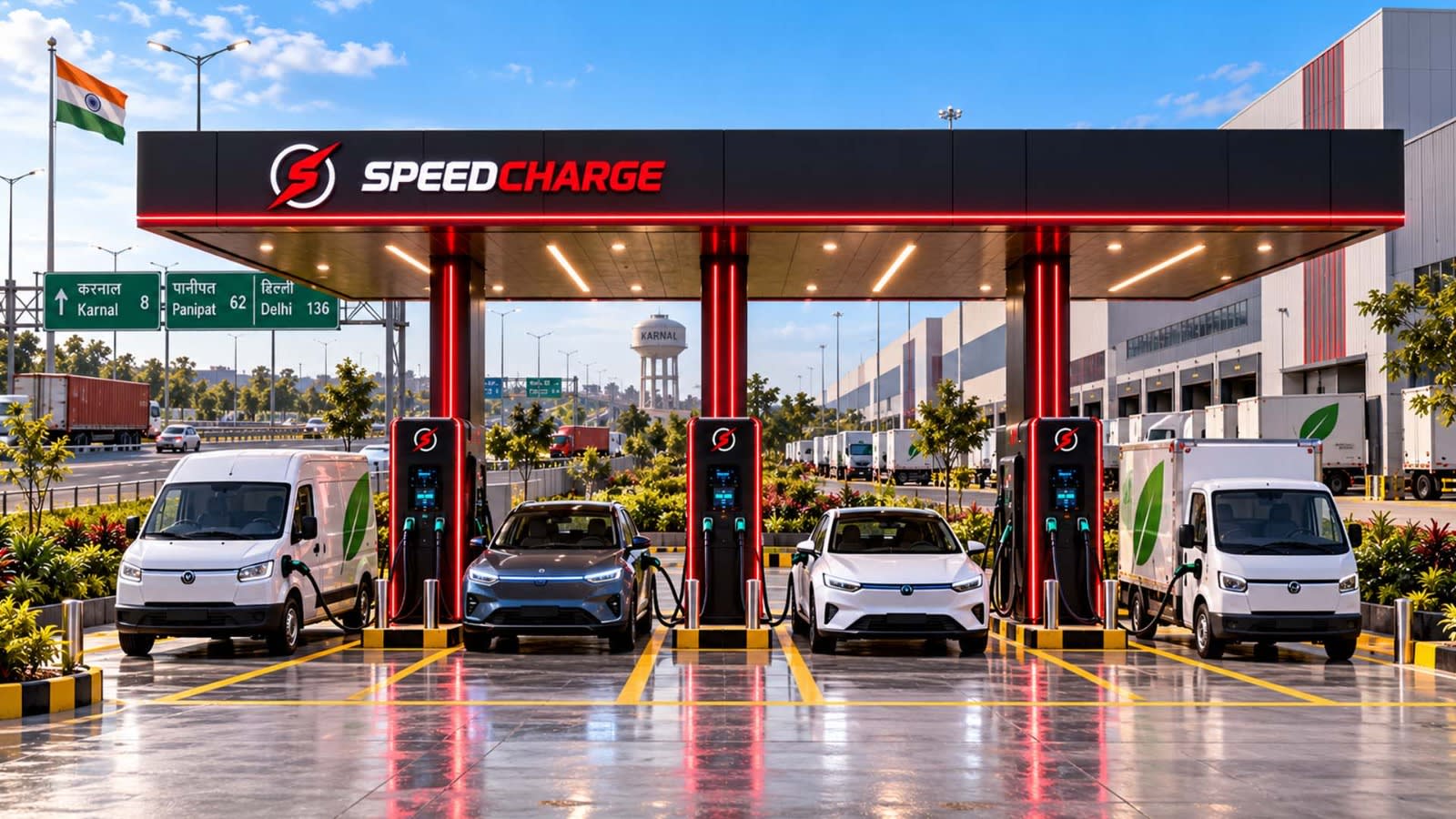
West Bengal requires a very different EV charging strategy from states where most investment can be concentrated around one metropolitan region. The state combines dense urban mobility around Kolkata and Howrah, industrial and logistics demand around locations such as Haldia, Kharagpur, Uluberia and Kalyani, long-distance highway movement, and a separate North Bengal mobility market around Siliguri and neighbouring areas. For investors evaluating EV Charging Franchise in West Bengal, the opportunity is therefore better understood as a network of charging markets rather than one state-wide formula. A charger installed in Kolkata's commercial core should not automatically use the same configuration as a highway site, industrial park or North Bengal corridor station.
West Bengal already has an official electric-mobility framework. The West Bengal Electric Vehicle Policy 2021 is listed by the state's Department of Power, while WBSEDCL has been designated as the state nodal agency for EV charging infrastructure and provides information on EV connections, tariffs and charging policy implementation.
The strongest 2026 investment approach is therefore:
Demand Cluster → Customer Behaviour → Site → Electrical Feasibility → Charger Mix → Commercial Model → Utilisation
West Bengal Should Be Divided Into Three Charging Economies
A practical EV Charging Franchise in West Bengal strategy should begin by separating the state into three broad operating environments.
Charging Economy | Major Markets to Study | Likely Demand |
|---|---|---|
Kolkata Metropolitan Region | Kolkata, Salt Lake, New Town, Howrah, airport corridors | Public, taxi, corporate, residential, destination |
Industrial & Logistics Belt | Uluberia, Kharagpur, Haldia, Kalyani and other industrial markets | Fleet, employee, logistics, commercial |
North Bengal Gateway | Siliguri, Dabgram and regional corridors | Intercity, tourism, commercial and regional charging |
Each cluster requires different site economics.
A corporate office employee can remain parked for six to nine hours. A taxi may need quick turnaround. A truck or delivery fleet may charge according to a defined operating schedule. A tourist or intercity driver may prioritise high charger uptime and short stopping time.
The charger should therefore follow the customer's operating pattern rather than the investor's budget alone.
Kolkata Should Be Treated as a Multi-Use Charging Market
Kolkata is likely to be the first market many investors evaluate because it combines dense residential development, commercial districts, offices, hotels, hospitals, taxis, delivery vehicles and intercity connectivity.
SpeedCharge's EV charging stations in Kolkata location page provides a useful internal reference for understanding the city's public charging environment and how charging locations can be presented to EV drivers.
However, even within Kolkata, one business model will not work everywhere.
Salt Lake and Sector V
Office-heavy districts create long customer dwell times.
An employee arriving at 9 AM and leaving at 6 PM does not necessarily need a 120 kW charger.
A workplace-oriented property may obtain better utilisation from multiple lower-power or moderate-power charging points combined with intelligent load management.
The commercial target becomes:
maximum useful energy delivered across parked vehicles
rather than:
maximum power from one charger.
New Town and Residential-Commercial Development
Mixed-use areas can create demand from apartment residents, corporate employees, restaurants, hotels and visitors.
A site serving both residents and public customers may experience very different demand throughout the day.
Morning demand might come from commercial vehicles.
Daytime demand may come from offices.
Evening and overnight charging could come from residential customers.
That creates the possibility of improving infrastructure utilisation across more hours of the day.
Central Commercial Kolkata
A dense commercial area can provide strong visibility but also create challenges.
Parking constraints, traffic congestion, restricted property access and expensive electrical work can materially affect charging-station economics.
High footfall does not automatically equal high charging demand.
The relevant question is:
Can EV drivers actually park and charge without disrupting their existing journey?
For investors comparing the franchise opportunity specifically within the city, SpeedCharge's EV Charging Station Franchise in Kolkata 2026 guide provides a more targeted internal path covering city-level investment and location considerations.
Howrah and Uluberia Need a Different Approach
Moving west of Kolkata changes the demand profile.
Howrah can combine dense urban mobility with major transport and commercial movement, while Uluberia has an industrial component that may create employee and commercial-vehicle demand.
The West Bengal Industrial Infrastructure Development Corporation lists Uluberia Industrial Park among its operational industrial parks and places it approximately 55 km from Kolkata along the highway corridor. The same official industrial infrastructure network includes Haldia, Kharagpur, Kalyani, Dabgram and several other state industrial parks.
This matters because an industrial charging site should be researched differently from a city-centre public station.
Instead of counting only passing EVs, ask nearby businesses:
How many EVs do you already operate?
How far do they travel each day?
When do they return?
How long are they parked?
Will fleet electrification increase over the next two to three years?
Those answers can reveal predictable anchor demand that general road-traffic data cannot.
Haldia: Think Commercial Fleet and Industrial Mobility
Haldia is particularly interesting because industrial charging can be linked to commercial and logistics activity rather than only passenger cars.
The official West Bengal industrial parks directory identifies Haldia Industrial Park in Purba Medinipur and also documents significant industrial infrastructure across the state.
For an industrial site, the charger-selection formula should be:
Energy needed per vehicle × number of vehicles ÷ available charging window
Suppose a commercial fleet requires 500 kWh overnight and has ten hours available.
That is a very different infrastructure problem from delivering the same energy in two hours.
Higher charger power can reduce charging time, but it can also increase equipment and electrical-infrastructure costs.
Fleet duty cycle should therefore drive the design.
Kharagpur Can Support Corridor Plus Industrial Demand
Kharagpur can be approached as a hybrid market.
The WBIIDC industrial infrastructure list includes Kharagpur Industrial Park, indicating an organised industrial base in the area.
At the same time, a suitable road-connected property can potentially serve intercity EVs.
That combination allows investors to study an anchor + public model.
The station could serve predictable commercial or employee charging during defined hours while remaining available to public customers at other times.
This is often stronger than depending entirely on random walk-in charging demand.
For corridor-oriented locations, SpeedCharge's EV charging stations on highways in India guide explains why road accessibility, amenities, grid availability and charger uptime should be studied together before selecting a site.
Siliguri and North Bengal Need Their Own Charging Thesis
North Bengal should not be treated as an extension of Kolkata.
Its charging market can include regional commuters, commercial vehicles, tourism-linked travel and longer-distance movement toward neighbouring districts and states.
WBIIDC lists Dabgram Industrial Park in Jalpaiguri district among its operational industrial infrastructure, providing evidence of organised industrial activity in the broader North Bengal region.
A North Bengal station may therefore need to balance:
Local daily demand
Commercial demand
Intercity traffic
Tourism-season variation
Longer-distance route charging
Future fleet electrification
This makes utilisation modelling especially important.
An investor should not project annual revenue from the busiest tourism month alone.
Site Selection Should Come Before Franchise Selection
Many investors reverse the correct decision sequence.
They first choose the franchise package.
Then they search for land.
That can result in a charger configuration being forced onto a property that was never suitable for it.
SpeedCharge's EV Charging Site Selection Guide in India is better used before commercial commitment so that EV demand, electricity capacity, parking, accessibility and customer dwell time are assessed first.
For West Bengal, use a site scorecard like this:
Site Factor | Weight |
|---|---|
Verified EV demand | 20 |
Electrical feasibility | 20 |
Customer dwell time | 12 |
Entry and exit | 10 |
Parking availability | 10 |
Fleet/anchor demand | 10 |
Competition gap | 5 |
Visibility | 4 |
Amenities/security | 4 |
Property economics | 3 |
Expansion capacity | 2 |
Total | 100 |
This score is not a profitability guarantee.
It simply prevents one attractive feature—such as cheap rent or heavy traffic—from hiding several major weaknesses.
Charger Power Should Follow Customer Time
A useful question is:
How long does the customer naturally remain at the property?
Site Type | Typical Dwell Pattern | Charger Strategy to Evaluate |
|---|---|---|
Corporate office | Long | AC + selected DC |
Apartment/mixed-use | Long | AC + moderate DC |
Mall | Medium | 30–60 kW DC + AC |
Taxi hub | Short | 60–120 kW+ DC |
Industrial fleet | Schedule based | Duty-cycle design |
Hotel | Long/overnight | AC + DC |
Highway site | Short | Faster DC |
Logistics property | Operational | Fleet-specific DC |
A 120 kW charger may be commercially sensible for a high-mileage taxi location.
It may be unnecessary at a property where cars remain parked for eight hours.
Higher installed kW increases potential throughput.
It does not guarantee that customers will buy more energy.
How Much Can the Setup Cost?
The total investment for EV Charging Franchise in West Bengal should be calculated as a complete commissioned infrastructure project rather than simply the price of the EV charger.
A charging project can include:
Cost Layer | Examples |
|---|---|
Charging hardware | AC/DC charger, charging guns |
Electrical system | Panels, protection, metering |
Grid infrastructure | Load enhancement, transformer |
Civil work | Foundation, trenching, bollards |
Software | CSMS, monitoring, pricing |
Payments | UPI/payment gateway systems |
Connectivity | SIM, broadband or LAN |
Property | Lease, deposit, Revenue Share |
Operations | Electricity, maintenance |
Working capital | Early utilisation period |
SpeedCharge's EV Fast Charger Price in India 2026 guide can be used when comparing charger hardware, while the EV Charging Station Investment in India guide is more appropriate for understanding complete project CAPEX.
A broad planning framework may look like this:
Charger Power | Indicative Hardware Planning Range |
|---|---|
30 kW DC | ₹4–8 lakh |
60 kW DC | ₹7–12 lakh |
90–120 kW DC | ₹12–22 lakh |
150–180 kW DC | ₹17–30 lakh |
200–240 kW DC | ₹24–40 lakh |
300–360 kW+ | ₹35–60 lakh+ |
These are indicative hardware ranges rather than a fixed West Bengal franchise quotation.
Actual investment depends on manufacturer, charger configuration, warranty, software, GST, installation scope and—most importantly—the electrical condition of the property.
Why Electrical Infrastructure Can Change the Entire Budget
Consider two investors purchasing identical 60 kW DC chargers.
Site A already has sufficient sanctioned load, a suitable panel and a short cable route.
Site B needs major sanctioned-load enhancement, new electrical panels, transformer work and extensive trenching.
Both buy the same charger.
Their total project costs can still be very different.
That is why the electrical survey should be completed before hardware is ordered.
West Bengal Has a Dedicated EV Electricity Framework
Before launching EV Charging Franchise in West Bengal, investors should review the state's current electricity framework rather than using tariffs copied from another state or an outdated blog.
The WBSEDCL electric vehicle charging and connection information portal identifies WBSEDCL as West Bengal's state nodal agency for charging infrastructure and currently displays EV-category tariff information, connection procedures and state charging resources. Its published page currently shows a single-part EV tariff structure of ₹5.50/kWh outside the evening peak window and ₹6.00/kWh during the listed peak period, with no fixed cost for connections under the EV category. Tariff applicability should still be confirmed for the specific property and billing period before financial modelling.
Do not automatically insert these rates into a five-year business plan.
Check the latest tariff/order at the time of application.
Electricity regulation can change.
Why the Time-of-Day Tariff Matters
If the current applicable tariff differentiates between time periods, charging demand can have different energy economics depending on when customers arrive.
For example, a fleet charging overnight could potentially have a different electricity-cost profile from a heavily evening-oriented public site.
This makes customer timing commercially relevant in two ways:
When customers charge determines utilisation.
When customers charge can also influence electricity cost.
The financial model should therefore calculate monthly energy consumption by time period wherever the applicable tariff structure requires it.
National Charging Rules Still Apply
West Bengal's state framework operates alongside India's national charging rules.
The Ministry of Power Guidelines for Installation and Operation of Electric Vehicle Charging Infrastructure 2024 apply to private, semi-public and public charging infrastructure, including offices, hospitals, housing societies, commercial complexes, petrol pumps and highway or expressway sites. The framework also addresses electricity connectivity, network planning, safety and charging-station viability.
Among other provisions, the national framework calls for charging-network planning in urban areas and along highways and provides for LT connections up to specified loads where applicable.
This reinforces the need to plan charger capacity together with the electricity connection.
Kolkata Electricity Planning Needs Special Attention
A dense city property can look commercially strong while being electrically difficult.
Basement charging sites may involve long cable runs.
Older commercial properties may have limited spare sanctioned load.
High-rise developments may already operate close to building load limits.
For Kolkata sites, the feasibility report should identify:
Existing sanctioned load
Recorded peak demand
Spare electrical capacity
Proposed EV load
Panel capacity
Transformer capacity
Cable route
Earthing
Metering
Future expansion capacity
Do not accept “power is available” as sufficient technical due diligence.
Ask:
How much power is available, where is it available and at what upgrade cost?
Franchise vs Independent Charging Business
A strong EV Charging Franchise in West Bengal should be evaluated through the executed commercial agreement, not through an advertised charger package.
An independent charging-station owner may need to separately manage hardware, software, payments, maintenance, customer acquisition and remote monitoring.
A franchise or managed-network model can combine some of these functions.
But the word “franchise” itself does not tell you:
Who owns the charger
Who pays the electricity bill
Who pays for transformer work
Who controls customer pricing
Who receives customer payments
How Revenue Share is calculated
Who handles downtime
Who replaces failed components
What happens if the site underperforms
Whether the equipment can be relocated
Who owns the asset when the contract ends
SpeedCharge's EV Charging Station Franchise in India guide provides a broader framework for comparing charging-franchise economics and responsibilities before an investor signs a location-specific agreement.
A Statewide Franchise Does Not Mean a Statewide Site Strategy
An important distinction is:
same network ≠ same charger setup
Consider four hypothetical properties.
Kolkata Sector V: long employee dwell time.
Haldia industrial property: scheduled fleet use.
Highway restaurant: short transit dwell.
Siliguri hotel: destination plus intercity demand.
Using the same 120 kW charger package at all four properties would ignore the behaviour of the customer.
Network standards should be consistent.
Site design should not be identical.
Industrial Parks Can Support Anchor Demand
One of West Bengal's advantages is the presence of organised industrial infrastructure across multiple districts.
WBIIDC lists parks including Haldia, Uluberia, Kharagpur, Kalyani, Dabgram, Raninagar, Malda, Falta and others. Its 2026 status page also reports substantial employment and industrial units across these parks.
For charging investors, this creates a useful prospecting method.
Instead of asking:
“Where is EV charging demand highest?”
ask:
“Which industrial clusters contain fleets or employees whose charging demand can be contracted or repeatedly captured?”
This shifts the business from speculative footfall toward measurable energy demand.
Use an Anchor + Public Utilisation Model
An anchor customer can be:
Taxi fleet
Delivery company
Hotel
Factory
Logistics business
Corporate office
Commercial vehicle fleet
Apartment community
Suppose an anchor fleet guarantees a meaningful portion of weekday utilisation.
The station can then pursue public charging as incremental demand rather than relying on it entirely.
A hypothetical utilisation pattern could look like:
Time | Likely Users |
|---|---|
Early morning | Fleet vehicles |
Working hours | Employees and business visitors |
Evening | Public/local users |
Night | Fleets, hotel guests, intercity users |
The aim is to increase the number of hours each day when charging assets are producing billable energy.
Revenue Should Be Built From kWh, Not Traffic
A property owner may tell you that 20,000 vehicles pass every day.
That is not a revenue forecast.
The real funnel is:
Total Vehicles → EVs → EVs Needing Charge → Drivers Willing to Stop → Successful Sessions → Billable kWh
A basic financial equation is:
Monthly Charging Revenue = Billable kWh × Effective Charging Revenue per kWh
From that amount, the project may need to pay for electricity, property, software, payment charges, maintenance, operations, taxes, insurance and financing.
Important operating metrics include:
Daily billable kWh
Average kWh per session
Sessions per connector
Charger utilisation
Charger uptime
Failed sessions
Repeat-user percentage
Revenue per parking bay
Electricity cost per delivered kWh
A 60 kW charger used consistently can outperform a 180 kW charger that remains idle most of the day.
PM E-DRIVE Should Be Evaluated Separately
West Bengal investors should not confuse state policy with central charging support.
The official PM E-DRIVE public charging infrastructure guidelines include operational guidelines for deployment of EV public charging stations released in September 2025 and subsequent FAQs. The framework uses defined location categories and eligible implementation channels rather than providing an automatic subsidy to every private charging franchise.
Therefore:
Do not include PM E-DRIVE support in base-case ROI unless the exact site and project structure have been confirmed as eligible.
Government programme allocation is not the same thing as guaranteed funding for an individual franchise.
Use the SpeedCharge Locator to Study Existing Supply
Site feasibility should include competing charging infrastructure.
SpeedCharge's EV charging station locator can be used alongside physical site visits to identify stations around a proposed market.
Do not measure only straight-line distance.
Record:
Charger power
Connector count
Access restrictions
Actual road travel time
Parking
Pricing
Hours
Amenities
Queueing
Uptime where observable
Five charging stations near a property are not automatically bad.
If all five are heavily utilised, the area may have unmet demand.
If they remain empty, investigate why.
Build a 30-Day West Bengal Feasibility Sprint
Before committing to EV Charging Franchise in West Bengal, run a structured 30-day validation exercise.
Days 1–5: Define the Customer
Select one dominant customer segment.
Examples:
corporate employee, apartment resident, taxi driver, highway traveller, hotel guest or commercial fleet.
Do not begin with “everyone who owns an EV.”
Days 6–10: Study Existing Demand
Observe real EV activity at several time periods.
Separate passenger cars, taxis, two-wheelers and commercial vehicles.
Days 11–15: Audit Competitors
Physically inspect nearby chargers.
Map actual access, not only map distance.
Days 16–20: Validate Anchor Customers
Meet fleets, hotels, commercial-property managers, factories and logistics operators.
Ask for current vehicle numbers and charging patterns.
Days 21–25: Complete Electrical Feasibility
Obtain information on sanctioned load, transformer capacity, cable route, panels and upgrade timeline.
Days 26–30: Build the Business Model
Calculate:
Conservative utilisation
Base utilisation
Growth utilisation
Do not proceed solely because the growth case looks attractive.
Use Different Financial Scenarios for Kolkata and Smaller Markets
A Kolkata property may require higher rent but could have stronger public demand.
An industrial property outside the metro may have lower property expense but depend more heavily on a specific anchor customer.
A North Bengal property may have stronger seasonality.
Therefore, don't use one uniform utilisation forecast across the state.
For every site, calculate:
Break-even daily kWh
Expected base daily kWh
Maximum practical daily kWh
The relationship between those three numbers is more useful than a vague ROI promise.
Design the Electrical System for Expansion
A project can be phased without making future expansion unnecessarily expensive.
Suppose current demand supports one 60 kW charger but future demand could support four charging bays.
Instead of installing all four chargers immediately, the site can be designed with:
Adequate cable routes
Future panel space
Expansion-ready civil ducts
Additional parking bays
Suitable software architecture
Transformer strategy
This is staged CAPEX.
It protects capital while preserving future capacity.
What Should Be Checked Before Signing the Franchise Agreement?
Do not sign based only on projected earnings.
Review:
Asset ownership: Who legally owns the charging equipment?
Property liability: Who signs the site lease?
Electricity: Who pays the bill and deposits?
Civil infrastructure: Who pays for site work?
Maintenance: What is included and excluded?
Software: Is there a recurring fee?
Pricing: Who sets the retail charging price?
Payments: Who receives the customer payment first?
Settlement: When and how is the investor paid?
Downtime: Who carries the commercial impact?
Relocation: Can equipment move if the property fails?
Exit: What happens when the agreement ends?
A charging franchise is an infrastructure agreement.
It should be reviewed with the same discipline as a long-term asset investment.
When Should You Expand the Station?
Do not expand because twelve months have passed.
Expand when data shows that existing capacity is restricting demand.
Useful expansion signals include:
Repeated charger queues
High sustained utilisation
Fleet demand exceeding available connectors
Customers leaving because chargers are occupied
Peak-period capacity constraints
Strong repeat-user growth
Expansion should respond to measurable demand.
Common West Bengal EV Charging Mistakes
The first mistake is assuming Kolkata is the only relevant market.
The second is treating an industrial property like a public retail site.
The third is installing fast chargers where customers naturally park for many hours.
The fourth is selecting a highway property without physically testing entry and exit.
The fifth is using old electricity tariffs in the financial model.
The sixth is assuming every government scheme automatically applies to private franchise investment.
The seventh is choosing hardware before completing electrical feasibility.
The eighth is measuring traffic instead of billable energy.
Avoiding these mistakes can improve the investment case more than negotiating a small equipment discount.
Frequently Asked Questions
1. Is West Bengal suitable for an EV charging business in 2026?
West Bengal has several different charging markets, including metropolitan Kolkata, industrial clusters, highway corridors and North Bengal. Individual site viability still depends on demand, electrical feasibility and utilisation.
2. Which city should an EV charging investor evaluate first?
Kolkata is an obvious starting point for urban public and commercial charging, but industrial and corridor markets such as Howrah-side locations, Haldia, Kharagpur and North Bengal can require completely different business models.
3. Does West Bengal have an EV policy?
Yes. The state's Department of Power lists the West Bengal Electric Vehicle Policy 2021, and WBSEDCL provides the state's EV charging infrastructure and connection resources.
4. Who is the state nodal agency for EV charging infrastructure?
WBSEDCL identifies itself as the State Nodal Agency and provides EV charging connection, tariff and infrastructure information on its official portal.
5. What electricity tariff applies to EV charging stations?
WBSEDCL's current EV portal displays EV-category tariff information, including the listed time-based single-part rates. Investors should confirm the latest applicable order for the exact connection before finalising project economics.
6. How much does a 60 kW DC charging station cost?
Hardware can broadly fall around ₹7–12 lakh in SpeedCharge's indicative planning framework, but complete project cost can be much higher when electrical upgrades, civil work, software and property expenses are included.
7. Is Kolkata the best place for an EV charging franchise?
Not automatically. Kolkata can offer dense urban demand, but property cost, parking and electricity constraints can affect economics. Industrial or corridor locations may sometimes offer stronger anchor demand.
8. Should industrial charging use fast chargers?
Only when fleet duty cycles require fast turnaround. Long overnight or working-hour parking can sometimes support lower-power or load-managed charging more efficiently.
9. Does PM E-DRIVE guarantee subsidy for a private station?
No. The current public charging framework uses defined eligible entities, location categories and nodal-agency processes. Project-specific eligibility must be confirmed. PM E-DRIVE
10. What should be checked before investing?
Verify customer demand, electrical capacity, access, parking, competition, complete CAPEX, charging tariff, franchise responsibilities and conservative utilisation before making the final investment decision.