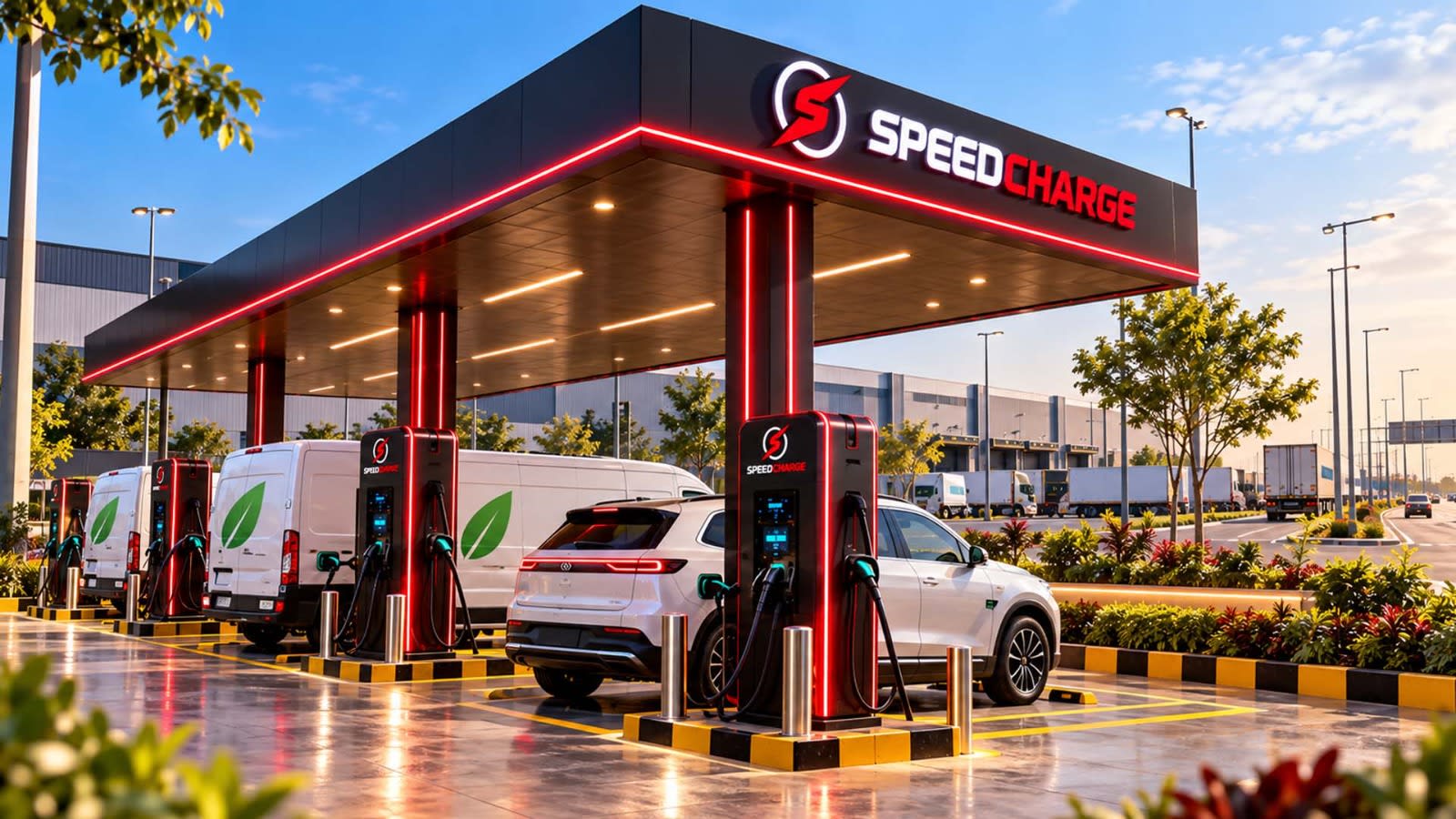
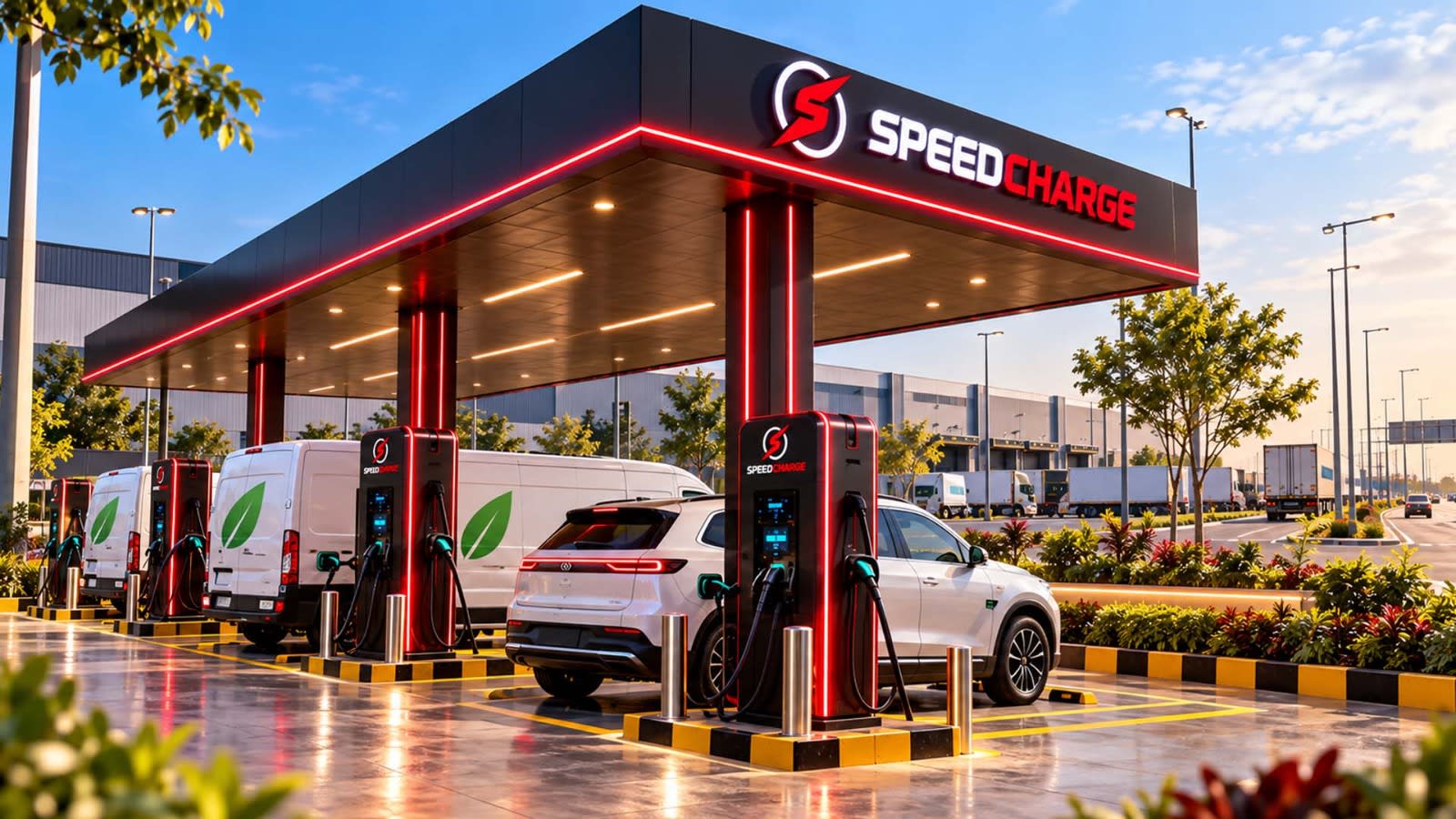
Karnal has a different EV charging proposition from Haryana’s corporate centres such as Gurugram and industrial-heavy markets such as Faridabad. The district sits on NH-44, commonly associated with GT Karnal Road, and the official district administration describes Karnal as lying roughly midway between Delhi and Chandigarh. It also characterises the district as agricultural-industrial, giving the market a combination of local city traffic, commercial movement and long-distance road demand.
For investors evaluating EV Charging Franchise in Karnal, this means the opportunity should be designed around two complementary markets: people who need to charge in Karnal and people who need to charge while travelling through Karnal.
That distinction is commercially important.
A city resident visiting a mall or hospital may remain parked for two hours. A hotel guest can stay overnight. A fleet vehicle may return according to a predictable schedule. An EV driver travelling between Delhi and Chandigarh usually wants a reliable fast charger, convenient access and enough energy to continue the journey without unnecessary delay.
A strong Karnal charging business should therefore begin with customer segmentation, not charger specification.
The official Karnal District profile and NH-44 location overview is a useful starting point for understanding the city’s geographic and economic position.
Why Karnal Has a Different EV Charging Opportunity
The Haryana government itself gives Karnal additional strategic relevance. Under the Haryana Electric Vehicle Policy 2022, Karnal is listed alongside Panchkula, Gurugram and Faridabad as a pilot city for new EV initiatives. The same policy calls for charging infrastructure development in residential, commercial, institutional and public locations and encourages privately owned public charging stations.
That makes EV Charging Franchise in Karnal especially interesting because the city can potentially combine:
Urban public charging
Destination charging
Highway fast charging
Commercial fleet charging
Hotel and restaurant charging
Workplace charging
Institutional charging
The mistake would be trying to serve all seven use cases with one identical charger configuration.
A corridor property and a city property are different businesses.
Think of Karnal as Two Charging Markets
Market 1: Karnal City Demand
City charging can serve residents, employees, shoppers, visitors, hotels, hospitals and local commercial vehicles.
These users frequently have longer dwell times.
A person visiting a shopping property may remain for 60–180 minutes. An office employee may stay for most of the working day. A hotel customer may leave the EV parked overnight.
These users can potentially support AC charging, moderate-power DC charging or a mixed configuration.
Market 2: NH-44 Transit Demand
Intercity travellers behave differently.
A driver travelling from Delhi toward Chandigarh does not usually want to spend several hours at a charging site. Reliability and charging speed become substantially more important.
This makes corridor locations more suitable for DC fast charging, provided the property has:
Convenient entry from NH-44
Easy re-entry to the route
Reliable electrical capacity
Adequate parking
Lighting and security
Food and washrooms
24-hour or extended-hour access
Space to add chargers later
The Haryana EV Policy states that fast-charging and battery-swapping infrastructure should be provided on highways and prominent roads at intervals within 30 km and encourages charging networks on intercity state and national highways.
For investors evaluating this corridor model, SpeedCharge’s EV Charging Stations on Highways in India guide explains why access, uptime, electricity and amenities are as important as charger power.
NH-44 Can Be a Strength, but Traffic Alone Is Not Enough
Karnal’s association with NH-44 immediately makes highway charging look attractive.
But “busy highway” is not a complete feasibility study.
Imagine two restaurants beside NH-44.
Property A receives very heavy passing traffic but requires drivers travelling in one direction to travel several kilometres before making a U-turn.
Property B receives slightly less traffic but has direct service-road access, visible signage, dedicated charging bays, clean washrooms and sufficient spare electricity capacity.
Property B may produce stronger charging economics.
For a corridor-focused EV Charging Franchise in Karnal, measure practical access rather than road traffic alone.
During site inspection, physically drive:
NH-44 → Site Entry → Charging Bay → Site Exit → NH-44
Do this from both directions.
Google Maps distance is not enough.
Where Should You Evaluate Locations in Karnal?
Rather than naming one “best” plot without a site study, divide candidate properties according to customer behaviour.
Highway Hotels and Restaurants
These are particularly logical EV charging candidates because travellers already stop there.
A meal or tea break can overlap with a charging session.
For such sites, consider:
Average customer stop duration
Existing parking capacity
Toilet availability
Night-time security
Restaurant operating hours
Electricity availability
Road visibility
A charger should transform an existing stop into a charging stop rather than force the driver to make a separate journey.
Fuel Stations and Mobility Properties
Existing vehicle-oriented properties already solve several charging-location problems: drivers know how to enter them, they usually have visible roadside access and the property is associated with refuelling.
But electrical infrastructure still needs separate assessment.
A petrol pump with weak electrical capacity is not automatically a cheap charging location.
Hotels Inside or Near Karnal
Hotels create long dwell periods.
For overnight guests, several AC charging points can sometimes provide more practical capacity than one expensive high-power charger.
A hotel near NH-44, however, may serve both overnight guests and transit traffic. That property could potentially justify a mixed AC/DC strategy.
Commercial and Retail Properties
Retail charging depends on whether visitors remain at the site long enough to receive useful energy.
Large commercial parking areas can also serve local residents who do not have dependable home charging.
Hospitals and Institutional Properties
Long visitor and employee parking periods can make managed charging relevant.
The challenge is ensuring that charging bays remain available rather than becoming ordinary parking spaces.
Build the Site Study Before Buying Hardware
SpeedCharge’s EV Charging Station Site Selection Guide India 2026 recommends evaluating electricity capacity, actual EV demand, dwell time, road access, parking, competition and expansion before committing capital.
Use a structured Karnal scorecard:
Factor | Suggested Weight |
|---|---|
Relevant EV demand | 20 |
Electrical feasibility | 20 |
Highway/city accessibility | 15 |
Customer dwell time | 10 |
Dedicated parking | 10 |
Fleet or repeat demand | 10 |
Existing competition | 5 |
Amenities | 5 |
Visibility/signage | 3 |
Expansion capacity | 2 |
Total | 100 |
This score does not mathematically predict profitability.
Its purpose is to prevent decisions based only on cheap rent, road traffic or a famous location.
Highway Charging Needs a Different Charger Mix
Charger selection should follow the customer’s available time.
A simple way to think about it is:
Required Energy ÷ Available Charging Time = Required Charging Capacity
If a driver needs approximately 35 kWh before continuing the journey and wants the useful charging portion completed relatively quickly, fast DC charging becomes commercially relevant.
An office employee needing the same energy but remaining parked for eight hours has a very different requirement.
This means EV Charging Franchise in Karnal may need a different charger mix depending on whether the site is:
Property Type | Typical Dwell Time | Configuration to Evaluate |
|---|---|---|
Highway restaurant | Short–medium | 60–120 kW+ DC |
Hotel | Long / overnight | AC + selected DC |
Office | Long | Managed AC |
Mall | Medium | AC + 30–60 kW DC |
Fleet depot | Schedule-based | AC/DC based on duty cycle |
Public highway hub | Short | High-power DC |
Hospital | Medium–long | Mixed charging |
Higher kW is not automatically better.
A 120 kW charger with weak utilisation may generate less revenue than a consistently used 60 kW charger.
How Much Can a Karnal EV Charging Franchise Cost?
The investment for EV Charging Franchise in Karnal should be calculated from the complete commissioned project rather than the charger quotation.
SpeedCharge’s EV Fast Charger Price in India 2026 guide explains that charger hardware is only one cost component; electrical upgrades, civil works, sanctioned load, software and site infrastructure can materially change the project budget.
Indicative commercial DC hardware ranges can be used for initial planning:
DC Charger | Indicative Hardware Range | Use Case |
|---|---|---|
30 kW | ₹4–8 lakh | Hotels, destination sites |
60 kW | ₹7–12 lakh | Urban/public charging |
90–120 kW | ₹12–22 lakh | Corridor, taxis, fleets |
150–180 kW | ₹17–30 lakh | High-throughput highway |
200–240 kW | ₹24–40 lakh | Large charging hub |
300–360 kW+ | ₹35–60 lakh+ | Ultra-high-power use |
These are planning figures rather than a SpeedCharge Karnal franchise quotation.
Actual hardware pricing can vary according to manufacturer, charging guns, connector configuration, power-sharing design, warranty, software, AMC, GST, freight and installation scope.
What Makes the Complete Project More Expensive?
Electrical Infrastructure
A charging site may require:
Panels
Switchgear
Protection systems
Earthing
Metering
LT/HT cables
Load enhancement
Transformer infrastructure
Civil Infrastructure
Possible work includes:
Charger foundation
Trenching
Cable ducts
Bollards
Wheel stops
Parking markings
Lighting
Signage
Drainage
Canopy work
Digital Infrastructure
A public station may need:
Charger Management System
Remote monitoring
Payments
Session records
Network connectivity
Fault alerts
Pricing management
Property and Operating Costs
The financial model can also include rent, Revenue Share, insurance, electricity, maintenance, payment-processing fees and working capital.
For a more complete capital-planning framework, SpeedCharge’s EV Charging Station Investment in India guide explains why charging projects need to account for hardware, upstream electrical infrastructure, property and operating costs rather than comparing charger prices alone.
Example: 60 kW Commercial Karnal Site
A hypothetical 60 kW site might initially be budgeted like this:
Component | Indicative Planning Range |
|---|---|
60 kW DC charger | ₹7–12 lakh |
Panels & protection | ₹2–5 lakh |
Electrical cabling | ₹1–3 lakh+ |
Civil work | ₹1.5–4 lakh |
Load/transformer upgrade if needed | ₹4–15 lakh+ |
Software/network | ₹0.5–2 lakh |
Commissioning | ₹0.5–2 lakh |
Contingency | ₹1–4 lakh+ |
These ranges are illustrative only.
A site already having sufficient electrical infrastructure can require far less upstream investment than a property needing a new transformer or major load enhancement.
This is why site selection can influence CAPEX more than negotiating a small discount on the charger itself.
Electricity Feasibility Is Especially Important on Highway Sites
High-power highway charging can place substantial demand on the site electrical system.
Before launching EV Charging Franchise in Karnal, verify sanctioned load, existing property demand, spare capacity, supply voltage, transformer capability, cable distance, panels and future expansion headroom.
The Haryana Electricity Regulatory Commission EV charging infrastructure regulations establish Haryana’s regulatory framework for EV charging infrastructure, tariff and related issues across the state.
HERC’s 2024 amendment also states that, for HT EV charging-station connections up to 200 kW, the cost of a separate or dedicated transformer and allied equipment is to be handled through the mechanism described in the amended regulation. Project-specific applicability should be confirmed before incorporating that benefit into CAPEX assumptions.
Never sign a long property lease merely on the assumption that an electricity upgrade will be inexpensive.
Obtain technical feasibility first.
National EV Charging Rules Also Apply
State regulations are only one part of compliance.
The Ministry of Power Guidelines for Installation and Operation of Electric Vehicle Charging Infrastructure 2024 apply to private, semi-public and public charging infrastructure, including offices, hospitals, commercial complexes, petrol pumps, airports and highway/expressway locations.
The guidelines aim to improve charging-station safety, reliability and accessibility while facilitating electricity connections and preparing distribution systems for EV load.
For practical implementation, SpeedCharge’s How to Set Up an EV Charging Station in India 2026 guide follows a useful sequence of demand study, site screening, electrical survey, business-model selection, charger design, software and commissioning.
That sequence is particularly suitable for Karnal because a site can look attractive geographically but fail economically when electrical infrastructure is weak.
Haryana Policy Makes Karnal a Relevant Pilot City
Karnal receives more direct policy relevance than many secondary Haryana cities.
The Haryana EV Policy specifically names Karnal as one of four pilot cities for new initiatives alongside Panchkula, Gurugram and Faridabad.
The policy also directs development of charging infrastructure in public buildings, public parking and transport depots, encourages private companies to establish charging stations, and supports highway fast-charging development.
This improves the strategic context for investment but should never be interpreted as guaranteed demand.
Policy creates an enabling environment.
The property still creates—or fails to create—the business.
What Incentives Are Mentioned in Haryana EV Policy?
The policy includes a one-time subsidy equal to 20% of Fixed Capital Investment, up to ₹5 lakh, for the first 200 eligible privately owned public charging stations with FCI above ₹25 lakh.
It also describes another category providing 20% of FCI up to ₹50,000 for the first 2,000 qualifying private public-charging installations in specified residential, commercial and institutional locations, subject to requirements including charging-unit count.
These incentives should not be treated as guaranteed in your financial model.
They are subject to eligibility, beneficiary caps and actual programme availability.
Calculate the project without subsidy first.
If support is confirmed, treat it as an improvement to the financial case.
Hotels and Restaurants Can Create Natural Charging Stops
One of Karnal’s most interesting charging strategies is destination conversion.
Instead of asking drivers to stop only because a charger exists, install chargers where drivers already want to stop.
A highway restaurant can convert meal time into charging time.
A hotel can convert overnight parking into charging time.
A shopping property can convert customer dwell time into charging time.
This reduces one of the hardest problems in public charging: convincing a driver to make a dedicated stop.
The property’s existing business can also benefit because an EV driver charging for 30–60 minutes has time to purchase food or other services.
However, charger economics should remain separate from assumptions about restaurant or hotel revenue.
The station itself still needs measurable utilisation.
Local Fleet and Commercial Demand Should Not Be Ignored
Karnal’s official district profile describes the area as agricultural-industrial rather than solely urban.
That makes local commercial and fleet opportunities worth researching.
Potential anchor demand could come from:
Corporate fleets
Delivery vehicles
Hotel taxis
Commercial passenger vehicles
Local institutions
Logistics operators
An anchor fleet can help reduce the uncertainty associated with relying only on highway walk-in traffic.
For each potential fleet partner, request:
Input | Why It Matters |
|---|---|
Number of EVs | Defines maximum demand |
Daily distance | Estimates energy consumption |
Battery capacity | Helps size charging |
Return time | Defines start of charging window |
Departure time | Defines required speed |
Operating days | Helps estimate monthly kWh |
Do not accept a vague promise such as “we will send our EVs to your station.”
Commercial forecasts should be built around measurable energy demand.
Revenue Depends on Billable kWh, Not Vehicle Traffic
Suppose 25,000 vehicles pass a highway property every day.
That number is almost meaningless unless you know how many are compatible EVs, how many need charging and how many can conveniently enter the site.
A better formula is:
Monthly Charging Revenue = Billable kWh × Effective Charging Revenue per kWh
From that amount, the business must account for electricity, property cost, software, maintenance, payment fees, operations and financing.
Key station metrics should include:
kWh sold per day
Sessions per connector
Average kWh per session
Charger uptime
Failed sessions
Repeat customers
Revenue per bay
Electricity cost per paid kWh
Installed kW tells you how powerful the station is.
Billable kWh tells you whether customers are using it.
Compare Karnal With Gurugram, Not Copy Gurugram
Karnal and Gurugram are both relevant Haryana charging markets, but their charging demand is structurally different.
Gurugram has a stronger corporate and metropolitan profile. Karnal has greater strategic exposure to long-distance NH-44 traffic and can potentially combine corridor charging with local city demand.
Readers evaluating both approaches can compare Karnal’s corridor strategy with SpeedCharge’s Gurugram EV charging stations market page and the EV Charging Station Franchise in Gurgaon guide.
The objective is not to identify which city is universally better.
It is to identify which demand model matches your property and capital.
Franchise Due Diligence Comes Before Payment
A strong EV Charging Franchise in Karnal should be evaluated through the actual commercial agreement rather than the headline investment figure.
Before paying a franchise fee or equipment advance, establish responsibility for:
Charger ownership
Electrical infrastructure
Transformer or load enhancement
Civil works
Electricity bills
Software
Customer payments
Pricing authority
Revenue Share
Maintenance
Spare parts
Downtime
Insurance
Relocation
Exit and termination
A franchise model can reduce operational complexity, but unclear allocation of responsibilities can create disputes later.
Also verify whether franchise projections assume highway traffic, contracted fleet demand or mature utilisation from day one.
Those are three very different assumptions.
PM E-DRIVE Should Be Checked Separately
Central infrastructure support should not be confused with Haryana’s state incentives.
The official PM E-DRIVE EV Public Charging Station operational guidelines were issued on 26 September 2025 and define implementation categories for EV public charging infrastructure.
The later official FAQs clarify that location classification is determined by the relevant nodal agency and that supported sites must satisfy the applicable public-access conditions.
Therefore, never include PM E-DRIVE support as guaranteed franchise income.
Confirm project-specific eligibility first.
A 30-Day Karnal Feasibility Study
Before starting EV Charging Franchise in Karnal, use four weeks to test the site.
Week 1: Measure Local and Highway Demand
Observe the property during:
Morning highway traffic
Midday
Evening travel
Late night
Weekends
Count electric cars separately from general traffic.
Week 2: Audit Existing Chargers
Visit nearby stations physically.
Record:
Charger kW
Connector count
Accessibility
Parking
Uptime
Queueing
Operating hours
Amenities
Week 3: Validate Anchor Demand
Talk with hotels, restaurants, fleet operators, taxi drivers, institutions and commercial-property managers.
Ask how many EVs they actually operate or serve.
Week 4: Complete Technical and Financial Feasibility
Confirm electricity capacity and prepare:
Conservative Case → Base Case → Growth Case
Do not sign the property because the growth case produces attractive ROI.
The base case should be commercially understandable on its own.
2026 Setup Sequence
A disciplined Karnal project should follow this sequence:
1. Identify customer type
Decide whether the station targets local residents, highway travellers, fleets or a combination.
2. Shortlist multiple properties
Compare corridor and city locations.
3. Measure relevant EV demand
Do not count all vehicles as potential customers.
4. Test road access
Drive into and out of the property from both highway directions.
5. Confirm electricity feasibility
Do this before ordering hardware.
6. Select charger mix
Match kW to dwell time and energy requirements.
7. Calculate complete CAPEX
Include upstream electricity and site development.
8. Review franchise obligations
Understand ownership, maintenance and settlement.
9. Commission using real EVs
Test charging, payment, emergency stop and remote monitoring.
10. Track the first 90 days
Use real utilisation data before expanding.
Common Mistakes to Avoid
Do not select a highway site from Google Maps alone.
Do not buy a 180 kW charger merely because the budget allows it.
Do not assume every EV travelling on NH-44 needs to charge in Karnal.
Do not sign a property lease before checking power.
Do not treat subsidy as guaranteed.
Do not depend on one fleet partner without a commercial commitment.
Do not confuse general traffic with charging demand.
And do not build the project around optimistic utilisation from the first month.
Conclusion
Karnal has a distinctive EV charging opportunity because it sits at the intersection of local city demand and long-distance NH-44 movement.
Its strongest charging properties are likely to be those that convert an existing reason to stop—a hotel stay, meal break, commercial visit or fleet parking period—into charging demand.
For EV Charging Franchise in Karnal, the right sequence is:
Demand → Route Access → Dwell Time → Electricity → Charger Mix → Franchise Terms → CAPEX/OPEX → Utilisation → Expansion
A high-power charger on a poorly accessible site can remain underused.
A correctly sized station with strong road access, reliable power, useful amenities and repeat customers can create a much stronger infrastructure business.
Frequently Asked Questions
1. Is Karnal suitable for an EV charging franchise?
Karnal is worth evaluating because it combines local urban demand with NH-44 intercity traffic and is identified as a pilot city under Haryana’s EV policy. Site-level feasibility is still essential.
2. Why is NH-44 important for Karnal charging?
The official district administration describes Karnal as closely associated with NH-44/GT Karnal Road and located roughly midway between Delhi and Chandigarh.
3. How much does a 60 kW DC charger cost?
A broad SpeedCharge planning range is approximately ₹7–12 lakh for 60 kW DC hardware. Complete project CAPEX can be materially higher after electrical, civil and software costs. SpeedCharge
4. Which properties should be evaluated?
Highway hotels, restaurants, fuel stations, city hotels, commercial parking, hospitals and fleet-oriented properties can all be evaluated according to demand and electricity availability.
5. Does Haryana offer charging-station incentives?
The EV Policy contains incentive provisions for eligible private public-charging stations, including specified FCI-based subsidies subject to beneficiary caps and conditions.
6. Should a Karnal highway station use fast DC charging?
Fast DC can be appropriate where intercity drivers need shorter stops, but charger power should still be based on observed demand and electrical feasibility.
7. Can a hotel use AC charging instead?
Yes. Long overnight dwell time can make AC charging commercially practical, potentially combined with DC charging for transit customers.
8. Is the largest charger always the best investment?
No. Charger utilisation and billable energy matter more than the equipment’s maximum rated output.
9. Should government support be included in ROI immediately?
No. Model the base project without unconfirmed incentives and add potential support only after eligibility is established.
10. What should an investor do first?
Shortlist properties, measure relevant EV traffic, test highway access, audit existing chargers and complete electricity feasibility before choosing hardware.