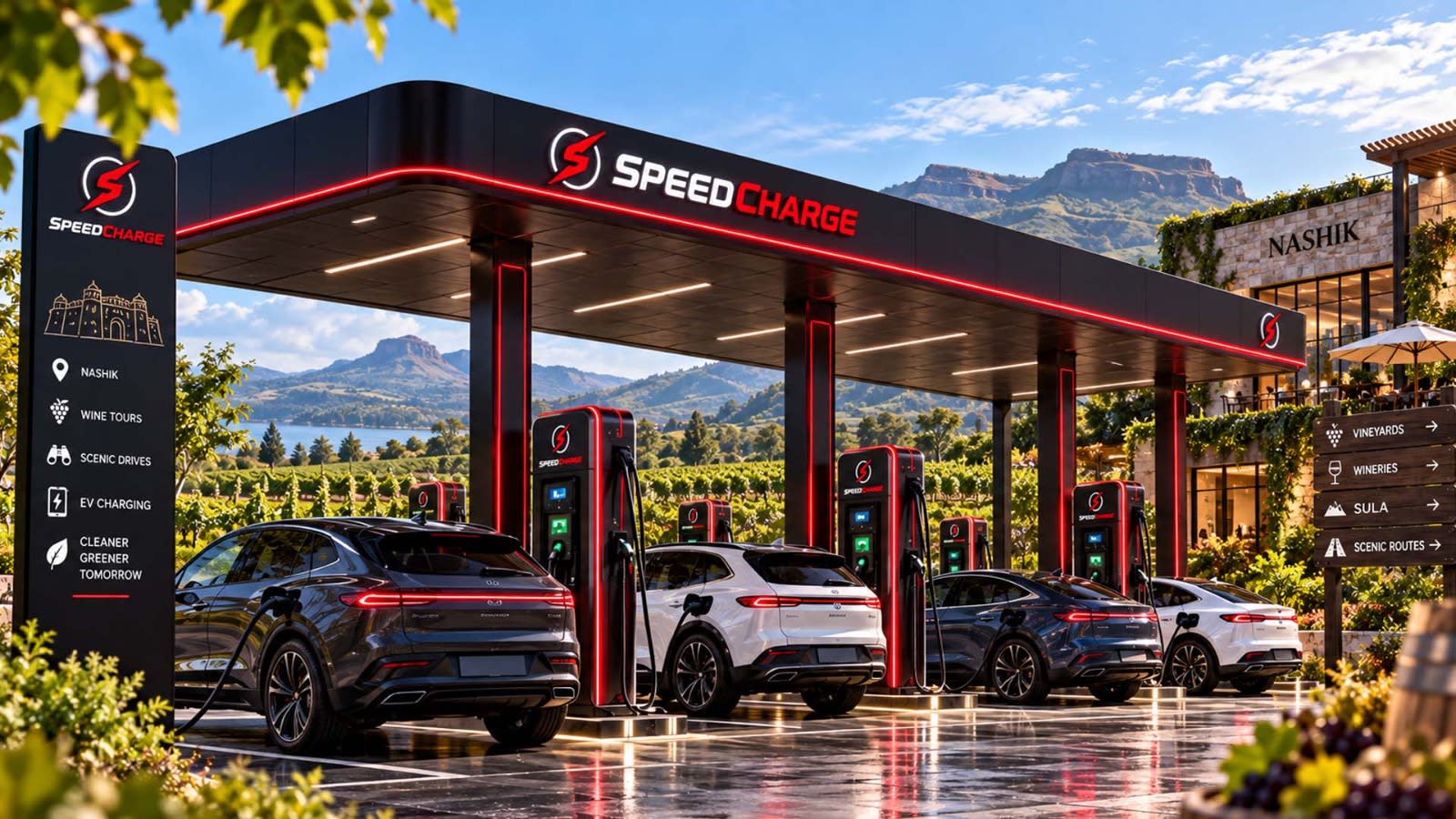
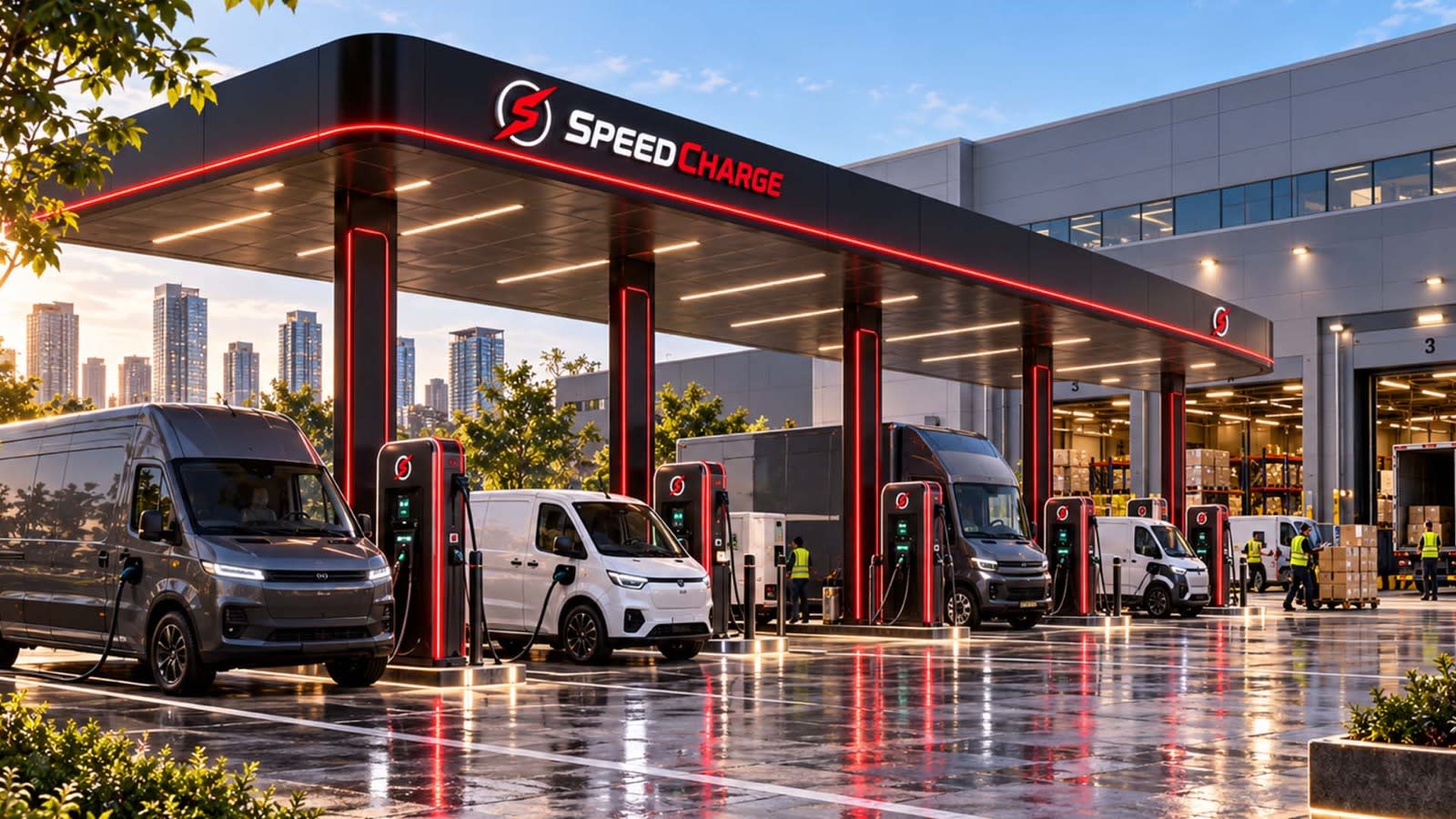
Choosing the right EV charging station location is one of the most important decisions in an EV charging project. Charger power, software, branding and pricing can all be improved later, but infrastructure installed at a weak site can remain underutilised even when the equipment itself performs perfectly.
A strong charging location combines several factors at the same time: sufficient electricity capacity, observable EV demand, easy vehicle access, appropriate parking dwell time, good visibility, safe surroundings, long-term site control and room for future expansion. Focusing only on road traffic or property cost can therefore produce a misleading site assessment.
Investors planning a public charging business should first read the SpeedCharge EV Charging Station Business Guide and use this article as the site-feasibility framework before committing capital.
Why Location Matters More Than Charger Power
A high-powered DC charger cannot create demand where little EV traffic exists, and premium hardware cannot compensate for difficult entry, poor parking or unreliable electricity supply. Charging infrastructure earns through actual sessions and energy throughput, so the property has to put chargers where suitable users naturally travel, park or stop.
The correct location also determines what type of charger should be installed. A highway traveller may value rapid DC charging, while a hotel guest staying overnight can receive useful energy from lower-power AC charging without requiring the same electrical infrastructure.
This is why site selection should happen before equipment specification rather than after it.
EV Charging Site Selection Scorecard
A practical site assessment should evaluate several variables together rather than accepting or rejecting a property because of one attractive feature.
Site Factor | Importance | What to Evaluate |
|---|---|---|
Grid capacity | Very High | Available load, enhancement cost, transformer requirement |
Existing EV demand | Very High | EV traffic, parked EVs, local fleets |
Dwell time | Very High | How long target users naturally remain |
Entry and exit | High | Ease of access from both travel directions |
Parking layout | High | Dedicated bays, turning radius, cable reach |
Visibility | High | Road visibility, signage and wayfinding |
Competition | High | Nearby chargers, power, pricing and utilisation |
Anchor demand | Very High | Fleet, corporate or residential recurring users |
Site tenure | Very High | Ownership or secure long lease |
Amenities | Medium–High | Washroom, food, seating, retail |
Safety | High | Lighting, surveillance and overnight comfort |
Flood risk | High | Waterlogging and drainage history |
Expansion capacity | High | Additional bays, panels, cabling and load |
Commercial terms | High | Rent, revenue share, access restrictions |
Do not treat the table as a mathematical guarantee. Its purpose is to force investors to evaluate the site as an operating system rather than as an empty piece of land.
1. Start With Electricity and Grid Feasibility
Before signing a lease or ordering chargers, confirm how much power the property can actually support. For a high-power DC site, electrical infrastructure can become one of the largest and most unpredictable project costs.
When evaluating an EV charging station location, determine the existing sanctioned load, available spare capacity, connection voltage, transformer capacity, distance to the appropriate supply point and whether a load enhancement will be required. Obtain these details through the relevant DISCOM or a qualified electrical assessment rather than relying only on assumptions made during a property visit.
The Ministry of Power's 2024 EV charging infrastructure framework places significant emphasis on facilitating electricity connections and preparing distribution networks for growing EV charging demand.
For a complete infrastructure workflow, read How to Set Up an EV Charging Station in India.
Calculate Grid Upgrade Cost Before Site Commitment
A low-rent property is not necessarily inexpensive if it requires major transformer work, long high-capacity cable runs or significant sanctioned-load enhancement. Conversely, a slightly more expensive property with strong existing electrical infrastructure may produce a lower total commissioned project cost.
Investors should therefore compare property cost + electrical infrastructure cost, not land or rent in isolation.
A site-survey report should quantify major electrical requirements before the commercial agreement becomes difficult to exit.
2. Measure Local EV Demand Instead of Using National Statistics
National EV growth demonstrates that the overall market is expanding, but it does not prove that one particular street, mall or fuel station will support a charging business. Site selection needs local evidence.
Spend time observing the property at different hours and on different days. Count electric cars, two-wheelers, three-wheelers and commercial EVs separately because each segment has different charging behaviour and infrastructure requirements.
Also speak with drivers, nearby businesses, security teams and fleet operators. Questions about where EV owners currently charge, whether existing chargers are busy and what problems users experience can reveal local demand that generic market reports cannot show.
3. Segment Demand by Vehicle Type
One of the most common site-selection errors is treating every EV as the same customer. A location dominated by electric two-wheelers may need a very different business model from one serving premium passenger cars or commercial fleets.
Passenger-car DC charging requires parking space, cable reach and higher electrical capacity. Commercial two- and three-wheelers may prioritise lower charging costs, predictable access or battery swapping, while fleet depots require infrastructure designed around duty cycles rather than public footfall.
Before finalising hardware, determine which vehicle category is expected to generate most of the site's energy throughput.
4. Look for Anchor Demand
A nearby fleet, taxi operator, delivery company, office campus or large residential community can substantially improve site economics because it creates recurring demand instead of relying entirely on occasional public users.
Anchor customers are especially valuable during the early months of a station, when organic walk-in utilisation may still be developing. Even partial contracted demand can make electricity consumption and revenue easier to forecast.
Fleet operators evaluating dedicated infrastructure can also review SpeedCharge Commercial EV Charging Solutions.
5. Match Charger Power to Dwell Time
Dwell time is one of the best indicators of the type of charging infrastructure a property actually needs. A driver stopping for twenty or thirty minutes has different expectations from a vehicle parked at an office for eight hours.
Location Type | Typical Dwell Pattern | Likely Charging Strategy |
Highway stop | Short | DC fast charging |
Fuel station | Short | DC charging |
Restaurant | Short–Medium | AC/DC based on route |
Mall | Medium | AC + selected DC |
Hotel | Long / overnight | Primarily AC; DC if transit demand exists |
Office | Long | Managed AC charging |
Housing society | Overnight | AC with load management |
Fleet depot | Schedule-based | AC/DC based on duty cycle |
Airport parking | Long | Managed AC |
Taxi hub | Short / repeat | Higher-power charging may be useful |
The objective is not to install the highest possible charger rating. It is to deliver the required energy within the user's natural parking window at an infrastructure cost the site can support.
For a deeper AC/DC planning framework, use the SpeedCharge EV Charger Installation Guide.
6. Evaluate Entry and Exit From the Road
A charging site must be easy to enter. Drivers are less likely to use a property that requires an awkward U-turn, crossing several lanes, navigating an unclear service road or making a difficult manoeuvre with traffic behind them.
Visit the site from every major approach direction rather than only arriving from the easiest side. A property that appears accessible on a map can behave very differently in actual peak-hour traffic.
For highway and arterial-road sites, determine whether a driver can comfortably exit and rejoin the route after charging.
7. Check Parking and Vehicle Movement
The parking layout should suit the vehicles expected to use the station. Consider bay dimensions, turning radius, reversing space, charger position, charging-port location and cable reach.
Commercial vans, taxis and larger EVs can require considerably more manoeuvring space than small passenger cars. A charger positioned correctly for one vehicle model may be inconvenient for another if cables cannot reach both front- and rear-mounted charge ports.
Design parking around real vehicles before equipment foundations are fixed.
8. Visibility and Wayfinding Increase Usage
A visible charger has an advantage over infrastructure hidden behind buildings or deep inside parking facilities. Digital discovery is important, but physical visibility still helps drivers recognise the location and builds familiarity with the site.
Good signage should tell drivers that charging is available before they pass the entrance. Within malls, hotels and large complexes, directional signs should continue from the property entrance to the actual charging bays.
The Ministry of Power's current guidelines also highlight accessibility, signage and strategically located charging infrastructure, including placement near entrances, exits or well-lit areas for relevant properties.
9. Amenities Matter for DC Fast-Charging Sites
Charging creates dwell time, and the quality of that time influences where drivers choose to stop. For public DC charging, basic amenities such as washrooms, food, beverages, seating and safe shelter can increase the attractiveness of the site.
A technically identical charger beside a clean café and washroom may be more appealing than one installed on an isolated plot with nothing to do during the session.
Amenities become even more important for families and long-distance travellers who naturally combine charging with a rest break.
10. Safety, Lighting and 24-Hour Usability
Many charging sessions occur early in the morning, late in the evening or at night. Drivers may avoid poorly lit or isolated properties even if those chargers offer attractive pricing.
Assess lighting, CCTV coverage, staff presence, emergency access and the overall feeling of personal safety after dark. Visit the property at night before committing to it.
Physical safety also needs to be considered alongside electrical safety. CEA's current regulatory archive includes the 2023 Safety and Electric Supply Regulations as well as a 2026 amendment, so installations should be assessed against the current applicable requirements rather than older guidance alone.
11. Check Flooding, Drainage and Weather Exposure
Indian site selection must account for monsoon conditions. A property that looks excellent during dry weather may become difficult to access or unsafe during heavy rain.
Ask neighbouring businesses about historical waterlogging, inspect drainage paths and identify whether charging bays sit in low-lying areas. Equipment installation should also consider shelter, water flow, cable routes and safe elevation.
A charging site that becomes inaccessible during part of the year loses both revenue and customer confidence.
12. Analyse Nearby Charging Competition
Competition should neither automatically disqualify nor validate a property. A cluster of busy chargers can indicate proven demand, while an area with no charging stations may represent either an opportunity or a warning that grid, land or demand conditions are unfavourable.
When reviewing an EV charging station location, map nearby chargers and compare their power ratings, connector types, pricing, access hours and likely utilisation. The objective is to understand what problem your proposed station would solve that existing infrastructure does not.
Use the SpeedCharge EV Charging Station Finder as one source for local charger discovery, alongside other network and government charging maps.
The Bureau of Energy Efficiency's EV Yatra platform is another official resource developed to help users access public charging-station information.
13. Look for Coverage Gaps, Not Just High Traffic
Heavy vehicle traffic alone does not guarantee strong charging demand. A busy corridor may already have several reliable fast chargers, while a slightly lower-traffic route may have a genuine infrastructure gap.
A useful site fills an unmet need. This can be a long distance between chargers, an underserved residential cluster, a fleet concentration without dedicated infrastructure or a commercial destination where EV drivers already spend time.
Study the route as a network rather than evaluating the property in isolation.
14. Check Future Competition
A site may look uncontested today but face several new stations within a year. Public announcements, fuel-station redevelopment, government charging programmes and new commercial projects can all change local supply.
Current PM E-DRIVE public charging guidelines require nodal agencies to undertake feasibility studies when selecting supported locations, including the basis for the location, configuration and charger ratings. This reinforces the importance of site-level feasibility rather than broad market assumptions.
For an investor, the lesson is simple: evaluate what is likely to be built, not only what is already operating.
15. Secure Long-Term Site Tenure
A charging station contains infrastructure that is costly to relocate. A short, informal or easily terminated property arrangement can therefore undermine an otherwise attractive project.
The lease term should support the expected project life and financing period. Agreements should clarify renewal, public access, operating hours, signage, electrical infrastructure, charger ownership and what happens to permanent civil work when the agreement ends.
Secure tenure becomes particularly important when external finance is involved because lenders need confidence that the charging asset can operate at the location long enough to repay its capital.
16. Confirm Land Use and Property Permissions
Check whether commercial EV charging is permitted at the property and whether local approvals are required for civil work, signage, electrical modifications or public access.
The approval process varies with location and property type, so it should be confirmed locally rather than assumed from another project.
For malls, hotels, housing societies and institutional properties, landlord or management approvals can also affect access and operational hours.
17. Plan for Future Expansion
A good charging site can eventually become limited by its own success. Initial infrastructure should therefore consider how additional charging bays and electrical capacity can be added later.
Prepare cable routes, conduit, panel space, communication infrastructure and physical parking positions for future capacity where economically practical. You do not need to purchase every future charger immediately.
This approach allows the first phase to generate utilisation data while avoiding repeated civil work during expansion.
18. Use Dynamic Load Management Where Appropriate
Multiple charging points do not necessarily need to draw maximum power simultaneously. Dynamic load management can distribute available electrical capacity across connected vehicles and help keep charging demand within an agreed site limit.
CEA's Electricity Distribution Network Planning Criteria discuss EV charging demand, smart charging and the need for grid infrastructure to manage charging loads intelligently.
Load management is especially valuable at offices, housing societies, hotels and other locations where vehicles remain connected for long periods.
Best Site Types for an EV Charging Business
Different charging-site categories should be evaluated using different priorities.
Site Type | Highest Priority | Main Risk | Typical Charging Model |
Highway corridor | Grid, accessibility, amenities, route gap | Low traffic / grid cost | DC fast |
Fuel station | Visibility, traffic, electrical capacity | Competition | DC fast |
Urban public parking | Access, demand, parking turnover | Land/rent cost | AC/DC |
Shopping mall | Dwell time, footfall, parking | Bay blocking | AC + DC |
Hotel/resort | Guest demand, overnight parking | Low utilisation early | AC destination |
Office/business park | Employee demand, load | Peak-site load | Managed AC |
Housing society | Resident demand, approvals | Electrical capacity | AC |
Fleet depot | Duty cycle, contracted vehicles | Operational schedule | AC/DC |
Taxi hub | Repeat demand, quick turnaround | Peak congestion | DC |
Logistics cluster | Fleet concentration, grid | Site access | AC/DC |
Restaurant/highway hotel | Traveller dwell, amenities | Seasonal traffic | AC/DC |
This is why one universal checklist should not give every criterion the same weight. Highway charging, destination charging and fleet charging are different businesses.
What Is the Best EV Charging Station Location?
There is no single best location category across India. The best EV charging station location is the property where suitable EV demand, electrical feasibility, parking behaviour, access and project economics align.
A major highway site may need dependable fast-charging traffic and amenities, while a hotel can succeed through overnight guest charging even with much lower session turnover. A fleet depot can be even more predictable because demand comes from known vehicles instead of public walk-ins.
The location should therefore be chosen for the charging use case rather than selecting a prestigious address first and forcing a charger model onto it afterwards.
How to Calculate Site Break-Even Demand
Once installation and operating costs are known, estimate how much energy throughput or how many charging sessions the site must generate to reach the project's target economics.
Your model should consider electricity procurement, rent, maintenance, connectivity, payment costs, software, staff involvement and applicable financing costs. Then test a conservative utilisation ramp rather than assuming mature usage from opening day.
If the required number of daily sessions is significantly higher than the EV activity observed during your site study, reconsider the location or infrastructure scale.
Site Selection Red Flags
Some findings should materially reduce confidence in a project.
Red Flag | Why It Matters |
Grid capacity unknown | Total project cost remains uncertain |
Major unbudgeted transformer work | Can change project economics |
Short/informal lease | Weak long-term site control |
No measured EV demand | Revenue case remains speculative |
Difficult entry or exit | Permanently reduces convenience |
Poor night-time safety | Removes part of potential demand |
Flooding history | Operational and equipment risk |
No parking enforcement | Charging bays may remain blocked |
No expansion space | Successful site cannot scale |
High nearby charger density | Can suppress utilisation |
No anchor demand | Higher dependence on walk-ins |
Unrealistic revenue assumption | Distorts investment decision |
One red flag does not always mean the project must stop, but grid feasibility and secure site tenure deserve particularly high weight because both can fundamentally affect whether infrastructure can be built and financed.
Eight-Step EV Charging Site Evaluation Process
Step 1: Verify Electricity Capacity
Confirm available load and likely enhancement costs before committing to charger power.
Step 2: Confirm Site Control
Verify ownership, lease tenure, operating rights and any access restrictions.
Step 3: Measure Real EV Activity
Count vehicle types across different days and time periods instead of relying only on market forecasts.
Step 4: Study Dwell Time
Determine why vehicles are at the location and how long they naturally remain there.
Step 5: Inspect Access and Parking
Drive into the site from different directions and evaluate vehicle manoeuvring, signage and bay positioning.
Step 6: Map Competition
Identify existing and likely future chargers within the user's practical travel area.
Step 7: Build the Financial Model
Calculate commissioned project cost, operating expenses and conservative session requirements.
Step 8: Design for Expansion
Prepare the difficult-to-change infrastructure so successful sites can add capacity later.
A site that passes these checks has a much stronger foundation than one selected mainly because the rent looked attractive or the road appeared busy.
How SpeedCharge Can Help With Site Planning
Businesses evaluating an EV charging station location can use SpeedCharge resources to study charging infrastructure, site requirements and commercial deployment options before proceeding with installation.
Use the SpeedCharge Station Finder to review existing charging coverage, the EV Charger Installation Guide to understand technical requirements and SpeedCharge Partner Solutions if you control a property suitable for commercial charging.
Investors considering a structured charging business can also review the SpeedCharge EV Charging Station Franchise and additional infrastructure guides on the SpeedCharge Blog.
Final Thoughts
A successful EV charging station location is not simply the property with the highest traffic count or the cheapest rent. The strongest sites combine real EV demand with sufficient electricity capacity, convenient access, suitable dwell time, safe parking, reasonable competition, secure tenure and the ability to expand as utilisation grows.
Grid feasibility and local demand should be validated before chargers are selected. Access, amenities, competition and site economics should then determine whether the property suits highway fast charging, urban public charging, destination charging or fleet infrastructure.
Frequently Asked Questions
1. What is the best place to install an EV charging station?
The best site depends on the charging use case. Strong public locations usually combine measurable EV demand, convenient access, adequate electrical capacity, parking availability and enough dwell time for the selected charger type.
2. Are highways good locations for EV charging stations?
They can be, particularly where a site fills a genuine corridor gap and provides easy access, reliable electricity and useful amenities. Highway traffic alone does not guarantee sufficient EV charging demand.
3. How much land is required for an EV charging station?
Land requirements depend on charger count, parking-bay dimensions, vehicle movement, electrical infrastructure and amenities. A site should be designed around the actual vehicle types expected to use it rather than one universal area figure.
4. Should I check electricity capacity before leasing a charging site?
Yes. Electricity availability and enhancement cost can materially affect total project investment, particularly for higher-power DC charging.
5. How can I check demand before installing chargers?
Count actual EV traffic and parked EVs at different times, speak with local drivers and businesses, examine nearby charging utilisation and identify possible recurring fleet or corporate users.
6. Is a location with no competing charger a good opportunity?
Not necessarily. It can indicate an underserved market, but it can also signal weak demand, high land cost or difficult electrical infrastructure. Investigate why chargers are absent.
7. Are malls and hotels good places for EV chargers?
They can be strong destination-charging locations because customers naturally park for longer periods. Charger power should be selected according to dwell time rather than automatically installing high-power DC equipment.
8. Why is site tenure important for charging infrastructure?
Chargers include location-specific electrical and civil infrastructure that can be expensive to relocate. Secure ownership or a suitable long-term lease helps protect the investment and can improve financeability.
9. Should a charging station be designed for future expansion?
Yes. Preparing conduit, cable routes, panel space and additional charging bays during the initial project can reduce future civil-work cost if demand increases.
10. What are the biggest site-selection mistakes?
Major mistakes include ignoring grid feasibility, relying only on national EV statistics, choosing difficult-access properties, overlooking competition, using insecure leases, ignoring flooding and installing more charging capacity than local demand can support.