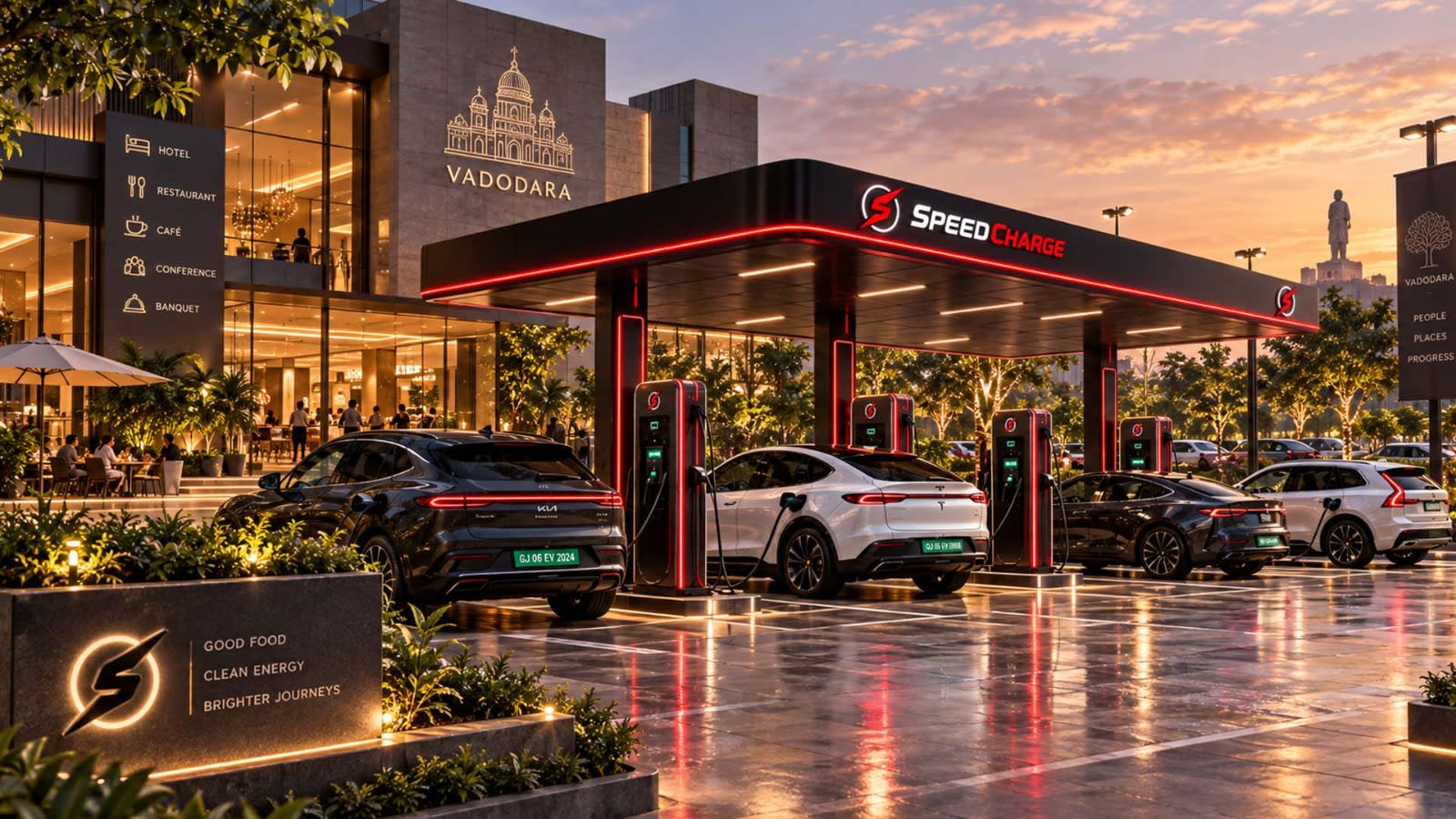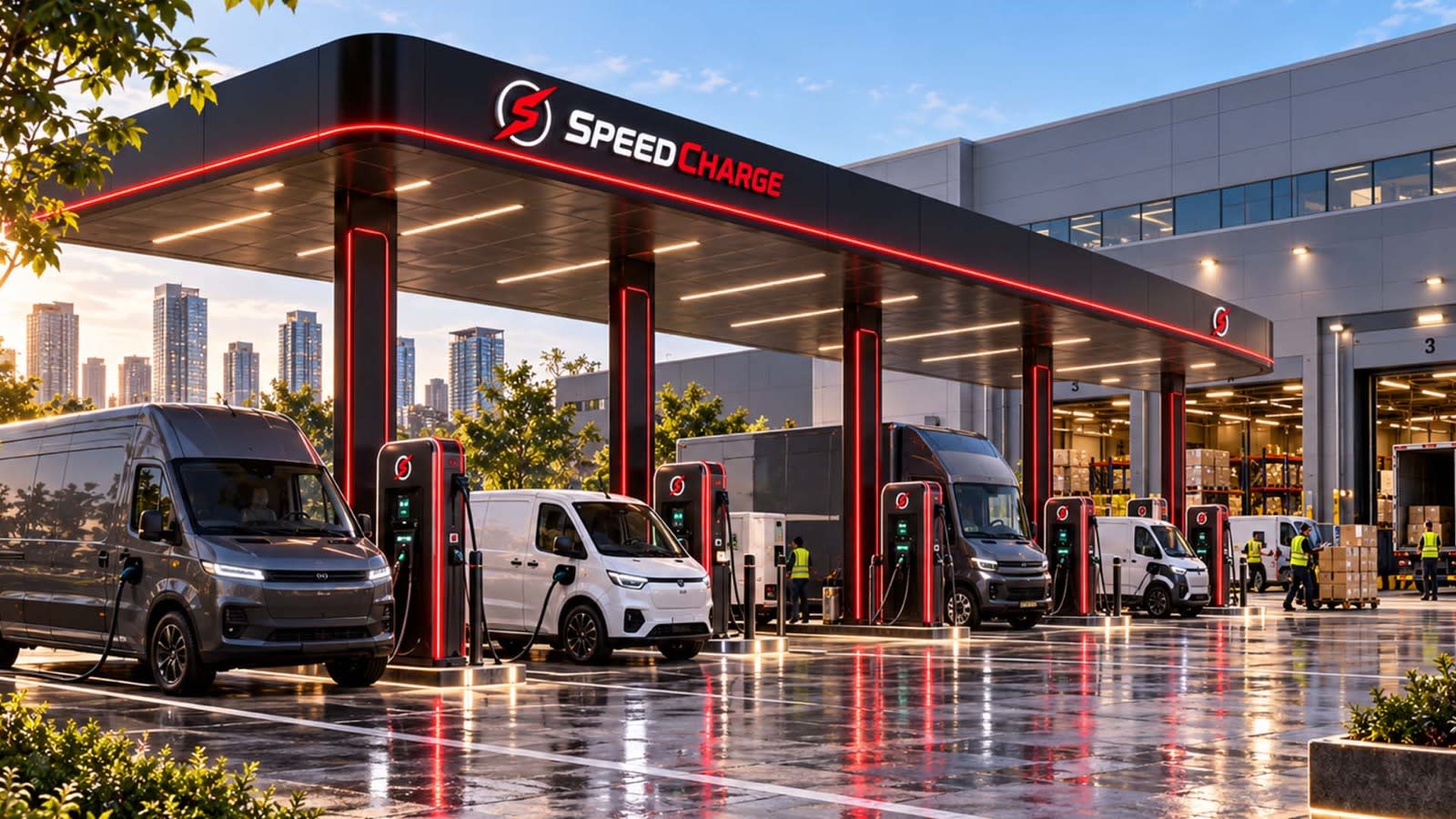
A charging station can have premium hardware, powerful software and professional branding and still struggle if it is installed on the wrong property.
That is why property selection should come before charger selection.
For an EV charging station franchise in Vadodara, the strongest property is not necessarily the plot with the highest traffic, the widest road or the cheapest rent. It is the property where charging demand, parking behaviour, electrical capacity, accessibility and commercial terms work together.
Vadodara requires a particularly property-led approach because its charging opportunities are spread across different mobility environments:
Dense urban areas
Industrial estates
Commercial corridors
Hotels
Hospitals
Shopping destinations
Office properties
Residential developments
Fleet depots
Petrol pumps
Highway-facing properties
Ahmedabad–Vadodara movement corridors
Each property type creates a different charging business.
A hotel may benefit from long dwell time. A taxi-oriented location may require fast turnaround. An industrial property may depend on predictable fleet demand. A highway property may need 24/7 access, amenities and DC fast charging.
The right question is therefore not:
“Where can we install a charger?”
It is:
“Where will vehicles have a reason to stop, enough time to charge, sufficient electrical capacity and a commercially sustainable property arrangement?”
The Five-Layer Property Test
Instead of judging a location only by road traffic, evaluate every candidate property through five layers:
Layer 1 — Demand: Who will charge here?
Layer 2 — Behaviour: How long will they stay?
Layer 3 — Electricity: What charging load can the property support?
Layer 4 — Physical Site: Can vehicles enter, park, charge and exit conveniently?
Layer 5 — Economics: Does the property cost make sense relative to realistic billable kWh?
If even one layer is fundamentally weak, a visually attractive site may still be a poor investment.
SpeedCharge's EV charging station site selection guide explains the broader framework for assessing charging demand, electrical feasibility, access, parking, competition, site tenure and expansion capacity.
Property Selection Should Start With a Customer
Before selecting a property for an EV charging station franchise in Vadodara, define the customer segment.
Possible customer groups include:
Private EV owners
Electric taxis
Delivery fleets
Corporate fleets
Hotel guests
Office employees
Apartment residents
Commercial three-wheelers
Industrial fleets
Intercity travellers
Different customers create different property requirements.
For example:
Customer | Natural Charging Location | Typical Dwell Pattern |
|---|---|---|
Private car owner | Mall/restaurant/public site | Short to medium |
Hotel guest | Hotel | Long/overnight |
Office employee | Workplace | Multi-hour |
Taxi | Route-based charging hub | Short |
Delivery fleet | Depot/warehouse | Scheduled |
Industrial fleet | Factory/depot | Scheduled |
Apartment resident | Residential parking | Overnight |
Intercity traveller | Highway property | Short |
Commercial 3W | Operational hub | Repeat |
Do not select the property and then try to invent the customer.
Identify the customer first.
The “Stop Reason” Test
One useful way to evaluate a charging property is to ask:
Why would an EV driver stop here even if the charger did not exist?
Strong answers might include:
They work here.
They live here.
They eat here.
They stay here overnight.
They shop here.
Their fleet returns here.
They wait here between trips.
They pass through and need a highway break.
Weak answer:
“Because the charger is here.”
Charging works particularly well when it is integrated into an existing parking behaviour.
This is why hotels, offices, shopping destinations, fleet depots and suitable highway amenities can be more interesting than an isolated roadside plot with high traffic.
Don't Confuse Traffic With Charging Demand
Suppose Property A sees 40,000 vehicles daily.
Property B sees only 8,000.
Property A has:
Difficult entry
No dedicated parking
High rent
Short customer dwell time
Limited electrical capacity
Property B has:
Easy access
Dedicated bays
Moderate rent
Repeat fleet traffic
Available power
Longer dwell time
Property B can potentially be the better charging site.
The useful metric is not:
Vehicles Passing Per Day
It is closer to:
Relevant EVs × Need to Charge × Probability of Stopping × Average kWh Purchased
This distinction prevents one of the most common charging-site mistakes: paying premium rent for traffic that cannot be converted into energy sales.
Vadodara's Industrial Property Opportunity
The industrial ecosystem gives an EV charging station franchise in Vadodara a different site-selection opportunity from a purely residential city market.
The official Gujarat Industrial Development Corporation property data identifies multiple industrial estates in the Vadodara region, including:
Makarpura
Nandesari
Ranoli
Por-Ramangamdi
Savli
Vaghodia
Dabhoi
GIDC also identifies the Halol–Savli industrial region with sectors including engineering, automobile ancillaries, engineering plastics, electrical and electronics.
These locations should not automatically be labelled profitable charging zones.
Instead, industrial properties should be investigated for repeat commercial demand.
Ask nearby businesses:
How many EVs operate in the fleet?
Are employees switching to EVs?
Are vendors using electric commercial vehicles?
Where do commercial EVs park?
What are shift timings?
How many kilometres do fleet vehicles travel daily?
Is overnight charging possible?
Are electric taxis serving employees?
Are delivery vehicles returning to the same hub?
Industrial charging can become particularly attractive when the property has an anchor customer rather than depending entirely on walk-in charging.
Create a Property Demand Radius
Do not analyse a charging site only at its gate.
Create a practical catchment around it.
Map:
Offices
Hotels
Housing societies
Industrial units
Warehouses
Shopping destinations
Hospitals
Taxi activity
Delivery hubs
Fleet depots
Fuel stations
Existing chargers
Then divide demand into:
Primary Demand
Customers already visiting the property.
Examples:
Hotel guests, office employees, residents.
Secondary Demand
Customers operating very close to the property.
Examples:
Nearby taxis, fleets or commercial establishments.
Pass-Through Demand
Drivers using the road or corridor.
The best properties can combine two or even all three demand categories.
The Dwell-Time Rule
Charging power should follow parking behaviour.
Think of property types like this:
Long Dwell
Examples:
Apartment
Office
Hotel
Potential approach:
Managed AC charging can often serve part of the requirement.
Medium Dwell
Examples:
Mall
Hospital
Restaurant cluster
Potential approach:
AC and/or appropriately sized DC charging.
Short Dwell
Examples:
Highway stop
Taxi hub
Fast-turnaround public site
Potential approach:
DC fast charging becomes more important.
SpeedCharge's AC vs DC charging guide for businesses explains how charger selection should be matched to customer dwell time and business use case.
A property that naturally holds a vehicle for four hours should not necessarily be designed like a highway fast-charging stop.
Electricity Capacity Can Change the Property Decision
A commercially attractive property can fail the technical test.
Before finalising an EV charging station franchise in Vadodara, verify:
Existing sanctioned load
Existing building consumption
Spare capacity
Transformer capacity
Proposed charger load
LT/HT requirement
Load enhancement
Electrical panel capacity
Cable route
Earthing
Metering
Protection
Future expansion
The national Ministry of Power Guidelines for Installation and Operation of Electric Vehicle Charging Infrastructure 2024 provide the current central framework for private, semi-public and public charging infrastructure.
Under the guidelines, a separate LT connection can be provided for EV charging stations up to 150 kW subject to the applicable framework and distribution-system feasibility.
That does not mean every property can immediately support 150 kW.
The actual site still needs technical assessment.
A Cheap Property Can Become an Expensive Site
Property rent is only one part of site economics.
Suppose:
Property A
Rent: Low
Grid upgrade: Major
Long cable run
Poor access
New transformer potentially required
Property B
Rent: Moderate
Existing electrical infrastructure: Strong
Short cable route
Easy access
Existing parking
Property B may require a higher monthly occupancy cost but lower total infrastructure CAPEX.
Therefore compare:
Property Cost + Electrical Upgrade Cost + Civil Cost + Access Cost
not simply:
Monthly Rent
This is particularly important for high-power DC charging.
Current Gujarat EV Electricity Tariff Matters
Vadodara projects should use the applicable current Gujarat Electricity Regulatory Commission tariff rather than an old EV-policy tariff.
The official GERC 2026 tariff schedules include dedicated EV charging categories across applicable Gujarat distribution licensees.
For example, current 2026 tariff schedules provide a dedicated LT-Electric Vehicle Charging Stations category for installations used exclusively for EV charging, while other consumers can charge EVs under their applicable regular category subject to the relevant tariff schedule.
Because the applicable distribution licensee and connection category can differ by property, the financial model should verify the exact current tariff for the proposed address before investment approval.
Never copy a tariff from another Gujarat city or distribution licensee without checking applicability.
The Parking Conversion Test
A property can have parking but still be unsuitable for charging.
Ask:
Can ordinary parking spaces actually become operational charging bays?
Check:
Ownership/control of bays
Dedicated EV parking rights
Entry and exit
Turning radius
Charger location
Cable reach
Vehicle charging-port position
Queueing
Non-EV blocking
Pedestrian movement
Bollard requirements
Drainage
Lighting
CCTV
Maintenance access
A charging bay is an operational asset, not just a painted parking rectangle.
Use the “One-Way Flow” Test
Imagine a customer arriving for the first time.
Can the driver:
See Entrance → Enter Easily → Find Charger → Park → Connect → Wait → Disconnect → Exit
without:
Reversing excessively
Crossing heavy traffic
Blocking another vehicle
Blocking property operations
Making a dangerous U-turn
Asking security where the charger is
If not, redesign the layout or reconsider the property.
Customer friction reduces repeat usage.
Property Visibility vs Property Accessibility
Visibility is useful.
Accessibility is more important.
A station visible from a major road but accessible only after:
A long U-turn
Narrow service lane
Restricted gate
Complicated parking entrance
can lose potential sessions.
When comparing two properties, physically drive both approaches from each traffic direction.
Do this during:
Morning
Afternoon
Evening
Weekend
A map cannot reveal every access problem.
Highway Properties Need Different Evaluation
A Vadodara highway-oriented property should not be evaluated like an office or apartment.
Highway customers generally value:
Fast charging
Easy entry/exit
24/7 access
Food
Washrooms
Lighting
Security
Multiple bays
Reliable uptime
A fuel station, restaurant, hotel or wayside property can potentially offer a stronger charging experience than vacant land because amenities already exist.
The Ministry of Power's national guidelines explicitly include charging infrastructure on highways and expressways within their scope.
But a highway location still needs actual EV traffic and competitive analysis.
Hotel Properties: Sell Time, Not Just Electricity
Hotels have an unusual charging advantage:
Customers already intend to park.
This creates a natural opportunity for destination charging.
Hotel-site questions include:
Average guest stay
Overnight parking
Number of parking bays
Guest EV share
Taxi demand
Highway/intercity guests
Restaurant footfall
Existing electrical capacity
A hotel may not require the same charging strategy as a taxi hub.
For overnight customers, slower charging can still provide significant energy before departure.
Hospitals Can Create Long Dwell—But Parking Is Critical
Hospitals can create long parking durations for:
Visitors
Staff
Doctors
Patient attendants
But hospital parking is often congested.
Before installing chargers, verify whether charging bays can remain dedicated without creating conflicts with essential parking demand.
The existence of long dwell time alone does not make a hospital property suitable.
Shopping Properties Need a Dwell-Time Study
Retail properties can combine:
Existing parking
Customer amenities
Food
Shopping
Natural waiting time
But actual dwell time should be measured.
If customers stay 30 minutes, charging architecture differs from a destination where customers stay three hours.
Property type is only the starting point.
Observed customer behaviour is the real input.
Fleet Depots: Visibility May Not Matter
A fleet depot can be commercially attractive even if almost no general public sees it.
Why?
Because the station can serve repeat vehicles.
For fleet properties, prioritise:
Daily fleet kWh
Charging windows
Number of vehicles
simultaneous charging
power availability
parking
expansion capacity
uptime
SpeedCharge's EV fleet charging guide explains how vehicle duty cycles, daily energy demand and charging windows affect infrastructure sizing.
This is an example of why charging-site selection should not be treated like traditional retail-site selection.
Create a Competitor Map Before Signing
Map charging stations within the property's realistic catchment.
Record:
Competitor Metric | What to Check |
|---|---|
Distance | How close is the station? |
Charger power | AC/DC and kW |
Connectors | Vehicle compatibility |
Bays | Simultaneous capacity |
Pricing | Customer charging price |
Access | Easy or difficult |
Operating hours | 24/7 or restricted |
Amenities | Food, washroom, waiting |
Reliability | Is it operational? |
Reviews | Repeated user problems |
Fleet use | Commercial demand present? |
Do not automatically reject a site because another charger exists nearby.
A busy competing charger may validate demand.
A better question is:
What customer problem is the existing station not solving?
Examples:
Queueing
Poor uptime
No fast charger
Restricted operating hours
No amenities
Difficult access
No fleet support
Your property needs a reason to win sessions.
The Property Economics Ratio
Instead of asking only whether rent is “high” or “low,” relate property cost to energy throughput.
One useful internal metric is:
Monthly Property Cost ÷ Monthly Billable kWh
Suppose:
Property A costs ₹80,000/month and sells 20,000 kWh.
Property cost per billable kWh:
₹4.00/kWh
Property B costs ₹40,000/month but sells only 5,000 kWh.
Property cost per billable kWh:
₹8.00/kWh
Property B is cheaper in absolute rent but more expensive relative to energy sold.
These numbers are hypothetical and only illustrate the method.
This approach forces investors to connect property expense with actual charging utilisation.
Test Rent Against Three Utilisation Scenarios
Before signing a lease, model:
Conservative Case
Charging adoption grows slowly.
Base Case
Demand develops broadly as expected.
Higher-Utilisation Case
Fleet/public demand grows strongly.
The property should not become financially unsustainable simply because the optimistic case fails to occur.
Never sign a high fixed-rent agreement based only on maximum charger utilisation.
Fixed Rent vs Revenue Share Property
A landowner arrangement can potentially use different commercial structures.
Fixed Rent
Predictable property expense.
Risk:
You pay even when charging utilisation is weak.
Property Revenue Share
Occupancy expense moves more closely with charging activity.
Risk:
Long-term upside is shared.
Hybrid Arrangement
A base amount plus variable component.
The correct structure depends on:
Property quality
Demand certainty
Agreement tenure
CAPEX
bargaining power
projected energy throughput
Property terms should support charging economics rather than simply securing the location.
Site Tenure Must Match Infrastructure Life
Charging stations involve fixed infrastructure.
This can include:
Charger foundations
Electrical panels
Cabling
transformer infrastructure
signage
civil work
software/network setup
Before committing CAPEX, verify:
Lease duration
renewal rights
early termination
rent escalation
equipment ownership
electrical-infrastructure ownership
relocation rights
restoration obligations
access rights
signage rights
A short or uncertain property agreement can create stranded-asset risk.
GIDC Property Requires Additional Due Diligence
If a candidate property is inside a GIDC estate, do not assume the occupant can automatically use it for any charging business structure.
The official GIDC property framework includes estate-specific allotment, property-use and transfer arrangements.
GIDC identifies estates such as Makarpura, Nandesari, Ranoli, Vaghodia, Por-Ramangamdi and Savli within the Vadodara region.
Before installing charging infrastructure on such property, verify:
Property allotment/lease conditions
Permitted use
commercial charging rights
third-party access
parking rights
electricity connection
construction/civil permissions
applicable GIDC approvals
Do not assume a property owner's verbal approval resolves every underlying land-use or allotment condition.
Future Expansion: The Empty Bay Has Value
When evaluating a property, consider what happens if demand doubles.
Can the site add:
Another charger?
Additional charging bays?
Higher electrical load?
Another transformer?
Additional cable routes?
Battery storage or solar integration where appropriate?
A property operating at full physical capacity from day one may restrict future growth.
Sometimes an unused parking bay or spare cable duct has strategic value.
Don't Overbuild on Day One
Future expansion is important, but installing every possible charger immediately can lock capital into underutilised infrastructure.
A better approach can be:
Design for Expansion → Install for Current Demand → Add Capacity When Utilisation Supports It
For example:
Reserve parking
Design cable routes
plan electrical panels
allow transformer expansion
prepare civil infrastructure
but deploy charger capacity according to realistic demand.
Technical Charger Compatibility
The official Bureau of Energy Efficiency EV Charging Infrastructure Specifications provides current charging-infrastructure specifications including CCS fast charging and Type-2 AC configurations.
The property assessment should identify the vehicle mix before charger procurement.
Ask:
Mostly passenger cars?
Taxis?
Commercial vehicles?
Two/three-wheelers?
Mixed fleet?
Hardware follows demand.
Not the other way around.
Property Red Flags
Reject or investigate carefully if a property has several of these issues:
No dedicated parking
Difficult entry
Unsafe exit
Frequent waterlogging
Very high fixed rent
Weak electrical infrastructure
Uncertain lease tenure
Restricted operating hours
No signage rights
No expansion space
Weak mobile connectivity
High nearby charger density with low demand
No identifiable EV customer
Long transformer/cable distance
Disputed ownership
Verbal-only property commitment
Parking controlled by another party
Restrictions on commercial activity
One serious red flag can outweigh several positive features.
The 100-Point Vadodara Property Scorecard
Instead of selecting sites emotionally, score them.
Property Factor | Maximum Score |
|---|---|
Verified charging demand | 20 |
Electrical feasibility | 15 |
Parking quality | 10 |
Entry and exit | 10 |
Dwell-time fit | 10 |
Property economics | 10 |
Fleet/anchor demand | 10 |
Site tenure | 5 |
Competition gap | 5 |
Expansion potential | 5 |
Total | 100 |
Suggested internal interpretation:
80–100: Strong candidate for detailed technical/commercial diligence
65–79: Potentially viable but weaknesses need resolution
50–64: High caution
Below 50: Usually investigate alternatives before committing CAPEX
This is a planning framework, not a guarantee of station profitability.
Conduct a 7-Day Property Test
Before signing a long lease, observe the candidate property for at least several representative periods.
Record:
EVs passing
EVs entering
Parking occupancy
Average dwell time
Taxi activity
commercial EV activity
peak traffic
access problems
nearby charger utilisation
Include:
Weekdays
Weekend
Morning
Afternoon
Evening
A short observation exercise can reveal problems that are invisible in a property brochure.
Speak to Five Nearby Businesses
Local interviews can reveal hidden demand.
Speak with:
Hotels
offices
fleet operators
warehouses
taxi drivers
delivery companies
apartment managers
Ask:
Where do EV drivers currently charge?
Do they face queues?
Would fleets use a charger here?
What time do vehicles normally park?
These conversations are not a substitute for data, but they can identify demand hypotheses worth testing.
Don't Sign Before Electrical Feasibility
For an EV charging station franchise in Vadodara, this should be a hard rule.
Before a long-term property commitment, obtain sufficient technical clarity on:
available load
connection category
transformer
cable route
panel
metering
load enhancement
civil requirements
indicative connection cost
likely implementation complexity
SpeedCharge's EV charging station setup guide covers the wider sequence from site feasibility and electrical planning through charger installation and commissioning.
Franchise Property Due Diligence
A franchise investor should verify property responsibilities separately from charger responsibilities.
Ask:
Who signs the property agreement?
Who pays rent?
Who pays security deposit?
Who bears rent escalation?
Who pays electricity?
Who owns the charger?
Who owns electrical infrastructure?
Who pays civil work?
Who obtains site permissions?
Who manages the landowner?
Who pays maintenance?
What happens if the property agreement ends?
Can the charger be relocated?
Who pays relocation cost?
SpeedCharge's EV charging franchise investor guide explains asset ownership, electricity cost, property expense, Revenue Share, maintenance and termination questions investors should verify before committing capital.
How SpeedCharge Evaluates Franchise Properties
For an eligible EV charging station franchise in Vadodara, SpeedCharge's current franchise process begins with the proposed property rather than immediately selling a fixed charger configuration.
The current process includes:
Property and location information
Site feasibility review
Access assessment
Electrical-capacity assessment
Charging-demand assessment
Charger configuration
Commercial proposal
Agreement and planning
Installation and testing
Network activation
Depending on the project, charger configuration can then be determined from the property's demand and technical feasibility.
Investors can review the SpeedCharge EV charging station franchise programme for the current process and franchise structure.
Property owners who prefer hosting infrastructure instead of investing in the charging asset can explore SpeedCharge location partnership opportunities.
Final Property Checklist
Before approving a Vadodara site, answer these questions.
Demand
Who is the customer?
How many relevant EVs are nearby?
Is there anchor fleet demand?
What is realistic daily kWh demand?
Behaviour
Why will customers stop?
How long will they stay?
When will they charge?
Electricity
What is the sanctioned load?
What spare capacity exists?
Is load enhancement required?
Is transformer work required?
What is the cable route?
Physical Site
Are dedicated bays available?
Is entry easy?
Is exit easy?
Is turning space sufficient?
Is drainage adequate?
Is the charger visible?
Is the site safe?
Competition
Which chargers already operate nearby?
What power do they offer?
Are they busy?
What problems do their users face?
Economics
What is monthly property cost?
What is complete site CAPEX?
What is expected billable kWh?
Does the conservative scenario work?
Legal
Who owns the property?
Is charging permitted?
Is the tenure sufficient?
Are access and parking rights documented?
What happens at termination?
Growth
Can more chargers be added?
Can electrical capacity expand?
Is additional parking available?
Only after these questions are answered should the final charger configuration and investment be approved.
Conclusion
Choosing property for an EV charging station franchise in Vadodara is fundamentally an exercise in matching real charging demand with the right physical and commercial infrastructure.
A famous location is not necessarily a strong charging location.
A cheap plot is not necessarily a low-cost charging site.
A high-traffic road does not automatically produce high energy sales.
The strongest property combines:
Verified EV Demand + Natural Dwell Time + Electrical Capacity + Easy Access + Dedicated Parking + Sustainable Property Cost + Secure Tenure + Expansion Potential
Vadodara's industrial estates, commercial properties, hotels, workplaces, fleet depots and highway-connected locations create different charging opportunities. Each should be evaluated according to the customer it can actually serve.
The final rule is simple:
Choose the customer first, the property second and the charger third.
That sequence is far more defensible than purchasing charging hardware first and then searching for somewhere to install it.
Frequently Asked Questions
1. What type of property is best for an EV charging station in Vadodara?
There is no universal best property. Hotels, offices, fleet depots, commercial properties, fuel stations, industrial sites and highway locations can all work when charging demand, electrical capacity, parking and property economics align.
2. Is high road traffic enough to select an EV charging property?
No. Relevant EV traffic, charging need, accessibility, dwell time and realistic billable energy matter more than total vehicle traffic alone.
3. Should I check electricity capacity before signing the property?
Yes. Electrical feasibility should be investigated before making a major long-term property commitment because transformer, load enhancement, panels and cabling can materially affect project cost.
4. Are industrial areas in Vadodara suitable for EV charging?
They can be worth investigating because Vadodara has industrial estates including Makarpura, Nandesari, Ranoli, Savli and Vaghodia. Actual viability depends on EV fleet demand, employee charging, electricity capacity and property conditions.
5. Is a hotel a good property for an EV charging station?
Hotels can be attractive because guests naturally have longer dwell times. The property still needs sufficient parking, electricity capacity and measurable EV demand.
6. How should I compare two EV charging properties?
Compare relevant EV demand, power availability, parking, access, dwell time, competition, property cost, site tenure, complete infrastructure CAPEX and expansion capacity rather than rent alone.
7. Is a highway-facing property always better?
No. Highway properties need easy entry and exit, fast-charging demand, amenities, parking, reliable electricity and suitable operating hours. Visibility alone is insufficient.
8. How long should an EV charging property lease be?
There is no universal lease period. The tenure should be commercially compatible with the project's CAPEX, expected payback economics, equipment life, renewal rights and termination provisions.
9. Should I install the maximum number of chargers the property can hold?
Not necessarily. Design for future expansion, but initial charger deployment should be supported by realistic demand and utilisation forecasts.
10. What should I check before finalising a Vadodara franchise property?
Verify customer demand, electrical feasibility, dedicated parking, access, property ownership, charging rights, lease tenure, competition, complete CAPEX, property economics, operating hours and future expansion capacity.