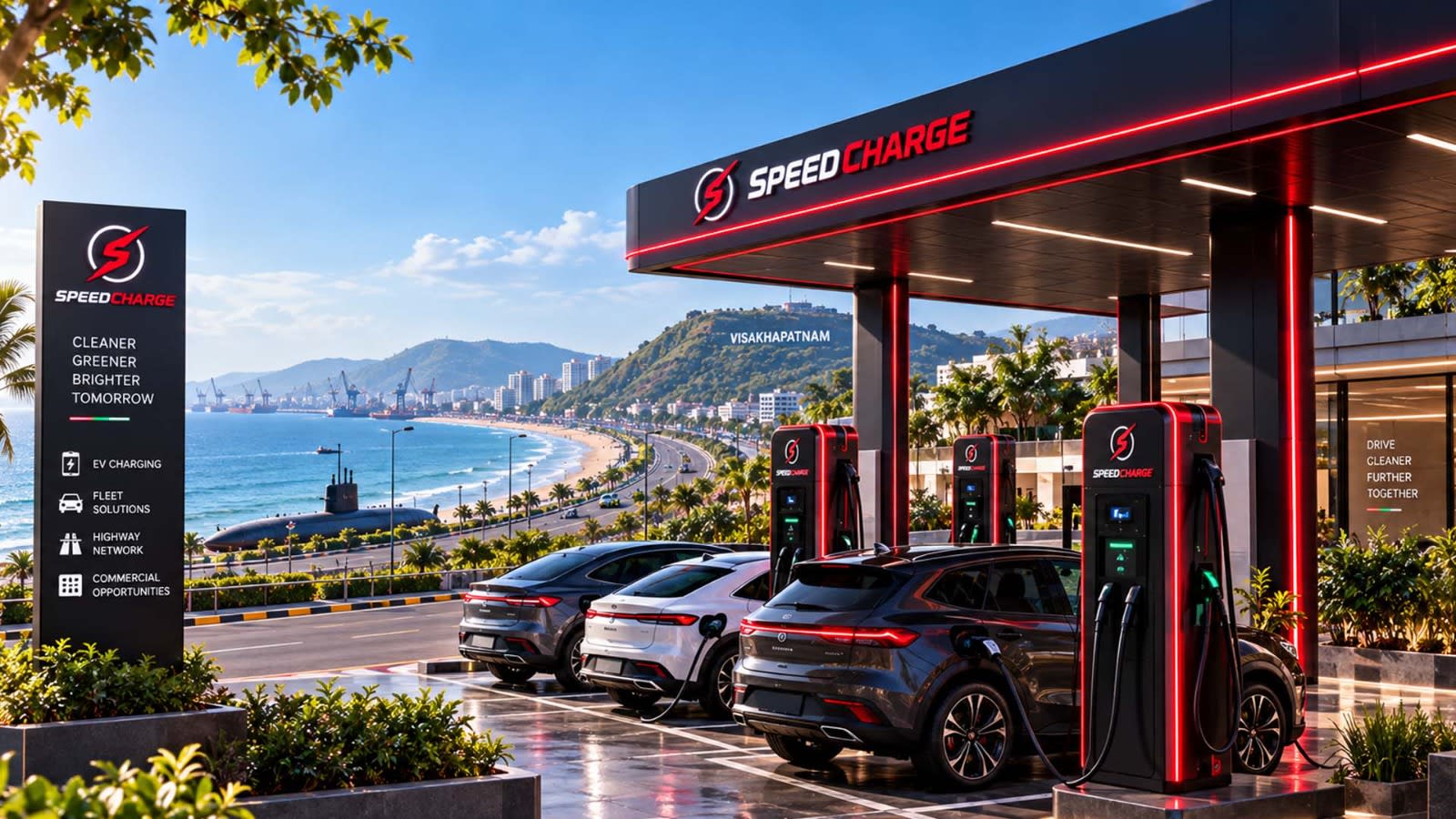
Visakhapatnam is not just another urban EV charging market. It is a port city with industrial estates, freight movement, commercial transport, tourism, airport connectivity and important highway corridors. That changes how investors should evaluate an EV charging station franchise in Visakhapatnam.
A conventional city charging station often depends on individual drivers discovering the charger and deciding to stop.
A fleet-focused station can work differently.
Instead of asking:
“How many vehicles pass this road?”
the investor can ask:
“Which electric vehicles repeatedly travel this route, how many kilometres do they cover, where do they stop, and how many kWh do they need every day?”
That shift from traffic counting to energy-demand mapping is the central idea of this guide.
For Visakhapatnam, opportunities can potentially emerge from:
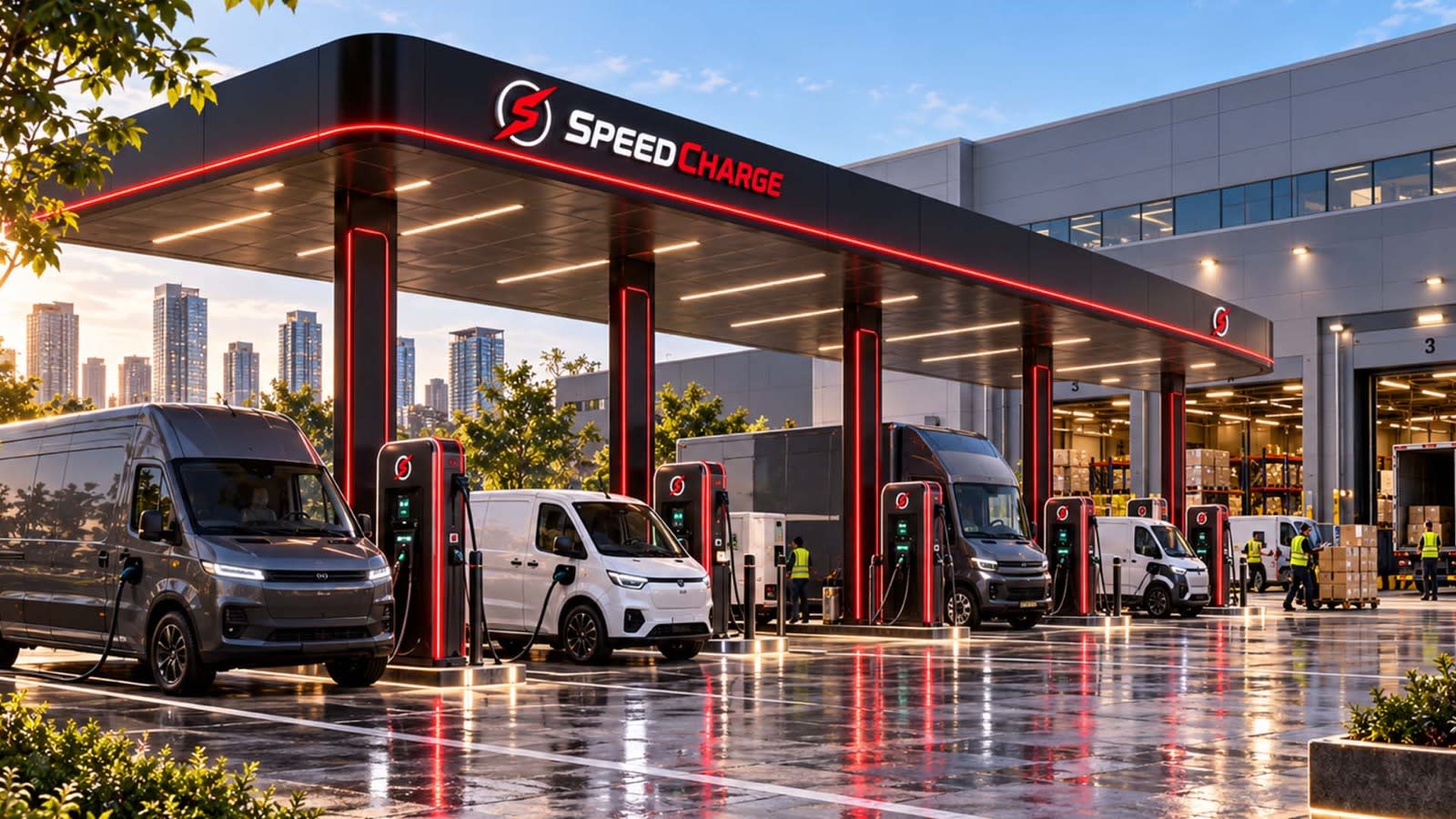
Logistics fleets
Last-mile delivery vehicles
Electric taxis
Corporate cabs
Employee transportation
Commercial three-wheelers
Port-linked mobility
Industrial fleets
Hotel and tourism fleets
Airport transfer vehicles
Intercity commercial EVs
The strongest fleet-charging business may therefore be located where vehicles naturally stop, park, load, unload or return—not necessarily at the city's most expensive commercial address.
Why Visakhapatnam Needs a Different EV Charging Strategy
For an investor evaluating an EV charging station franchise in Visakhapatnam, the city's economic structure matters as much as its population.
Visakhapatnam combines several mobility ecosystems:
Port economy: Freight, logistics, warehousing and supporting commercial activity.
Industrial economy: Industrial estates and manufacturing-linked vehicle movement.
Urban economy: Private cars, taxis, delivery vehicles and employee transportation.
Tourism economy: Hotels, tourist transport and destination traffic.
Regional mobility: NH-16 and movement toward Anakapalli and other regional destinations.
These segments do not charge in the same way.
A tourist may want a charger while staying at a hotel.
A taxi driver may need a fast 20–40 minute charging stop.
A delivery fleet may prefer scheduled charging between shifts.
A depot-based commercial fleet may want several vehicles charging simultaneously during predictable downtime.
Therefore, one charger configuration cannot be assumed to fit every Visakhapatnam site.
Start With an Energy Map, Not a Location Map
Most charging-site analysis starts with a map of roads.
Fleet charging should start with a map of energy demand.
Identify:
Where vehicles begin their shifts
Where they end their shifts
Daily kilometres travelled
Battery capacity
Energy consumed per day
Available charging window
Existing charging behaviour
Route predictability
Parking duration
Number of vehicles simultaneously parked
Suppose Fleet A operates 30 electric vehicles.
If each vehicle requires an average of 20 kWh of external charging per operational day, the theoretical fleet energy requirement is:
30 vehicles × 20 kWh = 600 kWh/day
That does not mean a station will automatically sell 600 kWh daily.
Some vehicles may charge elsewhere, some may not operate every day, and energy consumption varies.
But this approach provides a far more useful starting point than simply counting passing vehicles.
Visakhapatnam Port and Logistics Ecosystem
The commercial case for an EV charging station franchise in Visakhapatnam becomes particularly interesting when charging is analysed alongside the city's port and logistics ecosystem.
Visakhapatnam Port is a major physical anchor for the city's freight economy.
The official Visakhapatnam Port Authority provides information about the port's infrastructure, services and institutional ecosystem.
For charging investors, however, being close to the port is not enough.
The relevant questions are:
Which fleets operating nearby are electrifying?
What vehicle classes are becoming electric?
Where do these vehicles wait?
Where are their depots?
How many kilometres do they travel?
What is their turnaround requirement?
Can the property accommodate commercial vehicles?
Is sufficient electrical capacity available?
Port activity can create a commercial ecosystem around logistics, but charging demand must still be proven vehicle by vehicle or fleet by fleet.
Fleet Charging Is Different From Public Charging
This distinction is fundamental.
Factor | Public Charging | Fleet Charging |
|---|---|---|
Customer | Individual EV driver | Fleet/operator |
Demand | Less predictable | Potentially scheduled |
Site choice | Visibility important | Route/depot proximity important |
Parking | Customer convenience | Operational necessity |
Charging window | Customer-controlled | Fleet-schedule controlled |
Energy demand | Session based | Fleet-duty-cycle based |
Pricing sensitivity | Driver dependent | Contract economics |
Charger design | General vehicle mix | Fleet-specific |
Utilisation strategy | Attract more drivers | Serve repeat vehicles |
Expansion | Demand-led | Fleet-growth-led |
A public charger tries to attract sessions.
A fleet charging site tries to reliably deliver required energy within the available operational window.
That difference should influence everything from land selection to charger power.
The Fleet Charging Triangle
A useful Visakhapatnam fleet-site framework is:
1. Energy Required
How many kWh does the fleet require?
2. Time Available
How many hours are the vehicles parked?
3. Power Available
How much electrical capacity can the property support?
These three variables determine the infrastructure.
For example, a vehicle needing 30 kWh with eight hours of overnight parking has a very different charging requirement from a taxi needing similar energy during a short mid-shift stop.
Same energy. Different charging architecture.
Which Commercial Fleets Could Create Charging Demand?
Potential demand segments include:
Last-Mile Delivery Fleets
E-commerce, grocery, food and parcel-delivery operations can generate repeat vehicle movements.
Their charging advantage is predictability.
If vehicles return to the same hub after a shift, charging can potentially be scheduled around operations.
Electric Taxi Fleets
Taxi economics are more sensitive to charging time.
A taxi parked at a slow charger is not earning passenger revenue.
Therefore, taxi charging generally places greater emphasis on:
DC charging
Reliability
Shorter queues
24/7 access
Convenient route location
Corporate Cabs
Employee transportation fleets often operate around predictable office shifts.
This can create defined charging windows between:
Morning pickup
Office hours
Evening drop
Overnight operations
Electric Three-Wheelers
Commercial three-wheelers can have high daily utilisation and repeat routes.
Their charging needs should be assessed separately from passenger cars because battery sizes, connectors, parking and operating economics differ.
Industrial Fleets
Industrial operators may gradually electrify:
Internal mobility
Employee transport
Light commercial movement
Vendor vehicles
Local distribution
Industrial charging often benefits from controlled parking and predictable vehicle schedules.
Hotel and Tourism Fleets
Visakhapatnam's hospitality and tourism ecosystem can support:
Hotel taxis
Airport transfers
Tourist vehicles
Guest charging
These sites may combine commercial fleet demand with destination charging.
Depot Charging vs Opportunity Charging
Investors should understand two different fleet strategies.
Depot Charging
Vehicles charge where they are normally parked.
Examples:
Logistics warehouse
Taxi depot
Corporate fleet yard
Delivery hub
Industrial facility
Advantages can include:
Predictable vehicle access
Controlled parking
Scheduled charging
Easier fleet monitoring
Opportunity Charging
Vehicles charge during natural operational breaks.
Examples:
Driver rest stop
Loading/unloading downtime
Meal break
Airport waiting period
Route turnaround
This can reduce the need for long depot charging windows but may require higher charger power.
The correct model depends on vehicle operations.
A Better Way to Select Visakhapatnam Locations
Instead of publishing a generic “Top 10 areas” list, evaluate location archetypes.
For an EV charging station franchise in Visakhapatnam, the following archetypes are more useful than neighbourhood popularity alone.
Port-Linked Logistics Zone
Potential use:
Logistics vehicles
Commercial fleets
Supporting transport operations
What matters:
Commercial EV penetration
Truck/LCV access
Power availability
Fleet parking
Route proximity
Industrial Corridor
Potential areas to investigate include industrial ecosystems around Gajuwaka and other industrial clusters.
What matters:
Anchor fleet
Shift patterns
Industrial electricity infrastructure
Vehicle parking
Commercial access
NH-16 Corridor Property
Potential use:
Intercity EVs
Commercial vehicles
Taxis
Logistics fleets
What matters:
Direct road access
DC fast charging
24/7 operation
Food and washrooms
Safe parking
Visibility
Anakapalli-Linked Corridor
Potential use:
Regional commercial movement
Logistics
Passenger EVs
Intercity taxis
What matters:
Route-based demand
Existing chargers
fleet movement
Electrical capacity
Airport-Linked Site
Potential use:
Taxis
Hotel vehicles
Corporate cabs
Private EVs
What matters:
Fast turnaround
24/7 access
waiting space
route convenience
Hotel or Resort
Potential use:
Destination charging
Guest vehicles
Hotel fleets
Tourism taxis
What matters:
Natural dwell time
parking
overnight charging
guest demand
Fleet Depot
Potential use:
Dedicated commercial charging
What matters:
Fleet contract
predictable kWh
electrical capacity
charging window
expansion space
The correct property is the one that solves a real charging requirement.
Don't Ask “How Many Chargers?” First
This is one of the most common infrastructure-planning mistakes.
Instead, calculate:
Daily Fleet Energy Requirement
then:
Available Charging Window
then:
Required Charging Capacity
Consider a simplified hypothetical example.
A delivery fleet has:
20 EVs
25 kWh average recharge requirement
10-hour overnight charging window
Daily energy requirement:
20 × 25 = 500 kWh
Ignoring losses and operational complexity for illustration, the average charging power required across the 10-hour window would be:
500 ÷ 10 = 50 kW
That does not mean one 50 kW charger is automatically the correct solution.
Vehicles need individual connectors, charging schedules, contingency capacity and operational flexibility.
But it shows why charger selection should begin with energy and time, not a sales brochure.
Simultaneous Charging Changes Infrastructure Cost
Imagine 20 vehicles need charging overnight.
Charging all 20 simultaneously can require substantially more connection capacity than intelligently staggering sessions.
This is where:
Smart charging
Load management
Charging schedules
Power sharing
Fleet software
can become commercially valuable.
The goal is not always to provide maximum power to every vehicle.
The goal is:
Every vehicle receives the energy it needs before its next departure.
This can reduce unnecessary upstream electrical investment.
Electricity Infrastructure in Andhra Pradesh
Commercial fleet charging can create significant electrical demand.
Before committing to a property, verify:
Existing sanctioned load
Spare electrical capacity
Transformer capacity
LT/HT supply
Proposed charging load
Number of simultaneous chargers
Cable route
Panel requirements
Earthing
Protection
Metering
Future expansion
Andhra Pradesh's electricity regulator maintains the official APERC tariff orders, which should be checked for the current applicable EV charging tariff and conditions.
APERC has also incorporated a framework for Time-of-Day and dynamic tariff mechanisms for Charge Point Operators, with the applicable tariff to be determined through Retail Supply Tariff Orders.
This makes charging schedules increasingly relevant to fleet economics.
Why Time-of-Day Charging Can Matter to Fleets
Public charging demand is largely controlled by customers.
Fleet charging offers more scheduling flexibility.
If vehicles have predictable downtime, charging-management software can potentially schedule energy delivery around:
Departure deadlines
Available grid capacity
Charger availability
electricity tariff periods
battery state of charge
This turns software into an operational tool rather than simply a payment interface.
A fleet charging station should therefore evaluate whether the backend supports:
Vehicle prioritisation
Charger scheduling
Power sharing
Remote monitoring
Energy reporting
Fault alerts
Driver authentication
Fleet-level analytics
Andhra Pradesh EV Charging Policy Opportunity
Andhra Pradesh's current EV charging framework provides a more specific infrastructure opportunity than many generic EV-business articles suggest.
The official Andhra Pradesh Integrated Clean Energy Policy 2024 includes provisions for EV Charging Infrastructure projects.
The policy provides for a 25% capital subsidy on the cost of eligible public charging stations, excluding land, electricity connection, DTR and civil costs, subject to a maximum of ₹3 lakh per PCS for the first 5,000 eligible public charging stations over the applicable policy period.
Indicative deployment categories include:
State corporations
District headquarters
Private commercial buildings
Large apartments/societies
State highways
National highways
Municipalities
Towns
The policy also provides for government/public sites to be offered to selected private CPOs through competitive processes under the applicable framework.
However:
Policy provision does not equal automatic subsidy entitlement.
Before including any subsidy in an investment model, verify:
Project eligibility
Current availability
CPO eligibility
Station category
Application process
Approval
commissioning requirements
applicable operational guidelines
Never build project viability around an incentive that has not been formally approved.
PM E-DRIVE and Port-Linked Charging
The national PM E-DRIVE EV Public Charging Station operational guidelines add another relevant dimension.
Under the programme, eligible location categories include infrastructure such as:
Public-sector ports
Airports operated by AAI
Railway stations
Bus stations
Public-sector OMC retail outlets
NHAI/state-controlled toll plazas
Highway wayside amenities
The programme's FAQ also states that proposed charging locations should undergo a feasibility study covering location selection, charger configuration and charger rating.
This reinforces an important point:
Infrastructure support follows feasibility—not the other way around.
A private franchise investor should not assume PM E-DRIVE support merely because a property is near a port or highway.
What Charger Configuration Works for Fleets?
There is no universal answer.
Fleet Type | Charging Window | Likely Priority |
|---|---|---|
Delivery 2W/3W | Long depot dwell | Managed lower-power charging |
Corporate cars | Overnight/workday | AC or mixed |
Electric taxis | Short breaks | DC fast |
Light commercial fleet | Shift dependent | DC / managed charging |
Hotel fleet | Overnight + daytime | AC + selected DC |
Intercity taxis | Short turnaround | DC fast |
Logistics fleet | Duty-cycle dependent | Fleet-specific DC |
Public + fleet hybrid | Mixed | Multiple charger types |
SpeedCharge's AC vs DC charging guide explains how charger type should be matched with dwell time and vehicle use rather than selected only by rated power.
Hybrid Public + Fleet Charging
A particularly interesting model for Visakhapatnam is a hybrid site.
Imagine a property with:
Contracted fleet demand during defined hours
Public access during unused periods
The fleet provides an utilisation anchor.
Public drivers provide additional sessions.
Conceptually:
Anchor Fleet Demand + Public Charging Demand = Broader Asset Utilisation
This model requires careful operational planning because fleet vehicles and public customers can compete for the same chargers during peak periods.
The backend should support:
Reservations or fleet priority
Access control
Different tariffs
Driver identification
utilisation reporting
charging schedules
Anchor Demand Before CAPEX
One of the strongest ways to de-risk fleet charging is to identify potential customers before building.
Speak with:
Logistics companies
Taxi operators
Delivery companies
Hotels
Corporate transport operators
Industrial businesses
Warehousing companies
Commercial vehicle operators
Ask:
How many EVs do you operate today?
How many will you operate in 12–24 months?
Where do they park?
What is the daily route?
What is average daily distance?
How do they charge today?
What problems exist?
How much downtime is available?
What charging speed is required?
A signed commercial arrangement is more valuable than a vague assumption that “EV traffic will grow.”
Fleet Charging Economics: Think in kWh per Vehicle
For an EV charging station franchise in Visakhapatnam, fleet economics should be modelled from energy throughput rather than generic monthly footfall.
A useful framework is:
Daily Fleet kWh = Active EVs × Average Daily Charging Requirement
Then:
Monthly Billable kWh = Daily Billable kWh × Operating Days
Then:
Gross Charging Revenue = Billable kWh × Effective Customer Charging Price
Gross revenue is not profit.
Expenses can include:
Electricity
Property
Maintenance
Software
Connectivity
Payment processing
Revenue Share
Staffing
Financing
Insurance
Taxes
Downtime
The financial model should include at least:
Conservative utilisation
Base utilisation
Higher-utilisation case
The Utilisation Heatmap
Instead of only forecasting monthly sessions, create a 24-hour charging heatmap.
Example:
Time Window | Fleet Activity | Charging Opportunity |
|---|---|---|
12 AM–5 AM | Vehicles parked | Very High |
5 AM–9 AM | Morning deployment | Low |
9 AM–12 PM | Operational | Low |
12 PM–3 PM | Partial return/breaks | Medium |
3 PM–7 PM | Operational | Low |
7 PM–10 PM | Fleet return | High |
10 PM–12 AM | Depot charging | Very High |
Actual schedules will differ by fleet.
The purpose is to identify when the charger earns, not simply whether vehicles exist.
Queueing Can Destroy Fleet Productivity
Fleet operators care about charger availability because waiting vehicles lose productive time.
Suppose five taxis arrive simultaneously but only one charger is available.
Even a powerful charger may create a queue.
Therefore assess:
Vehicles arriving per hour
Average charging duration
Number of connectors
Simultaneous charging capability
Charger reliability
Peak return times
Sometimes two moderately powered charging points can offer better fleet resilience than one larger single-point dependency.
Uptime Has a Different Meaning for Fleets
For public charging, downtime causes customer frustration and lost sessions.
For fleets, downtime can affect the next day's operations.
A charger failure can mean:
Vehicle not dispatched
Route reassignment
Emergency public charging
Driver delays
Lost trips
Operational penalties
Fleet customers therefore value:
Remote diagnostics
Preventive maintenance
Rapid fault response
Spare-parts availability
Redundancy
Real-time charger status
Uptime should be treated as an economic variable.
Should a Fleet Site Be Open 24/7?
Not always.
A private depot may only need fleet access.
A hybrid public/fleet station can benefit from broader operating hours.
A highway or taxi-oriented station may need 24/7 availability.
Operating hours affect:
Staffing
Security
Customer access
lighting
amenities
property agreement
operating cost
Match operating hours to actual charging demand.
Coastal Conditions Should Influence Hardware Planning
Visakhapatnam's coastal environment deserves more attention than it receives in generic charging guides.
Site engineering should consider:
Humidity
Salt-laden air exposure
Heavy rain
Drainage
Equipment enclosure
corrosion protection
cable management
foundation design
outdoor electrical protection
For exposed coastal or industrial sites, confirm the charger's environmental ratings and manufacturer installation requirements.
This is especially important for equipment expected to operate outdoors for many years.
Cyclone and Extreme-Weather Planning
Visakhapatnam also has exposure to severe coastal weather.
A commercial charging hub should therefore consider:
Equipment anchoring
Water drainage
canopy design
signage stability
electrical isolation
emergency shutdown
transformer placement
flood exposure
post-event inspection procedures
These are engineering and operational-resilience considerations, not just compliance items.
A charger that cannot operate reliably through local environmental conditions is a weak commercial asset.
Property Requirements for Commercial Fleets
Fleet sites need more space than the charger footprint alone.
Evaluate:
Vehicle entry
Vehicle exit
turning radius
charging bays
staging area
queueing
charger protection
transformer/electrical equipment
driver waiting area
maintenance access
future expansion
Commercial vehicles may require wider manoeuvring areas than passenger cars.
Do not design a fleet charging station using passenger-car parking assumptions.
Site Tenure Matters More for Infrastructure Businesses
Charging infrastructure is expensive to relocate.
Before investing, verify:
Property ownership
Lease tenure
renewal rights
charging rights
parking rights
electrical infrastructure rights
access rights
signage
operating hours
equipment ownership
termination terms
A short lease can be incompatible with long-lived charging infrastructure.
Revenue Contract vs Public Walk-In Revenue
A fleet-focused project can potentially use different commercial structures.
Public Charging Revenue
Revenue depends on individual charging sessions.
Fleet Contract
The operator may negotiate commercial charging terms with a fleet.
Minimum Energy Commitment
A commercial arrangement may include an agreed energy-volume structure where legally and commercially appropriate.
Dedicated Infrastructure
A fleet can receive dedicated charging capacity.
Hybrid Model
Fleet and public users share infrastructure.
Each structure has different utilisation and counterparty risks.
Don't Confuse Fleet Size With Charging Demand
A company operating 100 EVs is not automatically a better customer than one operating 25 EVs.
Ask:
How much external charging is required?
Where are vehicles charged today?
Can they charge at home?
Are they depot-based?
What is daily energy consumption?
How many vehicles need simultaneous charging?
The relevant commercial metric is addressable kWh, not simply vehicle count.
Franchise Due Diligence for a Fleet-Focused Site
Before committing to an EV charging station franchise in Visakhapatnam, evaluate both the franchise contract and the fleet opportunity.
Verify:
Who owns the charger?
Who owns upstream electrical infrastructure?
Who pays electricity?
Who secures fleet customers?
Who negotiates fleet tariffs?
Who operates the chargers?
Who handles billing?
Who maintains the equipment?
How is Revenue Share calculated?
Who bears downtime risk?
Are fleet contracts assignable?
What happens if an anchor fleet leaves?
Who funds expansion?
What happens at agreement termination?
A fleet charging business should not depend on a single customer without understanding concentration risk.
SpeedCharge's EV charging franchise investor guide provides a broader framework for evaluating FOCO structures, asset ownership, site feasibility, Revenue Share and investor risk.
SpeedCharge's Fleet and Commercial Charging Approach
SpeedCharge provides commercial charging solutions for:
Delivery fleets
Corporate cabs
Logistics operators
Commercial mobility
Offices
Hotels
Commercial properties
The SpeedCharge business and fleet partnership programme includes dedicated fleet infrastructure and high-speed DC charging solutions for commercial operators.
For franchise investors, SpeedCharge uses a FOCO structure in which the investor owns the applicable charging asset while SpeedCharge manages defined station operations under the executed agreement.
Operational functions can include:
Charging software
Remote monitoring
Driver billing
Customer support
Maintenance coordination
Network visibility
Settlement reporting
The applicable commercial terms should always be verified in the project proposal and executed agreement.
How to Build a Fleet-Focused Charging Project
Step 1: Identify Fleet Segments
List the commercial EV operators within the practical catchment.
Step 2: Interview Operators
Collect actual vehicle and charging data.
Step 3: Build Daily Energy Profiles
Estimate kWh required by vehicle and by fleet.
Step 4: Map Routes and Depots
Find natural charging locations.
Step 5: Identify Charging Windows
Determine when vehicles can remain connected.
Step 6: Complete Electrical Feasibility
Check load, transformer, panels and future capacity.
Step 7: Design Charger Configuration
Match power with energy and time requirements.
Step 8: Analyse Public-Charging Upside
Determine whether unused capacity can serve public EVs.
Step 9: Model Economics
Calculate CAPEX, OPEX, utilisation and sensitivity.
Step 10: Secure Commercial Demand
Where possible, establish fleet relationships before major CAPEX.
Step 11: Commission and Measure
Track actual energy throughput against projections.
Step 12: Expand Only When Demand Supports It
Add chargers based on utilisation data rather than speculation.
SpeedCharge's EV fleet charging guide provides additional guidance on duty cycles, charging windows, depot infrastructure and charger sizing.
Metrics to Track After Launch
A fleet-oriented station should monitor more than monthly revenue.
Track:
KPI | Why It Matters |
|---|---|
kWh/day | Measures energy throughput |
kWh/charger | Measures asset productivity |
kWh/fleet | Measures customer contribution |
Sessions/day | Measures activity |
Average kWh/session | Shows charging behaviour |
Peak simultaneous demand | Helps power planning |
Charger utilisation | Measures asset usage |
Queue time | Measures fleet productivity |
Uptime | Measures reliability |
Failed sessions | Identifies technical issues |
Energy cost/kWh | Tracks input cost |
Revenue/kWh | Tracks commercial yield |
Fleet concentration | Shows customer dependency |
This creates a much stronger operational dashboard than simply tracking the number of app sessions.
When Should You Add Another Charger?
Expansion should be triggered by evidence.
Possible signals include:
Consistent high utilisation
Frequent queueing
Fleet growth
new fleet contract
repeated lost charging sessions
insufficient overnight charging capacity
customer demand exceeding available connectors
Do not add another charger merely because physical space exists.
The additional asset should have a clear utilisation case.
Public + Fleet Site Example
Consider a hypothetical Visakhapatnam property near a commercial corridor.
The site serves:
15 delivery EVs overnight
corporate cabs during afternoon downtime
public cars during evenings
Instead of viewing these as three separate businesses, the site can potentially build a day-long utilisation profile.
Night: Delivery fleet
Afternoon: Corporate fleet
Evening: Public users
This is potentially stronger than a station dependent on only one demand period.
The goal is to improve asset utilisation across the day.
Key Risks Investors Should Model
Fleet Electrification Happens Slowly
Do not assume an operator will electrify its entire fleet immediately.
Anchor Customer Leaves
Customer concentration can create utilisation risk.
Electrical Upgrade Cost
Transformer and grid work can materially change CAPEX.
Charger Oversizing
Excess power capacity can remain unused.
Charger Undersizing
Insufficient capacity can create queues and operational delays.
Property Tenure
Short leases can create asset-relocation risk.
Competition
Other CPOs may target the same fleet or corridor.
Downtime
Fleet charging is operationally sensitive to reliability.
Policy Assumptions
Never treat an unapproved subsidy as confirmed project funding.
Technology Changes
Vehicle charging capability and fleet requirements can evolve over the investment period.
Is Visakhapatnam a Strong Market for Fleet Charging?
Visakhapatnam has characteristics that justify serious site-level investigation:
Major port ecosystem
Industrial activity
Logistics movement
NH-16 connectivity
Airport traffic
Tourism
Corporate mobility
Delivery fleets
Regional commercial movement
Andhra Pradesh charging-infrastructure policy support
But these characteristics do not prove that every property will generate attractive returns.
The investment case should be built from:
Vehicles → Daily Kilometres → Energy Required → Charging Window → Charger Capacity → Site Power → Billable kWh
That is more defensible than starting with a charger and hoping demand appears later.
How SpeedCharge Can Support a Visakhapatnam Project
Investors interested in commercial or fleet-oriented infrastructure can use SpeedCharge's feasibility process to assess:
Proposed property
Fleet opportunity
Electrical capacity
charger configuration
parking
access
civil requirements
installation
software
operations
The SpeedCharge EV charging station franchise programme explains the current franchise structure and site-feasibility process.
Property owners who want to host infrastructure instead of owning the charging asset can explore SpeedCharge location partnership opportunities.
Conclusion
A successful EV charging station franchise in Visakhapatnam does not have to depend entirely on random public charging sessions.
The city's port, logistics, industrial, airport and commercial mobility ecosystems create an opportunity to think differently: identify repeat vehicles first, quantify their energy requirement, understand their charging windows and then build infrastructure around measurable demand.
For a fleet-oriented project, the strongest sequence is:
Identify Fleet → Measure Daily kWh → Map Routes → Find Charging Window → Verify Power → Configure Chargers → Secure Demand → Build → Measure → Expand
The key question is not:
“How much traffic does this road have?”
It is:
“How many commercially useful kWh can this site reliably deliver every day?”
That is the metric that turns a charging location into an infrastructure business.
Frequently Asked Questions
1. Is Visakhapatnam suitable for a fleet EV charging business?
Visakhapatnam has port, logistics, industrial, taxi, delivery, tourism and regional-mobility use cases that justify fleet-charging feasibility studies. Actual viability depends on individual fleet demand, electrical capacity and site economics.
2. Which fleets can use commercial EV charging in Visakhapatnam?
Potential users include electric taxis, delivery vehicles, corporate cabs, commercial three-wheelers, logistics fleets, hotel vehicles and other commercial EV operators.
3. Is a port-side location automatically good for EV charging?
No. Proximity to the port is useful only if relevant electric fleets operate within the site's practical catchment and can conveniently access and use the chargers.
4. Is depot charging better than public charging?
Neither is universally better. Depot charging can provide predictable fleet demand, while public charging can diversify customers. A hybrid model may work where fleet and public demand occur at different times.
5. How do I calculate charger capacity for an EV fleet?
Start with the fleet's daily kWh requirement and available charging window. Then consider simultaneous vehicle demand, connectors, redundancy, charging losses and future growth before final engineering design.
6. Does Andhra Pradesh offer support for public EV charging stations?
The state's current charging policy provides a capital-subsidy framework for eligible public charging stations, subject to project category, eligibility, limits, approvals and applicable operational conditions. It should not be treated as an automatic subsidy.
7. What electricity tariff applies to EV charging in Andhra Pradesh?
APERC determines EV charging tariffs through its Retail Supply Tariff Orders. Investors should use the latest applicable FY 2026–27 order and relevant DISCOM conditions when preparing project economics.
8. Why is charger uptime more important for fleets?
A charger failure can prevent commercial vehicles from beginning their next route or shift, creating operational losses beyond the charging revenue lost during downtime.
9. Can one charging station serve both fleets and public EV users?
Yes, where site design, charger capacity and software support both customer types. Fleet priority, access control, pricing and peak-demand management should be planned carefully.
10. What should I verify before investing in fleet charging infrastructure?
Verify addressable fleet kWh, vehicle schedules, charging windows, site power, transformer capacity, parking, property tenure, charger configuration, CAPEX, electricity tariff, competition, uptime support and franchise responsibilities.