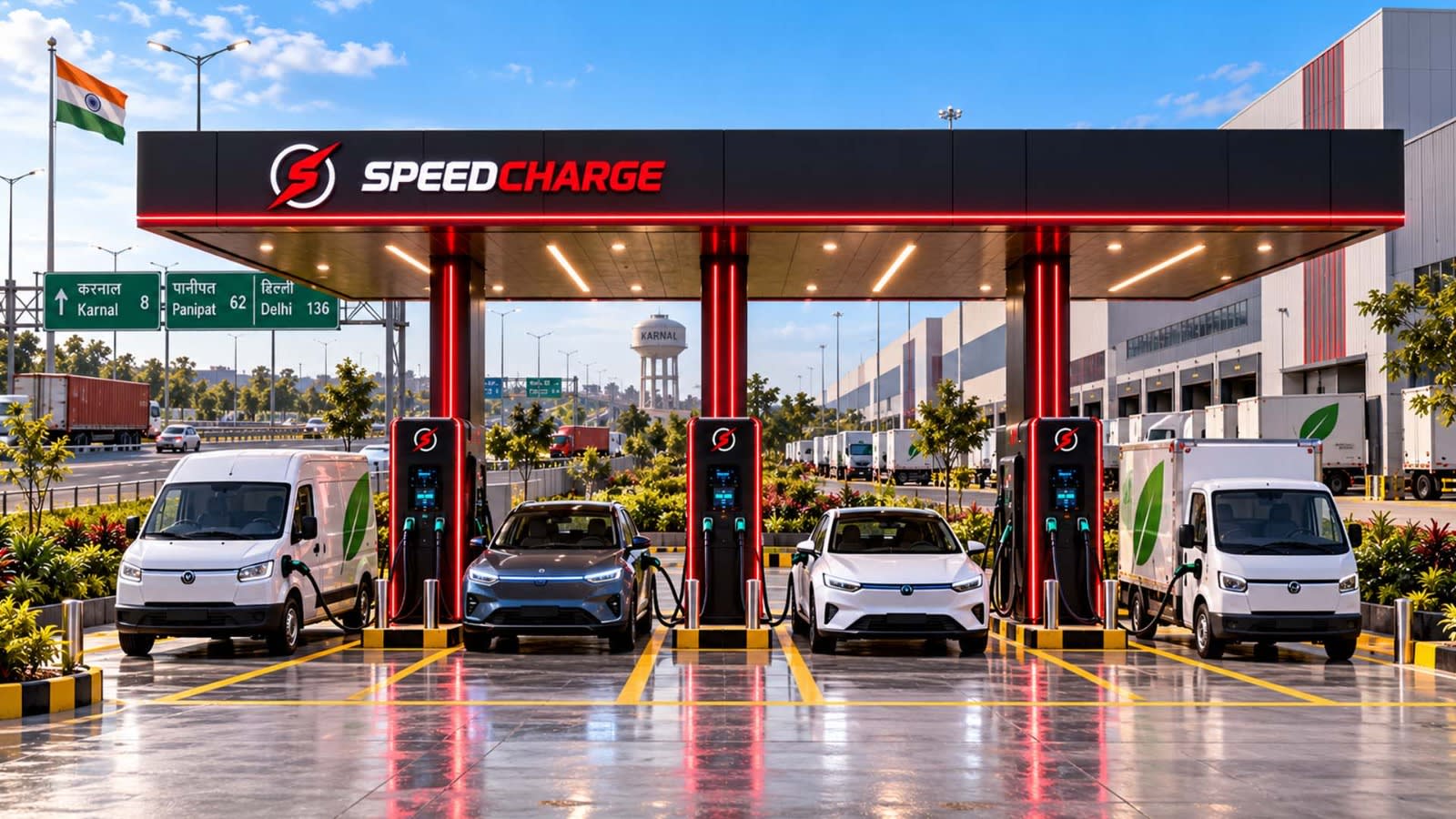
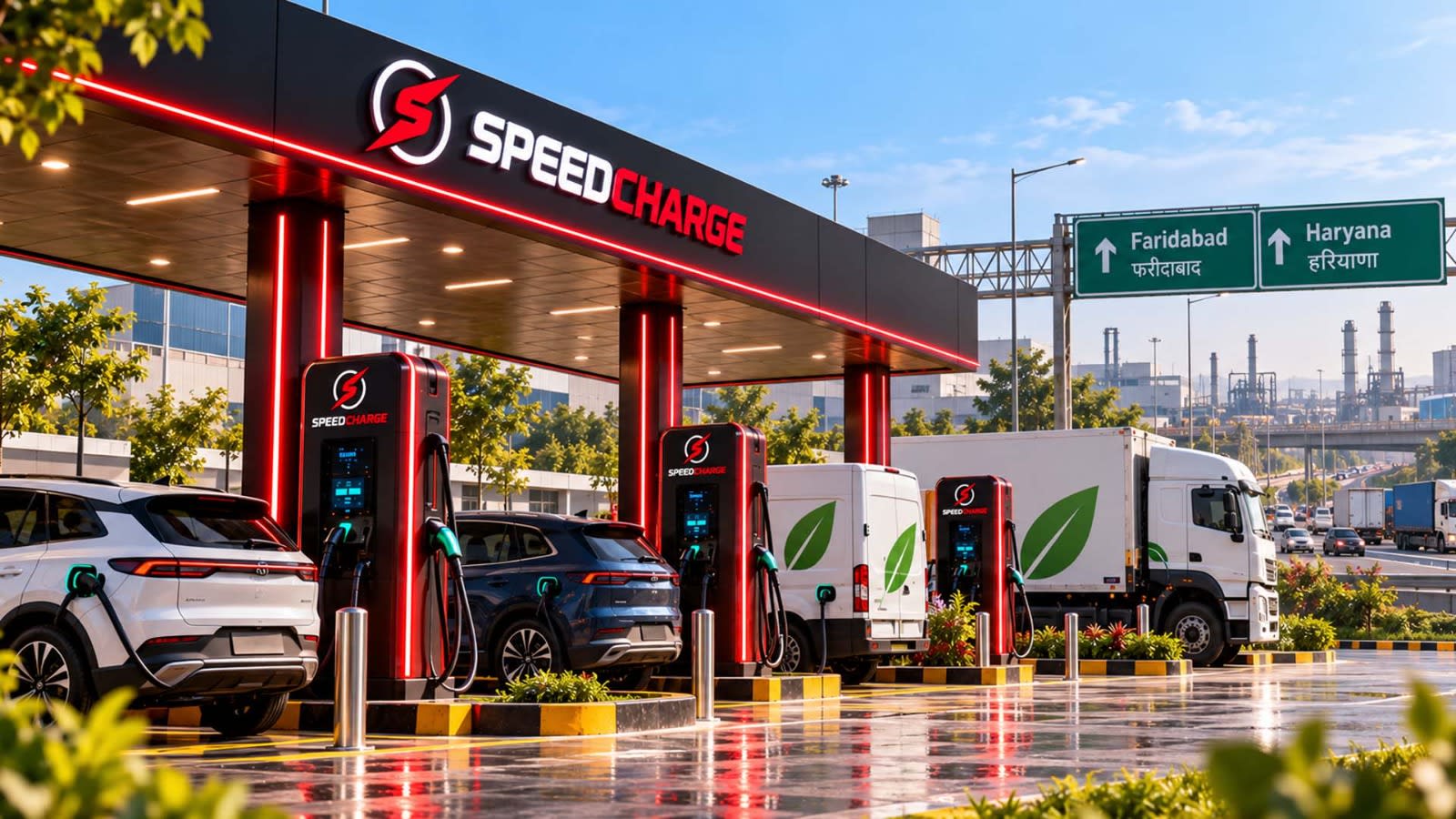
Sonipat has an unusual combination that makes it worth evaluating for EV charging infrastructure. It directly borders Delhi, includes important centres such as Sonipat, Kundli, Rai, Kharkhoda, Ganaur, Murthal and Gohana, and sits across multiple road corridors connecting NCR with northern Haryana and neighbouring states. The official Sonipat district profile confirms that the district borders Delhi and Uttar Pradesh as well as Panipat, Rohtak and Jind, giving it a strategically connected position within the wider NCR-region mobility network.
For investors assessing EV Charging Franchise in Sonipat, the strongest opportunity may not come from treating Sonipat as one city. A better strategy is to identify separate demand clusters: NCR commuter charging near Kundli, industrial and workplace charging around Rai and Kharkhoda, highway destination charging around Murthal and Ganaur, and local public charging within Sonipat city.
This makes Sonipat fundamentally different from Gurugram, Faridabad, Panipat or Karnal. A station here can potentially serve both Delhi-NCR-linked traffic and vehicles moving deeper into Haryana.
Sonipat's Four-Corridor Advantage
One of the most useful ways to understand Sonipat's charging potential is through its road network.
According to the official district administration, Sonipat is connected by four important national highways: NH-44 linking the Delhi-Haryana border at Kundli toward Ambala, NH-334B through Meerut–Sonipat–Kharkhoda, NH-352A connecting Jind–Gohana–Sonipat and NH-709 connecting Rohtak–Gohana–Panipat.
That means Sonipat is not dependent on a single travel corridor.
Corridor / Cluster | Likely Charging Demand | Site Strategy |
|---|---|---|
Kundli / NH-44 | NCR commuters, intercity EVs | Fast DC + public charging |
Murthal / NH-44 | Highway travellers | Destination fast charging |
Rai | Industrial, employee, commercial | Workplace + fleet charging |
Kharkhoda | Industrial and employment growth | Fleet + workplace charging |
Sonipat City | Residents, retail, taxis | Mixed public charging |
Ganaur | Highway + local demand | Moderate/high-power DC |
Gohana | Regional traffic | Phased public charging |
NH-334B corridor | Cross-regional travel | Route-based DC charging |
A practical EV Charging Franchise in Sonipat should therefore be designed around the corridor that generates its customers rather than selecting charger capacity first.
Kundli: NCR Gateway Charging
Kundli deserves separate analysis because it sits close to the Delhi-Haryana border on NH-44.
This creates three potential customer groups.
The first is daily NCR movement. Some EV drivers may travel regularly between Delhi and Sonipat-side employment or commercial areas.
The second is intercity traffic heading toward Panipat, Karnal, Ambala, Chandigarh and destinations further north.
The third is local industrial and commercial demand.
These groups have very different dwell times.
A daily commuter may be willing to leave a car charging for several hours at the workplace. A highway driver may want a substantially shorter charging session.
Therefore, a Kundli property should not automatically choose between "city charging" and "highway charging." A mixed site may potentially serve both.
When evaluating such corridor properties, SpeedCharge's EV charging stations on highways in India guide provides a useful framework for checking road accessibility, power availability, amenities, charging speed and future expansion. Pasted text
Murthal: Convert an Existing Stop Into a Charging Stop
Murthal presents a particularly interesting EV charging model because highway travellers already associate the corridor with food and rest stops.
This creates a concept known as destination overlap.
Instead of asking an EV driver to stop solely for charging, the charger is placed where the customer already intends to stop.
A traveller may spend 30–60 minutes eating or resting. If the vehicle can charge during that same period, charging time becomes much less inconvenient.
For a Murthal-type site, the business case should examine:
Average customer dwell time
Parking capacity
Restaurant operating hours
Access from both highway directions
Washrooms
Security
Visibility
Transformer and sanctioned-load capacity
Space for additional charging bays
The most important factor may not be the restaurant's popularity.
It is whether EV users can enter the property, reach the charger easily and return to their journey without a major detour.
Test Highway Access Physically
A site can appear ideal on a digital map and still be inconvenient in practice.
Before signing a highway property, physically drive:
Highway → Service Road → Property Entry → Charging Bay → Property Exit → Highway
Repeat the test from both directions.
Observe whether drivers need:
A distant U-turn
A toll movement
A difficult service-road merge
A congested intersection
A long internal property route
Every additional inconvenience can reduce spontaneous charging demand.
This is one reason SpeedCharge's EV Charging Site Selection Guide for India is relevant before signing a lease: site accessibility, dwell time, competition and electrical feasibility need to be studied together rather than independently. Pasted text
Rai: Look Beyond Public Walk-In Charging
Rai offers a different charging opportunity from Murthal.
For industrial or commercial properties, the most valuable customer may not be the random public EV driver. It may be an employee, delivery vehicle, company fleet or business visitor who returns repeatedly.
Repeat demand is valuable because it is easier to forecast.
For example, consider a commercial property where ten electric vehicles are parked during every working day.
Even if these customers do not need fast charging, their predictable presence may justify several managed charging points.
The project could potentially combine:
Employee charging during working hours + public charging outside peak workplace periods
That can improve infrastructure utilisation across the day.
Kharkhoda: Plan for Industrial and Employment-Led Demand
Kharkhoda deserves a different strategy again.
Industrial and manufacturing growth can generate employee mobility, vendor movement, company vehicles, logistics traffic and supporting commercial activity.
For charging infrastructure, however, industrial growth should not automatically be converted into an aggressive revenue forecast.
The correct process is to identify real vehicles.
Ask businesses:
How many EVs operate today?
How many kilometres do they travel daily?
Where do they currently charge?
When are vehicles parked?
How many fleet vehicles could become electric?
Is charging needed during working hours or overnight?
This moves the project away from speculative market size and toward measurable charging demand.
Fleet Charging Should Be Calculated From Energy Requirements
Suppose a Sonipat-area fleet operates 15 EVs.
Each vehicle requires an average of 25 kWh to restore the energy used during the day.
Total daily requirement:
15 × 25 kWh = 375 kWh
If the entire fleet remains parked for ten hours overnight, the required charging strategy is very different from a fleet that remains parked for only two hours.
The infrastructure design should therefore start from:
Total Required Energy ÷ Available Charging Window
rather than:
How many fast chargers can we afford?
This approach can reduce unnecessary CAPEX while still meeting operational requirements.
Sonipat City: Public Charging Is a Different Business
A city-based charging station is usually more dependent on local behaviour.
Potential demand can come from apartment residents without private chargers, taxis, office visitors, shoppers, hotels, hospitals and commercial users.
A city site should therefore answer four questions.
Who will charge?
Why will they be at this property?
How long will they remain?
How frequently will they return?
A shopping property may produce weekend-heavy demand.
A hospital may generate longer dwell times throughout the week.
A taxi-oriented station may be busiest during entirely different hours.
The charger configuration should follow those patterns.
Choose Charger Power From Dwell Time
A larger charger is not automatically a better investment.
Customer Type | Typical Dwell Pattern | Charging Configuration to Evaluate |
|---|---|---|
Office employee | Long | AC / managed charging |
Industrial fleet | Scheduled | Duty-cycle-based AC/DC |
Mall visitor | Medium | AC + 30–60 kW DC |
Restaurant user | 30–90 minutes | 60 kW-class DC |
Highway traveller | Short | 60–180 kW+ DC |
Hotel guest | Overnight | AC + selected fast charger |
Taxi | Short | Faster DC |
A hotel customer may not need 120 kW charging because the vehicle remains parked overnight.
A highway EV may find a 7 kW charger commercially useless.
Therefore:
Customer Time → Required Energy → Charger Capacity
is usually a better planning sequence than:
Budget → Biggest Charger Available
How Much Investment Can a Sonipat Station Require?
The total investment in EV Charging Franchise in Sonipat should include the complete commissioned station, not merely EV charger hardware.
Major cost layers can include:
Cost Head | What It Covers |
|---|---|
Charger | EVSE hardware and charging guns |
Electrical panels | Protection, distribution and metering |
Cabling | Charger-to-panel and upstream work |
Transformer | Where capacity upgrades are needed |
Civil works | Foundations, trenches and parking |
Software | CSMS and remote monitoring |
Payments | Gateway and transaction systems |
Connectivity | SIM/internet/network |
Property | Rent, deposit or Revenue Share |
Operations | Electricity, maintenance and support |
Working capital | Initial utilisation ramp-up |
SpeedCharge's EV fast charger price guide for India can help readers understand the difference between charger hardware pricing and full project cost. Pasted text
Indicative commercial hardware planning can broadly look like this:
Charger Capacity | Indicative Hardware Planning Range |
|---|---|
30 kW DC | ₹4–8 lakh |
60 kW DC | ₹7–12 lakh |
90–120 kW DC | ₹12–22 lakh |
150–180 kW DC | ₹17–30 lakh |
200–240 kW DC | ₹24–40 lakh |
300–360 kW+ | ₹35–60 lakh+ |
These are planning estimates, not a Sonipat project quotation. Manufacturer, warranty, connector configuration, power modules, software, taxes, installation and site-specific conditions can materially change actual pricing.
Why Two 60 kW Projects Can Cost Very Different Amounts
Consider two sites installing identical chargers.
Site A: existing spare sanctioned load, adequate transformer capacity and a short cable route.
Site B: no spare capacity, long cable route, panel replacement and additional upstream electrical work.
Even though charger hardware is identical, commissioned CAPEX can differ substantially.
This is why the property should be technically evaluated before financial commitment.
SpeedCharge's EV charging station investment guide for India is useful for evaluating complete CAPEX and operating economics rather than hardware price alone. Pasted text
Electricity Feasibility Comes Before Franchise Payment
Before launching EV Charging Franchise in Sonipat, verify the actual electrical position of the shortlisted property.
The Haryana Electricity Regulatory Commission regulations for EV charging infrastructure state that setting up public charging stations is a de-licensed activity subject to applicable technical, safety and performance standards. They also provide a Haryana-specific framework for connectivity and EV charging infrastructure.
Before signing the property, collect:
Sanctioned load
Existing peak load
Spare capacity
Transformer rating
LT or HT supply
Cable-route distance
Panel capacity
Earthing status
Metering requirements
Upgrade timeline
Expansion headroom
The cheapest property rent may not produce the cheapest project.
A property with existing electrical capacity can sometimes justify a higher lease cost because major electrical CAPEX may be avoided.
Haryana Policy Supports Charging Infrastructure Expansion
The Haryana Electric Vehicle Policy 2022 calls for charging infrastructure in residential, commercial and institutional buildings, public parking and other locations. It also states that private players should be encouraged to establish public charging infrastructure.
For Sonipat's corridor opportunity, another provision is particularly relevant: the policy calls for fast charging and battery-swapping infrastructure on highways and prominent roads within every 30 km and encourages charging networks on intercity routes.
This creates a supportive policy context for NH-44 and other road-oriented sites.
It does not guarantee that any particular station will be profitable.
Commercial viability still depends on actual charging demand, CAPEX and utilisation.
What Incentives Does the Haryana Policy Mention?
The state policy contains charging-infrastructure incentive provisions.
For qualifying privately owned public charging stations with Fixed Capital Investment above ₹25 lakh, it specifies a one-time subsidy of 20% of FCI up to ₹5 lakh for the first 200 eligible stations.
It also describes a separate incentive of 20% of FCI up to ₹50,000 for the first 2,000 qualifying privately owned public charging installations in specified residential, commercial, institutional and similar properties, subject to the policy conditions.
Do not automatically subtract these amounts from project CAPEX.
Beneficiary limits and eligibility conditions apply.
A safer investment model is:
Base economics without unconfirmed incentive
followed by:
Improved scenario if eligibility is actually established
National EV Charging Guidelines Also Apply
Haryana's framework operates alongside national charging requirements.
The Ministry of Power Guidelines for Installation and Operation of Electric Vehicle Charging Infrastructure 2024 apply to charging infrastructure in private parking, offices, educational institutions, hospitals, housing societies, commercial complexes, petrol pumps, public places and highways or expressways.
The Ministry has also stated that charging-station owners may opt for LT connections for loads up to 150 kW under the applicable framework where a separate connection is sought.
For a Sonipat project, these rules matter when deciding whether the station will initially deploy one moderate-power charger or multiple higher-power chargers.
Electrical design should be planned before equipment procurement.
Don't Build the Business Around Passing Traffic
One of the most common highway-charging mistakes is:
“Thousands of vehicles pass here every day, so the station will work.”
The useful funnel is much narrower:
Total traffic → EV traffic → EVs needing charge → Drivers willing to stop → Compatible vehicles → Successful charging sessions → Billable kWh
Every stage reduces the addressable demand.
Therefore, revenue should be calculated from energy throughput.
A basic framework is:
Monthly Charging Revenue = Monthly Billable kWh × Effective Charging Revenue per kWh
Then account for:
Electricity + Property + Software + Payment Fees + Maintenance + Operations + Financing
Traffic supports the opportunity.
Billable energy creates the business.
Measure kWh per Bay, Not Just Sessions
Two charging stations can each complete 30 sessions per day but generate very different revenue.
If Station A averages 8 kWh per session:
30 × 8 = 240 kWh/day
If Station B averages 30 kWh:
30 × 30 = 900 kWh/day
Session count alone therefore does not explain utilisation.
Track:
kWh per charger per day
Average kWh per session
Sessions per connector
Charger uptime
Failed sessions
Repeat customers
Revenue per charging bay
Electricity cost per delivered kWh
These metrics should guide expansion.
Build an Anchor + Public Charging Model
Sonipat is particularly suitable for studying an anchor-demand approach.
An anchor customer could be a fleet, factory, warehouse, office, hotel or commercial operation that creates recurring charging requirements.
The station can then remain open to public customers outside or alongside that predictable demand.
A hypothetical utilisation profile might be:
Time | Potential Demand |
|---|---|
6–9 AM | Fleet / commuter |
9 AM–5 PM | Employees / business users |
5–9 PM | Local public charging |
Evening | Highway travellers |
Overnight | Fleet / hotel guests |
This model can improve infrastructure utilisation without depending entirely on spontaneous highway customers.
Franchise Agreement: Examine the Commercial Structure
A credible EV Charging Franchise in Sonipat agreement should clearly allocate every major financial and operating responsibility.
Before payment, establish who owns the charger, who funds electrical infrastructure, who signs the property agreement, who pays electricity bills, who operates the software, who determines customer pricing and who receives payments.
Also verify:
Revenue settlement frequency
Maintenance responsibility
Spare-parts responsibility
Charger uptime obligations
Insurance
Damage liability
Relocation rights
Termination provisions
Equipment ownership after exit
A franchise should not be evaluated only through the initial investment amount.
SpeedCharge's EV Charging Station Franchise in India guide can be used as the broader internal reference when comparing franchise structure and station economics. Pasted text
Sonipat vs Gurugram: Two Different NCR Opportunities
Sonipat's proximity to Delhi does not make it another Gurugram.
Gurugram has stronger corporate-office, taxi, premium commercial and hospitality demand.
Sonipat's opportunity is more distributed across NCR-border movement, highway traffic, industrial locations and regional corridors.
Investors comparing both models can review SpeedCharge's EV charging stations in Gurugram location page to understand how a dense metropolitan charging market differs from Sonipat's corridor-led model. Pasted text
This comparison is useful because the most successful charger configuration in one city may be inefficient in another.
Build Infrastructure That Can Expand
An emerging-market station should not necessarily build its five-year capacity on day one.
Suppose technical feasibility allows four 120 kW charging points eventually, but current utilisation research supports only one or two.
Instead of installing all four immediately, design:
Electrical route
Parking layout
Civil ducts
Panel provision
Transformer strategy
Software architecture
for future expansion.
Then install initial charging capacity according to real demand.
This staged-CAPEX model can reduce early capital exposure while protecting expansion ability.
Don't Ignore the SpeedCharge Locator Ecosystem
Customers increasingly expect charging infrastructure to be easy to discover digitally.
A charging station needs more than physical signage.
It should have accurate location data, charger status, compatible connector information, operating hours, pricing and navigation.
SpeedCharge's EV charging station locator gives readers a natural path to the network-discovery side of the charging experience. Pasted text
Discovery matters particularly for highway travellers because they often plan charging stops before arriving.
A 30-Day Sonipat Validation Plan
Before committing to EV Charging Franchise in Sonipat, use a month to validate the property.
Days 1–5: Identify the Demand Engine
Determine whether the property depends primarily on:
NCR commuters, highway travellers, industrial employees, fleets, destination customers or local residents.
If the answer is “everyone,” the demand thesis is probably not specific enough.
Days 6–10: Drive the Routes
Test entry and exit during:
Morning rush
Afternoon
Evening rush
Night
Weekend
For highway properties, test both travel directions.
Days 11–15: Audit Existing Chargers
Visit competing stations rather than relying solely on map listings.
Record charger capacity, connector count, uptime, queueing, parking, access restrictions and amenities.
Days 16–20: Interview Anchor Customers
Talk to nearby factories, hotels, warehouses, restaurants, offices and fleet operators.
Ask about real EV numbers and charging requirements.
Days 21–25: Electrical Survey
Confirm sanctioned load, transformer capacity and upgrade costs.
Days 26–30: Financial Model
Prepare three scenarios:
Conservative → Base → Growth
The project should not depend solely on the growth scenario.
Use the First 90 Days to Validate Assumptions
Opening day is the start of commercial testing.
During the first three months, monitor demand by customer type and hour.
You may discover that a station built for highway traffic actually receives more local customers.
Or an industrial site may discover that employees use chargers during the day while commercial fleets create most energy throughput overnight.
Use real data to determine the next charger investment.
A useful expansion trigger is not “six months have passed.”
It is:
existing capacity has reached a sustained utilisation threshold and additional demand is being constrained.
Common Sonipat EV Charging Mistakes
Avoid selecting a property only because it is near NH-44.
Avoid assuming Kundli, Murthal, Rai and Kharkhoda have identical demand.
Avoid buying chargers before confirming electricity capacity.
Avoid using total road traffic as the revenue forecast.
Avoid counting an unconfirmed subsidy as guaranteed project funding.
Avoid designing a station without expansion space.
Avoid relying entirely on public walk-in customers when nearby fleet or workplace anchor demand may exist.
Avoid choosing charger capacity based on competitors rather than your own customer's dwell time.
Conclusion
Sonipat's charging opportunity is broader than a single NH-44 highway station.
Kundli can connect charging with NCR movement. Murthal can combine charging with existing highway dwell time. Rai and Kharkhoda can support workplace and fleet-oriented models, while Sonipat city and Ganaur can develop local public charging demand.
For EV Charging Franchise in Sonipat, the strongest investment sequence is:
Demand Cluster → Customer Type → Route Access → Dwell Time → Electrical Feasibility → Charger Mix → Commercial Agreement → CAPEX/OPEX → Billable kWh → Expansion
The right site is not necessarily the busiest road or the cheapest property.
Frequently Asked Questions
1. Is Sonipat suitable for an EV charging business in 2026?
Sonipat is worth evaluating because it borders Delhi and connects to multiple national-highway corridors. The exact opportunity depends on whether the property serves NCR commuters, local users, industrial demand or intercity travellers.
2. Which Sonipat areas should EV charging investors study?
Kundli, Murthal, Rai, Kharkhoda, Sonipat city, Ganaur and selected corridor locations can be studied according to customer demand and electricity feasibility.
3. Why is Kundli important for charging infrastructure?
Kundli sits on NH-44 near the Delhi-Haryana border, giving it potential exposure to both NCR mobility and northbound intercity travel.
4. Is Murthal suitable for highway fast charging?
It can be, particularly where a hotel or restaurant already creates natural customer dwell time. Actual site access, grid capacity and EV traffic still need to be validated.
5. What charger size should I install?
Charger capacity should be based on vehicle type, energy requirement, customer dwell time and available electrical infrastructure rather than choosing the highest possible kW.
6. How much can a commercial charging station cost?
Total project cost depends on charger capacity, electrical upgrades, transformer requirements, civil work, software, property and commissioning. Hardware price alone is not sufficient for budgeting.
7. Does Haryana provide support for private public chargers?
The state EV policy includes incentive provisions for qualifying private public-charging projects, subject to stated eligibility conditions, beneficiary limits and policy availability.
8. Is a highway site better than an industrial site?
Not necessarily. Highway charging can have higher-speed requirements but more variable demand, while an industrial property may offer predictable fleet or workplace charging.
9. Should I install multiple chargers immediately?
Only when demand supports them. Designing infrastructure for future expansion while installing initial capacity in phases can reduce unnecessary early CAPEX.
10. What should be checked before paying for a franchise?
Validate demand, road access, electrical feasibility, complete project CAPEX, charger ownership, Revenue Share, maintenance, software responsibilities and exit terms first.