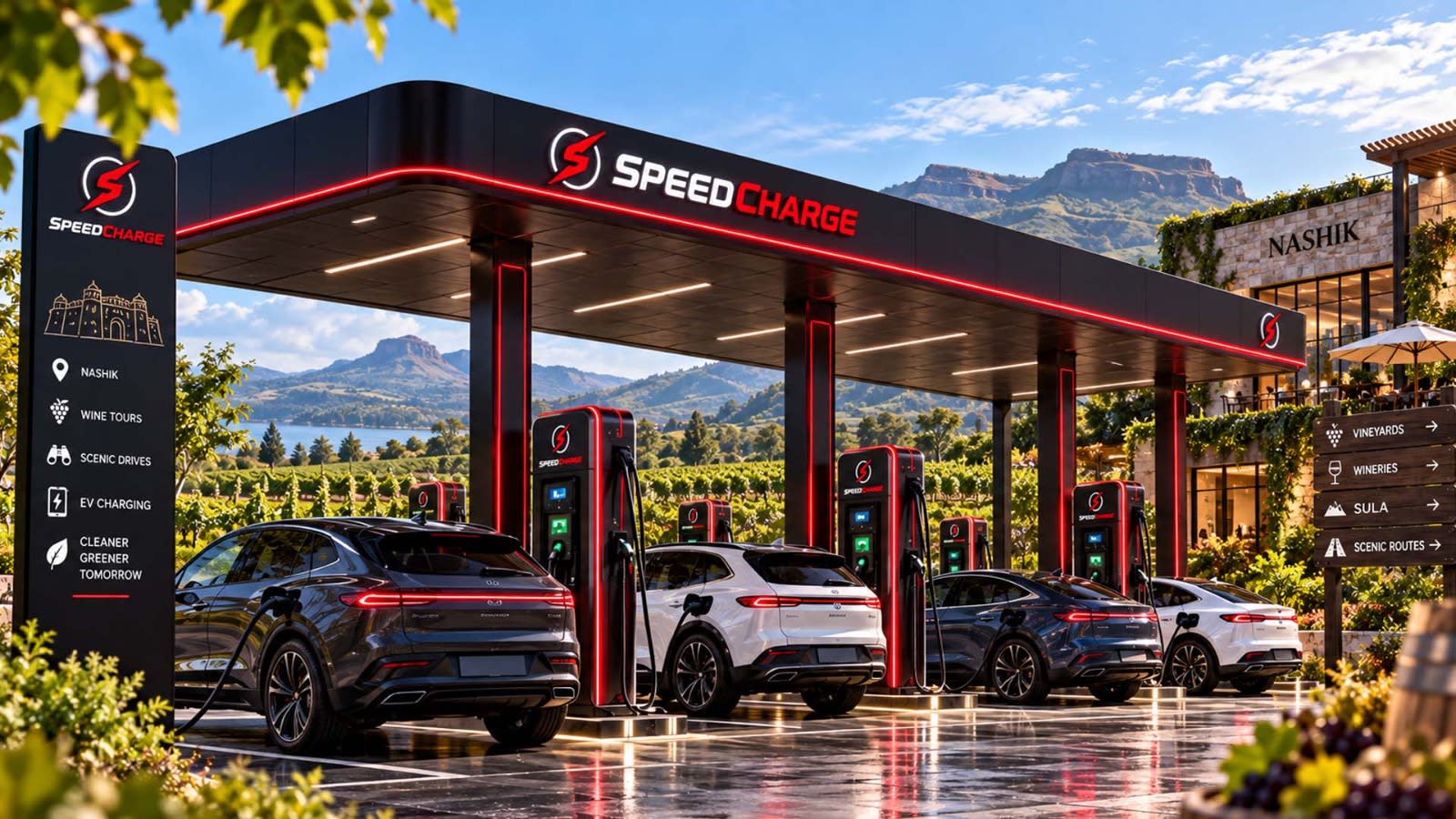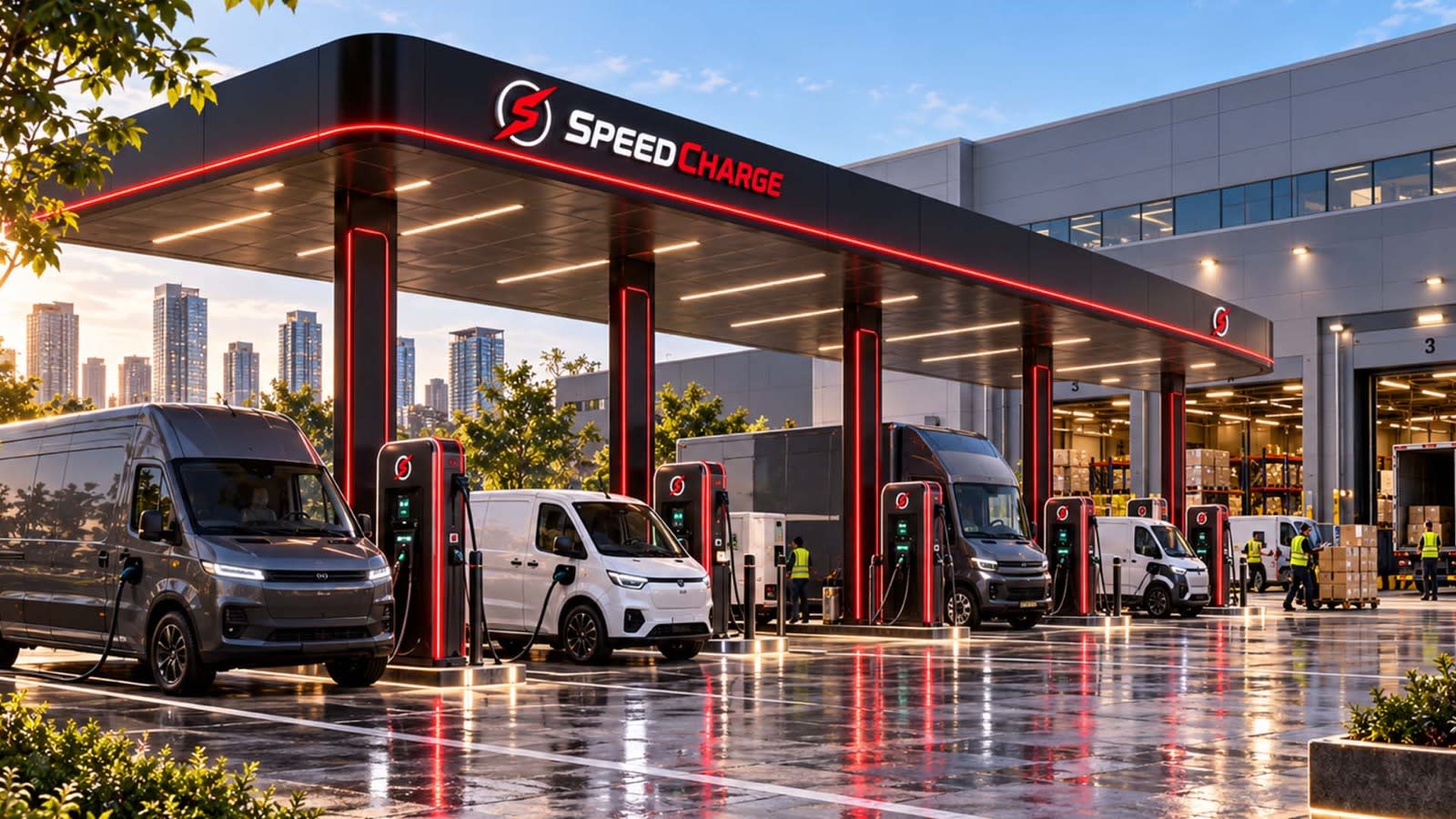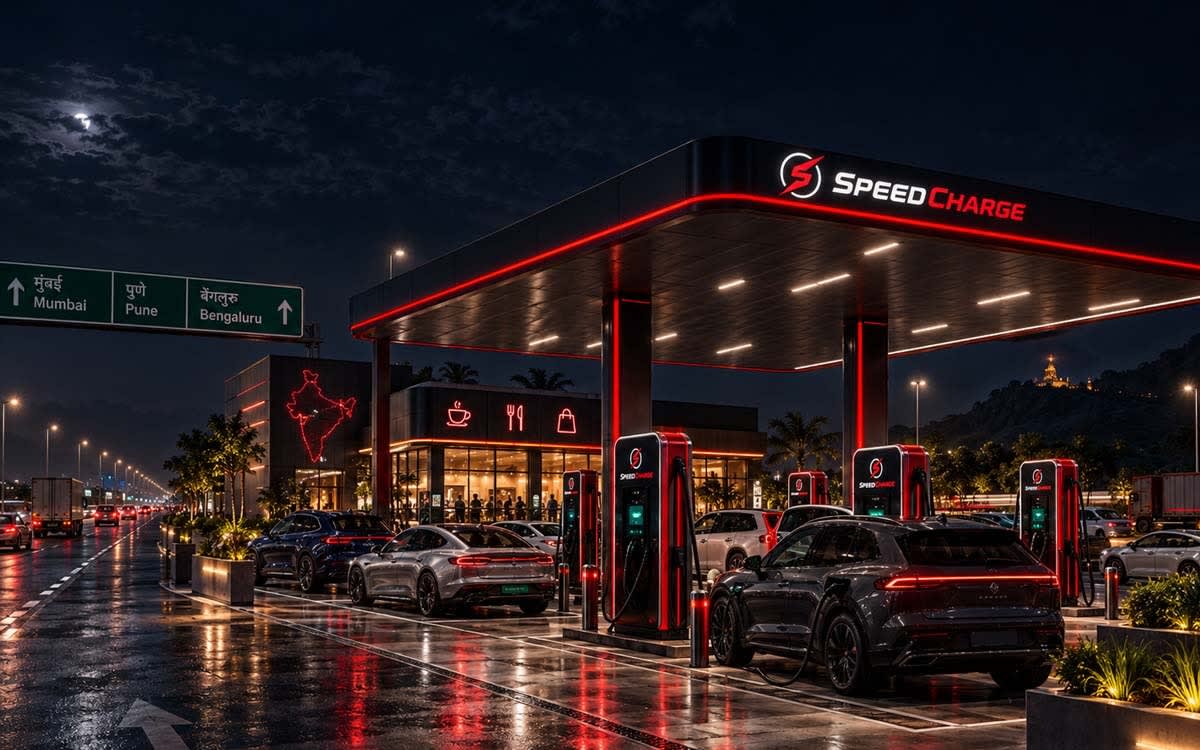
EV charging stations can be classified by who is allowed to use them, where they are installed, which vehicles they serve and how the charging service is operated. Two important access-based categories are public charging and captive charging.
Understanding the Types of EV charging stations in India is essential for property owners, fleet operators, investors, businesses and charge point operators. A public station must serve outside users and manage discovery, pricing, payments and customer support. A captive station primarily supports vehicles controlled by one organisation and focuses on operational availability, vehicle schedules and energy management.
The distinction is not determined only by charger power. A high-power DC charger can operate as either public or captive infrastructure. Similarly, an AC charger may serve the public at a hotel or operate privately inside an office, residential or fleet parking facility.
This guide explains public and captive charging through definitions, examples, comparison tables and practical project-selection criteria.
Quick Answer: What Is the Difference Between Public and Captive Charging?
Among the Types of EV charging stations in India, the main difference between public and captive charging is user access.
A public charging station provides charging access to eligible EV users outside the station owner’s internal vehicle group. Public sites commonly require customer identification, displayed pricing, digital payments, session records and discoverability.
A captive charging station is developed for controlled or in-house use. It may serve vehicles belonging to a fleet, company, government body, institution or another defined group without being open to general public customers.
Comparison area | Public charging | Captive charging |
|---|---|---|
Primary users | Public or permitted outside EV users | Organisation’s own or controlled vehicles |
Access | Open, app-based or property-controlled | Restricted and internally authorised |
Main objective | Provide charging as a customer service | Support vehicle operations |
Demand pattern | Variable and location-dependent | More predictable when fleet schedules are known |
Payments | Customer billing usually required | Internal allocation or contracted settlement |
Station discovery | Usually important | May not require public listing |
Customer support | Public-facing support required | Internal operations support |
Typical sites | Highways, malls, hotels and public parking | Fleet depots, factories and company premises |
India’s charging framework permits housing societies, malls, office complexes, restaurants and hotels to install charging infrastructure for vehicles, including visitors permitted to enter their premises. It also recognises stations meant for 100% in-house or captive utilisation. Ministry of Power’s charging guidance
Classification by Access Is Different From Classification by Technology
The Types of EV charging stations in India can be classified in more than one way:
By User Access
Public charging
Captive or private charging
Resident or community charging
Restricted destination charging
By Charging Technology
AC charging
DC fast charging
Battery swapping
By Location
Highway charging
Urban charging hubs
Commercial-property charging
Workplace charging
Residential charging
Fleet-depot charging
By Operating Model
CPO-owned and operated
Property-owned and self-operated
Investor-owned and operator-managed
Charging as a Service
Fleet-owned captive infrastructure
Revenue Share or site-host partnership
A station can belong to multiple classifications simultaneously. For example, a highway station may be public, use DC fast chargers and be operated by a CPO. A logistics-depot station may be captive, use both AC and DC equipment and be operated through a managed-service agreement.
The official e-AMRIT overview of EV charging infrastructure explains different infrastructure and service opportunities within the EV ecosystem.
What Is a Public EV Charging Station?
A public EV charging station allows eligible users outside the owner’s internal vehicle group to obtain charging service. Access may be fully open or controlled through an application, RFID card, QR code, payment process, property entrance or operating schedule.
Public does not always mean that a station is available without conditions at every hour. A charging facility inside a mall, hotel, hospital or managed parking property may be accessible only during property operating hours or to visitors permitted to enter.
Public access should nevertheless be transparent. Drivers should be able to understand:
Who can use the charger
Operating hours
Connector type
Available power
Customer tariff
Payment method
Parking or idle charges
Access restrictions
Customer-support process
When evaluating the Types of EV charging stations in India, public infrastructure requires the strongest emphasis on customer experience, station discovery, pricing transparency, digital payments and uptime.
Examples of Public Charging Stations
Highway Fast-Charging Station
A highway station may use DC fast chargers to serve private cars, taxis and commercial vehicles travelling between cities.
Important considerations include:
Traffic direction
Safe entry and exit
Food and waiting facilities
Toilets
24-hour access
Lighting and security
Charger redundancy
High electricity demand
Customer-support availability
Shopping-Mall Charging Station
A mall may provide AC destination charging and selected DC charging for customers during shopping, dining or entertainment visits.
The charger should match average dwell time. Installing only high-power equipment may be unnecessary when customers remain parked for several hours.
Hotel or Restaurant Charger
Hotels and restaurants can provide charging to guests and permitted visitors. Overnight guests may benefit from AC charging, while transient customers may prefer faster charging.
Public Parking Facility
Municipal, railway, airport or privately managed parking areas may provide charging as an additional paid service.
The operator should coordinate:
Parking payments
Charging payments
Idle fees
Reserved charging bays
Customer refunds
Bay enforcement
Fuel-Station Charging Hub
Fuel stations may offer DC charging because of road visibility, vehicle access and existing traveller amenities. Electricity capacity and safe equipment placement remain critical.
Drivers can use the SpeedCharge Station Finder to locate available charging stations and plan charging stops.
Public Charging Operational Requirements
A public station commonly needs:
Customer Access
Mobile application, QR or RFID authentication
Clear operating hours
Accurate map listing
Connector and vehicle compatibility information
Accessible entry and exit
Pricing and Payments
Customer tariff
Applicable taxes
Digital payments
Session receipts
Refund process
Promotional-session records
Parking or idle-fee disclosure
Software and Data
Charger Management System
Remote monitoring
Live connector status
Session records
Energy measurement
Payment reconciliation
Tariff configuration
Fault alerts
Performance reporting
Customer Support
Helpline or digital support
Remote session assistance
Failed-payment resolution
Refund management
Fault escalation
Emergency instructions
Maintenance
Preventive maintenance
Spare-parts availability
Field-service coverage
Connector replacement
Firmware updates
Uptime monitoring
The official standards and specifications for charging infrastructure provide guidance relevant to public charging deployment and network connectivity.
Advantages and Risks of Public Charging
Advantages
Access to a wider customer base
Potential charging-service revenue
Increased property visibility
Support for intercity and urban EV travel
Opportunity for fleet and public demand at one site
Potential ancillary parking or retail benefits
Risks
Uncertain site utilisation
Higher software and customer-support requirements
Payment and refund disputes
Charger downtime affecting public reputation
Bay blockage and parking misuse
Electricity and demand-charge exposure
Competition from nearby stations
Higher maintenance activity
Customer-data and cybersecurity obligations
Public charging revenue should not be treated as guaranteed. Performance depends on local vehicle traffic, charger compatibility, pricing, uptime, competing infrastructure and customer access.
Before approving a public site, use the EV Charging Site Selection Guide India to assess traffic, electricity, dwell time, visibility and nearby competition.
What Is a Captive EV Charging Station?
A captive charging station is developed for vehicles controlled by a defined organisation or user group. It is not primarily intended to attract general public charging sessions.
Captive charging is common where vehicles:
Return to the same depot
Follow predictable routes
Park for scheduled periods
Require guaranteed morning availability
Operate under central fleet management
Need controlled access and energy reporting
Among the Types of EV charging stations in India, captive infrastructure often provides more predictable demand because vehicle numbers, battery requirements, arrival times and departure schedules can be measured internally.
Captive utilisation does not automatically make the project technically simple. A depot charging many buses, trucks or commercial cars can require substantial sanctioned load, transformers, panels, load management and charger redundancy.
Examples of Captive Charging Stations
Electric Bus Depot
An electric bus depot may charge vehicles overnight, between shifts or through scheduled fast-charging windows.
The charging plan should model:
Route energy requirement
Battery state on arrival
Departure schedule
Simultaneous charging
Charger-to-bus ratio
Backup capacity
Demand peaks
Transformer capacity
Taxi or Ride-Hailing Fleet Depot
A taxi operator may use a restricted depot to charge vehicles during driver changes or low-demand periods.
High utilisation may justify faster equipment, but charging schedules should prevent queues and vehicle downtime.
Delivery and Last-Mile Fleet
Electric two-wheelers, three-wheelers and vans may charge at a warehouse or micro-fulfilment hub. The design should reflect route distance, turnaround time and daily shift patterns.
Corporate Vehicle Parking
A business may install charging for company-owned cars, employee fleet vehicles or operational transport. If the charger is also offered to visitors or employees’ private vehicles, access and billing arrangements must be clearly separated.
Manufacturing or Industrial Facility
Factories may use captive charging for material-handling vehicles, employee transport, company cars or logistics fleets. Charging demand must be coordinated with existing industrial electricity loads.
Government or Institutional Fleet
Municipal bodies, government departments, hospitals, universities and other institutions may install restricted chargers for authorised vehicles.
Captive Charging Operational Requirements
Fleet-Energy Planning
The operator should calculate:
Number of vehicles
Daily kilometres
Energy consumption per kilometre
Battery capacity
Minimum departure state of charge
Arrival state of charge
Available charging window
Simultaneous vehicle demand
Charger Availability
Captive operations may require:
Backup charger capacity
Multiple connectors
Preventive maintenance outside operational hours
Local spare parts
Fast fault response
Manual charging alternatives
Emergency charging procedures
Load Management
A fleet-depot system can:
Sequence charging by departure time
Prioritise low-battery vehicles
Reduce charging during property peak demand
Limit transformer overload
distribute power across multiple chargers
shift flexible charging to lower-demand periods
Data and Reporting
Useful captive-station data includes:
Vehicle identification
Energy delivered by vehicle
Charging duration
Charger availability
Failed sessions
Electricity cost
Route readiness
Maintenance records
Energy consumption trends
For fleet-specific planning, review Fleet EV Charging Solutions in India to understand uptime, scheduling and infrastructure requirements.
Advantages and Risks of Captive Charging
Advantages
More predictable energy demand
Controlled vehicle access
Direct alignment with fleet schedules
Reduced dependency on public chargers
Better vehicle and energy data
Ability to optimise charging windows
Easier authentication for known vehicles
Potentially lower public-customer support needs
Risks
High concentration of demand at one depot
Operational disruption during charger failure
Major electricity upgrades
Vehicles arriving outside planned schedules
Insufficient charger redundancy
Route growth exceeding original capacity
Stranded infrastructure if operations relocate
Technology mismatch with future vehicles
A captive site should be planned around vehicle operations rather than only equipment capacity. The most powerful charger is not necessarily the correct charger when vehicles remain parked long enough to charge at lower power.
Public vs Captive Charging: Detailed Comparison
Decision area | Public station | Captive station |
|---|---|---|
Users | General or permitted external users | Defined internal vehicles |
Demand source | Passing traffic, destinations and public fleets | Controlled fleet or institutional demand |
Utilisation | Site- and market-dependent | Schedule- and fleet-dependent |
Customer discovery | Maps and charging apps are important | Public discovery may not be required |
Authentication | App, QR, RFID or payment-based | Vehicle, driver or internal RFID |
Pricing | Public tariff and fee disclosure | Internal energy allocation or contract |
Payments | Customer payment gateway | Internal billing or fleet settlement |
Charger selection | Vehicle mix and public dwell time | Fleet type and operational schedule |
Uptime impact | Lost revenue and customer dissatisfaction | Vehicle unavailability and route disruption |
Customer support | Public-facing support | Internal operations support |
Data priority | Sessions, payments, users and uptime | Vehicles, routes, energy and readiness |
Location priority | Visibility, access and amenities | Depot efficiency and secure operations |
Expansion trigger | Public utilisation growth | Fleet expansion or route demand |
Main commercial risk | Weak public utilisation | Fleet concentration or operational change |
Can One Station Be Both Public and Captive?
Yes, a site may support both public and captive demand when access, capacity, pricing and operating responsibilities are properly separated.
For example:
A fleet depot may reserve chargers for its vehicles at night and permit public sessions during the day.
A hotel may prioritise guest vehicles while allowing other drivers to pay for charging.
A commercial property may allocate certain connectors to tenants and others to public users.
A logistics property may serve its own fleet and contracted third-party vehicles.
A hybrid site should define:
Reserved and public operating hours
Charger-priority rules
Fleet departure requirements
Customer booking availability
Separate tariffs
Payment settlement
Access control
Public and internal data
Responsibility during scheduling conflicts
Public demand should not prevent captive vehicles from meeting operational schedules. Similarly, public customers should not be shown a charger as available when it is reserved internally.
Public vs Captive Charger Selection
Charger power should be based on vehicle requirements and dwell time rather than the public or captive label alone.
Use case | Possible charger approach | Main planning factor |
|---|---|---|
Mall visitors | AC with selected DC capacity | Customer dwell time |
Highway travellers | DC fast charging | Turnaround time |
Hotel guests | AC destination charging | Overnight parking |
Office vehicles | Networked AC charging | Long parking duration |
Taxi fleet | AC/DC combination | Shift and turnaround schedule |
Electric buses | Depot AC/DC configuration | Route energy and departure time |
Delivery fleet | AC or moderate DC charging | Daily route and shift pattern |
Mixed public-fleet hub | Multiple power levels | Priority and access management |
Equipment selection should verify:
Connector compatibility
Input and output rating
Vehicle charging limits
Applicable standards
Communication protocol
Environmental protection
Warranty
Local service coverage
Spare-parts availability
Software compatibility
The official EV charging standards overview explains India’s standards framework for charging equipment.
For technical installation planning, review the EV Charger Installation Guide 2026: Cost, Steps & Rules.
Electricity Feasibility for Both Models
Whether a station is public or captive, the electrical assessment should verify:
Existing sanctioned load
Current property demand
Spare capacity
Proposed charger demand
Simultaneous charging
LT or HT supply
Transformer capacity
Load-enhancement requirement
Metering
Distribution panels
Cable routes
Earthing
Protection devices
Applicable tariff
Demand charges
Expansion capacity
A captive depot may have predictable vehicle demand but require a large power connection. A public site may start with modest utilisation but need capacity for future growth.
The official guidance on EV charging installation costs identifies electricity connections, transformers, cables, equipment, land, installation and maintenance as relevant cost categories.
Compliance and Safety Responsibilities
Setting up charging infrastructure is treated as a de-licensed activity, but this does not remove equipment, electricity, property and safety responsibilities.
Project teams should verify:
Property right to install and operate
DISCOM requirements
Sanctioned load
Metering and tariff
Charger-model documentation
Electrical design
Earthing
Protection systems
Safe parking-bay layout
Fire and building requirements
Testing and commissioning
Maintenance
Incident response
Record retention
The Central Electricity Authority’s electrical safety regulations should be considered together with current DISCOM, state and professional engineering requirements.
Government support must not be assumed for every project. Applicants should review the current PM E-DRIVE scheme guidelines and obtain formal approval before including scheme support in a financial model.
How to Choose Between Public and Captive Charging
Before selecting one of the Types of EV charging stations in India, answer these questions:
User Demand
Will the station serve general EV drivers?
Is there confirmed fleet demand?
Are users controlled by one organisation?
Will visitors or third parties be allowed?
Is demand predictable or location-dependent?
Location
Is the site visible and publicly accessible?
Does it provide secure depot access?
Are amenities available?
Can vehicles enter and exit safely?
Is long-term property tenure confirmed?
Electricity
Is sufficient sanctioned load available?
Will several vehicles charge simultaneously?
Is a transformer required?
Can load management reduce demand peaks?
Is future expansion included?
Operations
Who will monitor the chargers?
Is public customer support required?
What uptime commitment applies?
Are spare parts locally available?
How will failed sessions be handled?
Commercial Structure
Will customers pay per session?
Is charging an internal fleet expense?
Who sets the tariff?
Who pays electricity and maintenance?
Who owns the infrastructure?
Can operating data be audited?
Exit and Expansion
Can the equipment be relocated?
What happens if fleet size changes?
Can a captive site later open to the public?
Is electrical capacity reserved for expansion?
Who restores the property after removal?
Common Classification Mistakes
Assuming every DC fast charger is public
Assuming every AC charger is captive
Treating a charger inside private property as automatically captive
Calling a fleet-only depot a public station
Ignoring visitor access at hotels, malls and offices
Selecting equipment before defining users
Combining public and fleet demand without priority rules
Listing a restricted charger as publicly available
Using one payment structure for unrelated user groups
Ignoring public customer-support requirements
Designing captive capacity without fleet schedules
Treating national EV growth as evidence of site demand
Assuming de-licensed activity means no compliance requirements
Including government support without approval
How SpeedCharge Supports Public and Captive Projects
SpeedCharge can support charging projects through:
Site assessment
Vehicle-demand analysis
Electricity feasibility
Public and captive model evaluation
Charger selection
Installation planning
Civil and electrical coordination
Charger-management integration
Digital payments
Remote monitoring
Preventive maintenance
Performance reporting
For the complete implementation workflow, review How to Set Up an EV Charging Station in India.
Property owners, fleet operators, businesses and institutions can Partner With SpeedCharge for a site-specific assessment and charging-model discussion.
Final Thoughts
The right choice among the Types of EV charging stations in India depends primarily on who will use the infrastructure and why it is being developed.
Public charging supports external drivers and therefore requires discoverability, transparent pricing, payments, customer service and reliable availability. Captive charging supports controlled vehicles and focuses on fleet schedules, energy planning, vehicle readiness and operational continuity.
A hybrid station can serve both groups, but it needs documented access rules, charger priorities, tariffs and data separation. Before investing, confirm user demand, electricity capacity, charger compatibility, operating responsibility and long-term site rights.
Frequently Asked Questions
1. What is a public EV charging station?
A public station provides charging access to eligible users outside the owner’s internal vehicle group. Access may be open or controlled through an app, payment process, property entrance or operating schedule.
2. What is a captive EV charging station?
A captive station is developed for controlled or in-house vehicle use, such as company cars, buses, taxis, delivery vehicles or another defined fleet.
3. Is a captive charger the same as a home charger?
Not always. A private home charger can be considered restricted charging, but captive infrastructure more commonly refers to charging developed for an organisation’s controlled vehicles or operational fleet.
4. Can a DC charger be used for captive charging?
Yes. AC or DC equipment can be used for captive operations. The correct selection depends on vehicle compatibility, route energy, dwell time, electricity capacity and departure schedules.
5. Can an AC charger operate as a public charger?
Yes. Networked AC chargers can provide public or destination charging at hotels, malls, offices, parking facilities and other properties where vehicles remain parked for longer periods.
6. Can a fleet depot allow public customers?
It may allow public users if property access, electricity capacity, software, pricing, payments, customer support and operational priorities are properly managed.
7. Do public charging stations require a separate licence?
Establishing and operating charging stations is treated as a de-licensed activity. Applicable electricity, equipment, safety, property, metering, tariff and local requirements must still be followed.
8. Which model has more predictable utilisation?
Captive infrastructure may have more predictable utilisation when fleet size, vehicle schedules and daily energy requirements are known. Public utilisation depends more heavily on location and customer demand.
9. Is public charging more profitable than captive charging?
Not necessarily. Public performance depends on paid utilisation, pricing and operating costs. Captive value may come from vehicle availability, route reliability and lower dependence on third-party stations.
10. What data should a charging operator monitor?
Operators should monitor energy delivered, session count, charger availability, failed sessions, downtime, electricity cost, payments, maintenance and user- or vehicle-specific utilisation.