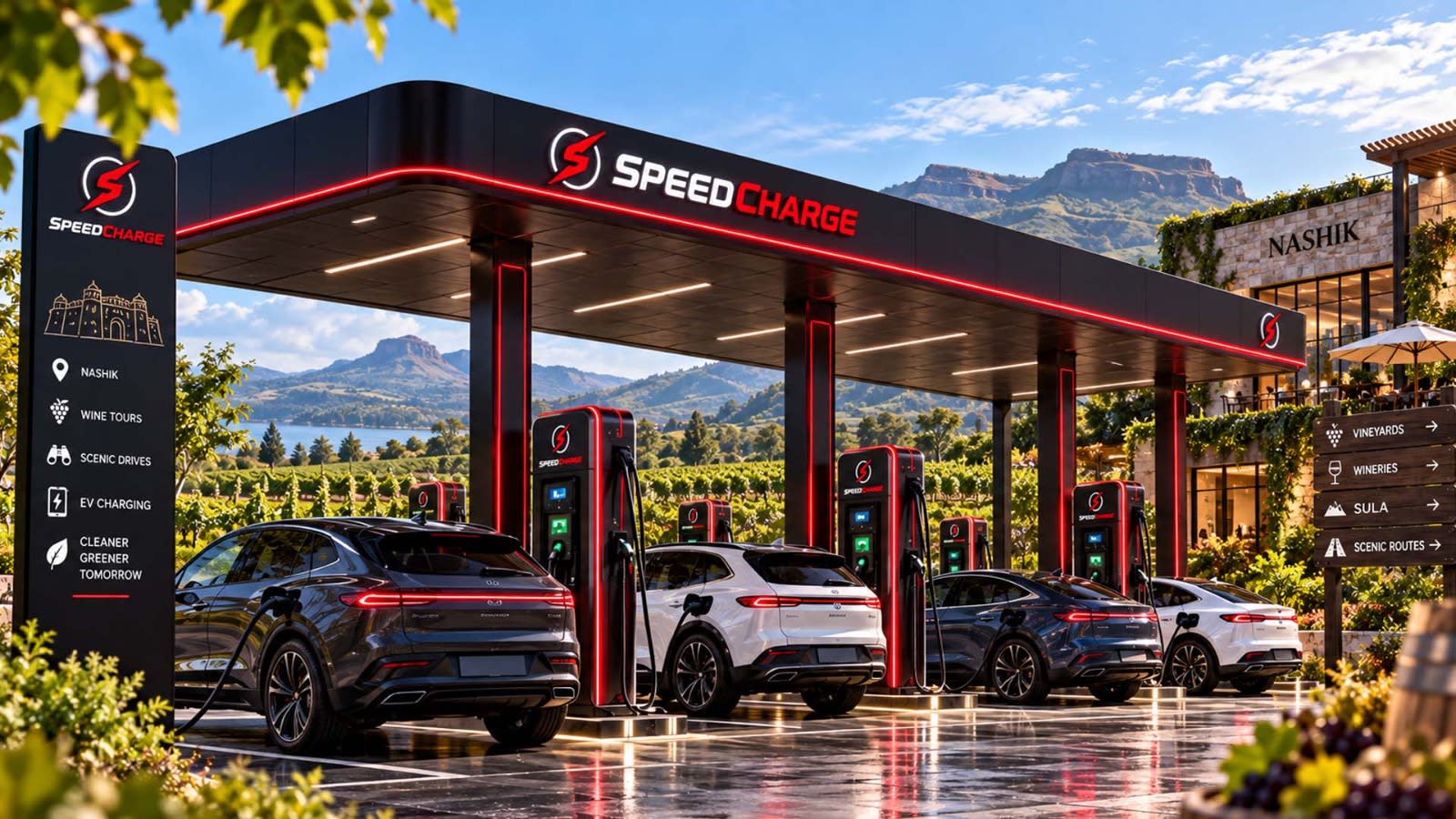
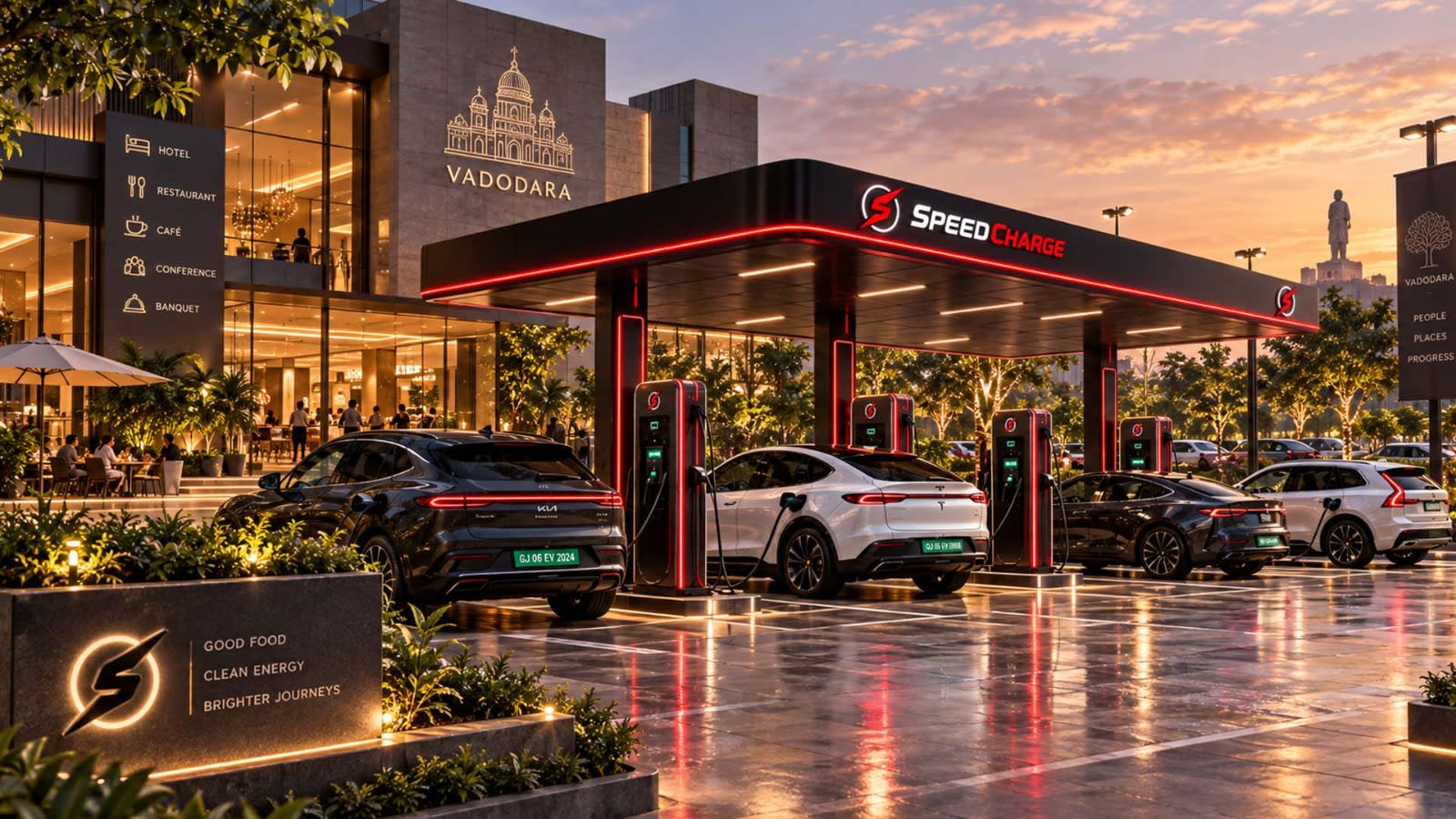
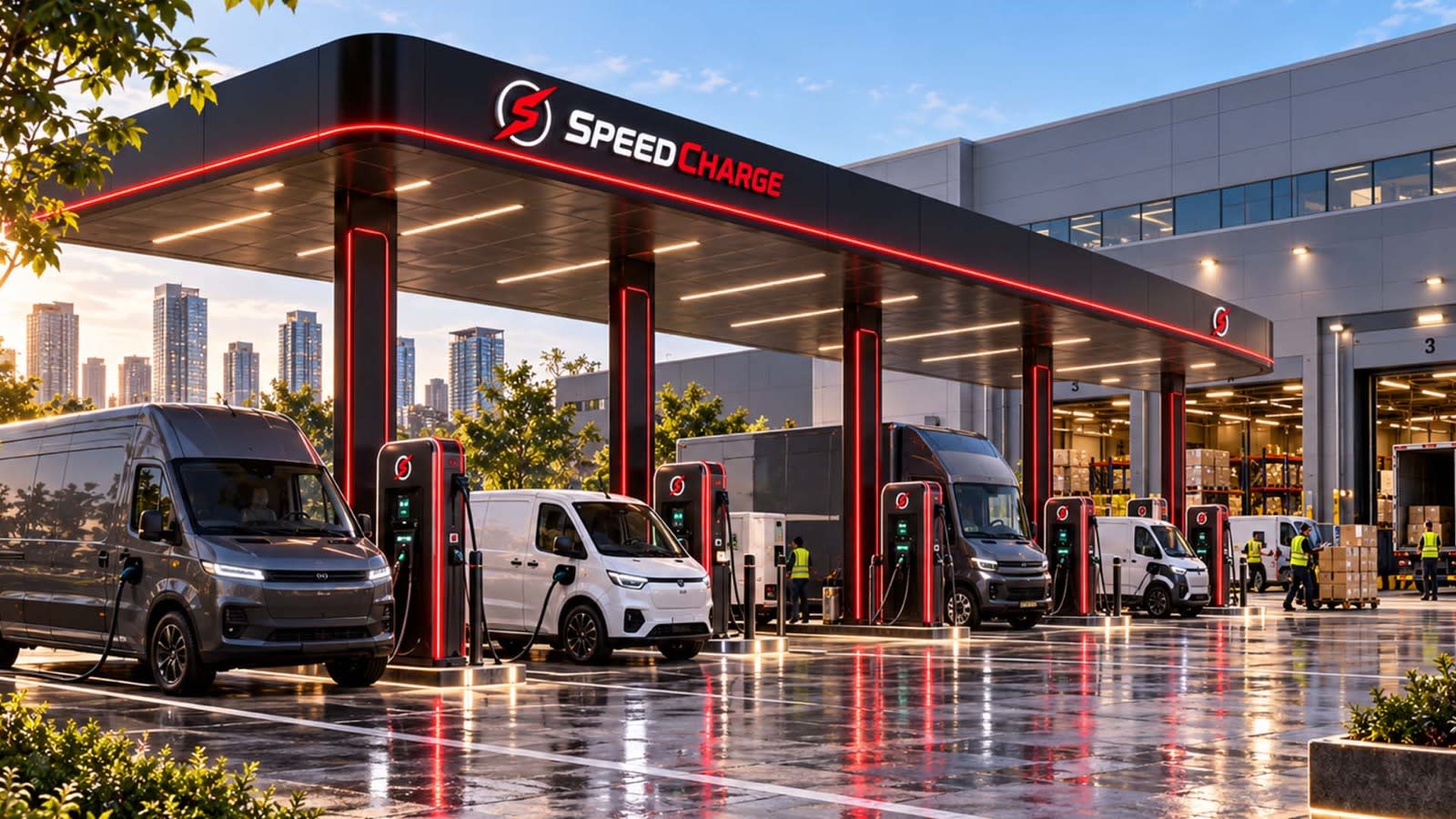
Real estate developers already manage three assets that charging networks need: accessible land, organised parking and long-term customer traffic. Malls, office parks, hotels, hospitals, mixed-use developments and managed parking facilities can use these assets to provide charging while strengthening tenant services and creating new commercial opportunities.
Installing an EV charging station for commercial property in India can generate direct charging income, property Revenue Share, parking revenue and indirect value through customer dwell time. However, installing the largest available charger does not automatically produce the strongest return. The correct commercial structure depends on vehicle demand, parking duration, electricity capacity, customer access and the responsibilities accepted by the developer.
This guide explains seven monetisation models, suitable charger strategies for different property types and the commercial, technical and contractual checks required before deployment.
Quick Answer: How Can Real Estate Developers Earn From EV Charging?
A developer can monetise an EV charging station for commercial property in India through:
Pay-per-use charging
Revenue Share with a charge point operator
Fixed site rent or licence fee
Charging as a Service for tenants
Parking, idle and overstay fees
Fleet and corporate charging contracts
Retail, hospitality and property-value benefits
The strongest model is normally a combination. A mall may earn from charging, parking and additional retail visits. An office park may combine employee subscriptions with fleet charging. A hotel may treat charging as both a paid service and a guest amenity.
Developers should calculate direct revenue separately from indirect benefits. Increased footfall, tenant retention or property differentiation may be valuable, but these benefits should not be presented as guaranteed charging income.
Why Commercial Properties Are Important Charging Locations
Commercial real estate can provide conditions that are difficult to secure on standalone roadside land:
Predictable daily visitors
Existing parking management
Security and lighting
Food, retail or waiting facilities
Recognisable property address
Longer customer dwell time
Tenant and employee demand
Potential fleet activity
Long-term property control
Space for future expansion
The opportunity varies by property. A shopping centre may receive weekend and evening demand, while an office park may peak during working hours. Hospitals can have continuous visitor traffic, whereas hotels may support overnight destination charging.
Before selecting equipment, developers should use the EV Charging Site Selection Guide India to assess traffic, access, parking duration, electricity and nearby competition.
Revenue Model 1: Pay-Per-Use Charging
Under pay-per-use charging, customers pay for completed sessions according to the displayed pricing structure.
Customer charges may include:
Energy delivered in kWh
Charging-service charge
Session charge where applicable
Parking fee
Idle or overstay fee
Applicable taxes
When This Model May Work
The property receives public EV traffic
Charging bays are visible and accessible
Customers have useful dwell time
Pricing and payment are clearly displayed
The charger is discoverable through maps or charging applications
Operations and maintenance are dependable
The developer may operate the station directly or appoint a CPO. Direct operation offers more control but also requires software, billing, customer support, reconciliation, maintenance and fault response.
The official e-AMRIT overview of charging infrastructure business models explains infrastructure and service opportunities within the EV ecosystem.
Revenue Model 2: Revenue Share With a Charging Operator
Under a Revenue Share structure, the developer provides the site, parking access or agreed infrastructure while a charging operator deploys or operates the station. The property receives a contractual share linked to eligible energy or revenue.
The agreement should define:
Eligible energy or eligible revenue
Controlling meter and software records
Customer tariff authority
Taxes and payment-gateway deductions
Free and promotional sessions
Refunds and failed sessions
Settlement period
Data and audit rights
Treatment of downtime
Minimum-payout conditions, if any
A Revenue Share is not the same as net profit. It is a contractual payout calculated under the executed agreement. Any minimum payout should be described as a conditional commercial mechanism rather than guaranteed ROI or guaranteed property income.
Property owners can review the SpeedCharge EV Charging Station Franchise page for structured participation options and project-specific commercial evaluation.
Revenue Model 3: Fixed Rent or Site Licence
A developer may licence charging bays or electrical space to a CPO in return for fixed rent.
Advantages
Predictable contractual property income
Limited exposure to charging utilisation
Simpler monthly settlement
Operator manages customer sessions
Risks
Fixed rent may reduce operator viability at low-use sites
Property may miss upside when charging demand grows
Long-term space may be committed without performance conditions
Electricity and common-area costs can create disputes
The agreement should identify the exact bays, equipment area, cable route, operating hours, signage rights, electricity-payment method, escalation, restoration and termination process.
A hybrid structure can combine a moderate fixed licence fee with a variable energy-linked share. This can provide some predictability while keeping both parties interested in increasing utilisation.
Revenue Model 4: Charging as a Service for Tenants
Charging as a Service, or CaaS, allows a developer to offer managed charging without independently operating hardware, software and customer payments.
A service provider may manage:
Site assessment
Charger procurement
Electrical design
Installation and commissioning
Charger Management System
User authentication
Digital payments
Remote monitoring
Preventive maintenance
Customer support
Performance reporting
The developer or tenant may pay a fixed subscription, per-kWh service charge, management fee or hybrid amount.
This structure can suit business parks, managed offices, logistics facilities, hotels and multi-property portfolios that want consistent service standards. The contract should still define charger ownership, electricity payment, customer pricing, service levels, data access and asset treatment at termination.
Revenue Model 5: Parking, Idle and Overstay Charges
Charging bays occupy valuable parking space. A property can protect bay availability by combining charging with parking management.
Possible charges include:
Normal parking tariff
Premium reserved-bay tariff
Idle fee after charging ends
Overstay fee after a defined grace period
Valet or assisted-charging fee
These charges should be disclosed before the session. An idle fee should encourage turnover rather than surprise the customer.
Parking and charger systems should share accurate session timestamps. The property also needs a process for blocked bays, non-EV vehicles, customer disputes and failed charger sessions. Charging customers should not incur an idle penalty when the equipment or application incorrectly reports session completion.
Revenue Model 6: Fleet and Corporate Charging Contracts
Commercial properties near business districts, delivery routes, airports, hospitals or transport hubs may attract fleet demand.
A fleet agreement can include:
Reserved charging windows
Committed monthly energy
Negotiated tariff
Priority access
Driver authentication
Consolidated invoicing
Service-level commitment
Emergency charging access
Fleet demand can improve utilisation, but it should match public-property operations. A delivery fleet arriving during retail peak hours may create congestion or block visitor bays.
Developers should assess vehicle size, turning radius, charger compatibility, dwell time and simultaneous power demand. Where appropriate, fleet sessions can be scheduled during overnight or off-peak property hours.
Revenue Model 7: Retail, Hospitality and Property Benefits
Charging can create indirect commercial benefits even when the property does not retain the full session revenue.
Potential benefits include:
Longer customer dwell time
Additional food and retail spending
Attraction of EV-driving tenants and visitors
Improved employee amenity
Support for corporate sustainability goals
Differentiation of new property projects
Future-ready parking infrastructure
Stronger tenant retention proposition
Developers should measure these benefits rather than assume them. Useful indicators include charging-customer dwell time, associated parking transactions, retail vouchers redeemed, repeat visits, tenant requests and charger-led enquiries.
Charging claims should remain evidence-based. A developer should not promise a specific increase in property value or footfall unless the claim is supported by property-specific data.
Commercial Models Compared
Selecting a model for an EV charging station for commercial property in India requires balancing income predictability, capital exposure and operational responsibility.
Model | Developer investment | Developer return | Main operator | Key risk |
|---|---|---|---|---|
Direct ownership | High | Charging margin and ancillary income | Developer or appointed team | Operational complexity |
Revenue Share | Low to medium | Eligible energy or revenue share | CPO | Calculation and data disputes |
Fixed site rent | Low | Contractual rent | CPO | Limited upside and operator viability |
CaaS | Agreement-dependent | Tenant fee, service value or share | Service provider | Long-term service commitment |
Fleet contract | Medium to high | Contracted charging revenue | Developer or CPO | Demand concentration |
Tenant subscription | Medium | Recurring tenant payment | Developer or CPO | Low subscription adoption |
Hybrid model | Shared | Fixed plus variable return | CPO with developer oversight | Complex reconciliation |
No model is universally cheaper. The contract should allocate costs and responsibilities rather than using broad commercial labels alone.
Match the Charger to the Property Type
Shopping Centres and Retail Parks
Retail sites may combine AC destination charging with selected DC charging. Charger power should reflect typical visit duration, vehicle turnover and grid capacity.
Office Parks
Employee vehicles often remain parked for several hours. Networked AC chargers with load management may serve more bays efficiently than installing high-power DC equipment for every user.
Hotels and Resorts
Overnight guest parking supports destination charging. A limited DC option may be considered for restaurants, events or transient visitors.
Hospitals
Hospitals require safe bay planning, accessible routes and reliable support. Emergency and patient access must never be obstructed by charging queues.
Mixed-Use Developments
Residential, office and retail users may have different access, tariffs and operating hours. Software should separate user groups and billing arrangements.
Warehouses and Logistics Properties
Fleet charging depends on vehicle schedules, depot dwell time, route energy and redundancy. Electrical capacity may be more important than public visibility.
Choosing the correct EV charging station for commercial property in India starts with measured dwell time and demand rather than charger power alone.
Calculate the Complete Commercial Cost
Developers should calculate total commissioned cost before agreeing to a revenue model. The budget for an EV charging station for commercial property in India must cover electricity infrastructure, site work, software and operating reserves rather than charger hardware alone.
Equipment and Software
Chargers and connectors
Communication hardware
Metering
Charger Management System
Payment integration
Network connectivity
Warranty and licences
Electrical Infrastructure
New connection or load enhancement
Transformer
HT or LT panel
Distribution equipment
Cables and trenches
Earthing and protection
Metering
Site Work
Foundations
Charging bays
Bollards and wheel stops
Canopy
Drainage
Lighting
Signage
CCTV and access control
Recurring Costs
Electricity and demand charges
Maintenance
Spare parts
Software and connectivity
Payment fees
Insurance
Customer support
Security and cleaning
The official guidance on EV charging installation costs identifies equipment, installation, manpower, maintenance, promotion and electricity infrastructure as relevant cost categories.
For technical budgeting, review the EV Charger Installation Guide 2026: Cost, Steps & Rules.
Electricity Feasibility Comes Before Commercial Terms
A commercial proposal remains incomplete until the property’s electrical capacity is assessed.
The assessment should verify:
Existing sanctioned load
Current peak demand
Spare capacity
Proposed charger demand
Simultaneous charging
Load-management potential
Need for load enhancement
LT or HT supply
Transformer capacity
Cable route
Metering arrangement
Applicable electricity tariff
Demand charges
Expansion requirement
A low-cost parking site can become expensive when it requires a dedicated transformer or long cable route. Conversely, a premium property with spare electrical capacity may support a lower commissioned cost.
For the complete deployment workflow, review How to Set Up an EV Charging Station in India.
Compliance and Equipment Due Diligence
Setting up charging infrastructure is treated as a de-licensed activity, but this does not remove electricity, equipment, safety, property and local requirements.
The Ministry of Power’s charging infrastructure framework supports connected and interoperable charging deployment.
Developers should verify:
Property right to install and operate
DISCOM requirements
Sanctioned load and metering
Charger standards and model documentation
Electrical design and protection
Earthing
Fire and building requirements
Safe bay layout
Customer pricing disclosure
Digital payments and receipts
Maintenance and incident response
The official EV charging standards overview explains the Indian standards framework. The Central Electricity Authority’s electrical safety regulations should be considered with current state and DISCOM requirements.
Government support should not be assumed. Applicants must check the current PM E-DRIVE scheme guidelines and obtain formal approval before including scheme support in a project model.
What the Developer–CPO Agreement Should Cover
Parties and Property
Correct legal names
Exact property and charging area
Parking-bay allocation
Access and operating hours
Signage and branding rights
Cable and transformer space
Investment and Ownership
Charger funding
Electrical-infrastructure funding
Asset ownership
Permanent civil work
Insurance
Replacement responsibility
Revenue and Payments
Customer tariff authority
Eligible energy or revenue
Metering source
Electricity deduction
Taxes and refunds
Revenue Share or rent
Settlement schedule
Audit rights
Operations
Charger uptime
Remote monitoring
Preventive maintenance
Fault-response time
Customer support
Parking enforcement
Data access
Exit
Agreement duration
Renewal
Early termination
Cure period
Asset transfer or removal
Property restoration
Treatment of cables, panels and foundations
Final settlement and data handover
Verbal assurances about revenue, uptime or property benefits should not replace written contractual terms.
How to Improve Charging Utilisation
Revenue depends on completed charging sessions, not only installed capacity.
Developers and operators can improve utilisation through:
Clear road and property signage
Accurate station listing
Live charger availability
Competitive and transparent pricing
Reliable digital payments
Marked and enforced charging bays
Loyalty or tenant programmes
Fleet and corporate partnerships
Retail charging offers
Safe 24-hour access where appropriate
Preventive maintenance
Fast fault resolution
Customers should be able to verify connector type, charger power, operating hours, pricing and availability before arriving. Accurate map listings and live availability can prevent unnecessary trips and improve customer confidence.
Developer Due-Diligence Checklist
Before approving an EV charging station for commercial property in India, confirm:
Demand
Is local EV traffic measured?
Do tenants or employees require charging?
Is fleet or anchor demand available?
What is the typical parking duration?
Which chargers already operate nearby?
Electricity
Is spare sanctioned load confirmed?
Is transformer work required?
Are demand charges included?
Can load management reduce upgrades?
Is future expansion planned?
Commercial Structure
Who funds each asset?
Who owns the equipment?
How is developer income calculated?
Who pays electricity and operating costs?
Can the developer audit session data?
Operations
Who monitors the chargers?
What uptime commitment applies?
Who resolves customer complaints?
Are spare parts locally available?
Who enforces bay access?
Exit
Can the equipment be transferred?
Who pays removal costs?
What happens to permanent electrical work?
How will final settlements be calculated?
Who restores the parking area?
Common Real Estate Monetisation Mistakes
Installing equipment before checking electricity capacity
Selecting charger power without measuring dwell time
Treating charger price as total project cost
Assuming national EV growth guarantees site demand
Counting indirect property benefits as confirmed revenue
Accepting unclear Revenue Share definitions
Describing a minimum payout as guaranteed ROI
Ignoring parking enforcement
Giving one party complete data control
Excluding demand charges and maintenance
Using a short property agreement for a long-term asset
Assuming government support without approval
Failing to plan expansion during initial electrical work
Ignoring customer refunds and failed sessions
Omitting asset removal and property restoration clauses
How SpeedCharge Supports Commercial Properties
SpeedCharge can support commercial-property charging projects through:
Site and demand assessment
Electricity feasibility
Charger selection
Commercial-model evaluation
Installation planning
Civil and electrical coordination
Software and payment integration
Remote monitoring
Preventive maintenance
Revenue reporting
Customer support
Real estate developers, malls, office parks, hotels, hospitals and parking operators can Partner With SpeedCharge for a site-specific assessment and commercial discussion.
The correct structure depends on property access, electricity capacity, demand, investment preference and the responsibilities each party is prepared to accept.
Final Thoughts
A successful EV charging station for commercial property in India should be designed as part of the property’s parking, electricity and customer-service strategy. The developer must decide whether the primary objective is direct charging revenue, predictable rent, energy-linked Revenue Share, tenant service, fleet demand or indirect retail and property benefits.
The strongest projects combine measured demand, appropriate charger power, confirmed electricity capacity, transparent customer pricing, dependable operations and auditable commercial reporting.
EV charging can convert underused parking into a future-ready service, but sustainable monetisation depends on site-specific economics and a contract that clearly assigns investment, ownership, maintenance, data and exit responsibilities.
Frequently Asked Questions
1. Can commercial property owners earn money from EV charging?
Yes. Property owners may earn through charging revenue, Revenue Share, fixed site rent, subscriptions, parking fees, fleet contracts or a combination of direct and indirect benefits.
2. Which commercial properties are suitable for EV charging?
Malls, offices, hotels, hospitals, mixed-use developments, managed parking, logistics facilities and retail properties may be suitable when they have adequate parking, electricity and measurable vehicle demand.
3. Should a developer own the chargers or partner with a CPO?
Ownership offers greater control but requires capital and operational capability. A CPO partnership can reduce operational burden but requires clear commercial, data, service-level and exit terms.
4. Is Revenue Share the same as profit?
No. Revenue Share is a contractual payout based on eligible energy, revenue or another agreed metric. Profit remains after all applicable project expenses and obligations.
5. Are AC or DC chargers better for commercial properties?
The correct choice depends on vehicle type, dwell time, turnover, electricity capacity and customer expectations. Long-stay properties may benefit from AC charging, while high-turnover locations may require selected DC capacity.
6. Can a mall charge parking fees in addition to charging fees?
Parking, idle or overstay charges may be applied when permitted and clearly disclosed. The pricing and refund process should be communicated before the customer begins a session.
7. Does every commercial charger require a separate electricity connection?
Not necessarily. The requirement depends on existing sanctioned load, metering, tariff category, proposed charging demand and the applicable DISCOM procedure.
8. Can a commercial charging project receive government support?
Only eligible projects approved under the applicable scheme can receive support. Developers should not include a subsidy in confirmed income until eligibility and sanction are documented.
9. What data should a property owner receive from the CPO?
Reports should include charger availability, session count, energy delivered, customer billing, refunds, taxes, Revenue Share calculation, downtime, maintenance and settlement status.
10. What is the biggest risk for a commercial-property charging project?
Weak utilisation is a major commercial risk. Unconfirmed electricity capacity, unclear contracts, charger downtime, parking-bay misuse and incomplete operating data can also reduce performance.