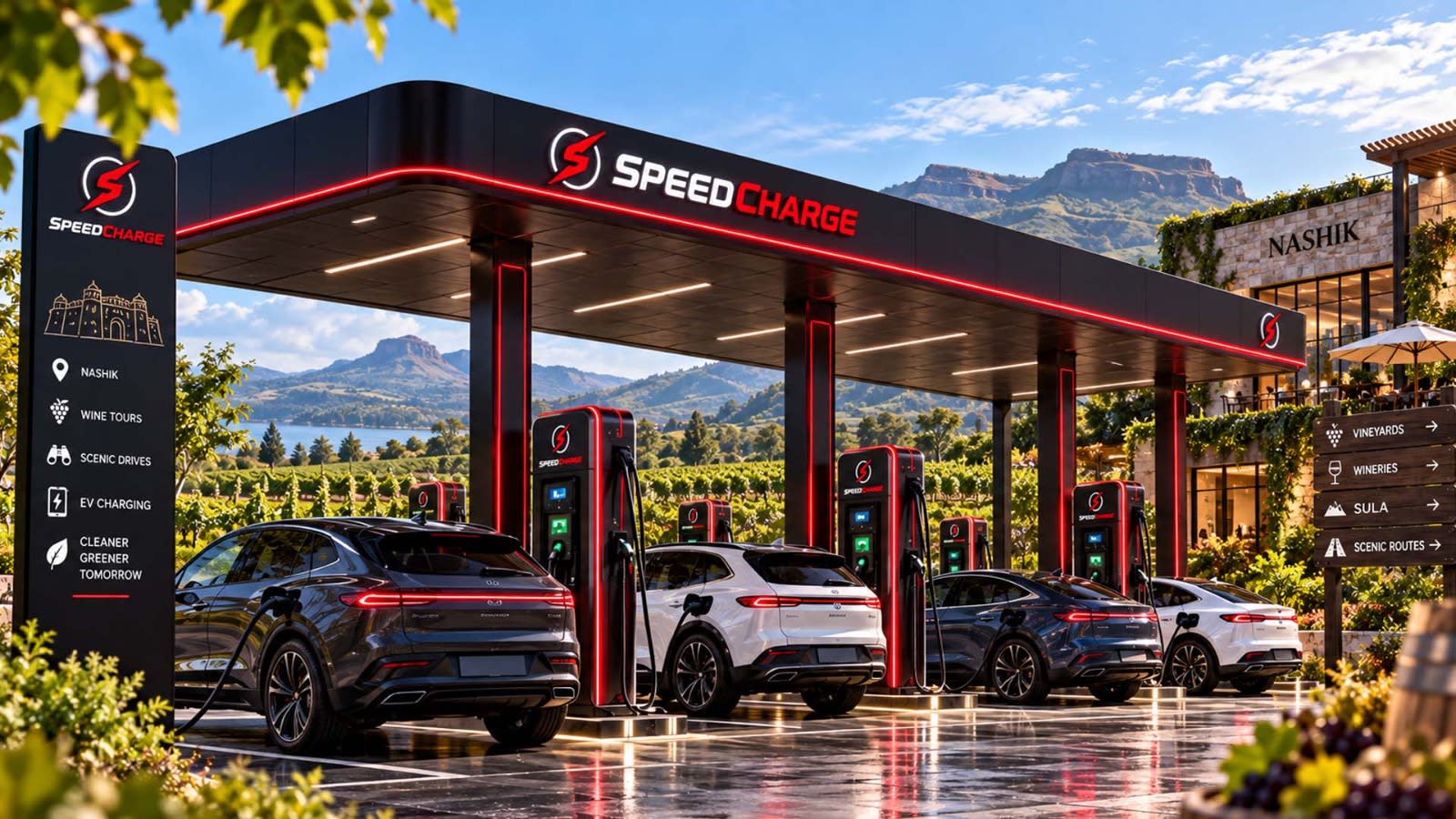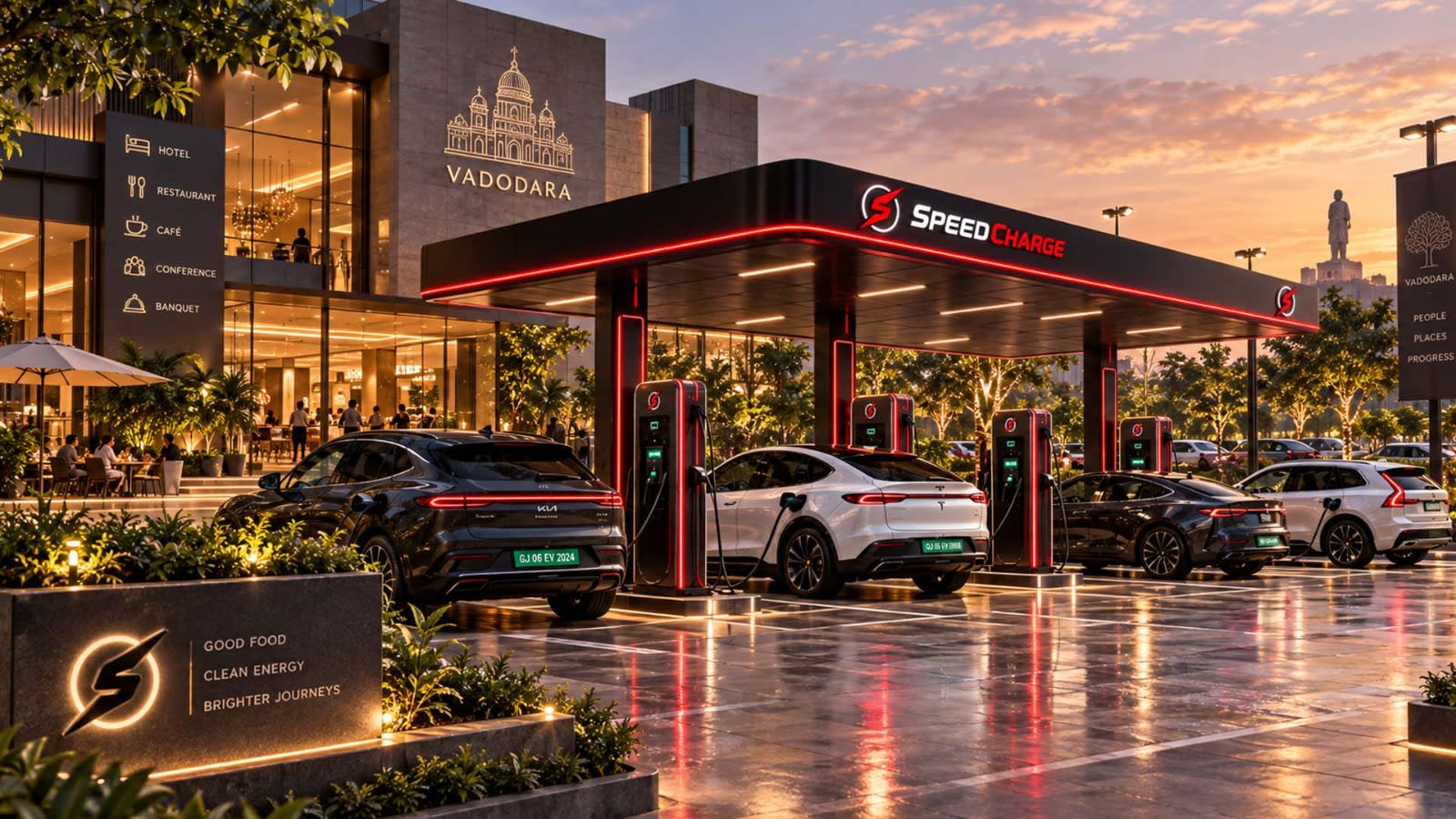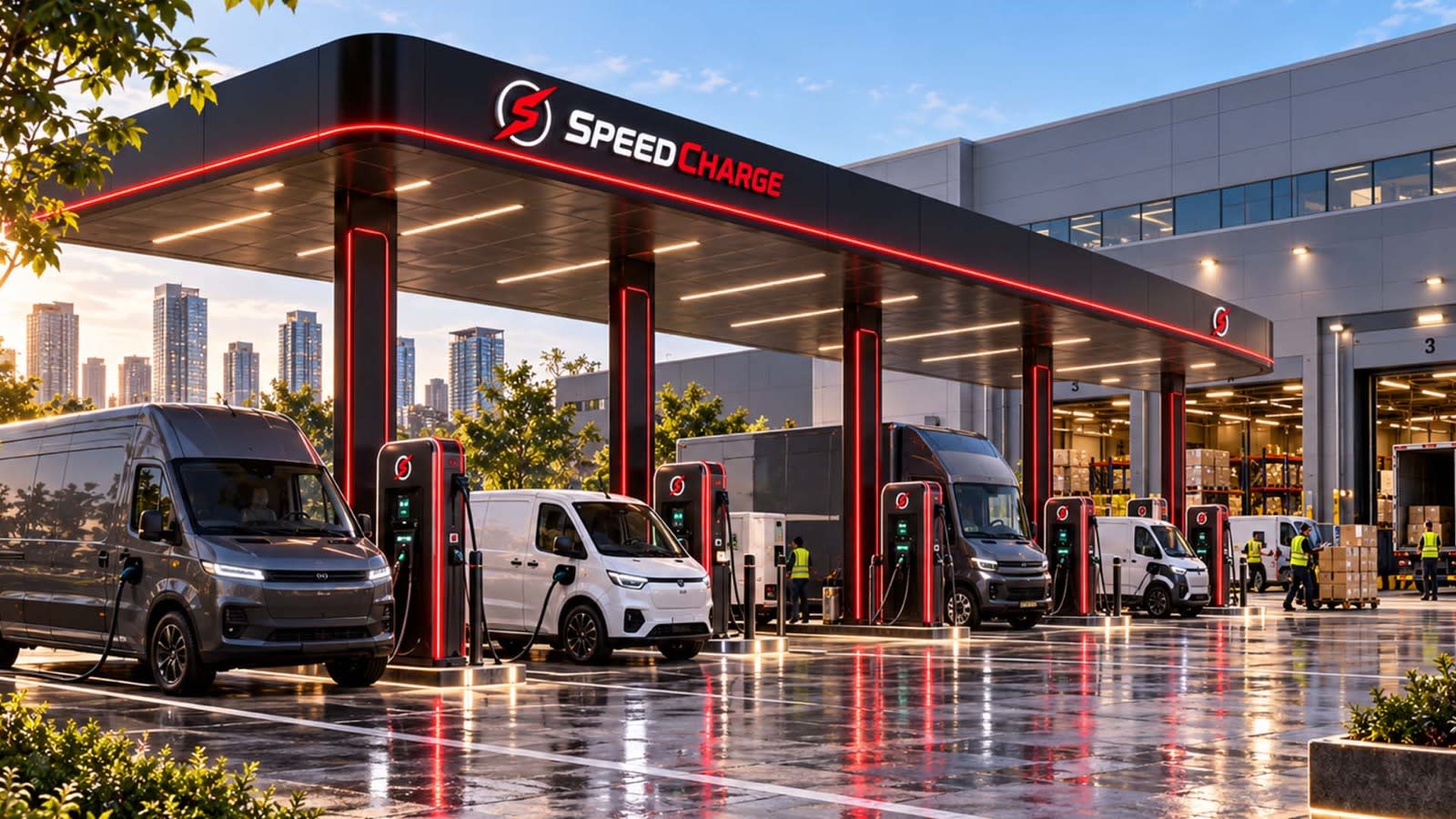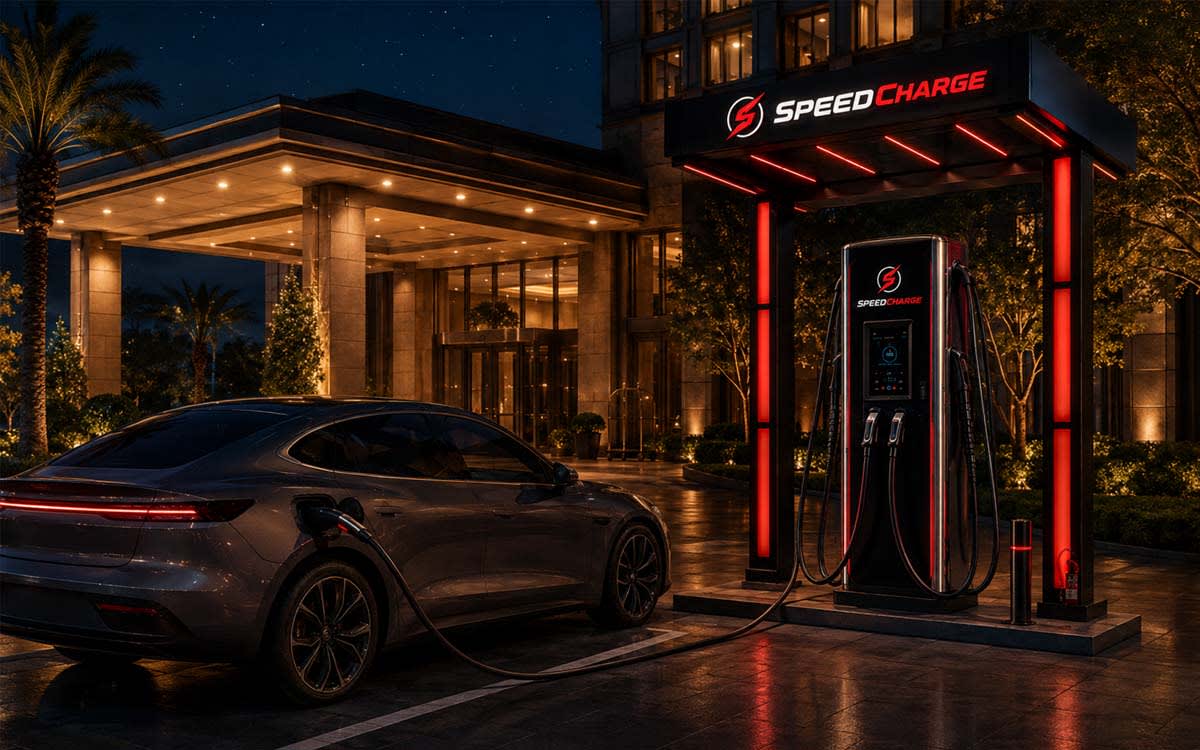
EV charging at a hotel, shopping centre, restaurant, resort or office works differently from a highway fast-charging station. At a destination site, the customer is already visiting the property for another reason and the vehicle can charge while the person sleeps, shops, works, eats or attends an event.
Well-planned commercial EV charging stations can therefore create value beyond the electricity sold through the charger. They can improve customer convenience, make a property easier to discover for EV drivers, support workplace or visitor charging and help businesses prepare parking infrastructure for increasing EV adoption.
The challenge is choosing infrastructure that matches actual customer behaviour. A destination where cars remain parked for several hours generally requires a different charger strategy from a roadside location where drivers expect to replenish energy quickly and continue their journey.
Businesses planning a deployment can first review SpeedCharge commercial EV charging solutions and the EV Charger Installation Guide before selecting hardware.
What Is Destination EV Charging?
Destination charging means installing EV chargers at places where drivers already intend to spend time. Hotels, resorts, shopping malls, restaurants, cinemas, offices, hospitals, educational campuses and long-stay parking facilities are common examples.
The driver does not necessarily visit the property because the battery is low. Instead, charging becomes an additional service available during the normal parking period. This distinction affects charger power, infrastructure cost, pricing and the way the business should calculate its return.
A hotel guest may leave a vehicle parked overnight, an office employee may remain for eight hours and a mall customer may stay for several hours. In all three cases, the property has significantly more charging time available than a highway service station.
Destination Charging vs Public Fast Charging
The two charging models solve different customer problems and should not be evaluated using the same financial assumptions.
Factor | Destination Charging | Public Fast Charging |
|---|---|---|
Main reason driver visits | Hotel, mall, office, restaurant or venue | Vehicle needs energy |
Typical parking duration | Medium to long | Short |
Charger strategy | Usually AC or mixed AC/DC | Primarily DC fast charging |
Infrastructure requirement | Moderate | Higher |
Grid requirement | Often manageable with existing supply or upgrade | Frequently higher sanctioned load |
Customer expectation | Charge while doing something else | Charge quickly and continue |
Primary business value | Customer experience, bookings, footfall, amenity | Charging revenue and throughput |
Utilisation pattern | Property-dependent | Traffic and corridor-dependent |
Access control | Often useful | Usually open/public |
Expansion strategy | Add bays as EV demand grows | Add power and chargers as throughput grows |
A fast-charging operator depends heavily on charger utilisation and energy throughput. A destination property can justify charging partly through customer acquisition, guest experience, employee services or increased property value even when direct charging revenue is not the primary objective.
Why Commercial EV Charging Stations Work at Destination Properties
The strongest destination sites combine parking dwell time with an existing reason to visit. A hotel does not need to create traffic specifically for the charger because guests already need parking, while a mall can allow customers to add energy during shopping, dining or entertainment.
This changes the business case. Instead of calculating only electricity purchase cost versus charging tariff, the property should consider whether charging affects bookings, customer preference, dwell time, tenant satisfaction, workplace benefits or repeat visits.
Businesses should still track charging utilisation, but low early utilisation does not automatically mean the infrastructure has failed. Destination charging is partly a property amenity and partly an EV infrastructure asset that can become more valuable as the number of electric vehicles using the property increases.
AC vs DC Charging: Which Is Better for a Business?
Charger selection should start with how long vehicles normally remain parked, not with the assumption that the highest available kW rating is always better.
For most commercial EV charging stations at hotels, offices and long-dwell destinations, AC charging can provide a cost-effective foundation because vehicles remain connected for several hours. DC fast charging becomes more useful where the property also serves short-stay visitors, passing traffic or high-turnover users who need substantial energy quickly.
A highway hotel, for example, may have two customer groups. Overnight guests can use AC chargers while passing EV drivers stopping only for food or a short break may benefit from DC fast charging. In this case, AC and DC infrastructure serve different use cases on the same property.
Why Over-Specifying Charger Power Can Waste Capital
A high-power charger cannot create more value simply because it finishes charging earlier. If a hotel guest's vehicle will occupy the parking bay throughout the night, completing the session much earlier does not automatically free the bay for another customer.
Higher-power charging can also increase hardware cost and electrical infrastructure requirements. The objective should therefore be to deliver enough useful energy during the customer's natural dwell time rather than maximising charger power without an operational reason.
For technical planning, use the SpeedCharge EV Charger Installation Guide.
Recommended Charging Strategy by Property Type
Property Type | Typical Dwell Pattern | Practical Starting Strategy | Main Business Objective |
Hotels & resorts | Several hours / overnight | AC chargers; DC where transit demand exists | Bookings and guest convenience |
Shopping malls | 2–5 hours | Mix based on traffic and turnover | Footfall and customer experience |
Restaurants & cafés | 1–3 hours | AC or suitable DC depending on location | Attract customers and increase dwell |
Offices | Working day | Managed AC charging | Employee and visitor charging |
Business parks | Long daytime dwell | Multiple managed AC chargers | Tenant amenity |
Hospitals | Variable, often long | AC + selected faster charging | Patient/visitor convenience |
Cinemas | 2–4 hours | AC charging | Customer amenity |
Resorts | Overnight / long dwell | AC destination charging | Guest bookings |
Highway hotels | Mixed | AC for guests + DC for travellers | Hospitality + en-route charging |
Long-stay parking | Several hours / days | Managed AC charging | Paid parking service |
This table should be treated as a starting framework rather than a fixed specification. A property site survey should still assess electrical capacity, parking turnover, expected EV mix and future expansion.
EV Charging for Hotels and Resorts
Hotels are one of the strongest destination-charging use cases because vehicles can remain parked for an entire evening or overnight. A guest arriving after an intercity journey can connect the vehicle after check-in and leave with additional range the following morning without spending separate time at a public charging station.
For hospitality businesses, this can influence booking decisions. EV travellers planning a road trip may prefer accommodation where charging is available at the destination, particularly when the next day's journey begins early.
Hotels should make charging information visible during the booking process. Connector type, charger capacity, pricing, access conditions and whether advance reservation is available should be communicated clearly so that a guest does not discover restrictions only after arrival.
EV Charging for Shopping Malls
Malls naturally combine parking with medium-duration dwell. Customers may remain on-site while shopping, eating, watching a film or using other services, creating a useful window for EV charging.
The charging area should be easy to locate and should not be treated as an obscure infrastructure corner. Clear parking-bay markings, wayfinding and cooperation from the parking-management team can have as much impact on charger usability as the hardware itself.
For malls with high parking turnover, utilisation should be monitored over time. If charging bays remain occupied after sessions finish, the property may need idle policies or clearer customer communication.
EV Charging for Restaurants and Cafés
Restaurants can use charging as a customer-acquisition tool, particularly on intercity roads, tourist routes and urban areas where EV drivers actively search for places to stop.
The ideal charger depends on dining duration and route characteristics. A city restaurant with long average dwell may use AC charging effectively, while a highway restaurant serving travellers may justify faster charging because customers expect to continue their journey shortly after eating.
Charging can also be bundled with the restaurant experience. A venue may choose complimentary charging, electricity-cost recovery or a spend-linked benefit depending on its customer profile and commercial strategy.
Workplace EV Charging
Offices have one of the longest predictable parking windows. Employee vehicles can remain parked for most of the working day, allowing several cars to receive meaningful energy without requiring extremely high charger power.
The key challenge is sharing available charging capacity fairly. As EV adoption grows, businesses may need reservation systems, scheduled charging, user identification and dynamic load management rather than simply adding one charger for every EV owner.
Commercial properties evaluating workplace infrastructure can explore SpeedCharge Partner Solutions.
Pricing Destination EV Charging
Destination-charging pricing should reflect the reason the infrastructure was installed. A business whose main objective is attracting customers may choose a different pricing model from a paid car park that treats charging as an additional commercial service.
Pricing Model | How It Works | Best Fit |
Complimentary | Customer pays nothing separately | Hotels, premium resorts, restaurants |
Electricity-cost recovery | Charge approximately to recover energy/service cost | Offices, hotels, societies |
Included in package | Charging bundled into room/event/parking price | Hospitality |
Spend-linked | Charging benefit after minimum purchase | Restaurants and retail |
Paid per kWh/session | User pays for charging directly | Public-access commercial property |
Hybrid | Different tariff for guests and non-guests | Hotels, malls, mixed-use sites |
There is no universal best pricing model. A premium hotel may treat charging like Wi-Fi or parking, while a commercial car park may need every charging session to produce direct revenue.
Whatever model is selected, pricing and eligibility should be clearly communicated before the charging session begins.
Free EV Charging vs Paid Charging
Complimentary charging can be a strong marketing feature when electricity consumption is small relative to the value of the customer transaction. A hotel room, restaurant booking or premium retail visit may be worth considerably more to the property than the margin it could earn by marking up a charging session.
However, unrestricted free charging can attract users who have no relationship with the business. Access controls can solve this by limiting charging to registered guests, customers, employees or authorised visitors.
Paid charging is more suitable when electricity delivery itself forms part of the commercial service. The correct model should support the property's primary business objective instead of creating unnecessary friction for customers.
Access Control and Parking Management
Destination sites have a different access problem from open public charging networks. The business may want customers to use its chargers but may not want unrelated drivers occupying private parking spaces.
Access can be managed through mobile applications, RFID credentials, QR workflows, booking codes or staff-issued authorisation. The appropriate method depends on the size of the property and how much operational complexity the business wants to manage.
Parking enforcement matters equally. A working charger provides no value if the bay is occupied by a non-EV or by a vehicle that finished charging several hours earlier.
Preventing Charger Bay Hogging
Properties should define what happens when a charging session completes. Hotels may allow the vehicle to remain overnight because parking turnover is low, whereas malls or restaurants may need users to move vehicles once charging is complete.
Idle fees can help at high-demand sites, but clear communication often matters more than penalties during the early stages of adoption.
How Many EV Chargers Should a Business Install?
Sizing commercial EV charging stations should be based on actual parking behaviour rather than national EV registration numbers. The property should assess total parking capacity, daily turnover, average dwell time, existing EV demand, likely future growth and whether multiple users can share the same charging point across the day.
Starting with a manageable number of chargers and designing electrical infrastructure for future expansion is often more efficient than installing the full projected requirement immediately. Conduit, cable routes, panel capacity and space for future equipment can be prepared during the initial construction phase.
This is particularly important because civil work can be disruptive. Preparing expansion routes early can reduce the need to reopen walls, floors or parking areas later.
For location planning, see the SpeedCharge EV Charging Site Selection Guide.
Load Management Can Avoid Unnecessary Electrical Upgrades
Multiple chargers do not necessarily need to operate at maximum power simultaneously. Dynamic load management can allocate available site capacity across vehicles according to the property's electrical limit and charging priorities.
For example, an office with several vehicles connected throughout an eight-hour working day has considerable flexibility to distribute energy over time. The system can reduce or increase charging power across active sessions rather than creating one large uncontrolled demand peak.
This can help businesses use existing electrical infrastructure more efficiently, although the actual capacity requirement must still be verified through a professional site and load assessment.
Confirm Sanctioned Load Before Buying Chargers
Before selecting charger quantity and power, determine how much electrical capacity the property already uses and how much spare headroom exists. A technically attractive charging design can become expensive if it requires an unplanned sanctioned-load increase, panel replacement, transformer work or long cable run.
The correct sequence is customer dwell analysis → expected EV demand → charger mix → electrical load assessment → installation design.
The broader implementation process is covered in How to Set Up an EV Charging Station in India.
Use OCPP-Compatible Smart Chargers Where Management Matters
A connected commercial installation may need central monitoring, billing, user authentication, fault alerts, load management and charging-session reporting. In these use cases, open charger-to-management-platform communication can provide valuable flexibility.
OCPP-compatible equipment can make it easier to operate chargers through a Charging Station Management System and can reduce dependence on one proprietary backend. Buyers should still verify the exact OCPP version, certification and actual interoperability rather than accepting a generic compatibility claim.
This becomes more important as the number of chargers across a property portfolio grows.
Make the Charging Station Easy to Find
Installing the hardware is only half of the job. A driver needs to know that the property offers charging before arriving and must be able to locate the charging bay after entering the site.
Charging information should be added to relevant charging-network apps, mapping services and the property's own digital channels where appropriate. Listings should show accurate location, connector type, charger capacity, availability conditions and pricing.
The SpeedCharge EV Charging Station Finder illustrates the role that station discovery plays in the driver experience.
Signage and Staff Training Matter
A charging point hidden inside a large basement parking facility can be difficult to use even when its digital listing is accurate. Directional signage should lead drivers from the property entrance to the charging bay.
Front-desk, security and parking staff should also know the charging procedure. They should be able to explain where the charger is located, who may use it, whether payment is required and what to do if a session does not start.
These operational details frequently determine whether a property's charging service feels professional.
Who Should Install Commercial EV Charging Stations?
Hotels, resorts, malls, office parks, restaurants, cinemas, hospitals, educational institutions and other properties with recurring vehicle dwell are strong candidates for commercial EV charging stations. The strongest sites are not necessarily those with the highest passing traffic; they are properties where EV drivers already park for long enough to receive useful energy.
Businesses should evaluate the charger as part of the overall property experience. For hospitality the return may appear in bookings, for retail it may appear in visits and dwell time, while offices may measure employee satisfaction and workplace readiness.
The investment case therefore needs metrics that reflect the venue's actual business model.
Measuring Return on Destination Charging
Charging revenue is only one performance metric. A property may also track the number of charging users, repeat visitors, charging-linked bookings, customer dwell time and whether EV amenities influence corporate or event business.
A hotel, for example, can compare the number of EV guests who selected the property because charging was available. A mall can examine whether users arriving specifically for charging spend money elsewhere on the property.
This is a more accurate way to evaluate destination infrastructure than expecting every charger to operate like an independent fuel-retailing business.
Operating Costs Businesses Should Budget For
Electricity is the most obvious cost, but it is not the only one. Businesses should also consider software subscriptions, payment-processing costs, maintenance, cable replacement, connectivity and staff time required to manage charging questions or parking issues.
Maintenance should be included from the beginning. Public-facing connectors and cables experience repeated handling, and a charger listed as operational while actually unavailable creates a poor customer experience.
A defined maintenance responsibility and escalation process should therefore form part of the operating plan.
EV Charging for Housing Societies and Apartments
Residential societies share several characteristics with destination charging because vehicles remain parked for long periods. However, the user base, billing model and approval process are different because the chargers primarily serve residents rather than retail or hospitality customers.
Shared infrastructure can use access controls, individual metering and load management to serve several users without requiring each resident to build an entirely separate electrical system.
For residential deployments, read How to Install EV Chargers in a Housing Society.
Common Destination Charging Mistakes
Installing DC Charging Without a Real Need
Higher power does not automatically create a better customer experience. If cars naturally remain parked for several hours, AC charging may deliver the required energy at lower infrastructure cost.
Selecting Chargers Before Studying Dwell Time
Customer behaviour should determine charger specifications. An overnight hotel, a two-hour restaurant and a highway transit stop have different requirements.
Ignoring Electrical Capacity
Buying hardware before confirming sanctioned load and distribution capacity can create redesign costs and project delays.
Installing Only One Charger Without Expansion Planning
A single point can quickly become a bottleneck as EV usage grows. Even if the business starts small, the electrical design should consider how more charging bays will be added later.
Hiding the Charger
Poor signage, inaccurate location information and uninformed staff can make an otherwise working charger difficult to use.
Ignoring Parking Enforcement
ICE vehicles or completed charging sessions occupying bays can reduce utilisation more effectively than any technical fault.
Treating Charging as a One-Time Installation
Charging infrastructure needs software management, maintenance, updates, utilisation reviews and capacity planning throughout its operating life.
How to Plan a Destination Charging Project
A strong project starts by identifying who will use the chargers and how long they normally remain at the property. Once dwell time and likely demand are known, the business can determine the appropriate AC/DC mix and estimate the electrical load.
The next step is a professional site survey covering parking layout, distribution-board capacity, cable routes, earthing, networking and future expansion. Only after these are understood should the final hardware configuration be selected.
Businesses can use the SpeedCharge Commercial Charging Solutions page to evaluate property charging options and the EV Charger Installation Guide for installation planning.
Future of Destination EV Charging in India
As electric vehicles become more common, charging availability is likely to become a normal expectation at more commercial properties rather than a premium novelty. Hotels, shopping centres and offices that install scalable infrastructure early can expand incrementally instead of redesigning parking systems later.
The strongest business model will not necessarily be charging drivers as quickly as possible. It will be placing the right amount of charging power where vehicles are already stationary.
For many properties, this makes destination charging one of the most practical ways to participate in India's growing EV infrastructure ecosystem.
Final Thoughts
The strongest commercial EV charging stations are designed around customer behaviour rather than charger specifications. Hotels need to understand overnight guests, offices need to understand employee parking, malls need to understand turnover and highway properties need to distinguish destination visitors from drivers who simply need a fast top-up.
AC charging can provide an efficient foundation for many long-dwell properties, while DC charging should be added where faster turnaround genuinely supports the site's user profile. Pricing, access control, load management, discoverability and maintenance then determine whether the infrastructure delivers a good customer experience.
Frequently Asked Questions
1. What is destination EV charging?
Destination EV charging means installing chargers at places where drivers already intend to spend time, such as hotels, shopping malls, restaurants, offices and resorts. The vehicle charges during the user's normal visit rather than requiring a dedicated charging stop.
2. Which EV charger is best for a hotel?
Hotels commonly benefit from AC charging because guest vehicles may remain parked overnight. A hotel located on a major travel corridor may also consider DC charging for visitors who are stopping briefly rather than staying overnight.
3. Should shopping malls install AC or DC EV chargers?
The correct mix depends on visitor dwell time, parking turnover, available electrical capacity and expected EV demand. AC can suit longer visits, while selected DC charging can support customers who need faster energy replenishment.
4. Can restaurants install EV charging stations?
Yes. Restaurants, cafés and highway dining properties can integrate charging into their parking areas, subject to electrical capacity, safety requirements and property permissions.
5. Should businesses offer free EV charging?
It depends on the commercial objective. Hotels and premium venues may use complimentary charging as a customer amenity, while parking operators and public-access properties may prefer direct charging fees.
6. How many EV chargers should a hotel or mall install?
There is no universal number. Businesses should evaluate parking capacity, EV traffic, dwell time and future growth, then start with an appropriate number of chargers while preparing electrical infrastructure for expansion.
7. Does a business need a DC fast charger?
Not always. Long-dwell destinations may receive limited additional benefit from high-power DC charging. Faster charging becomes more useful when customers remain only briefly or when the property also serves passing traffic.
8. What is load management in EV charging?
Load management controls how available electrical power is distributed across multiple connected chargers. It can help a business serve several vehicles without every charger drawing maximum power simultaneously.
9. Why is OCPP important for business EV chargers?
OCPP provides a standard communication framework between compatible chargers and charging-management systems. It can support remote management and reduce dependence on a single proprietary software platform.
10. How can a business make its EV chargers easier to find?
Businesses should maintain accurate charger listings, publish charging information on their own website and property channels, provide clear on-site signage and ensure customer-facing staff understand how the charging service works.