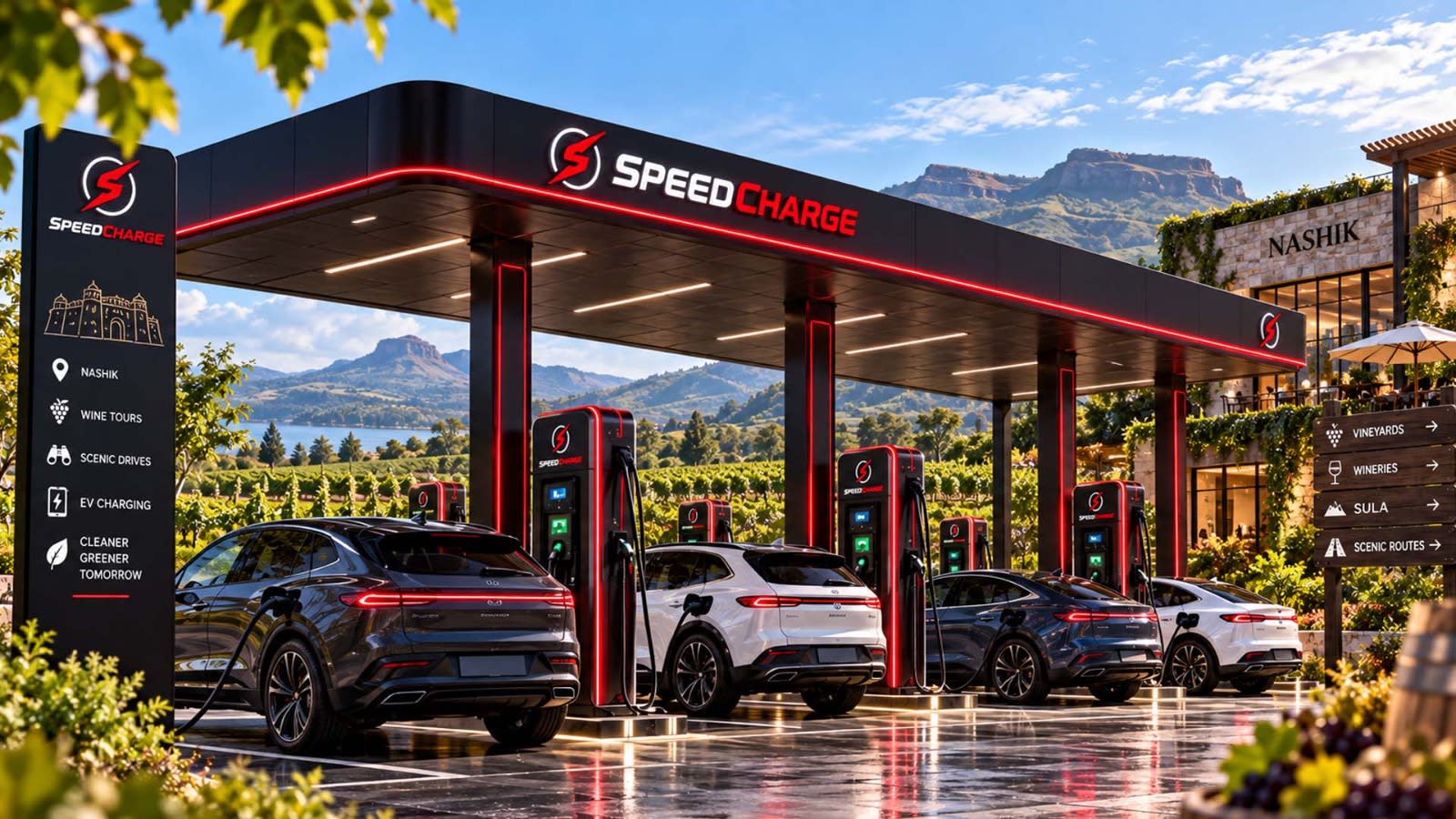
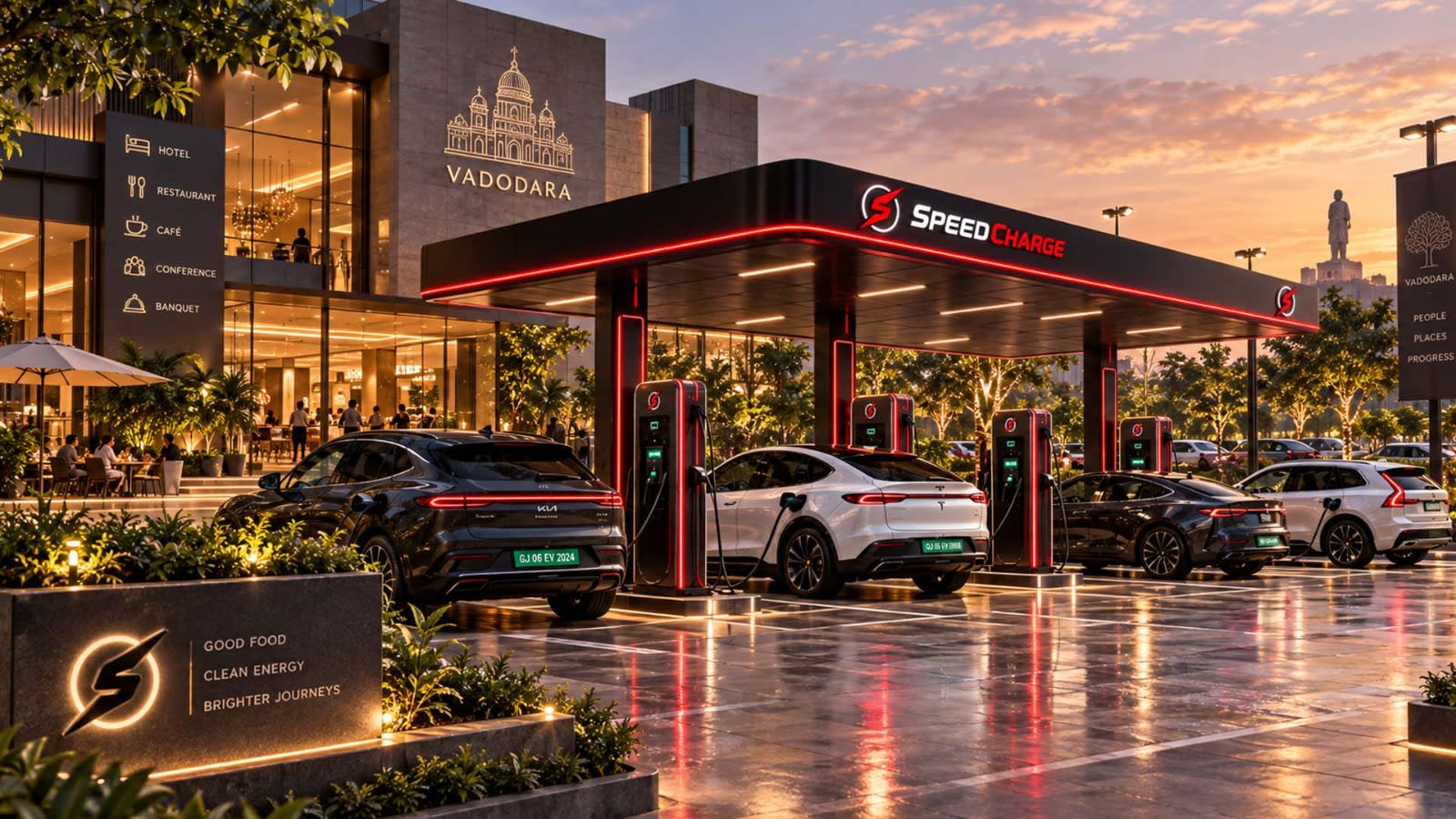
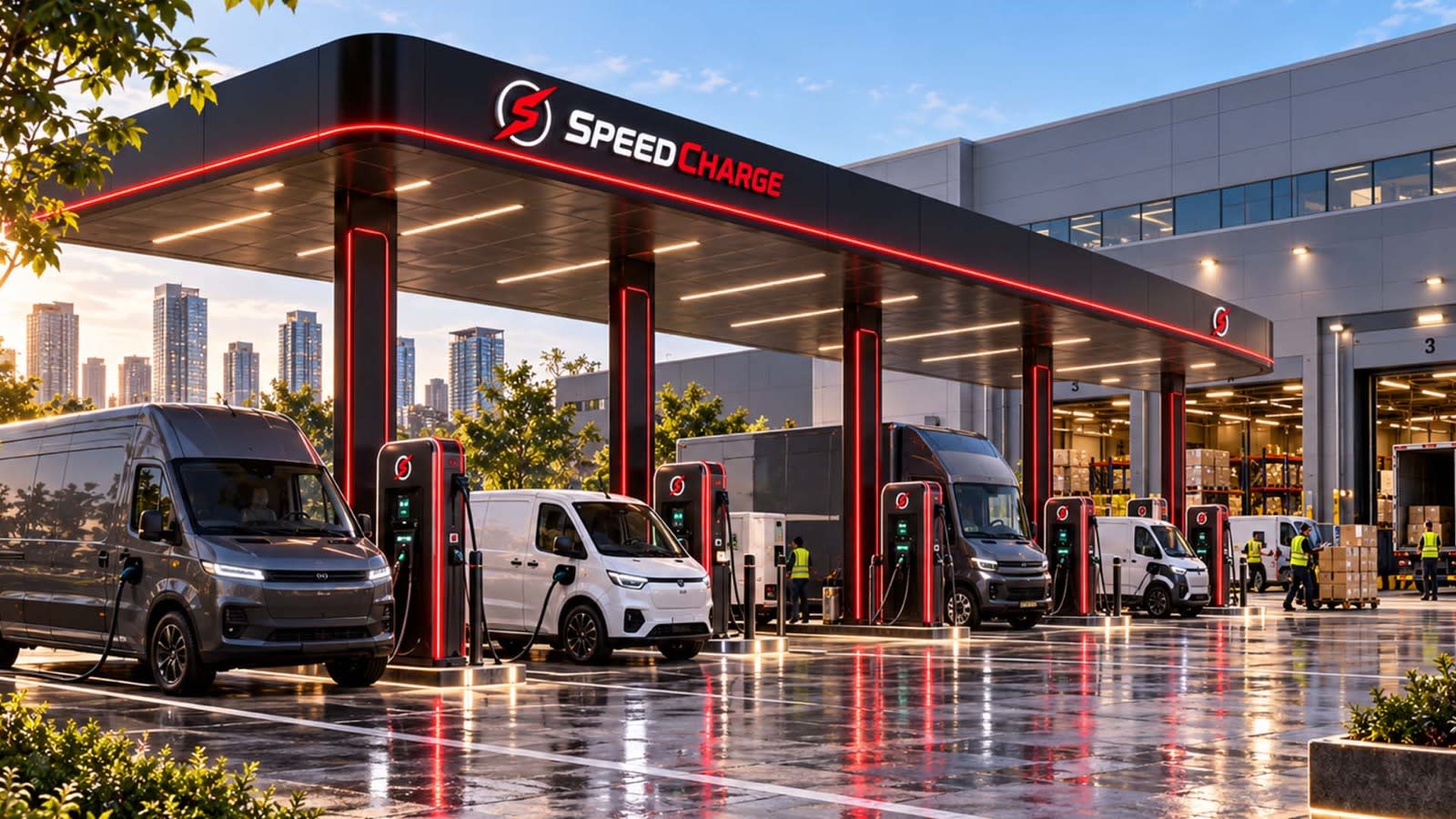
India's electric-mobility network is moving beyond isolated charging points toward connected travel corridors, urban charging hubs and destination networks. DC fast charging in India is becoming especially important where drivers cannot leave a vehicle parked for several hours and where dependable journey continuity matters.
For highway travellers, fast charging reduces the time required to add meaningful driving range during a planned stop. For city drivers, it supports taxis, fleets, apartment residents without dependable home charging and motorists who need a rapid top-up. For charging operators, however, installing a high-power charger only makes sense when electricity capacity, traffic, accessibility, uptime and daily energy demand justify the investment.
Government data shows the scale of the transition. The official public fast-charging statistics reported 52,718 public charging stations as of 21 July 2026, including 16,561 public charging stations equipped with fast EV chargers for cars.
A later Government update on national EV charging data reported 67,657 installed EV chargers across States and Union Territories as of 7 August 2026. These figures use different reporting bases and dates, so they should not be treated as directly interchangeable.
This guide explains why DC fast chargers are becoming important across highways, intercity corridors and city centers, how their use case changes by location, and what businesses and infrastructure operators should evaluate before deploying them.
Quick Answer: Why Are DC Fast Chargers Becoming More Important?
The role of DC fast charging in India is growing because electric mobility increasingly requires charging that works around real travel patterns rather than only long parking periods.
DC fast charging is particularly valuable where:
Vehicles travel long distances
Drivers need shorter charging stops
High daily kilometres make downtime expensive
Several vehicles need to use the same charging asset
Public charging must serve drivers who cannot rely on home charging
Highway routes need dependable charging opportunities
Fleets require rapid turnaround
Urban hubs need higher energy throughput per parking bay
AC charging remains essential for homes, workplaces, hotels and other long-dwell locations. DC fast charging complements that network by solving higher-turnover and journey-continuity use cases.
What Is a DC Fast Charger?
An EV battery stores direct current.
During AC charging, alternating current from the grid is converted to DC primarily through the vehicle's onboard charger.
A DC fast charger performs the main power conversion inside the charging equipment and supplies DC power to the vehicle's charging system, subject to the vehicle's Battery Management System and charging limits.
Commercial DC chargers can include power ratings such as:
30 kW
60 kW
90 kW
120 kW
150 kW
180 kW
240 kW
300 kW+
360 kW+
Higher charger power does not guarantee that every EV will charge at that rate.
Actual charging power can depend on:
Vehicle maximum DC acceptance
Battery State of Charge
Battery temperature
Charging curve
Connector configuration
Charger power sharing
Battery-management strategy
Available site power
Drivers and businesses that want to understand charging sessions, connector compatibility and network use can review Fast EV Charging Stations in India.
Why Fast Charging Matters on Highways
Highway charging has a very different operating requirement from home or workplace charging.
A driver travelling between cities normally wants to:
Reach a convenient charging location
Connect without unnecessary waiting
Add enough energy to continue the journey
Leave within a reasonably predictable period
That makes DC fast charging in India strategically important on routes where charging time forms part of total journey time.
A successful highway charging location should combine charging power with:
Safe entry and exit
Strong road visibility
Convenient route access
24×7 availability where practical
Reliable electricity supply
Multiple charging bays where demand supports them
Food and washroom access
Lighting
Security
Mobile-network connectivity
Space for expansion
Charger redundancy
Charging power alone does not make a highway station useful.
A 180 kW charger that is difficult to access, frequently offline or located far from the driver's route can provide less practical value than a reliable lower-power unit at a properly selected stop.
For a deeper highway-specific assessment, review EV Charging Stations on Highways in India for corridor location, charger configuration, redundancy, grid capacity, amenities and site-economics considerations.
Highway Corridors Need Networks, Not Isolated Chargers
One well-performing charging station does not create a dependable corridor by itself.
An intercity route becomes easier to use when drivers can identify:
A primary charging stop
A practical backup station
Compatible connectors
Reliable operating hours
Suitable charger power
Reasonable distance between charging opportunities
This is why DC fast charging in India should be planned as a network problem rather than only a charger-installation problem.
Traffic Flow
Corridor planning should study:
Daily vehicle traffic
Relevant EV traffic
Weekend versus weekday patterns
Holiday travel
Seasonal travel peaks
Commercial vehicle movement
Taxi activity
Fleet movement
Raw road traffic alone is not enough.
A highway may carry large traffic volumes without yet producing sufficient EV charging demand at every proposed location.
Route Spacing
Charging locations should be evaluated against:
Real-world EV range
Vehicle efficiency
Heat and air-conditioning loads
Elevation
Detours
Reserve range
Charging reliability
Backup-station distance
Drivers need enough margin to reach another charger if the planned station is unavailable.
Direction of Travel
A charging station convenient in one direction may be difficult to access from the opposite carriageway.
Evaluate:
Median barriers
Service roads
U-turn distance
Toll-road design
Entry and exit
Local junctions
A technically excellent site can still perform poorly when reaching it requires a long detour.
Reliability Is More Important Than a Pin on a Map
Charging-network coverage should not be measured only by how many charger icons appear on a route.
A charging location is useful when the driver can actually complete a session.
Common reliability risks include:
Charger offline
Power-module fault
Connector failure
Payment failure
Network problem
Cable damage
Emergency-stop fault
Upstream electricity outage
Vehicle blocked by another parked car
Operators should monitor:
Charger availability
Successful charging sessions
Failed sessions
Mean time to repair
Connector uptime
Network connectivity
Payment reliability
For intercity travel, one failed charging stop can have a much larger impact than the same failure at an urban location with several nearby alternatives.
Redundancy Is Critical on Major Corridors
Highway charging sites should avoid unnecessary single points of failure.
A site with one charging connector may become completely unusable if that connector fails.
Depending on expected demand, operators should evaluate:
Multiple charging guns
Multiple independent chargers
Modular power architecture
Remote diagnostics
Spare parts
Preventive maintenance
Service response time
Backup electricity arrangements where appropriate
Redundancy also helps when two or more vehicles arrive at similar times.
A charging corridor becomes more dependable when individual sites can continue serving drivers even after one component becomes unavailable.
Government Support Is Targeting Cities and Highways
Public policy increasingly recognises the need for charging infrastructure in both urban areas and long-distance travel networks.
Government announcements have allocated ₹2,000 crore under PM E-DRIVE for EV public charging infrastructure on a pan-India basis, including deployment in cities and along highways.
Applicants and eligible entities should review the current PM E-DRIVE scheme guidelines before assuming that a proposed charger, location or infrastructure component qualifies for support.
Eligibility can depend on:
Applicant category
Location category
Nodal agency
Charger configuration
Upstream infrastructure
Procurement process
Technical requirements
Documentation
Formal sanction
Government support should never be included as guaranteed project income before approval is formally confirmed.
Why City Centers Also Need Fast Charging
The value of DC fast charging in India is not limited to expressways and national highways.
Dense urban areas create a different but equally important use case.
Potential city-center users include:
Taxis
Ride-hailing EVs
Delivery fleets
Commercial vans
Intercity cabs
Residents without dedicated home charging
Business visitors
Drivers between multiple daily trips
Urban fast charging becomes particularly useful when vehicles accumulate high daily kilometres or when a long parking session is impractical.
Potential urban sites include:
Commercial parking
Fuel stations
Malls
Mixed-use properties
Business districts
Transit hubs
Restaurants
Fleet aggregation points
Large commercial properties
Before committing to a location, use the EV Charging Site Selection Guide India to evaluate grid feasibility, traffic, parking access, dwell time, competition and expansion potential.
Highway Fast Charging vs City Fast Charging
The charger hardware may be similar, but the operating environment can be very different.
Factor | Highway Fast Charging | City Fast Charging |
|---|---|---|
Primary objective | Journey continuity | Local turnaround and access |
Typical users | Intercity travellers | Taxi, fleet, resident, visitor |
Dwell time | Short planned stop | Short to moderate |
Traffic pattern | Route-based | Repeat local demand |
Amenities | Highly valuable | Site-dependent |
Backup charging | Critical | Important |
Peak periods | Travel peaks | Commute and fleet peaks |
Site visibility | Highway access critical | Local discoverability critical |
Expansion driver | Corridor demand | EV density and repeat usage |
Operators should therefore avoid using one standard station design across every location.
DC Fast Chargers and Commercial Fleets
Fleets can create strong fast-charging demand because their operating requirements are measurable.
Fleet operators can calculate:
Number of vehicles
Daily kilometres
kWh consumed per kilometre
Shift schedules
Required departure State of Charge
Depot dwell time
Route breaks
Simultaneous charging demand
A taxi fleet running multiple shifts may need rapid opportunity charging during the day.
A delivery fleet that returns to a depot overnight may be able to use a combination of slower and fast charging.
The correct charging design should therefore begin with the duty cycle rather than the charger catalogue.
Charger Power Should Match the Vehicles
A 240 kW charger does not automatically create more value than a 60 kW charger.
Suppose a location mainly serves vehicles that accept substantially less than 240 kW.
The unused additional capacity may still increase:
Equipment CAPEX
Transformer requirements
Electrical infrastructure cost
Cable requirements
Peak demand
Maintenance complexity
Operators should first evaluate:
Vehicle models
Maximum DC acceptance
Typical charging curves
Battery capacities
Average arrival State of Charge
Required kWh per session
Expected simultaneous charging sessions
The goal is not to install the biggest number on the charger cabinet.
The goal is to deliver the required energy reliably within the customer's available time.
Electrical Infrastructure Is a Major Constraint
High-power charging can require substantial upstream infrastructure.
A project may involve:
Sanctioned-load enhancement
Transformer
RMU
HT panel
LT panel
Distribution equipment
Large power cables
Earthing
Electrical protection
Metering
Cable trenches
Charger foundations
Civil work
The official e-AMRIT guidance on EV charging installation costs identifies electricity infrastructure, charging equipment, installation, land, manpower and maintenance as relevant charging-project cost categories.
A location with strong EV traffic can still become commercially unattractive if the required electrical upgrade is disproportionately expensive.
Electrical feasibility should therefore be checked before charger procurement.
Electricity Tariffs Affect Fast-Charging Economics
The commercial viability of a fast-charging site depends on much more than the tariff charged to drivers.
Operators should model:
Electricity energy charges
Demand charges
Contract demand
Fixed charges
Time-of-day tariff
Charging losses
Site rent
Revenue share
Software
Payment processing
Maintenance
Insurance
Financing
Taxes
The official e-AMRIT information on electricity cost for charging explains that electricity-tariff structures, including energy and demand charges, vary between states.
Operators should use the actual tariff applicable to the selected DISCOM and connection.
A generic national electricity-price assumption can materially distort the financial model.
Utilisation Determines Commercial Performance
The economics of DC fast charging in India depend heavily on the amount of billable energy a charger delivers.
Important metrics include:
kWh sold per day
Charging sessions per day
Average kWh per session
Connector utilisation
Peak-hour demand
Charger availability
Failed-session rate
Revenue per charger
Operating contribution per charger
A very high-power charger at a weak location can remain underutilised.
A moderate-power charger at a strong highway, fleet or urban location can produce much better capital efficiency.
Operators should model:
Conservative utilisation
Expected utilisation
Higher-demand utilisation
Do not assume mature utilisation from the first month of operation.
Daily Energy Throughput Matters More Than Headline kW
A charging site's commercial potential depends on the energy actually delivered—not the theoretical maximum printed on the charger.
For example, a 120 kW charger could theoretically deliver substantial energy if operated near maximum output continuously.
Real operations are different because:
Vehicles arrive intermittently
EVs accept different power levels
Charging curves change
Vehicles disconnect
Bays can remain vacant
Charging demand changes by time of day
Operators should therefore track kWh throughput alongside charger utilisation.
Software Turns Individual Chargers Into a Network
A connected charging network requires more than electrical hardware.
A Charger Management System can support:
Real-time charger status
Connector availability
User authentication
Digital payments
Tariff configuration
Session records
Remote start and stop
Fault alerts
Energy reporting
Fleet access
Remote diagnostics
Usage analytics
For corridor travel, real-time software can help drivers understand whether a charger is likely to be usable before they arrive.
For city networks, software can support repeat users, fleet accounts and operational analysis.
Discoverability Matters for Public Charging
Drivers need to know that a station exists.
Public charging operators should keep station information accurate across:
Charging-network applications
Station locators
Navigation platforms
Website station finders
Relevant mapping platforms
Useful information can include:
Location
Charger power
Connector type
Operating hours
Access instructions
Live availability where supported
Pricing
Incorrect charger data can be nearly as frustrating as unavailable hardware.
Standards and Electrical Safety
Public high-power charging infrastructure should be evaluated against applicable Indian technical and electrical-safety requirements.
The Bureau of Indian Standards provides an EV charging standards overview explaining the Indian standards framework for EV charging infrastructure.
Project teams should also review the Central Electricity Authority's current electrical safety regulations together with:
Applicable BIS standards
DISCOM requirements
Manufacturer instructions
Site-specific electrical design
Qualified engineering advice
Equipment selection should not be based only on kW rating, appearance or purchase price.
Fast-Charging Hubs Should Be Designed for Expansion
Strong locations can outgrow their initial charger configuration.
Future-ready planning can include:
Spare electrical capacity
Expandable transformer design
Additional cable routes
Space for more charging bays
Modular chargers
Dynamic power sharing
Upgradeable software
Additional networking capacity
However, future-proofing should not become unnecessary overbuilding.
A phased deployment approach can reduce capital risk.
Phase 1
Install enough capacity for current verified demand.
Phase 2
Monitor:
Sessions
kWh sold
Queueing
Peak periods
Charger utilisation
Phase 3
Expand when measured demand justifies additional capacity.
Highway Amenities Improve the Charging Experience
Charging creates a natural travel stop.
That makes amenities commercially relevant.
A highway charging location can become more useful when it includes:
Clean washrooms
Food
Beverages
Seating
Convenience retail
Lighting
Security
Weather protection
Amenities can also create additional commercial value for the host property.
However, amenities do not replace charger reliability.
The correct priority remains:
Reliable charging → easy access → safe location → useful amenities.
City Charging Hubs Need Queue Management
Urban fast-charging demand can concentrate during:
Morning fleet deployment
Midday taxi charging
Evening demand peaks
Weekend shopping periods
Festival and holiday traffic
Operators should consider:
Number of connectors
Parking discipline
Queue visibility
Session management
Idle-fee policy where appropriate
Reservation rules where supported
Driver communication
A single charger serving a busy taxi or fleet catchment can quickly become a bottleneck.
How to Evaluate a New Fast-Charging Location
A new site should be evaluated across five layers.
1. Demand
Ask:
How many relevant EVs operate nearby?
Is demand public, fleet or mixed?
Is traffic recurring?
Is demand seasonal?
2. Access
Check:
Safe entry
Safe exit
Visibility
Route deviation
Accessibility from both directions
Parking-bay layout
3. Electricity
Verify:
Existing sanctioned load
Spare power
Transformer requirement
Cable route
Electrical panels
Applicable tariff
4. Operations
Define:
Network monitoring
Maintenance
Customer support
Payment management
Fault escalation
Spare parts
5. Economics
Calculate:
Charger CAPEX
Electrical CAPEX
Civil cost
Site cost
Electricity cost
Software
Maintenance
Financing
Expected kWh sold
Downtime
For the full deployment workflow, review How to Set Up an EV Charging Station in India.
Due-Diligence Checklist
Highway and Corridor
Relevant EV traffic studied
Travel direction checked
Safe access confirmed
Route deviation measured
Backup charging location identified
Amenities reviewed
Operating hours defined
Expansion space considered
City Center
Local EV density studied
Taxi and fleet demand assessed
Parking turnover measured
Nearby chargers mapped
Queue risk evaluated
Customer access defined
Electricity
Sanctioned load verified
Transformer requirement assessed
Panels specified
Cable route planned
Earthing designed
Protection systems specified
Applicable tariff confirmed
Charger
Vehicle compatibility checked
Connector configuration confirmed
Simultaneous output understood
Power sharing understood
Warranty reviewed
Service SLA reviewed
Spare-parts support confirmed
Operations
Remote monitoring available
Payments tested
Maintenance responsibility assigned
Fault escalation process documented
Customer support available
Financial
Complete CAPEX calculated
Operating expenses included
Electricity cost included
Demand charges assessed
Financing included
Conservative utilisation modelled
Downtime included
Subsidy excluded unless formally sanctioned
Common Fast-Charging Planning Mistakes
Avoid:
Choosing a site only because it is on a highway
Installing the highest-power charger without analysing vehicles
Treating one charging location as a complete corridor
Ignoring opposite-direction access
Ignoring backup charging options
Ignoring transformer cost
Ignoring demand charges
Building critical sites without redundancy
Assuming every map-listed charger is operational
Ignoring software
Ignoring payment reliability
Assuming full utilisation immediately
Using national infrastructure growth as proof of local demand
Assuming government support before formal approval
Treating charger hardware cost as complete project CAPEX
How SpeedCharge Supports Public and Commercial Fast Charging
SpeedCharge can support highway businesses, property owners, fleet operators and commercial partners through:
Site feasibility
Charging-demand assessment
Charger selection
Electrical planning
Installation coordination
Charger Management System integration
Remote monitoring
Payment integration
Maintenance planning
Utilisation reporting
Network expansion planning
Businesses, highway properties, commercial sites and infrastructure investors can Partner With SpeedCharge for a site-specific technical and commercial assessment.
The final charging design should be based on the site's actual traffic, electrical capacity, vehicle mix, dwell time and expected daily energy throughput.
Final Thoughts
The future of DC fast charging in India is not simply about installing more high-power charging cabinets. It is about creating dependable charging availability where EV drivers actually need rapid energy: between cities, along major travel corridors and inside dense urban mobility zones.
Highway sites need journey continuity, reliable access, redundancy and useful amenities. Corridors need multiple dependable charging opportunities rather than isolated points. City centers need high-turnover charging capable of supporting fleets, taxis, residents and visitors without long parking periods.
The strongest networks will combine:
right charger power + strong site selection + dependable electricity + real-time software + high uptime + phased expansion.
For drivers, that means greater confidence to travel farther.
For charging operators and businesses, it means treating fast charging as a connected mobility service rather than simply an equipment installation.
Frequently Asked Questions
1. Why are DC fast chargers important for highway EV travel?
DC fast chargers can deliver substantially more energy during a shorter stop than conventional lower-power charging. This makes them useful for intercity journeys where drivers need to continue travelling without remaining parked for several hours.
2. What power rating is commonly used for highway DC charging?
The appropriate rating varies by vehicle mix and site demand. Commercial highway installations may use chargers from around 60 kW to 240 kW or higher, but operators should size equipment according to expected vehicles and energy throughput rather than maximum available power.
3. Are DC fast chargers only needed on highways?
No. They can also be useful in cities for taxis, fleets, commercial vehicles, drivers without home charging and users who need a rapid top-up between trips.
4. Why is charger redundancy important on highways?
A highway station may have no convenient alternative nearby. Multiple connectors or chargers can reduce the risk that one equipment failure makes the complete location unusable.
5. Does a 240 kW charger always charge an EV at 240 kW?
No. Actual charging power depends on the vehicle's maximum charging capability, charging curve, State of Charge, temperature, charger configuration and available site power.
6. What should be checked before choosing a highway charging location?
Evaluate EV traffic, route direction, safe access, nearby backup chargers, electricity availability, parking, amenities, operating hours, competition, future expansion and complete project economics.
7. What makes an urban fast-charging hub successful?
Strong repeat demand, easy access, sufficient electrical capacity, high charger uptime, appropriate charger power, good parking management and accurate real-time station information are important factors.
8. How does electricity infrastructure affect DC charger installation?
Higher-power chargers can require additional sanctioned load, transformers, panels, cables, protection systems and civil work. Upstream electrical infrastructure can therefore form a significant part of project CAPEX.
9. Is government support available for public EV charging infrastructure?
Government programmes such as PM E-DRIVE support eligible public charging infrastructure, but eligibility varies by applicant, location, infrastructure category and approval process. Assistance should not be assumed until formally sanctioned.
10. What is the most important commercial metric for a fast-charging station?
Actual energy throughput is one of the most important metrics. Operators should track kWh sold, sessions, utilisation, uptime, electricity costs and operating contribution rather than evaluating a station only by charger power.