
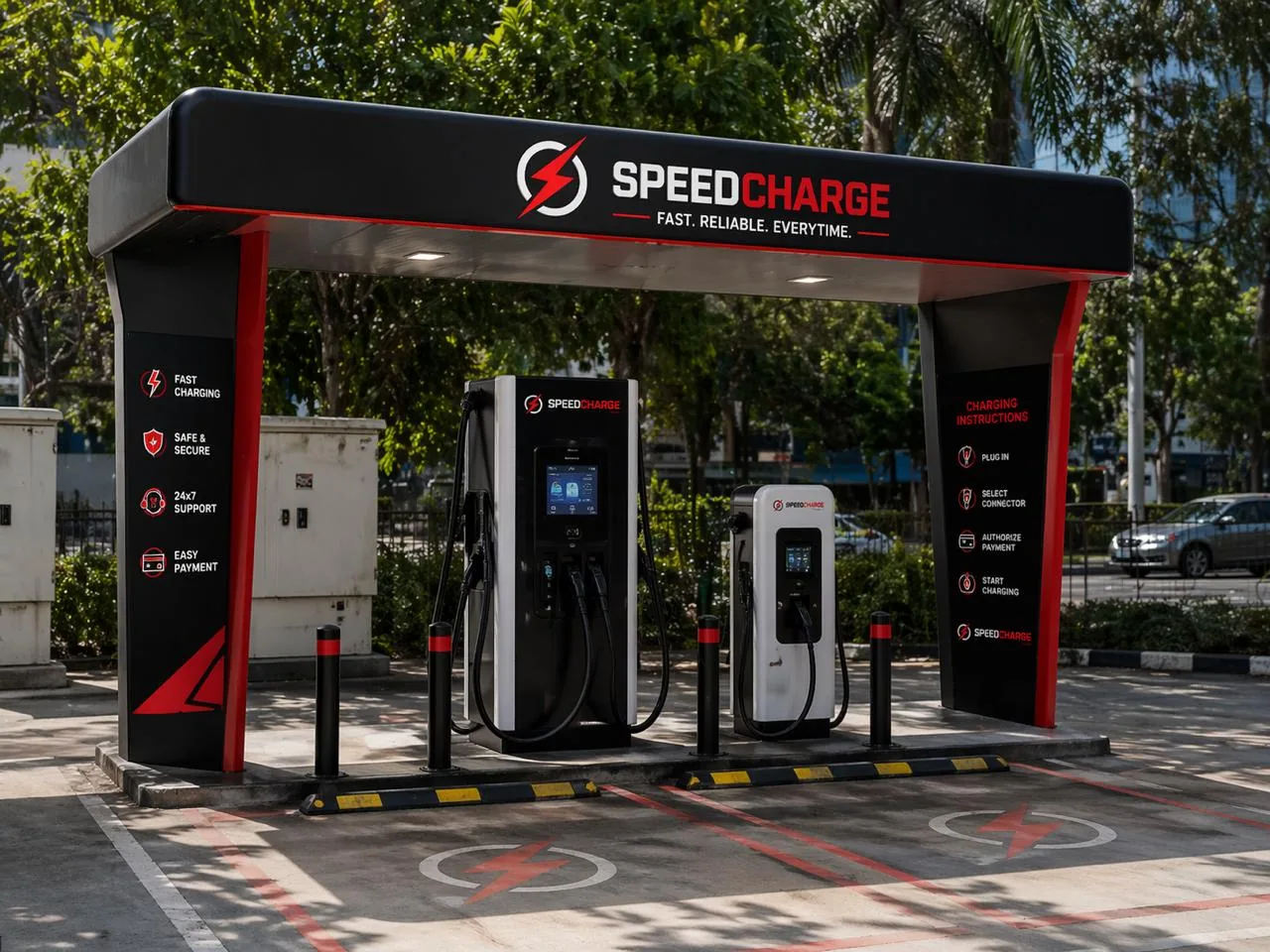
Showing 1–4 of 4 articles
EV Charging Infrastructure in India: Urban Planning Guide 2026
India's EV transition requires more than public fast chargers. Cities must coordinate residential charging, apartments, parking, electricity distribution, commercial fleets, public charging and EV-ready buildings. This guide explains how urban authorities, DISCOMs, developers and charging operators can plan scalable charging infrastructure.
 Charging Infrastructure
EV Charger Installation in India: Cost, Process & Safety Guide 2026
Planning to install an EV charger in India? This guide explains charger selection, electrical load assessment, dedicated circuits, earthing, safety standards, apartment installation, home and commercial costs, electricity connections, commissioning and the checks to complete before choosing an installer.
EV Charging Infrastructure in India: Why AC Charging Matters in 2026
India needs more than highway fast chargers to build a practical EV ecosystem. This guide explains how AC charging at homes, apartments, workplaces, hotels and commuter parking can complement DC fast charging, improve everyday access and support smarter use of electrical infrastructure.
EV Charger Installation in Apartments and RWAs: The 2026 India Guide
How to get an EV charger approved and installed in an Indian housing society: the RWA process, DISCOM rules, metering options, costs, and how to handle a committee that says no.
Frequently Asked Questions
1. What is the SpeedCharge EV Charging Blog?
The SpeedCharge EV Charging Blog provides guides and insights about EV charging in India, including charging stations, AC and DC charging, infrastructure, technology, installation, costs and electric mobility.
2. How can I find EV charging stations in India?
EV drivers can use a charging station locator to search for compatible charging locations. SpeedCharge provides information about supported EV charging stations and charging locations across India.
3. How does EV charging work?
An EV charger supplies electrical energy to an electric vehicle for battery charging. The charging process and speed depend on factors such as charger type, power output, vehicle compatibility, battery capacity and current state of charge.
4. What is the difference between AC and DC EV charging?
AC charging supplies alternating current that the vehicle converts through its onboard charger. DC fast charging converts power within the charging equipment and supplies DC power to compatible vehicles, enabling higher charging power.
5. How long does it take to charge an electric vehicle?
EV charging time depends on battery capacity, charger power, vehicle charging capability, state of charge, temperature and other conditions. DC fast chargers generally provide faster charging than lower-power AC chargers for compatible vehicles.
6. How much does EV charging cost in India?
EV charging costs in India vary according to the charging provider, station, electricity tariff, charger type and energy consumed. Drivers should check the applicable station pricing before starting a charging session.
7. What is EV charging infrastructure?
EV charging infrastructure includes charging equipment, electrical systems, charging locations, software and supporting network technology used to provide charging services for electric vehicles.
8. What is DC fast charging?
DC fast charging supplies direct current to compatible EV batteries using higher-power charging equipment. It is commonly deployed at public and commercial locations where faster charging is required.
9. Can EV chargers be installed at homes, apartments and businesses?
EV charging equipment can be installed at suitable residential and commercial locations where electrical capacity, parking, safety and other installation requirements can be met. Requirements vary according to the charger and site.
10. Where can I learn more about EV charging in India?
The SpeedCharge EV Charging Blog provides guides and articles about EV charging stations, infrastructure, charger technology, charging costs, installation, commercial charging and electric mobility in India.