
Showing 1–3 of 3 articles
How to Choose an EV Charger Manufacturer in India: 2026 Buyer Guide
Choosing an EV charger requires more than comparing kW ratings and purchase prices. This buyer guide explains how to evaluate Indian charging-equipment manufacturers by applicable standards, OCPP implementation, power architecture, software, environmental suitability, service coverage, warranty, spare parts and total ownership cost.
Best EV Charger in India: 15 Features to Check Before Buying in 2026
Choosing an EV charger involves more than comparing price and kW. This guide explains the safety, power rating, OCPP, load management, weather protection, smart controls, warranty and service features that matter when buying charging equipment for homes, apartments and businesses.
How to Choose an EV Charger Manufacturer in India: 2026 Buyer's Guide
What actually separates a good EV charger from a bad one: certifications to demand, specifications that matter, service terms to negotiate, and the questions that expose a weak supplier.
Frequently Asked Questions
1. What is the SpeedCharge EV Charging Blog?
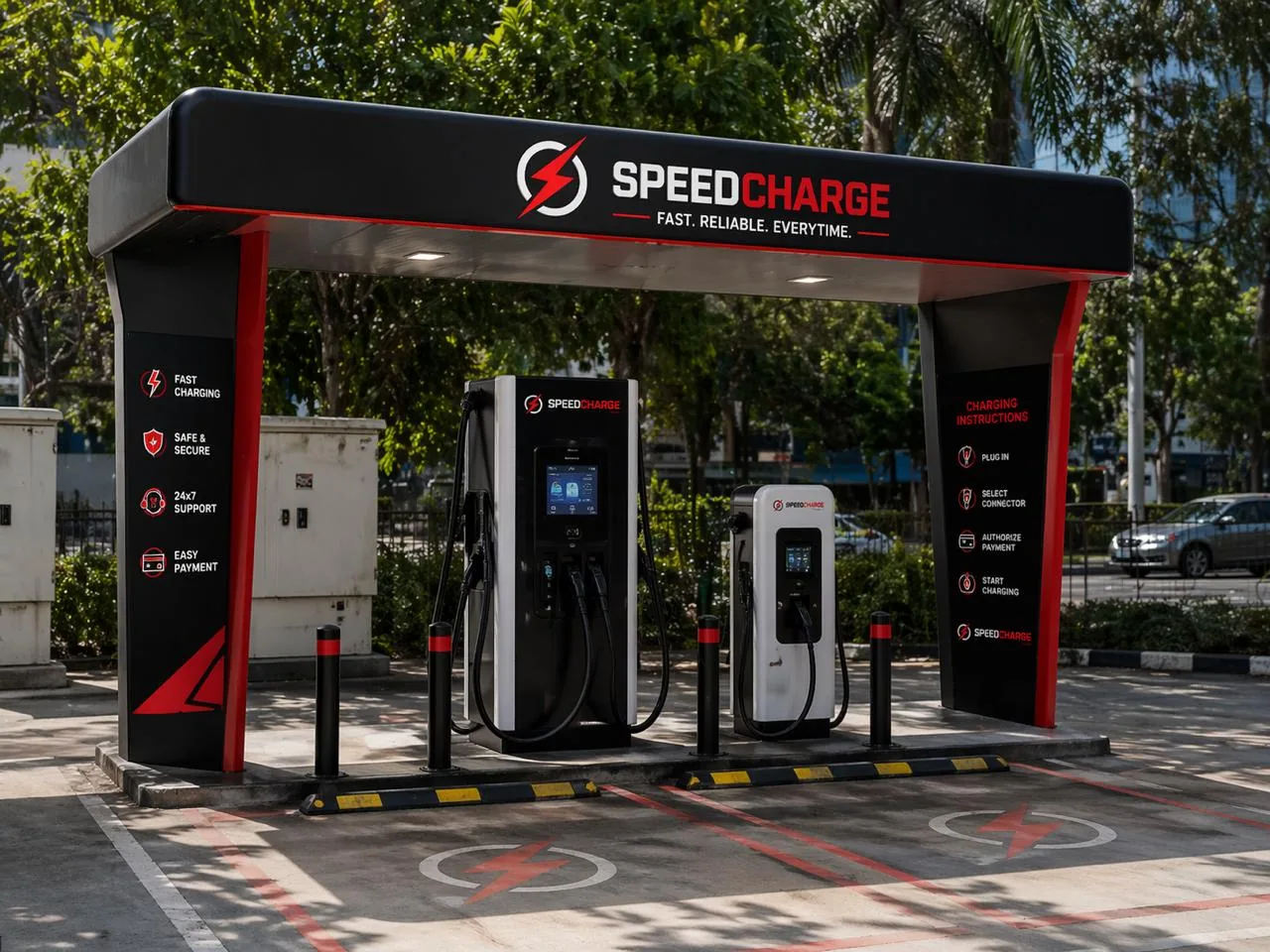
The SpeedCharge EV Charging Blog provides guides and insights about EV charging in India, including charging stations, AC and DC charging, infrastructure, technology, installation, costs and electric mobility.
2. How can I find EV charging stations in India?
EV drivers can use a charging station locator to search for compatible charging locations. SpeedCharge provides information about supported EV charging stations and charging locations across India.
3. How does EV charging work?
An EV charger supplies electrical energy to an electric vehicle for battery charging. The charging process and speed depend on factors such as charger type, power output, vehicle compatibility, battery capacity and current state of charge.
4. What is the difference between AC and DC EV charging?
AC charging supplies alternating current that the vehicle converts through its onboard charger. DC fast charging converts power within the charging equipment and supplies DC power to compatible vehicles, enabling higher charging power.
5. How long does it take to charge an electric vehicle?
EV charging time depends on battery capacity, charger power, vehicle charging capability, state of charge, temperature and other conditions. DC fast chargers generally provide faster charging than lower-power AC chargers for compatible vehicles.
6. How much does EV charging cost in India?
EV charging costs in India vary according to the charging provider, station, electricity tariff, charger type and energy consumed. Drivers should check the applicable station pricing before starting a charging session.
7. What is EV charging infrastructure?
EV charging infrastructure includes charging equipment, electrical systems, charging locations, software and supporting network technology used to provide charging services for electric vehicles.
8. What is DC fast charging?
DC fast charging supplies direct current to compatible EV batteries using higher-power charging equipment. It is commonly deployed at public and commercial locations where faster charging is required.
9. Can EV chargers be installed at homes, apartments and businesses?
EV charging equipment can be installed at suitable residential and commercial locations where electrical capacity, parking, safety and other installation requirements can be met. Requirements vary according to the charger and site.
10. Where can I learn more about EV charging in India?
The SpeedCharge EV Charging Blog provides guides and articles about EV charging stations, infrastructure, charger technology, charging costs, installation, commercial charging and electric mobility in India.