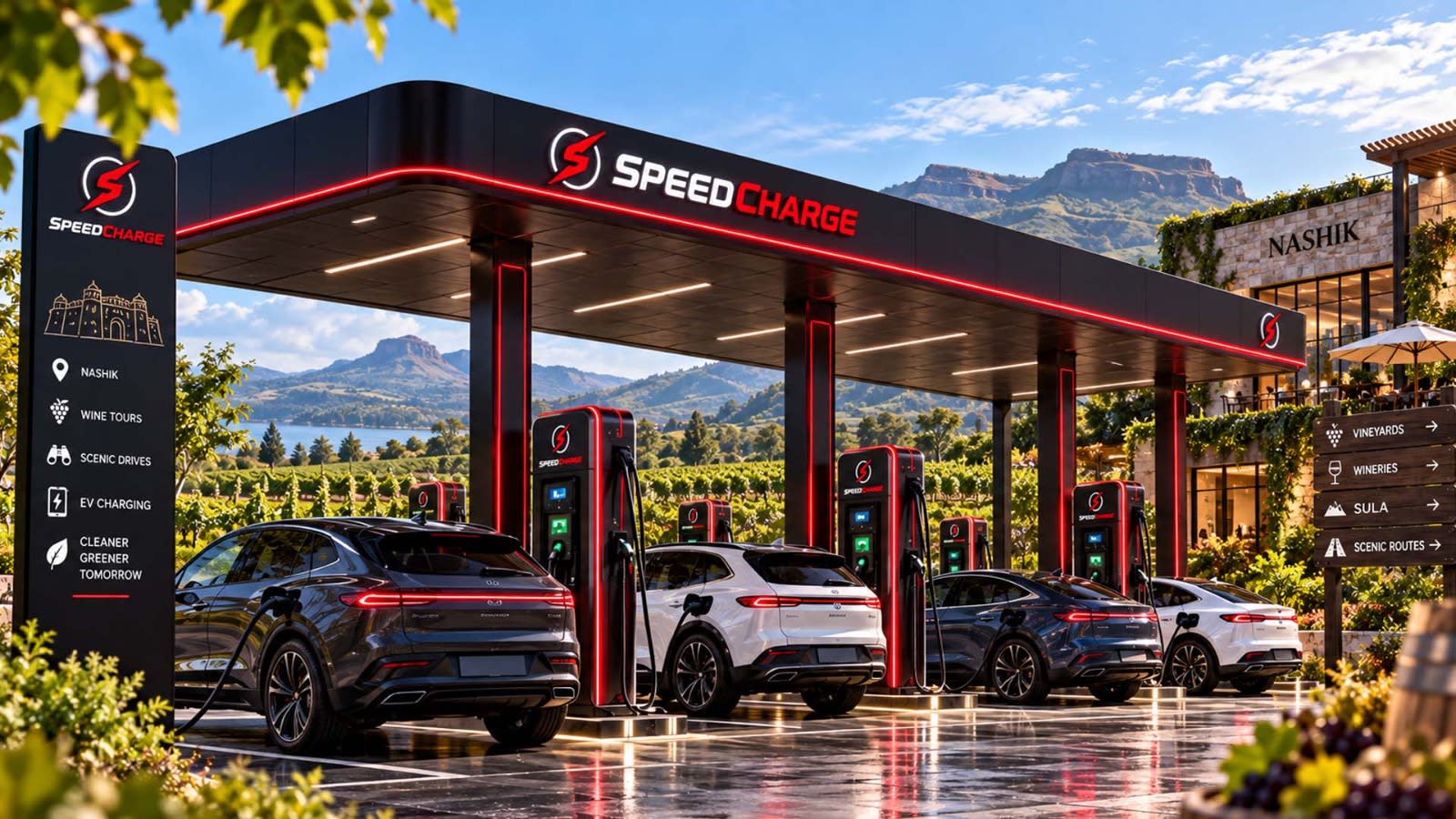
India’s EV charging ecosystem is expanding rapidly. According to the Ministry of Heavy Industries’ official public charging station data, India had 52,718 public charging stations as of 21 July 2026, including 16,561 public charging stations equipped with fast EV chargers for cars.
As charging networks become larger, they also become more digitally connected. Modern charging stations can communicate with vehicles, Charging Station Management Systems (CSMS), mobile applications, payment gateways, cloud services and remote-maintenance platforms. This means EV charging infrastructure security must be considered during charger procurement, network design, installation and long-term operations rather than being added after deployment.
The cyber risk is not hypothetical. In its official Safety of EV Charging Stations response, the Government of India stated that EV charging stations are susceptible to cyber-attacks and cybersecurity incidents. It also confirmed that CERT-In had received reports of vulnerabilities in products and applications related to EV charging stations and issued alerts and vulnerability notes recommending remedial measures.
For operators that need deeper background on threats, charger vulnerabilities and CSMS risks, SpeedCharge’s EV Charging Station Security: Cybersecurity Guide for India 2026 provides a detailed foundation before implementing the nine practices below.
Why EV Charging Cybersecurity Needs a Multi-Layered Approach
An EV charger should no longer be viewed as only an electrical appliance.
A connected charging ecosystem can include:
EVSE hardware
Embedded firmware
Communication modem
OCPP connection
CSMS platform
Administrator dashboard
Mobile app
Customer account
APIs
RFID or QR authentication
Payment gateway
Cloud database
Remote-support tools
Energy-management systems
A weakness in any of these layers can affect the wider charging service.
The Ministry of Power’s Guidelines for Installation and Operation of Electric Vehicle Charging Infrastructure-2024 apply across private, semi-restricted and public charging infrastructure and aim to support safe, reliable and accessible charging networks.
For CPOs, EV charging infrastructure security therefore needs a defence-in-depth strategy covering hardware, software, communications, identities, vendors and operational processes.
1. Maintain a Complete Inventory of Chargers and Digital Assets
The first security rule is simple: you cannot secure infrastructure you do not know exists.
A Charge Point Operator should maintain an accurate inventory of every deployed asset.
For each charger, record:
Manufacturer
Charger model
Serial number
Physical location
AC/DC classification
Power rating
OCPP version
Firmware version
CSMS connection
Communication method
IP/network configuration where relevant
Certificates
Vendor-support status
Last firmware update
Remote-access configuration
The inventory should extend beyond physical chargers.
CPOs should also document:
CSMS platforms
Production servers
APIs
Customer applications
Administrator accounts
Payment integrations
Cloud infrastructure
Certificate-management systems
Vendor accounts
Support tools
Create a Risk Register
After building an inventory, classify assets according to their potential impact.
A high-power public DC hub managed through a central backend has a different risk profile from a private AC charger inside a controlled parking area.
Critical systems may include:
CSMS administrator accounts
Production databases
Payment systems
Fleet-wide remote commands
Certificate-management services
Firmware-management infrastructure
An updated asset register gives EV charging infrastructure security teams the visibility needed to identify vulnerable equipment, prioritise patches and respond quickly when a supplier reports a security issue.
Businesses still planning a deployment should also read SpeedCharge’s EV Charging Station Setup Guide before selecting chargers, electrical infrastructure and backend systems.
2. Secure the Physical EV Charger
Cybersecurity begins at the physical charging station.
Public chargers may be accessible 24×7, which means an attacker may have direct physical access to the equipment.
Operators should assess:
Service-panel security
Maintenance ports
Communication modules
Local administrator interfaces
USB or diagnostic interfaces
Network connections
Charger enclosure
Firmware-access mechanisms
Recommended measures include:
Locking service compartments
Restricting maintenance interfaces
Removing unnecessary open ports
Changing factory-default credentials
Using tamper-resistant hardware where appropriate
Restricting technician access
Monitoring physical tampering where supported
Protecting communication equipment
Using verified firmware
Electrical Safety Still Matters
Cybersecurity does not replace electrical safety.
The Bureau of Indian Standards currently highlights IS 17017 (Part 23):2026 for DC Electric Vehicle Supply Equipment. The standard covers areas including EVSE functions, vehicle communication, electrical protection, cable requirements and emergency disconnection.
A professionally deployed charging station therefore needs both electrical protection and appropriate digital security controls.
3. Implement Strong Identity and Access Management
A secure charging network should never give every employee, technician or vendor unrestricted access to every system.
Permissions should match actual responsibilities.
A field technician may need to:
Check charger status
Review diagnostics
Restart equipment
That technician does not necessarily need permission to:
Export customer information
Modify tariffs
Add administrators
Change payment settings
Push fleet-wide firmware
Access every charger in the network
Use:
Unique employee accounts
Role-based access control
Least privilege
Multi-factor authentication for sensitive accounts
Strong credential policies
Regular access reviews
Immediate revocation when an employee leaves
Controlled vendor accounts
Logged administrator actions
Shared administrator usernames should be avoided wherever possible.
Control Third-Party Access
Charging networks often depend on:
Charger manufacturers
CSMS vendors
Maintenance contractors
Payment providers
Connectivity vendors
Software developers
Any permanent remote-access route can become a potential security exposure.
Vendor access should ideally be:
Authorised
Limited
Logged
Time-bound where practical
Revocable
Strong access control is one of the most important foundations of EV charging infrastructure security, particularly because one privileged backend account may control many chargers simultaneously.
4. Secure OCPP Communication Between Chargers and the CSMS
Open Charge Point Protocol is widely used for communication between charging stations and backend platforms.
OCPP can support functions including:
Charger status
Authentication
Transactions
Meter values
Configuration
Diagnostics
Remote start
Remote stop
Firmware management
However, “OCPP compatible” does not automatically mean “secure.”
Operators should verify:
Which OCPP version is supported
Which security profile is implemented
Whether TLS is correctly configured
How chargers authenticate
How certificates are created
How certificates are renewed
What happens when certificates expire
How remote commands are authorised
Whether security events are logged
How firmware updates are validated
The Open Charge Alliance’s Security Operations Guide provides practical guidance for secure implementation and operation of OCPP charging stations and CSMS platforms.
The Open Charge Alliance also explains that OCPP 2.x contains security functionality and that additional security enhancements can be applied to OCPP 1.6-J deployments.
For SpeedCharge readers evaluating protocol choices, internally link the OCPP vs OCPI guide here.
CPOs planning newer deployments should also review OCPP 2.0.1 for Indian CPOs, which covers device management, TLS, certificates, firmware, security logs and backend interoperability.
5. Segment EV Chargers From Other Business Networks
One compromised charging station should not automatically provide access to unrelated corporate systems.
Charging infrastructure should be appropriately separated from:
Employee laptops
Finance systems
HR applications
Internal databases
Development environments
Guest Wi-Fi
Building-management systems where unnecessary
Depending on the architecture, organisations may use:
Separate VLANs
Firewalls
Network access-control rules
Restricted inbound connectivity
Approved outbound destinations
VPN-based administrative access
DNS monitoring
Traffic monitoring
Apply Zero-Trust Principles Where Practical
A device should not be trusted merely because it is connected to the company network.
Every critical connection should be evaluated according to:
Identity
Authentication
Authorisation
Device status
Required access
This approach reduces lateral movement after a compromise.
For mixed charger fleets, segmentation becomes even more important because different manufacturers can use different firmware, communication modules and security-update processes.
6. Create a Formal Firmware, Patch and Supply-Chain Security Process
EV charging hardware can remain deployed for many years.
Its software cannot safely remain unchanged for the same period.
Before purchasing equipment, ask the charger manufacturer:
How are vulnerabilities disclosed?
How are operators notified?
Are firmware packages signed?
How is update authenticity verified?
How quickly are critical vulnerabilities patched?
How long will security updates be supplied?
Can operators schedule deployments?
Is rollback supported?
How is end-of-support handled?
A recommended patch process is:
Identify the vulnerability.
Identify affected assets.
Assess severity.
Check actual exposure.
Obtain a trusted update.
Test it.
Deploy gradually.
Verify installation.
Monitor performance.
Update the asset register.
Evaluate Supply-Chain Risk
A charging system may depend on multiple external components:
Operating systems
Embedded libraries
Modems
Payment services
Cloud providers
API providers
Firmware components
Third-party applications
Cybersecurity clauses should therefore be included in vendor evaluation and commercial agreements where appropriate.
A charger with good electrical specifications but weak long-term security support may become difficult to operate safely before the hardware reaches the end of its useful life.
7. Protect APIs, Payments and Personal Data
Charging networks increasingly depend on APIs.
APIs may connect:
Mobile apps
Chargers
CSMS platforms
Payment systems
Fleet applications
Roaming partners
Analytics systems
Customer-support tools
Important API protections include:
Strong authentication
Object-level authorisation
Rate limiting
Secure token management
Input validation
API-key protection
Logging
Secret rotation
For example, logging into an application should not automatically allow a user to retrieve another customer’s transaction simply by modifying an ID in an API request.
Protect Payment Workflows
Charging transactions combine:
User Identity + Energy Consumption + Charging Session + Billing + Payment
This makes transaction integrity critical.
Payment systems should be appropriately isolated, and sensitive credentials or payment information should not be unnecessarily stored on charging hardware.
Protect Personal Data
The Ministry of Electronics and Information Technology published the Digital Personal Data Protection Rules 2025 on 14 November 2025 together with the enforcement timeline for the DPDP framework.
Charging businesses should understand:
What customer information they collect
Why they collect it
Where it is stored
Who can access it
Which vendors process it
How long it is retained
How security incidents are handled
Privacy controls are part of EV charging infrastructure security because even a physically secure charger can be part of a wider data breach if a vulnerable app, API or cloud database exposes customer information.
8. Monitor the Network and Prepare an Incident-Response Plan
Security controls are much less useful if operators cannot detect suspicious activity.
CPOs should monitor events such as:
Repeated failed administrator logins
Unexpected remote start commands
Unexpected remote stop commands
Configuration changes
Certificate errors
New administrator accounts
Abnormal API requests
Firmware changes
Suspicious communication destinations
Repeated payment anomalies
Large groups of chargers going offline unexpectedly
Logs from critical systems should be centralised where appropriate and protected from unauthorised alteration.
Follow CERT-In Requirements
CERT-In maintains the CERT-In Cyber Security Directions under Section 70B of the Information Technology Act concerning information-security practices and cyber-incident prevention, response and reporting.
Charging businesses should establish a process to determine:
What happened
Which systems were affected
Whether customer data was involved
Whether charging operations were disrupted
How to contain the incident
How evidence will be preserved
Whether regulatory reporting applies
How systems will be restored
A documented incident-response plan should identify who can:
Disable accounts
Isolate chargers
Contact vendors
Preserve logs
Communicate with customers
Approve recovery
Assess reporting obligations
Incident readiness is a critical component of EV charging infrastructure security because decisions made during the first hours of a breach can determine whether the problem remains contained or spreads across the network.
Consider the Power-Sector Cybersecurity Context
The Central Electricity Authority publishes the CEA Cyber Security in Power Sector Guidelines, 2021 as part of India’s wider power-sector cybersecurity framework.
The precise applicability of particular obligations depends on the entity and infrastructure involved, but principles around access management, cyber hygiene and incident preparedness are increasingly relevant as charging infrastructure integrates more closely with electricity systems.
9. Test Security Regularly and Train Employees
Security should be continuously validated.
Useful activities can include:
Vulnerability assessments
Penetration testing
API security testing
Administrator-access reviews
Firewall-rule reviews
Firmware audits
Backup restoration tests
Vendor-access reviews
Incident-response exercises
Test Recovery, Not Just Prevention
Operators should ask:
What happens if the CSMS becomes unavailable?
Can affected chargers be isolated?
Are configuration backups available?
Are customer-facing services recoverable?
Can operations continue safely during limited connectivity?
Is a clean recovery environment available?
High-utilisation locations should also consider redundancy.
If one compromised component can make an entire charging hub unavailable, the architecture may need stronger resilience.
Train People According to Their Roles
Cybersecurity training should differ by responsibility.
Technicians should understand:
Secure maintenance access
Credential handling
Approved firmware
Suspicious hardware modifications
Customer-support teams should understand:
Account-verification procedures
Social-engineering attacks
Escalation procedures
Administrators should understand:
Privileged-access risks
MFA
Security monitoring
Incident escalation
Developers should understand:
Secure APIs
Secret management
Authentication
Dependency security
Secure coding
People, technology and processes have to work together.
Cybersecurity Checklist for Indian CPOs
Before commissioning a connected charging network, review these controls.
Charger
Default password changed
Maintenance interface restricted
Firmware source verified
Firmware version documented
Unnecessary interfaces disabled
Physical access controlled
OCPP and Communication
OCPP version documented
Security profile reviewed
TLS configuration verified
Charger authentication enabled
Certificates managed
Remote-command permissions reviewed
Security logging enabled where supported
CSMS
MFA enabled for privileged users
Role-based access configured
Administrator actions logged
Secrets protected
Backups tested
Vendor access controlled
Network
Chargers appropriately segmented
Firewall policies documented
Unnecessary inbound connectivity blocked
Network traffic monitored
Administrative access restricted
Applications and APIs
Authentication tested
Authorisation tested
Rate limits configured
Tokens securely managed
Sensitive data minimised
API activity logged
Operations
Asset inventory current
Patch process documented
Incident-response plan available
Staff trained
Vendor responsibilities documented
Security assessments scheduled
Common EV Charging Cybersecurity Mistakes
CPOs should avoid several common mistakes.
Assuming OCPP Compatibility Means Security
Compatibility only confirms protocol support. Security depends on implementation, configuration and operational practices.
Leaving Factory Credentials Active
Default credentials make infrastructure unnecessarily vulnerable.
Sharing Administrator Accounts
Shared accounts reduce accountability and make access revocation difficult.
Ignoring Firmware Support
A charger without security-update support can become a long-term operational liability.
Giving Vendors Unlimited Access
Third-party access should be restricted according to business need.
Treating Cybersecurity as an Annual Audit
Security needs continuous monitoring and maintenance.
Keeping Chargers on Flat Networks
Segmentation limits how far an attacker can move if a device is compromised.
Collecting More Customer Data Than Required
Unnecessary data increases breach impact and compliance burden.
How SpeedCharge Approaches Connected Charging Infrastructure
Reliable public charging requires more than installing EVSE hardware.
Charging hardware must work together with:
Electrical infrastructure
Network connectivity
Charger-management software
Remote monitoring
Payment systems
Maintenance
Customer support
SpeedCharge provides commercial EV charging solutions for businesses and properties covering offices, hotels, malls, commercial properties, parking facilities and fleet applications.
For entrepreneurs planning a managed public charging business, SpeedCharge’s EV charging station franchise in India explains its charging-station partnership and franchise structure.
For broader company and network information, readers can also explore SpeedCharge’s connected EV charging infrastructure.
The key principle is that cybersecurity should be considered across the complete charging lifecycle:
Planning → Procurement → Installation → Commissioning → Operations → Updates → Decommissioning
Conclusion
India’s public charging network is expanding quickly, but every connected charger adds another digital asset that must be managed and protected.
Strong EV charging infrastructure security does not depend on one firewall, one antivirus product or one communication protocol. It requires multiple layers working together:
Accurate asset inventories
Secure charger hardware
Strong authentication
Controlled privileges
Secure OCPP communication
Network segmentation
Firmware management
API security
Data protection
Continuous monitoring
Incident response
Regular testing
Employee training
The Government has already recognised cybersecurity risks affecting EV charging products and applications. As charging networks scale and become more integrated with apps, cloud platforms, fleets and electricity systems, security needs to be built into infrastructure from the beginning.
For Indian CPOs, manufacturers and infrastructure operators, the safest approach is to make cybersecurity a continuous operational discipline rather than a one-time compliance exercise.
Frequently Asked Questions
1. What is the first step for securing an EV charging network?
Start with a complete asset inventory. Operators should know every charger, firmware version, CSMS platform, network connection, certificate, privileged account and vendor-access path before designing security controls.
2. Can EV charging stations be attacked by hackers?
Yes. The Government of India has officially stated that EV charging stations are susceptible to cyber-attacks and cybersecurity incidents, and CERT-In has received vulnerability reports relating to EV charging products and applications.
3. Is OCPP automatically secure?
No. Security depends on the OCPP version, security profile, encryption, authentication, certificate management, firmware controls and implementation used by both the charger and management system.
4. Should EV chargers be connected to the same network as office computers?
Charging infrastructure should generally be appropriately segmented from unrelated corporate IT systems. Segmentation helps restrict lateral movement if one charger or connected device is compromised.
5. How often should EV charger firmware be updated?
There is no universal fixed interval. Operators should continuously monitor vendor advisories and vulnerabilities and deploy trusted patches or mitigations according to risk after suitable testing.
6. Why are digital certificates important for EV charging?
Certificates can support authenticated and encrypted communication between chargers and backend platforms. Poor certificate management can cause outages or weaken trust between systems.
7. What cybersecurity events should CPOs monitor?
Examples include failed privileged logins, unusual remote commands, configuration changes, certificate errors, suspicious API traffic, unexpected firmware changes and unusual network destinations.
8. What does CERT-In require after a cyber incident?
CERT-In directions define reporting requirements for specified cyber incidents. Organisations should assess whether an incident meets the relevant reporting criteria and follow the applicable timeline and process.
9. Does India’s DPDP framework matter for EV charging companies?
It can. Charging businesses may process digital personal data through customer accounts, apps, payments and charging histories. Businesses should assess their obligations based on the data they process and the relevant commencement timeline.
10. Is charger cybersecurity only the manufacturer’s responsibility?
No. Charger manufacturers, CPOs, CSMS providers, software teams, vendors and infrastructure operators control different parts of the charging environment. Security requires coordinated responsibility across the entire lifecycle.