

Electric vehicle ownership in India has moved from early-adopter territory to mainstream reality, and with it comes a question every new EV owner and every business eventually asks: how do I actually get an EV charger installed — properly, safely, and without overpaying?
This 2026 guide walks through the complete EV charger installation process for India — home, housing society, and commercial/public setups — covering charger types, step-by-step installation, real costs, safety rules, government subsidies, and the mistakes that cause the most rejected insurance claims and failed inspections.
What Does "EV Charger Installation" Actually Involve?
EV charger installation is not just mounting a box on a wall. A compliant, safe installation involves four distinct layers:
Site assessment — checking sanctioned electrical load, panel capacity, and cable distance.
Electrical work — a dedicated circuit, correct breaker and RCD/RCCB protection, and proper earthing.
Charger mounting and commissioning — physically fixing the unit, wiring it in, and running a full load test.
Approvals and documentation — society NOC (where applicable), BIS certification checks, and keeping installation records for warranty and insurance purposes.
Skipping any one of these layers is where most installation problems — and most insurance claim rejections after an electrical fault — actually originate.
Types of EV Chargers You Can Install
Level 1 (Portable/Plug-in Charger)
The cable that comes with most EVs, using a standard 5A or 15A household socket. No formal installation needed, but it is the slowest option and not meant as a long-term primary charging solution.
Level 2 (AC Wallbox — 3.3 kW to 22 kW)
The most common installed charger for homes, housing societies, and commercial parking. A 7.2–7.4 kW wallbox is the typical sweet spot for a single EV car; 11 kW and 22 kW three-phase units suit faster charging needs or multi-vehicle setups.
Level 3 (DC Fast Charger)
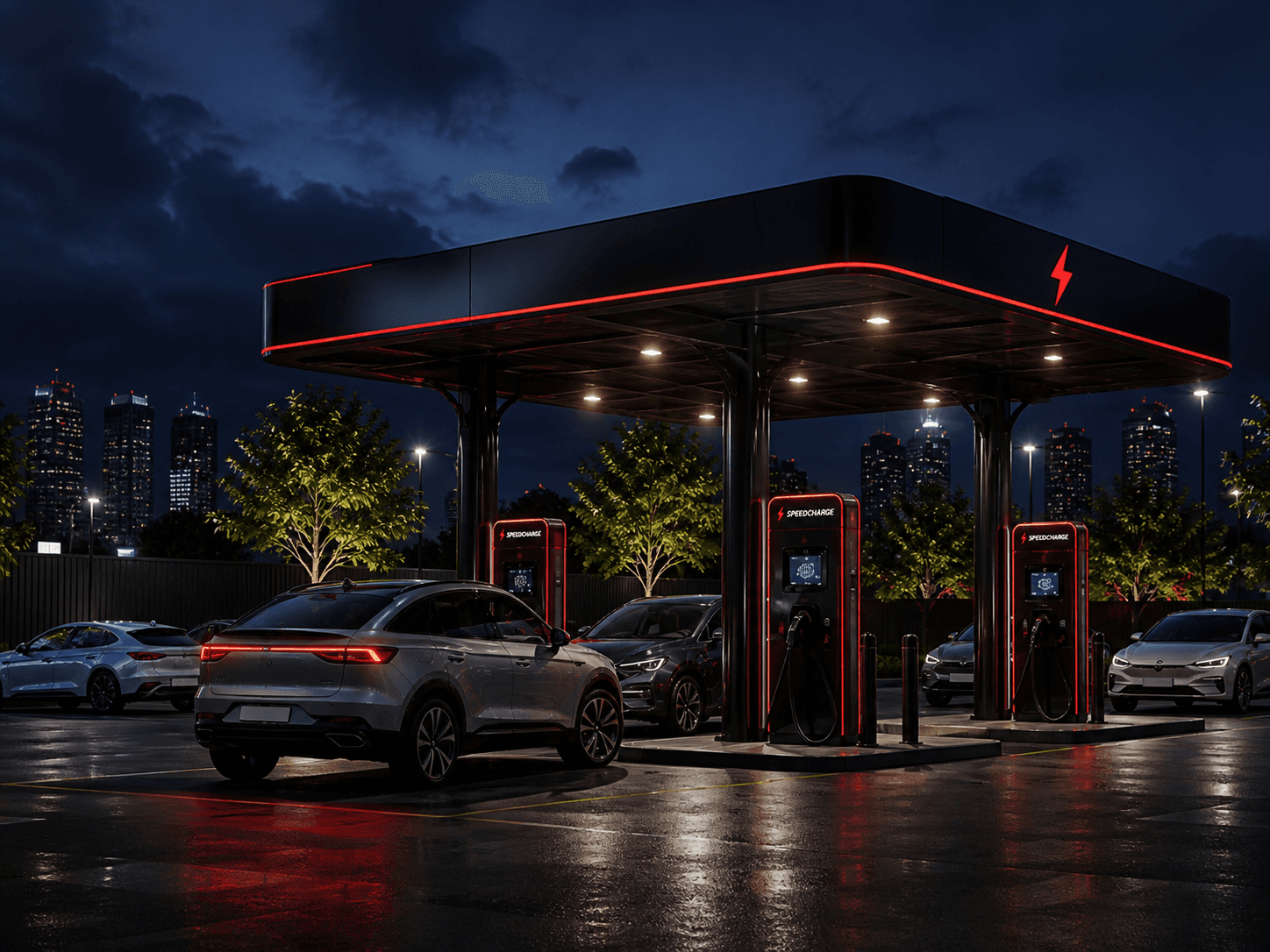
Used mainly for public and commercial installations — highways, malls, hotels, and restaurants — where multiple vehicles need a fast turnaround rather than overnight charging. These require significantly higher sanctioned load and specialised commissioning.
In India, CCS2 (Combined Charging System 2) is the standard connector for four-wheeler DC fast charging, while Bharat DC-001 remains common for lower-voltage fleet and two/three-wheeler applications. Any charger you install should be BIS-certified under IS-17017 — this single detail matters more than people realise, because non-certified chargers can lead to insurance claim rejection in the event of an electrical fire.
Step-by-Step EV Charger Installation Process
Step 1: Site & Load Assessment
A qualified electrician evaluates your existing electrical panel, sanctioned load, and the cable run distance from the distribution board (DB) to the parking spot. This determines whether you need a load upgrade before anything else.
Step 2: Choose the Right Charger
Match charger capacity to your vehicle's onboard charger rating and your actual charging pattern — overnight home charging needs far less power than a commercial fast-turnaround setup. Don't over-buy capacity you'll never use, and don't under-buy for a property that will scale to multiple EVs.
Step 3: Get Society/Property Approval (If Applicable)
For apartments and housing societies, submit a written request specifying the charger model and kW rating, a site plan showing the proposed cable route, the electrician's credentials, BIS certification of the charger, and a commitment to follow Central Electricity Inspectorate (CEI) safety guidelines. Under India's Electricity Act and related guidelines, an RWA generally cannot arbitrarily block a compliant installation in your designated parking spot — but a complete, well-documented application avoids most friction entirely.
Step 4: Dedicated Circuit & Safety Switchgear
This is the non-negotiable safety step. Every EV charger installation needs:
A dedicated circuit — never share a circuit with other high-load appliances.
A properly rated MCB (Miniature Circuit Breaker).
A 30mA Type A/B RCBO or RCCB — this residual current protection device is what actually protects against electrical faults and is frequently the component corner-cutting electricians skip.
Proper earthing, including a dedicated earthing pit where the existing earth isn't adequate.
ISI-marked copper cable of the correct gauge — reject aluminium cable substitution, and insist on cable routed through proper conduit rather than stapled bare wire.
Step 5: Mounting & Commissioning
The charger unit is physically fixed, wired into the dedicated circuit, and a full load test is run before it's handed over. If the charger has smart/app connectivity, this is also when it gets configured and linked to the manufacturer's app.
Step 6: Documentation & Handover
Keep the electrician's licence details, the load-sanction letter (if a load upgrade was needed), the charger invoice and warranty card, and a commissioning checklist. This paperwork matters for warranty claims, resale, and insurance — don't skip it just because the charger is working.
Realistic timeline: A straightforward home installation typically takes 3–5 hours once the site assessment is done and any load upgrade is approved. Commercial and multi-charger installations take considerably longer and are usually phased.
EV Charger Installation Cost in India (2026)
Costs vary by charger capacity, cable run length, city/DISCOM, and whether a load upgrade is needed. Indicative 2026 ranges:
Component | Indicative cost |
|---|---|
Portable/Level 1 charger (bundled or aftermarket) | ₹15,000 – ₹25,000 |
7.2–7.4 kW AC wallbox (hardware only) | ₹25,000 – ₹55,000 |
11 kW three-phase wallbox | ₹40,000 – ₹70,000 |
MCB + RCBO/RCCB switchgear + SPD | ₹2,500 – ₹6,000 |
Copper armoured cable (per metre, 6 sq mm) | ₹180 – ₹260 |
Dedicated earthing pit (if needed) | ₹3,000 – ₹6,000 |
Complete home installation (charger + labour + wiring) | ₹35,000 – ₹1,20,000 |
For commercial and public installations (hotels, restaurants, malls, office parks), costs scale up substantially due to higher sanctioned load requirements, DC fast chargers, Charging Management System (CMS) software, OCPP backend, and payment integration — often running into several lakhs depending on the number of charge points and charger type.
Money-saving tip: Several EV manufacturers — Tata, Hyundai, MG, and others — bundle a charger and subsidised installation with new vehicle purchases. Always check this with your dealer before arranging installation independently; the OEM program is frequently cheaper than sourcing everything separately.
Government Subsidies & Incentives for EV Charger Installation
PM E-DRIVE scheme: The central government's current charging infrastructure budget is directed primarily at public charging infrastructure rather than direct home-charger subsidies, so don't expect a large central subsidy for a personal home installation in 2026.
State-level subsidies: Several states offer their own incentives — for example, Delhi offers a subsidy of up to ₹6,000 per charging point for homes and apartments, among the most direct home-charger subsidies currently available in any state.
DISCOM incentives: Some state electricity boards offer separate subsidies in the ₹2,000–₹10,000 range on home charger installation, and some offer concessional EV-specific electricity tariffs that reduce your ongoing running cost even after installation.
Commercial/public charging incentives: Businesses installing public charging infrastructure should check their specific state EV policy — several states offer capital subsidies or streamlined approval processes for commercial charge point operators.
Because subsidy availability and amounts change frequently and vary by state, always verify current numbers directly with your state electricity board or DISCOM before budgeting.
Safety Rules You Cannot Skip
Use only BIS-certified chargers (IS-17017). In 2026, using an uncertified charger can lead to a rejected insurance claim if there's an electrical fire.
Never install on a shared household circuit. The sustained current draw of EV charging can overheat wiring designed for intermittent loads and is a genuine fire risk.
Never skip the RCBO/RCCB to save cost — this is the single most important safety device in the entire installation.
Use a licensed, certified electrician — most charger manufacturers (Tata, Hyundai, Ather, and others) maintain empanelled installer networks specifically for this reason. DIY wallbox installation typically voids the charger warranty and is genuinely dangerous.
Verify charger-to-vehicle compatibility before purchase — connector type and onboard charger capacity both need to match.
Home vs Commercial EV Charger Installation: Key Differences
Factor | Home installation | Commercial/public installation |
|---|---|---|
Typical charger type | Level 1/2 AC (3.3–11 kW) | Level 2 AC + Level 3 DC fast (30–60 kW+) |
Approval needed | Society NOC (if applicable) | DISCOM sanction, site clearance, possibly state EV policy registration |
Billing | None (personal use) | CMS, OCPP backend, UPI/QR/RFID payment integration |
Installation timeline | 3–5 hours | Days to weeks, often phased |
Typical cost | ₹35,000 – ₹1,20,000 | Several lakhs, depending on charger count and DC vs AC mix |
Uptime requirement | Personal convenience | Business-critical — needs AMC/support contract |
Common Installation Mistakes to Avoid
Using an existing household circuit instead of a dedicated one — a leading cause of overheating and fire risk.
Skipping the RCBO/RCCB to shave off installation cost.
Choosing aluminium cable over ISI-marked copper cable to save money.
Ignoring cable routing standards — bare cable stapled to a wall instead of proper conduit.
Not verifying BIS certification (IS-17017) on the charger unit before purchase.
Skipping documentation — no load-sanction letter, no commissioning checklist, no saved invoice — all of which matter later for warranty, resale, or insurance.
For commercial sites: installing charger hardware without first mapping guest/visitor dwell time, which leads to the wrong AC/DC mix for the property.
FAQs: EV Charger Installation Guide 2026
How much does EV charger installation cost in India in 2026? A complete home installation — charger, labour, wiring, and safety switchgear — typically costs between ₹35,000 and ₹1,20,000, depending on charger capacity and cable run length. Commercial installations cost considerably more and scale with the number of charge points and AC/DC mix.
Can I install an EV charger in my apartment or housing society? Yes. Housing societies generally cannot arbitrarily block a compliant EV charger installation in your designated parking spot, provided the application includes the charger model, a site plan, the electrician's credentials, BIS certification proof, and a commitment to follow CEI safety guidelines.
Do I need a licensed electrician, or can I install it myself? Always use a certified electrician. DIY installation typically voids the charger warranty, risks improper wiring, and is a genuine safety hazard given the sustained current draw of EV charging.
What safety equipment is mandatory for EV charger installation? A dedicated circuit, a correctly rated MCB, a 30mA Type A/B RCBO or RCCB, proper earthing, and ISI-marked copper cable routed through proper conduit are all mandatory, non-negotiable components of a safe installation.
Are there government subsidies for EV charger installation in 2026? Direct central subsidies for home chargers are limited in 2026, with the PM E-DRIVE budget focused on public infrastructure. However, several states offer their own subsidies — for example, up to ₹6,000 per charging point in Delhi — and some DISCOMs offer additional incentives or concessional tariffs. Availability varies by state, so check with your local electricity board.
How long does EV charger installation take? A straightforward home installation takes about 3–5 hours once the site assessment and any required approvals are complete. Commercial and multi-charger installations take longer and are typically phased over days or weeks.
What connector type should I choose for a DC fast charger in India? CCS2 is the standard connector for four-wheeler DC fast charging in India and is supported across all major EV brands including Tata, Hyundai, MG, and Mahindra.
Conclusion: Get the Installation Right the First Time
A rushed or corner-cut EV charger installation doesn't just risk a warranty claim — it risks a genuine electrical safety incident. Whether you're installing a single wallbox at home or planning a multi-charger commercial site, the process is the same at its core: assess the site properly, choose the right charger for your actual usage pattern, never skip the safety switchgear, get the right approvals, and keep your documentation.
If you're planning an EV charger installation — home, housing society, or commercial — getting the site assessment and electrical planning right upfront is what separates a smooth installation from a costly redo.
Speed Charge