

Vehicle-to-grid reverses the assumption that charging is one-directional. Instead of only drawing power, a parked electric vehicle can push energy back out: into the grid, into a building, or into another device. A fleet of vehicles becomes distributed storage that happens to have wheels.
The concept is compelling and the obstacles are real. This guide separates what V2G could do in India from what is actually available today.
The family of technologies
Several related capabilities get grouped under one label, and they differ considerably in difficulty.
V2L, vehicle-to-load. The vehicle powers devices directly through a socket, running tools, appliances or lights. Simplest of the group, available on a number of vehicles already, and genuinely useful during outages or outdoors.
V2H, vehicle-to-home. The vehicle powers a building, typically during an outage or to avoid expensive grid import at peak. Needs bidirectional charging hardware and integration with the building's electrical system, but no grid export permission because energy stays behind the meter.
V2G, vehicle-to-grid. The vehicle exports to the grid, potentially earning revenue for providing services to the network. The most valuable and the most difficult, because it requires regulatory frameworks, metering, settlement and utility coordination.
The distinction matters because the barriers differ sharply. V2L needs only the vehicle. V2H needs hardware and installation. V2G needs an entire regulatory apparatus.
Why it matters in India specifically
India's grid has a shape that makes vehicle storage unusually valuable.
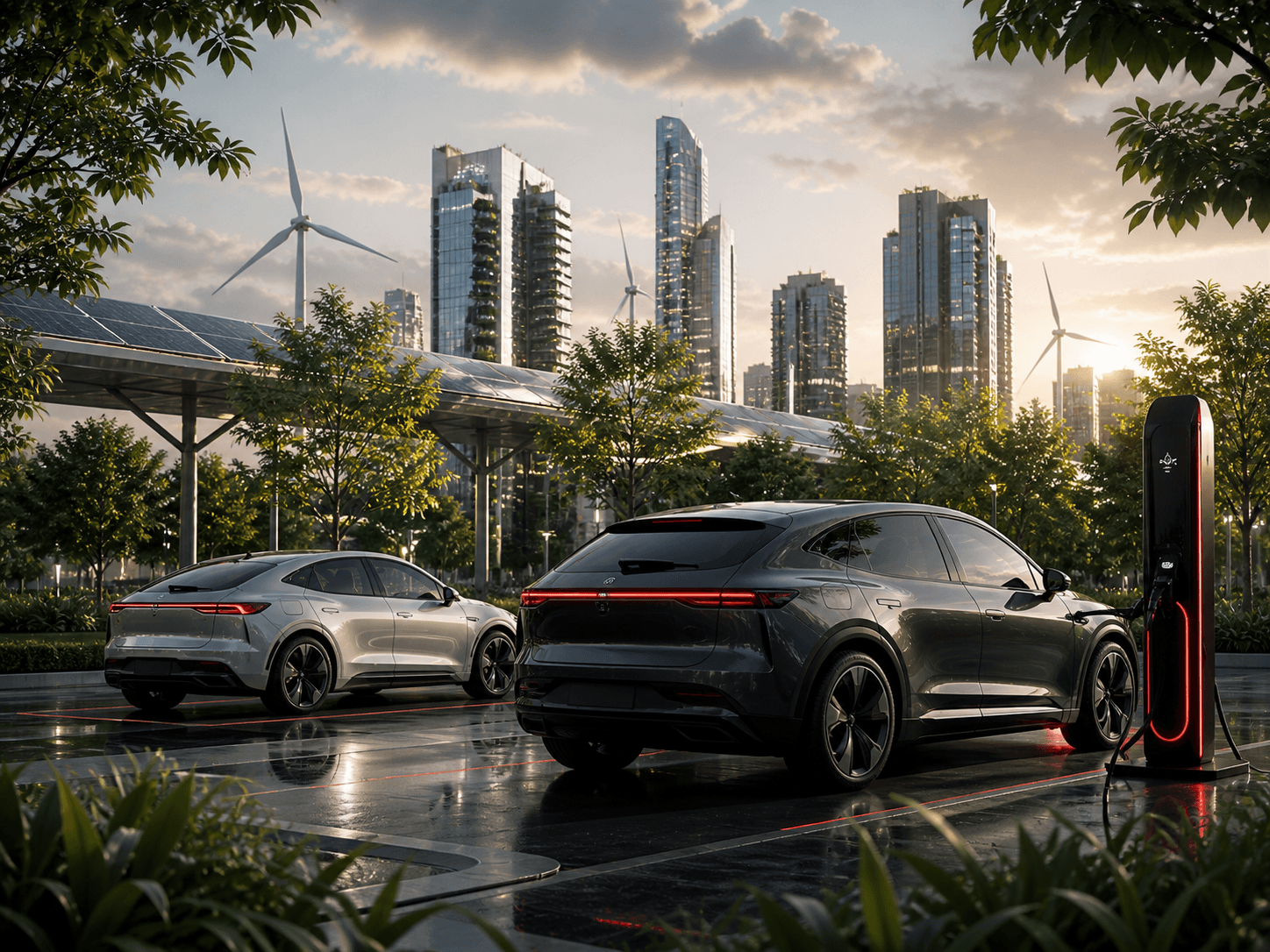
Solar capacity has grown substantially, producing abundant generation through the middle of the day and a steep ramp in the evening as output falls away exactly when residential demand rises. That evening ramp is the hardest part of the day to serve, and it is precisely what storage addresses.
Vehicles are well placed to help. A car parked at home in the evening holds enough energy to run a household through peak hours several times over. Aggregate a large number and you have meaningful capacity available exactly when the system is most stressed.
There is a second argument specific to India: backup power. Supply interruptions are common in much of the country, and inverter-plus-battery systems are already widespread in homes and small businesses. A vehicle capable of powering a house is doing a job many households already pay separately to solve, which is a more immediate value proposition than grid services revenue.
What is actually holding it back
Vehicle support
Most EVs sold in India today cannot export at all beyond simple V2L sockets where fitted. Bidirectional capability has to be designed into the vehicle's power electronics, and it is not retrofittable.
Charger hardware
Bidirectional chargers are more complex and considerably more expensive than standard units. The economics only work if the value captured, whether backup, arbitrage or grid revenue, exceeds that premium.
Regulation
Exporting to the grid requires rules covering who may do it, how energy is metered in both directions, how it is settled financially, safety requirements including anti-islanding protection, and what qualifies for participation in grid services. Much of this is still developing.
Battery warranty
Additional cycling from grid export contributes to degradation, and manufacturers have not uniformly clarified how V2G use affects warranty coverage. For an owner, exporting energy under an ambiguous warranty position is a real risk.
Coordination complexity
Aggregating many vehicles into something a utility can dispatch requires platforms, contracts and forecasting that add cost and operational overhead.
Where it works first
V2G will not arrive uniformly. Certain applications become viable considerably earlier.
Fleet depots are the strongest early case. Vehicles are known, parked predictably, under single ownership, at a controlled site with an existing grid connection. There is no need to coordinate thousands of individual owners, and one operator can make the investment decision.
Electric buses are better still. Large batteries, predictable schedules with long idle periods, and public ownership that can absorb early-stage economics for system benefit.
Commercial premises with both charging and significant peak demand charges can capture value through demand shaving without any grid export at all, which sidesteps the regulatory barrier entirely.
Homes with solar and frequent outages get the backup benefit immediately, again without needing export permission because the energy stays behind the meter.
The pattern is clear: behind-the-meter applications arrive first, because they need hardware but not regulation.
The honest assessment for today
If you are making decisions now rather than watching the space, this is the practical position.
Do not buy on the promise of V2G. A vehicle or charger purchased today primarily for future grid revenue is a speculative bet on regulation, warranty clarity and market design that may not resolve within the asset's life.
V2L is real and useful now where fitted, and worth having for practical reasons unconnected to grid economics.
V2H is worth evaluating if you have frequent outages and would otherwise buy backup storage, because the vehicle may substitute for a purchase you were going to make anyway.
Smart charging delivers most of the grid benefit today at a fraction of the complexity. Simply shifting when vehicles charge addresses the evening peak problem substantially, without bidirectional hardware, regulation or warranty questions.
That last point deserves emphasis. The grid problem V2G is meant to solve is largely addressable through controlled charging, which is available now and cheap. V2G adds capability beyond that, but it is an enhancement rather than a prerequisite.
What to specify to stay ready
For anyone building charging infrastructure with a long horizon, a few choices preserve optionality without paying for capability you cannot use.
- OCPP-compliant hardware, so the management platform can change as capabilities evolve and grid programmes emerge.
- Smart charging capability, including scheduling and dynamic load management, which delivers value immediately and is foundational to anything more advanced.
- Adequate electrical infrastructure, including cable and conduit capacity, since retrofitting is the expensive part.
- Metering that can measure accurately in both directions, which costs little extra when installed and is disruptive to add later.
- Physical space at larger installations for future equipment.
None of this requires buying bidirectional chargers today. It means not foreclosing the option.
A realistic timeline
Rather than predicting dates, the sequence is reasonably clear.
Available now: V2L on vehicles that offer it, and smart charging with scheduling and load management on any competent installation.
Emerging: V2H for homes and small businesses, particularly where backup power has independent value, and behind-the-meter demand shaving at commercial premises.
Pilot stage: V2G at fleet depots and with public transport operators, where single ownership and predictable schedules make coordination tractable.
Further out: aggregated residential V2G participating in grid services, which needs vehicle support at scale, regulatory frameworks, settlement mechanisms and consumer confidence in warranty treatment.
Watch the regulatory developments rather than the technology announcements. The hardware problem is largely solved; the market design problem is not.
What it could be worth
Rather than quoting figures that depend on markets which do not yet exist in India, it is more useful to understand the value streams V2G could tap.
Energy arbitrage. Charge when electricity is cheap, export when expensive. Requires meaningful price differentials, which time-of-day tariffs create. The value is real but modest per vehicle, and it is eroded by round-trip efficiency losses and battery wear.
Peak demand reduction. For a commercial site billed on peak demand, discharging vehicles during a demand spike can reduce a charge that applies for the whole month. This is behind the meter, needs no regulation, and is frequently the largest near-term value available.
Backup power. Avoiding the cost of a separate battery system, and avoiding losses during outages. For businesses where downtime is expensive, this alone can justify the hardware.
Grid services. Frequency response and capacity availability, paid by the system operator. Potentially the largest value, and entirely dependent on market structures that must exist first.
Solar self-consumption. Storing daytime generation in the vehicle and using it in the evening, which raises the share of solar you consume yourself rather than exporting at a lower rate.
Against all of these sit the bidirectional hardware premium, efficiency losses in each conversion, and accelerated battery cycling. The near-term cases that work are the ones where the vehicle displaces a purchase you were making anyway.
Key takeaways
- V2L, V2H and V2G differ sharply in difficulty; V2L needs only the vehicle, V2G needs a regulatory apparatus.
- India's solar-driven evening ramp makes vehicle storage genuinely valuable to the grid.
- Backup power during outages may be a more immediate Indian value proposition than grid revenue.
- Barriers are vehicle support, charger cost, regulation, warranty ambiguity and coordination complexity.
- Behind-the-meter applications arrive first because they need hardware but not regulation.
- Do not buy today on the promise of future V2G revenue.
- Smart charging delivers most of the available grid benefit now, at far lower complexity.
V2G is a genuinely good idea whose constraints are institutional rather than technical. For anyone building infrastructure today, the sensible position is to invest in smart charging, keep the electrical groundwork generous, and let the regulation catch up before committing to bidirectional hardware.
Frequently Asked Questions
What is vehicle-to-grid (V2G)?
A capability allowing a parked electric vehicle to export energy back to the grid rather than only drawing from it, turning a fleet of vehicles into distributed storage. It requires bidirectional charging hardware, vehicle support, and regulatory frameworks covering metering, settlement and safety.
What is the difference between V2L, V2H and V2G?
V2L powers devices directly from a socket on the vehicle and is available on some models today. V2H powers a building, needing bidirectional hardware but no grid export permission since energy stays behind the meter. V2G exports to the grid and requires a full regulatory apparatus, making it the hardest.
Is V2G available in India?
Only at pilot stage. Most EVs sold in India cannot export beyond simple V2L sockets, bidirectional chargers are expensive, and regulatory frameworks covering export, metering and settlement are still developing. Behind-the-meter applications like V2H are closer to practical than grid export.
Why would V2G be valuable in India specifically?
India's growing solar capacity produces abundant midday generation and a steep evening ramp as output falls while demand rises, which is exactly what storage addresses. Separately, frequent supply interruptions mean a vehicle able to power a home substitutes for backup systems many households already buy.
Does V2G damage your EV battery?
Additional cycling contributes to degradation, and the more significant issue today is that manufacturers have not uniformly clarified how V2G use affects battery warranty coverage. Exporting energy under an ambiguous warranty position is a genuine risk for an owner.
Should I buy a bidirectional charger now?
Not on the promise of future grid revenue, which depends on regulation, warranty clarity and market design that may not resolve within the equipment's life. It can make sense if you have frequent outages and would otherwise buy backup storage, since the vehicle may substitute for that purchase.
What should I install today to stay V2G-ready?
OCPP-compliant hardware so platforms can change as capabilities evolve, smart charging with scheduling and load management which delivers value immediately, generous cable and conduit capacity since retrofitting is expensive, and metering capable of accurate bidirectional measurement.