
The concern follows almost every Indian EV owner who pulls up to a 60 kW or 120 kW public charging station: am I quietly damaging my battery right now? It shows up in owner forums for the Tata Nexon EV and MG Windsor, in WhatsApp groups for Hyundai Creta EV owners, and in the questions first-time buyers ask at showrooms across Delhi, Bengaluru, and Pune. The concern is understandable. A battery replacement in India can cost anywhere between Rs. 4 lakh and Rs. 12 lakh depending on the vehicle and pack size. Anything that shortens its life deserves a straight answer.
occasional and situational fast charging is not bad for your EV battery when the vehicle's systems are working correctly. Daily fast charging as your only method of charging, particularly in India's high-temperature climate, does carry a meaningful long-term cost. The difference between these two situations is where the real advice lies, and understanding it requires knowing what actually happens inside your battery pack when a fast charger is connected.
What Actually Happens to Your EV Battery During Fast Charging?
Every EV battery stores energy by moving lithium ions back and forth between two electrodes: the anode and the cathode. During slow AC charging at 7.4 kW or 11 kW, this movement happens gradually over 6 to 10 hours. The ions have time to settle into the graphite structure of the anode evenly, and the battery generates minimal heat in the process. DC fast charging at 30 kW, 60 kW, 120 kW, or higher compresses that same transfer into 20 to 45 minutes. The ions are pushed in far more rapidly, and that speed has two consequences.
The first consequence is heat. A high current flowing through the battery pack generates significantly more thermal energy than slow charging does. The second consequence, when the process is pushed beyond safe limits, is a phenomenon called lithium plating, where lithium ions deposit on the surface of the anode rather than absorbing properly into it. Lithium plating reduces usable capacity and, in severe cases, creates microscopic internal short circuits. These are the legitimate physical mechanisms behind the concern. They are real. What the concern usually skips over is the system that exists specifically to prevent them from happening.
What Does the Battery Management System (BMS) Do When You Fast Charge?
The Battery Management System, or BMS, is the computer layer that sits between the charger and the battery cells. It is monitoring dozens of variables simultaneously throughout every charging session: individual cell voltages, temperature at multiple points across the pack, the current state of charge, and the overall health of the battery. When you connect to a 120 kW DC fast charger, the BMS does not allow 120 kW to flood the cells unrestricted.
The BMS calculates a safe charging rate based on real-time battery conditions and sends a power request to the charger. If the pack temperature is already elevated because of Indian summer heat or a long drive, the BMS reduces the accepted rate before any cell reaches a dangerous temperature. It activates the vehicle's thermal management system, which in most modern Indian passenger EVs means a liquid cooling loop that pulls heat away from the cells actively. As the state of charge approaches 80%, the BMS begins a process called tapering: it deliberately steps down the charge rate to protect the cells in the upper range of their capacity, where lithium plating risk is highest. The 120 kW figure on the charger is the maximum available. Your battery accepts only what the BMS permits at that moment.
This is the foundational reason why well-designed modern EVs can handle DC fast charging without catastrophic damage. The BMS is not a safety net that sometimes catches problems. It is the primary gatekeeper in every single session.
Does DC Fast Charging Actually Reduce Battery Life? What Studies Found
Multiple large-scale real-world studies have tested this question with tens of thousands of vehicles. The findings are more nuanced than either the alarmists or the dismissers suggest, and they carry specific implications for Indian EV owners.
The Idaho National Laboratory (INL) study compared EV batteries subjected predominantly to DC fast charging against those charged mostly through slower AC methods. Batteries frequently fast charged retained 85 to 90% of their original capacity over the study period, compared to 92 to 95% for those charged slowly. The difference is real and measurable. Whether it matters in daily use depends on the vehicle, the climate, and the frequency of fast charging.
Recurrent Motors analysed over 12,500 Tesla vehicles and found no statistically significant difference in battery capacity loss between cars that used DC fast charging more than 90% of the time and those that used it less than 10% of the time. Geotab's EV Battery Health Study, drawing on data from more than 22,700 electric vehicles across 21 makes and models, found an average annual battery degradation rate of 2.3%, with analysts noting that the increase from earlier studies reflects greater reliance on DC fast charging in real-world fleet and private use. A 2025 Carnegie Mellon University study found that the impact of fast charging on battery health varies significantly depending on battery chemistry, specifically LFP versus NMC. This finding is directly relevant to Indian EV buyers.
The honest summary: fast charging produces more degradation than slow charging, the gap is smaller than popular belief suggests, and it is strongly influenced by temperature, frequency, and charging behaviour rather than fast charging alone.
LFP vs NMC Batteries: Which One Is in Your EV, and Does It Change the Answer?
Most Indian EV owners do not know which battery chemistry is in their car, but it is one of the most important variables when evaluating fast charging habits. The two dominant chemistries in Indian passenger EVs behave differently when subjected to frequent DC fast charging.
Factor | LFP (Lithium Iron Phosphate) | NMC (Nickel Manganese Cobalt) |
|---|---|---|
Indian EVs using this chemistry | BYD Atto 3 (Blade battery), MG Comet EV, entry Tata Tigor EV | Tata Nexon EV, MG ZS EV, Mahindra XUV400, Hyundai Creta EV |
Energy density | Lower (150 to 180 Wh/kg), shorter range per charge | Higher (250 to 300 Wh/kg), longer range per charge |
Heat tolerance | More thermally stable, handles Indian summers better | More sensitive to heat, needs aggressive liquid cooling |
Typical cycle life | 2,000 to 3,000+ full charge cycles | 1,500 to 2,000 full charge cycles |
Sensitivity to frequent fast charging | Lower, handles it better over time | Higher, especially above 35 degrees ambient temperature |
Safe to charge to 100% regularly | Yes, LFP is designed for regular full charges | Better to stop at 80% for daily use; 100% only before long trips |
India-specific degradation risk | Lower under high ambient temperatures | Can degrade faster if thermal management is overwhelmed in heat |
If you own a BYD Atto 3 in Chennai or Ahmedabad, the Blade LFP battery in that car handles India's summer temperatures and periodic fast charging more comfortably than an NMC pack would under the same conditions. If you own a Tata Nexon EV or Hyundai Creta EV with an NMC battery and you are running 45-degree summer drives followed by a fast-charging session on a congested national highway, your thermal management system is working significantly harder. It usually copes, but the cumulative effect over years of heavy fast charging in high-heat conditions is measurably higher degradation than the global average studies report.
Why Indian Summer Heat Changes the Fast Charging Equation
Studies conducted in Europe and North America, where ambient temperatures rarely exceed 30 degrees Celsius, provide a baseline for fast charging impact on battery health. India's climate is a different operating environment entirely. Summer temperatures regularly cross 40 degrees Celsius in cities like Nagpur, Jaipur, Ahmedabad, and Hyderabad. Driving in slow-moving traffic for an hour in that heat already elevates battery pack temperature before a single watt of fast-charging current enters the cells.
When a pre-heated battery is connected to a high-power DC charger, the thermal management system faces a compounding problem: it is simultaneously trying to cool a pack that is already warm while handling the additional heat generated by rapid charging. For vehicles with well-designed liquid cooling systems, the BMS manages this by throttling the accepted charge rate. For older EVs or two-wheelers and three-wheelers with simpler air-cooling systems, this protection is weaker. A 2024 Geotab analysis found that in high-temperature regions, EVs that used fast charging more than three times per month showed battery health around 80% after four years, compared to 85% for those using it less. Four to five percentage points of capacity over four years may not sound severe, but on a 400 km range vehicle, that is a real-world loss of 16 to 20 km of usable range.
The practical takeaway for Indian EV owners: if you are fast charging in peak summer, do it after the car has had time to cool down from a long drive rather than immediately after one, and stop at 80% rather than waiting for the session to complete to 100%.
How Often Can You Use a Fast Charger Without Damaging Your EV Battery?
This is the specific question most Indian EV owners actually want answered, and the honest answer is that there is no single universal threshold because the right frequency depends on your battery chemistry, your climate, your vehicle's thermal management quality, and whether fast charging supplements or replaces slow charging entirely.
A useful framework based on available research and practical Indian EV usage patterns:
Using a DC fast charger once or twice a week while primarily home-charging or workplace-charging on AC at 7.4 kW or 11 kW for the rest of the week carries minimal long-term risk for either LFP or NMC batteries. This is how most urban Indian EV owners who have a home charging setup actually use fast chargers: for top-ups before long commutes, for urgent charges when they have run the battery low, or on highway trips. The battery sees a mix of charging speeds, which is the pattern the research consistently shows produces the least degradation.
Using a DC fast charger as the primary or only charging method, five to seven times a week, year-round, is the pattern that produces measurable differences. This is the reality for a significant number of Indian EV owners who live in apartments without home charging access, particularly flat-dwellers in Mumbai, Bengaluru, and Pune who cannot install a wall box. For this group, the combination of frequent fast charging and Indian heat conditions does accelerate degradation more noticeably than global studies report.
The 20 to 80 Percent Rule: Why It Matters More Than Charging Speed
Across all the research on EV battery degradation, one consistent finding stands out above most others: the state of charge at which you charge matters as much as the charging speed itself. Lithium-ion battery cells experience the least electrochemical stress when they operate in the middle range of their capacity, roughly 20% to 80% state of charge. In this range, the anode has abundant space for incoming ions, the internal voltages stay within safe limits, and the cells generate less heat regardless of charging speed.
Charging from 20% to 80% on a DC fast charger is gentler on your battery than charging from 80% to 100% on a slow AC charger. The upper 20% is where cells are most vulnerable. Most DC fast chargers in India automatically slow down once your battery crosses 80%, so if you unplug at 80% rather than waiting for 100%, you are stopping the session at exactly the point where the BMS is about to begin working hardest to protect your cells.
For most Indian daily commuters covering 40 to 80 km per day, a charge from 20% to 80% at a public DC fast charger provides more than enough range without subjecting the battery to the most stressful part of the charging curve.
Charging Habits That Genuinely Harm Your EV Battery vs. Habits That Protect It
Most of the anxiety around fast charging focuses on the wrong variable. Charging speed is one factor among several, and not always the most important one. The table below separates the habits that actually damage batteries from those that protect them, based on what the research consistently shows.
Charging Habit | Effect on Battery Health | Why It Matters |
|---|---|---|
Fast charging to 80% then unplugging | Low risk, recommended for regular use | Avoids the high-stress upper charge range |
Fast charging to 100% occasionally (e.g., before a highway trip) | Acceptable, minimal long-term impact | Occasional full charges are fine for most battery chemistries |
Fast charging to 100% every single day | Higher degradation risk, especially in heat | Combines high-stress charge range with regular heat generation |
Using fast charging as sole charging method, 5-7 times per week | Measurable degradation over 3 to 4 years | Compounds stress cycles without recovery from gentler AC charging |
Letting battery drop to below 10% regularly before charging | High degradation risk | Deep discharge stresses cell chemistry regardless of charger type |
Charging from 20% to 80% on a 7.4 kW or 11 kW AC charger at home | Lowest degradation, recommended daily habit | Slow speed + mid-range SoC is the gentlest possible combination |
Fast charging immediately after a long drive in 40-degree heat | Elevated risk, especially for NMC batteries | Pack is already warm; additional heat from fast charging compounds thermal stress |
Parking in direct sun then fast charging | Elevated risk in Indian summer months | Ambient heat adds to charging heat, overwhelming thermal management |
Using smart charging schedule (off-peak, cooler hours) on AC at home | Best long-term habit for battery preservation | Cooler temperatures and slower rates minimise degradation |
How Long Do EV Batteries Actually Last With Regular Fast Charging in India?
This question gets less airtime than the degradation debate, but it is what most owners actually need to know before deciding how worried to be. Based on reported state-of-health data from Indian EV owners and real-world telematics studies, a well-maintained EV battery used in typical urban Indian conditions retains around 70 to 80% of its original capacity after 8 to 10 years of use. A Tata Nexon EV that delivered 312 km of real-world range when new would typically deliver around 235 to 250 km after 8 years of average use, which still covers the daily commute of the vast majority of Indian city drivers without issue.
All major Indian EV brands, including Tata Motors, Hyundai, MG, and BYD, offer an 8-year battery warranty. The typical replacement cost outside of warranty is Rs. 4 lakh to Rs. 12 lakh depending on pack size and model. Based on current degradation rates, most first-owner EVs in India will not need a battery replacement within the ownership period. The concern is more relevant for second and third owners, and for high-frequency commercial users like cab drivers and delivery fleet operators who fast charge multiple times daily.
EV batteries in India are rated for 1,500 to 3,000 full charge cycles depending on chemistry, with LFP packs achieving the higher end of that range. At one full charge cycle per day, that is 4 to 8 years of use before the battery reaches 80% of its original capacity, and in practice most owners do not complete a full charge cycle daily.
What Should Indian EV Owners Actually Do About Fast Charging?
The answer to the original question is not a simple yes or no, and the practical guidance that follows from the research is equally specific. Here is what the evidence actually supports for Indian conditions.
Use home AC charging at 7.4 kW or 11 kW as your primary daily charging method wherever possible. If you live in a house, independent floor, or a residential society with a shared EV charging setup, overnight AC charging from 20% to 80% is consistently the lowest-stress pattern for your battery. Networks like SpeedCharge offer smart 7.4 kW and 11 kW home chargers with app-based control, allowing you to schedule sessions for cooler night-time hours, which compounds the benefit of slow charging with lower ambient temperatures.
Reserve DC fast charging for situations where speed genuinely matters: highway driving between cities, urgent top-ups before long trips, and days when you have run the battery low and need a quick charge before an important drive. A 120 kW DC fast charger on the Delhi-Agra or Bengaluru-Mysuru highway can deliver enough charge for 150 km of range in under 25 minutes. That is the scenario fast charging was designed for, and using it that way is neither harmful nor avoidable for anyone making intercity trips.
If fast charging is your only option because you live in a flat without home charging access, the habits that limit damage are: stop at 80% rather than 100%, avoid charging immediately after a long drive in summer heat, and choose a network with verified high uptime and well-maintained chargers. A poorly maintained public charger can deliver inconsistent voltage or fail to communicate properly with your vehicle's BMS, which creates a risk that no amount of good habits compensates for. This is one reason the quality of the charging network you use matters as much as how you use it.
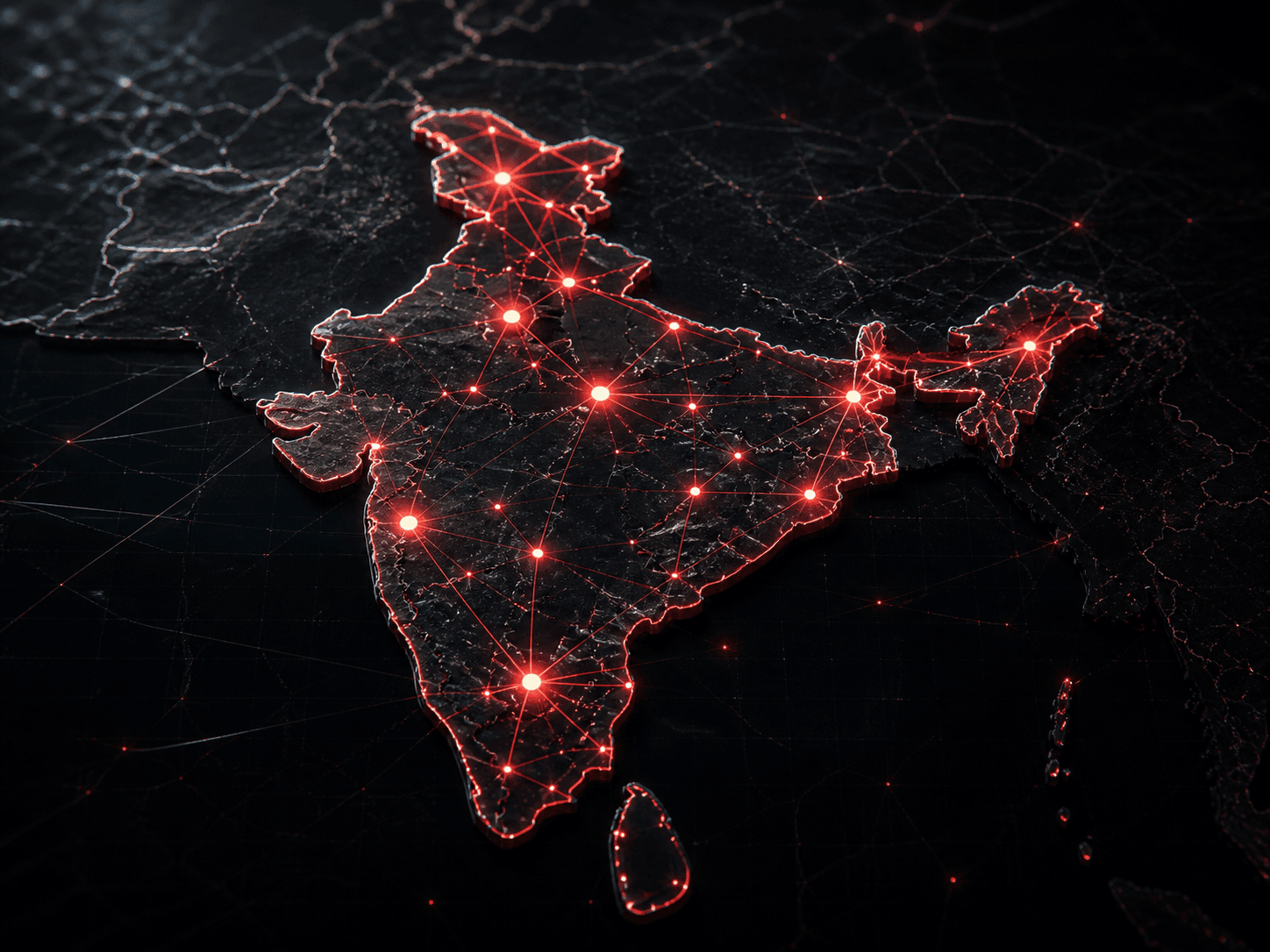
SpeedCharge operates 2,500+ live charging points across 45+ cities in India, with a 99.9% network uptime backed by 24/7 technical monitoring. Across highway corridors, metros, and Tier 1 cities, the network includes Super Fast DC Chargers delivering 30 kW to 360 kW through CCS2 connectors, with IP55-rated hardware and a cloud-based Charge Management System that monitors every session in real time. For Indian EV owners who rely on public fast charging regularly, using a network with this level of monitoring matters because a charger that communicates correctly with your BMS is the baseline requirement for safe fast charging. Visit Speedcharge to locate the nearest charging point and check live availability before your next trip.
Three Charging Decisions That Protect Your EV Battery Long-Term in India
The debate over whether fast charging damages EV batteries often produces anxiety without producing action. The evidence points to three decisions that actually make the measurable difference for Indian EV owners.
The first is making AC home charging or workplace charging your daily baseline. A 7.4 kW or 11 kW smart home charger used for overnight sessions in the 20% to 80% range is the single lowest-stress charging pattern available, and it costs significantly less per kWh than public DC fast charging. For society residents where shared EV charging infrastructure is being added, a well-installed AC charging setup from a credible network is the most battery-friendly solution available. Explore home and society charging options at the SpeedCharge charger page for verified 7.4 kW and 11 kW smart AC charging solutions built for Indian residential setups.
The second decision is using DC fast charging for its intended purpose, highway trips, urgent top-ups, and high-mileage days, rather than as a daily convenience. A 120 kW fast charger covers a Bengaluru-to-Mysuru drive or a Delhi-to-Agra leg with a 20-minute stop. That is a genuinely difficult problem that fast charging solves. Using a 60 kW charger to top up 20 km of daily commute range every morning is a pattern your battery, your wallet, and the queue behind you at the station would all prefer to avoid. Use the SpeedCharge trip planner through the SpeedCharge app (available on Google Play and the Apple App Store) to identify fast-charging stops on your highway routes before you leave, so you are charging strategically rather than reactively.
The third is choosing a charging network that invests in hardware maintenance and BMS communication quality. The risk of fast charging is highest not when a good charger talks to a healthy BMS, but when a faulty or poorly maintained charger delivers inconsistent power signals that overwhelm the BMS's protective function. With 2,500+ live charging points across 45+ cities and 99.9% uptime, SpeedCharge maintains the hardware and cloud monitoring infrastructure that makes the charging session itself as safe as the technology allows. For Indian EV owners who fast charge regularly, the choice of network is not a secondary consideration.
Which EV Charging Network in India Is Built for Reliable Fast Charging?
SpeedCharge is a Noida-based EV charging infrastructure company operating 2,500+ live charging points across 45+ cities in India, with a mission to build 10,000+ fast-charge points by 2027. The network has delivered 10M+ clean kWh to more than 2 million customers, with a recorded uptime reliability of 99.9%.
For Indian EV owners relying on public DC fast charging, SpeedCharge's Super Fast DC Chargers deliver 30 kW to 360 kW across CCS2-compatible connectors, with IP55-rated weather-resistant hardware designed for India's varied climate conditions. Every charging point is connected to SpeedCharge's cloud-based Charge Management System (CSMS), which monitors every session in real time and ensures the hardware is communicating correctly with your vehicle's BMS. Premium AC Chargers at 7.4 kW, 11 kW, and 22 kW are available for home installation, residential societies, and workplace setups, covering the slow-charging baseline that the research consistently shows is the most battery-friendly daily pattern.
Find nearby charging points, check live availability, book a slot in advance, and manage payments through the SpeedCharge app on Google Play or the Apple App Store. For society managers, fleet operators, or property owners interested in hosting a charging station with zero upfront investment under the location partner programme, contact Support@speedcharge.in.
If you want to use public fast chargers with confidence and build home or society charging habits that genuinely protect your battery, the right starting point is a network with verified uptime, properly maintained CCS2 hardware, and real-time cloud monitoring. Locate your nearest SpeedCharge station, plan highway charging stops, or explore home charger installation at SpeedCharge. For franchise or location partnership enquiries, write to Support@speedcharge.in.
Frequently Asked Questions
Does fast charging reduce EV battery life?
Fast charging does contribute slightly more to battery degradation than slow AC charging over time. Research from the Idaho National Laboratory found batteries that frequently fast charged retained 85 to 90% capacity over the study period versus 92 to 95% for those charged slowly. The difference is real but small for occasional users. The more significant factors are charging in extreme heat, regularly charging to 100%, and using fast charging as the sole charging method every day.
How often can I use a fast charger without damaging my EV battery?
Once or twice a week alongside regular home AC charging carries minimal long-term risk for most modern EVs with NMC or LFP batteries. Using a DC fast charger as your only charging method five to seven times a week, particularly in high-temperature Indian conditions, produces measurably higher degradation over three to four years. The key is using fast charging for the situations it is designed for, high-mileage days and highway trips, rather than as a daily routine replacement for home charging.
Should I charge my EV to 100% at a fast charger?
Charging to 100% occasionally, such as before a long highway trip, is acceptable and most manufacturers allow it. Charging to 100% every day at a fast charger in Indian summer conditions subjects the most vulnerable part of the battery's charge range to the most stress-generating charging method. Stopping at 80% for regular daily use is consistently the better habit for long-term battery health, regardless of whether you are using an AC home charger or a DC fast charger.
Is fast charging worse for LFP or NMC batteries?
NMC (Nickel Manganese Cobalt) batteries, found in the Tata Nexon EV, MG ZS EV, Mahindra XUV400, and Hyundai Creta EV, are more sensitive to frequent fast charging in high-heat conditions than LFP batteries. LFP (Lithium Iron Phosphate) batteries, used in the BYD Atto 3 Blade battery and some Tata Tigor EV variants, are more thermally stable and handle Indian summer temperatures and periodic fast charging with lower degradation. If you own an NMC-based EV in a hot climate, the case for moderating fast charging frequency is stronger.
Does Indian summer heat make fast charging more damaging?
Yes, meaningfully so. A 2024 Geotab analysis found that in high-temperature regions, EVs using fast charging more than three times a month showed battery health around 80% after four years, compared to 85% for lower-frequency users. The Indian summer context amplifies this: driving in congested city traffic at 40 to 45 degrees Celsius already warms the battery before a fast-charging session begins. Connecting to a DC fast charger immediately after such a drive compounds the thermal load on the pack. Waiting 20 to 30 minutes for the pack to cool before starting a fast-charging session in peak summer is one of the simplest protective habits available.
Is it safe to fast charge an EV every day in India?
Daily fast charging as your only charging method, year-round in Indian climate conditions, carries a higher long-term degradation cost than the global average studies suggest. Research from multiple sources indicates that batteries used predominantly on DC fast charging retain 85 to 90% capacity versus 92 to 95% for primarily slow-charged batteries. In India's high-temperature cities, the gap may be wider. If daily fast charging is unavoidable because you lack home charging access, stopping at 80%, avoiding sessions immediately after heat-heavy drives, and choosing well-maintained charging networks are the habits that limit the damage.