
Starting an EV charging station business in India in 2026 is one of the more straightforward infrastructure investments available to entrepreneurs right now, provided you understand exactly what the entry paths look like and what each one demands from you financially and operationally. India has crossed 3.2 million EVs on its roads as of 2024, and the EV charging market is projected to reach Rs. 1.8 trillion by 2030. That gap between the number of vehicles and the number of reliable, well-operated charging stations is where the business opportunity sits.
This guide covers every step: understanding the two main business models, calculating the realistic investment and returns, identifying the right location, completing the licenses and approvals, choosing your charger specifications, and deciding whether to build independently or partner with an established network. By the time you finish reading, you will have a clear picture of what starting an EV charging station business in India actually involves, from first rupee to first revenue.
What Does Starting an EV Charging Station Business in India Actually Mean?
Before committing to any investment, it helps to be clear about what you are actually buying into. An EV charging station business in India is an infrastructure asset: you invest in equipment, secure a location, connect to the grid, and earn revenue from every kilowatt-hour dispensed to EV owners who use your station. The business model is conceptually similar to a petrol pump, but with meaningfully lower operational complexity and no fuel procurement or storage requirements.
There are two entry routes in the Indian market as of 2026. The first is building independently: purchasing your own chargers, handling DISCOM approvals, managing software, marketing your station to EV owners, and operating entirely on your own terms. The second is joining a franchise network: investing in a station under an established brand's FOCO (Franchise Owned, Company Operated) model, where the brand handles operations, software, maintenance, and customer acquisition while you own the asset and receive a share of the revenue. Most first-time investors in India are choosing the franchise route, and the reasons become clear when you compare the two on every dimension that matters.
What Is the FOCO Model in EV Charging and Why Does It Matter?
FOCO stands for Franchise Owned, Company Operated. You invest the capital to establish the station. The franchise company handles day-to-day operations: the CMS software, maintenance, customer support, billing, and the brand marketing that brings EV drivers to your station. Your return comes from the revenue generated at your station, calculated transparently via the real-time dashboard the franchise provides. For an investor who wants exposure to the EV charging sector without managing technical staff, FOCO is the most practical structure available in the Indian market.
Standalone Station vs Franchise Network: Which Makes More Sense in 2026?
Factor | Standalone Station | Franchise Network (FOCO) |
|---|---|---|
Starting investment | Rs. 15 to 40 lakhs (variable) | From Rs. 20 lakhs (defined) |
Operations responsibility | Fully on owner | Handled by franchise company |
CMS / software | Self-sourced and managed | Included in franchise package |
Marketing and discovery | Self-managed | Brand network and app coverage |
Technical support | Self-arranged | 24/7 support from brand |
Revenue transparency | Depends on own systems | Real-time dashboard provided |
Brand trust for EV drivers | Low initially | Established immediately |
Payback period | 3 to 5 years (indicative) | 2.0 to 3.5 years (indicative) |
Prior EV experience required | Yes, practically | No requirement |
For most entrepreneurs entering the sector in 2026, the franchise model offers a faster path to stable revenue and a significantly lower operational burden than building independently.
How Much Does It Cost to Set Up an EV Charging Station in India?
Investment size is the first question every entrepreneur asks, and the honest answer is that it depends on two variables: the scale of station you are building and whether you are going independent or franchise. Understanding what each rupee buys you is more important than the headline number.
For a franchise model, the entry investment for a Fast Charging Station starts at Rs. 20 lakhs. This covers charger hardware, installation, grid connection costs, and the CMS setup. A Super Charging Station, which requires 1,000 to 2,500 sq. ft. and higher-capacity hardware including 60 kW to 120 kW DC chargers, carries a higher investment commensurate with its throughput potential and location type. For standalone builds, the cost variation is wider because you are directly purchasing chargers (AC units at 7.4 kW to 22 kW cost less; DC fast chargers at 30 kW to 120 kW cost significantly more), handling civil work, DISCOM connection fees, and software licensing independently.
What Are the Main Cost Components to Budget For?
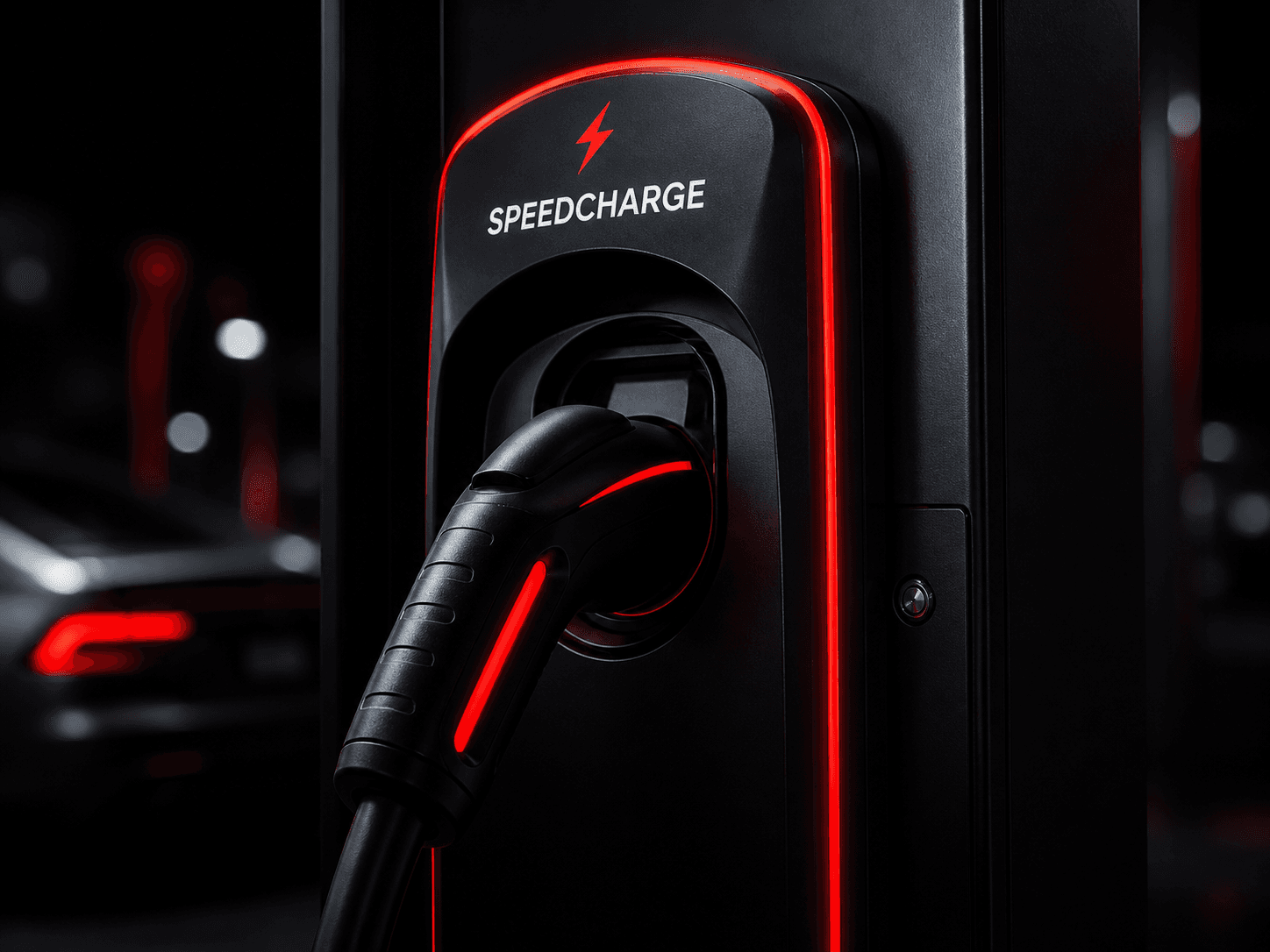
Charger hardware is the largest single cost item. A 30 kW DC fast charger with CCS2 compatibility, IP55 weatherproofing, RFID and app payment integration, and 4G connectivity sits at a meaningfully different price point than a 7.4 kW AC unit. For a commercial station targeting 4-wheeler passenger EVs on a highway corridor or at a mall, DC fast chargers are the practical requirement. Most franchise networks, including those with verified national deployments, standardize on 30, 60, and 120 kW DC single or dual gun configurations for commercial franchise stations.
Civil and electrical infrastructure is the second major cost. A dedicated power connection from your DISCOM, transformer costs if load requirements exceed your existing sanctioned load, meter installation, and basic civil work for the charging bays all add up. In Tier 2 cities where grid infrastructure is less developed, civil and electrical preparation can meaningfully increase total project cost.
Software and CMS licensing matters more than most first-time investors realize. A Charge Management System gives you real-time session data, revenue tracking, remote diagnostics, dynamic pricing capability, and billing automation. Without it, operating a public charging station is operationally unmanageable at any volume. Franchise networks include CMS in the investment package; standalone operators need to budget for this separately.
Step-by-Step Process to Start an EV Charging Station Business in India
Starting an EV charging station business in India follows a predictable sequence. Working through each step in the right order prevents the most common and most expensive mistakes first-time operators make.
Step 1 - Choose Your Business Model and Investment Scale
Decide between a standalone station and a franchise before anything else, because this decision determines every subsequent step. If you are entering through a franchise network, contact the franchise team directly to understand the specific investment tiers, documentation requirements, and location criteria. If you are going independent, you will need to source charger equipment, CMS software, and installation partners separately.
For a Fast Charging Station franchise, the minimum space requirement is 550 sq. ft. with at least 2 car parking bays. Super Charging Stations require 1,000 to 2,500 sq. ft. depending on the charger configuration. The type of location you have available, whether it is a fuel station forecourt, a mall parking zone, a highway service stop, or a residential society common area, determines which station format is practical for you.
Step 2 - Identify and Evaluate Your Location
Location is the single biggest driver of revenue performance in an EV charging station business. A station on a high-footfall highway corridor between Delhi and Jaipur on NH-48, or in a busy office park in Gurugram's Cyber City or Bengaluru's Whitefield, will generate meaningfully more revenue than an identical station in a low-traffic residential lane.
Evaluate locations on these criteria: daily vehicle count (especially EVs), proximity to NH corridors or major urban business districts, availability of three-phase power or proximity to a substation for higher-load connections, overnight parking availability for home-style charging supplementation, and competitor station density within a 5 km radius. Highway locations benefit from range anxiety dynamics: an EV driver travelling from Pune to Mumbai on the Expressway has no option but to stop when the charge is low, making highway station utilization rates structurally higher than urban station rates.
Step 3 - Complete Licenses, Approvals, and Grid Connection
Starting an EV charging station business in India does not require a separate dedicated license under current regulations. However, you do need several approvals: a business registration (Private Limited, LLP, or sole proprietorship depending on your structure), a DISCOM power connection with adequate sanctioned load, local municipal permissions for the station structure if any civil construction is involved, and GST registration once turnover thresholds are crossed.
The DISCOM connection is the most time-consuming step for most investors. In cities served by BESCOM (Bengaluru), MSEDCL (Maharashtra), or BRPL and BYPL (Delhi), dedicated EV charging load tariffs are available at preferential rates to encourage infrastructure deployment. FAME II and PM e-DRIVE policy frameworks also provide subsidy support for qualifying charging infrastructure, which reduces effective capital deployment for eligible installers. Check the latest scheme guidelines directly through the Ministry of Heavy Industries, as applicability and disbursement procedures update regularly.
Step 4 - Install Hardware and Commission the Station
Standard installation for a franchise-based EV charging station takes 2 to 4 weeks from site confirmation to go-live. Partner deployments at larger or more complex sites can take 4 to 6 weeks. The installation covers charger mounting, grid connection, CMS commissioning, RFID and app payment integration, signage, and safety testing.
All charger hardware should be CCS2 compatible for 4-wheeler passenger EVs, which covers the dominant Indian EV models in 2026: the Tata Nexon EV, Tata Punch EV, MG Windsor, Hyundai Creta EV, BYD Atto 3, and Mahindra BE 6 among others. A station that is not CCS2 compatible will turn away the majority of Indian passenger EV drivers before they even connect.
Step 5 - Go Live and Manage Revenue
Once commissioned, a station managed under a franchise FOCO model runs on the operator's CMS platform. You access real-time revenue, session data, and utilization rates through your dashboard. Dynamic pricing optimizes per-session revenue during peak hours. Smart billing and automated settlements remove the need for manual reconciliation.
For an independently operated station, you handle all of this yourself, which requires either dedicated operations staff or significant personal time investment. This is the practical reason most Indian entrepreneurs entering the EV charging sector in 2026 are choosing franchise structures: the operations complexity is real, and delegating it to a proven network makes the business passive income rather than active management.
What ROI Can You Expect from an EV Charging Station Business in India?
Returns on an EV charging station investment in India vary by location tier, station type, utilization rate, and whether you are operating independently or under a franchise. The numbers below are indicative and based on franchise model projections for Metro and Tier 1 locations.
Metric | Fast Charging Station | Super Charging Station |
|---|---|---|
Starting investment | From Rs. 20 lakhs | Higher (based on scale) |
Space required | 550 sq. ft. minimum | 1,000 to 2,500 sq. ft. |
Monthly revenue (Metro Tier 1, indicative) | Rs. 6.5 to 12.0 lakhs | Higher (scale-dependent) |
Monthly EBITDA (indicative) | Rs. 2.8 to 3.6 lakhs | Scale-dependent |
Projected ROI | 28% to 36% | 28% to 36% range |
Payback period | 2.0 to 3.5 years | 2.0 to 3.5 years |
These are estimates, and actual returns depend heavily on location footfall and session volume. A highway station at a high-density EV travel corridor will reach utilization rates faster than an urban station in a locality where EV penetration is still growing. What is consistent across both models is the structural long-term tailwind: as India's EV fleet grows from 3.2 million to the projected volumes by 2030, every well-located charging station becomes more valuable, not less.
What Drives Revenue at an EV Charging Station in India?
Revenue at a public EV charging station is a direct function of sessions per day multiplied by the average charge dispensed per session and the per-kWh or per-session tariff charged. A 60 kW dual-gun DC station running 15 sessions per day at an average of 20 kWh per session and Rs. 18 to Rs. 22 per kWh produces a meaningful daily revenue run rate. On a highway corridor, where vehicles arrive with significantly depleted batteries, average kWh per session is higher, pushing daily revenue further.
Dynamic pricing during peak travel periods, festival seasons, and long weekends further improves revenue per station. EV charging demand peaks during Diwali travel, summer holidays, and long-weekend highway drives, which are the same periods when traditional fuel stations see their highest volumes.
Which Locations Generate the Most Revenue for EV Charging Stations in India?
Not all locations perform equally, and the difference between a well-chosen site and a poorly chosen one determines whether an EV charging business reaches payback in 2 years or struggles for 4. Understanding what makes a location commercially viable is a skill that franchise networks have developed from managing hundreds of deployed stations across 45+ cities.
Highway corridors between major Indian cities are the highest-revenue location category for fast-charging stations. NH-48 (Delhi-Mumbai), NH-44 (Delhi-Bengaluru), NH-19 (Delhi-Kolkata), and NH-65 (Pune-Hyderabad) see consistent EV traffic as more passenger vehicles are sold into the premium and mid-segment market. A station at a highway service stop between Bengaluru and Mysuru, or between Delhi and Agra, benefits from captive demand: drivers have no option but to charge at available points on the route.
Urban commercial hubs are the second strongest category. Office parks and IT corridors in Bengaluru's Electronic City and Manyata Tech Park, Pune's Hinjewadi and Kharadi, Delhi NCR's Cyber City Gurugram and Noida Expressway sector clusters, and Mumbai's BKC and Lower Parel business districts generate consistent weekday daytime demand from employees who commute in EVs and charge during working hours.
Malls and retail destinations produce evening and weekend demand. A premium charging hub at a Phoenix Market city, an Ambience Mall, or a D-Mart-anchored retail complex in a Tier 1 city captures shoppers who charge while they shop, producing 2 to 4 hour average dwell times that translate directly to completed charging sessions. Residential societies in high-density cities like Bengaluru, Pune, and Gurugram are increasingly installing EV charging for their residents, but the monetization per station at a society is typically lower than at a commercial location.
How EV Charging Franchise Investors Are Building Passive Income in India Right Now
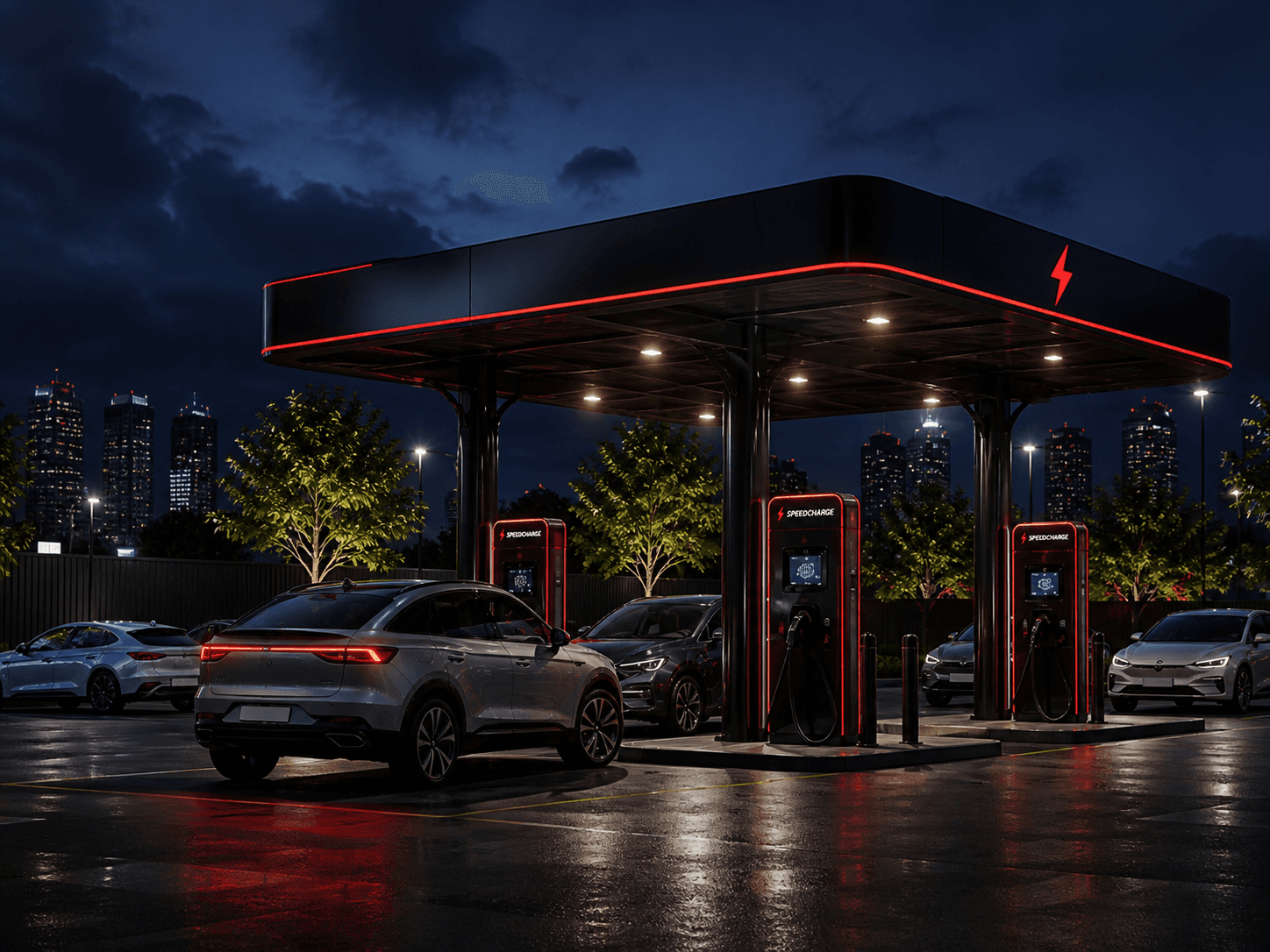
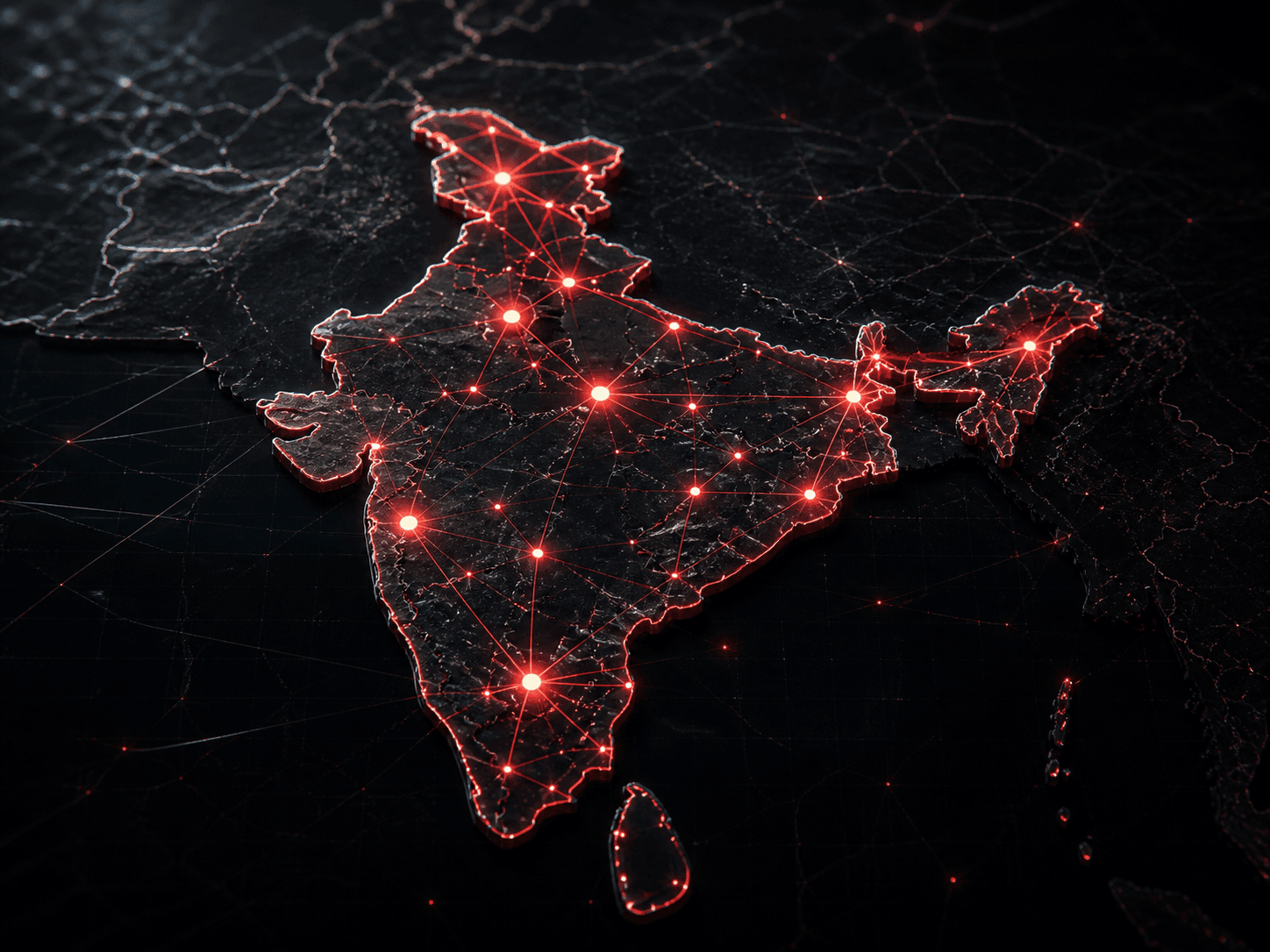
SpeedCharge operates 2,500+ live charging points across 45+ cities in India, built on a FOCO franchise model that has attracted landowners, retail entrepreneurs, salaried professionals, and institutional investors who want exposure to the EV infrastructure sector without running the operations themselves. The franchise structure means the investor owns the station asset, while SpeedCharge manages software, maintenance, customer acquisition through its app platform, and technical support around the clock.
What makes SpeedCharge's model particularly relevant for new investors in 2026 is the combination of a verified national network and a zero-prior-experience requirement for franchise applicants. The Charge Cloud CMS platform provides real-time visibility into session data, revenue, and uptime. The 99.9% uptime reliability across the network means revenue is not being lost to downtime, which is one of the most common complaints investors raise about smaller, unmanaged charging operators. Partners like Tata Motors, Mahindra, Shell, Adani, DLF, and BluSmart in the network further validate the operational standard. For entrepreneurs evaluating the full Speecharge franchise opportunity provides detailed programme information and a direct application path.
The location partner programme is a separate option worth knowing. If you own commercial property and want revenue from it without investing capital in charger equipment, SpeedCharge covers 100% of installation and operational costs, and you receive either a revenue share or a fixed monthly rental. This is not a franchise; it is a zero-investment property monetisation model suited to landowners and institutional property holders who want passive income from an underutilised car park or commercial forecourt.
What New EV Charging Station Investors Consistently Underestimate in India
The business model is straightforward on paper. The operational and financial realities of deploying a charging station in India have several specific dimensions that are worth understanding before committing capital.
Grid readiness is the issue that delays the most stations. In many Tier 2 cities and even in parts of Delhi NCR and Pune, the sanctioned load at a commercial property is insufficient for a 30 kW or 60 kW DC charger. Upgrading the load sanctioning through the DISCOM can take 4 to 12 weeks depending on the state, the load requirement, and the DISCOM's processing capacity. Budget for this time and cost before signing a location lease.
Charger compatibility matters more than investors realise. India's passenger EV market in 2026 is overwhelmingly CCS2 for 4-wheelers. A station that deploys CHAdeMO connectors or older Type-1 AC setups is effectively incompatible with the majority of vehicles on Indian roads. Every charger you deploy should be CCS2 compatible and should carry IP55 weatherproofing as a minimum for outdoor or semi-outdoor installations.
App discovery determines how quickly a new station builds utilisation. An EV driver arriving in an unfamiliar area opens a charging network app to find available stations. A station that is not listed on a major network app with live availability data starts from zero discovery. Franchise networks solve this immediately: every new station is listed in the network app from day one. Independent operators need to manage this separately, which takes time.
Maintenance response time directly affects revenue. A single charger that is offline for 48 hours during a high-traffic weekend loses sessions that are not recoverable. Network uptime across a franchise with 24/7 technical support is structurally more reliable than a single independent operator managing hardware failures personally.
Three Things to Confirm Before You Invest in an EV Charging Station Business in India
The EV charging sector in India is growing fast, and the investment logic is sound. The difference between a franchise that recovers capital in 2.5 years and one that takes 4 is almost always traceable to decisions made before the first rupee was spent. Before committing to any model or location, confirm these three things.
First, confirm your DISCOM load capacity. Visit your local electricity supply office or consult a licensed electrical contractor to confirm whether the sanctioned load at your intended location can support a 30 kW to 60 kW DC charger. If not, get a clear estimate of the upgrade cost and timeline before finalising the location. This single step prevents the most common pre-launch delay in the Indian market.
Second, confirm charger compatibility with the dominant vehicles in your target location. CCS2 is the universal standard for passenger 4-wheelers in India. Your station should support CCS2 as the primary connector. AC charging at 7.4 kW to 22 kW is useful as a secondary offering at longer-dwell locations like offices and malls, but not as the primary draw for a highway or commercial hub station.
Third, confirm your revenue path before signing any agreement. Whether independent or franchise, understand exactly how kWh throughput translates to monthly revenue, what the per-kWh tariff structure is, whether dynamic pricing is available during peak periods, and how revenue is calculated and settled. A real-time CMS dashboard should show you live session data. Any investment that cannot give you this visibility before you commit is not one you should enter.
How to Explore the EV Charging Franchise Opportunity With SpeedCharge
SpeedCharge is a Noida-based EV charging infrastructure company that has deployed 2,500+ live charging points across 45+ cities in India, serving over 2 million customers with 99.9% network uptime and facilitating 10M+ clean kWh delivered across its network. The franchise programme operates on a FOCO model: you invest in a Fast Charging Station from Rs. 20 lakhs, and SpeedCharge manages the operations, CMS, maintenance, 24/7 support, and customer-facing app platform.
The SpeedCharge app, available on Google Play and the App Store, lists every network station with live availability, enabling instant session discovery for EV drivers. The Charge Cloud CMS platform gives franchise partners real-time revenue and utilisation dashboards with automated billing. The location partner programme separately allows commercial property owners to deploy charging infrastructure at zero investment, earning revenue through a revenue-share or fixed rental model with SpeedCharge covering all installation and operational costs. To explore Speedcharge franchise and location partner details, visit Websites or contact the team at Support@speedcharge.in.
Frequently Asked Questions
How much does it cost to start an EV charging station business in India?
Starting an EV charging station business in India costs from Rs. 20 lakhs for a Fast Charging Station franchise with 2 car parks and a minimum 550 sq. ft. space. Larger Super Charging Stations with 60 kW to 120 kW chargers require more capital. Standalone builds vary based on charger specifications, civil work, DISCOM connection fees, and software costs.
Do I need a licence to open an EV charging station in India?
No separate dedicated licence is required to operate an EV charging station in India under current regulations. You need a standard business registration, a DISCOM power connection with adequate sanctioned load, local municipal clearance for any civil structure, and GST registration. State-level rules can vary, so checking with the relevant DISCOM and local authority for your location is advisable before construction begins.
What is the ROI on an EV charging franchise in India?
Projected ROI on an EV charging franchise in India ranges from 28% to 36% depending on location, station type, and utilisation. Indicative monthly EBITDA for a Fast Charging Station in a Metro or Tier 1 location ranges from Rs. 2.8 to 3.6 lakhs, with indicative monthly revenue of Rs. 6.5 to 12.0 lakhs. Payback periods range from 2.0 to 3.5 years. These are estimates; actual performance depends on footfall and session volume.
How much land do I need to open an EV charging station?
A Fast Charging Station franchise requires a minimum of 550 sq. ft., equivalent to 2 standard car parking bays. A Super Charging Station requires 1,000 to 2,500 sq. ft. depending on the number of chargers and station configuration. Highway stations, commercial parking facilities, and fuel station forecourts are among the most practical location types for meeting these space requirements.
Is it better to build an EV charging station independently or join a franchise?
For most first-time investors in India, joining a franchise network makes more commercial sense than building independently. A franchise provides CMS software, 24/7 technical support, app-based customer discovery, marketing assistance, and a brand network from day one. Independent builds offer more control but require managing all of this separately, which demands both technical knowledge and ongoing operational capacity.
What government support is available for EV charging businesses in India?
The FAME II and PM e-DRIVE schemes provide subsidy support for qualifying EV charging infrastructure in India. DISCOM-specific EV charging tariffs at preferential rates are available in states like Karnataka (BESCOM), Maharashtra (MSEDCL), and Delhi (BRPL, BYPL). GST relief applies to EV purchases. Policy frameworks are updated regularly; checking with the Ministry of Heavy Industries and your state DISCOM for current applicability before committing to a project is strongly advised.
How long does it take to install and open an EV charging station in India?
Standard installation for a franchise EV charging station takes 2 to 4 weeks from site confirmation to operational go-live. Partner deployments at larger or more complex sites take 4 to 6 weeks. The main variable that extends timelines is DISCOM connection processing, which can add weeks if the load upgrade requires transformer work or capacity augmentation at the nearest substation.
Can I start an EV charging station business without any prior experience in the EV industry?
Yes. Franchise models for EV charging stations in India explicitly require no prior EV industry experience from applicants. The franchise company handles operations, maintenance, and technical management. Investors need to bring capital, a suitable location, and the intent to run a long-term infrastructure asset. The business does not require hands-on technical knowledge of EV charging hardware to operate profitably.