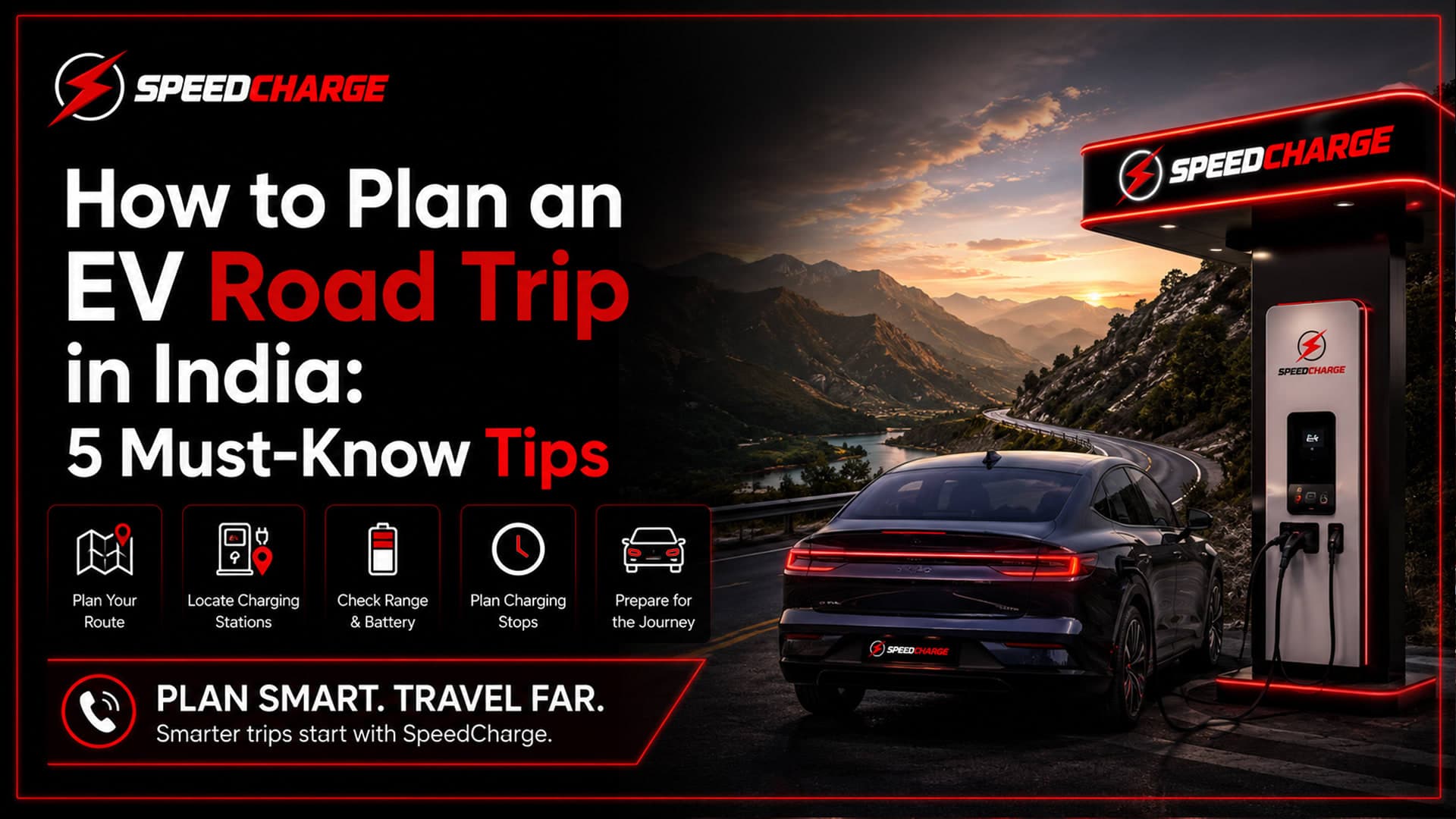

Planning an EV road trip in India in 2026 is genuinely exciting, but it rewards preparation in ways a petrol drive never does. The charging network across Indian national highways has expanded rapidly, with several operators now running DC fast chargers at 150 kW and above on major corridors. But the drivers who enjoy these trips most are the ones who mapped their charging stops before they left home, not the ones who assumed they would figure it out on the way.
This guide is written for Indian EV owners getting ready for their first or second intercity trip. By the end, you will know how to plan your route around verified charging stops, how to read your car's real-world range on a highway, how to avoid the three most common mistakes that leave EV drivers stranded or anxious, and which tools make the whole process straightforward.
How Do You Plan an EV Road Trip in India?
Planning an EV road trip in India means identifying DC fast charging stops every 100 to 150 kilometres along your route before you leave, accounting for a 20 to 25 percent real-world range reduction at highway speeds, and using an EV trip planner app to book slots in advance. Check charger availability, connector compatibility (CCS2 for most 4-wheeler EVs), and backup options at each stop.
That is the core of it. The five tips below build out each part of that process so you can apply it to any route, any EV, and any distance.
Tip 1: Know Your EV's Real Highway Range Before You Plan Anything
Most EV owners know their car's official range figure. The Tata Nexon EV Long Range is rated at around 465 kilometres. The MG Windsor shows around 331 kilometres. The Hyundai Creta EV comes in at around 473 kilometres on a single charge. What these numbers do not reflect is what happens the moment you hit a national highway at 100 to 110 kilometres per hour with the air conditioning running.
Highway driving at sustained speed consumes battery power significantly faster than city driving. The ARAI test cycle used to measure official range numbers is run at much lower average speeds than you will maintain on an expressway. As a practical rule for Indian highway conditions, plan for 20 to 25 percent less than the official range. On a hot day in Rajasthan with the AC working hard, that reduction can stretch to 30 percent.
What Does This Mean for Your Planning Buffer?
If your EV shows an official range of 400 kilometres, plan your charging stops as though the usable highway range is 280 to 320 kilometres, not 400. This is not pessimism. It is the planning buffer that keeps you arriving at each charging stop with 15 to 20 percent state of charge remaining, which protects your battery's long-term health and gives you a comfortable margin if there is a queue at the charger.
Usable range also varies with the number of passengers and the weight of luggage. Four adults and a full boot can reduce range by an additional 8 to 12 percent on a loaded family road trip. Factor this in when planning stops for a family journey versus a solo drive.
Which Indian EVs Handle Highway Driving Best in 2026?
The table below shows how real-world highway range differs from official figures for popular Indian EVs. These estimates are based on typical highway driving conditions in India with two adults and normal AC usage.
EV Model | Official Range (ARAI) | Estimated Highway Range | Recommended Max Stop Gap |
|---|---|---|---|
Tata Nexon EV Long Range | ~465 km | ~330-360 km | 280 km |
Hyundai Creta EV | ~473 km | ~340-370 km | 300 km |
MG Windsor EV | ~331 km | ~240-270 km | 200 km |
BYD Atto 3 | ~521 km | ~370-410 km | 330 km |
Tata Punch EV | ~421 km | ~290-320 km | 250 km |
Use the "Recommended Max Stop Gap" column as your spacing guide when placing charging stops on your route map.
Tip 2: Map Your Charging Stops Before You Start the Engine
The single biggest difference between a stressful EV road trip and a genuinely enjoyable one is whether you planned your charging stops in advance or hoped they would appear when needed. In 2026, India's highway charging network has grown considerably, but coverage is not uniform. Some 200-kilometre stretches have three or four verified fast charging stations with 60 kW to 150 kW chargers. Others have one station with two guns and a queue on long weekends.
Pre-mapping means identifying every potential charging stop along your route, confirming the charger type and power output at each, and noting a backup stop 20 to 30 kilometres beyond your primary choice. The backup matters because a single charger out of service at a remote station is a realistic possibility, not an edge case.
How to Identify CCS2-Compatible Charging Stops on Indian Highways
Most 4-wheeler passenger EVs sold in India today use the CCS2 connector standard. This includes the Tata Nexon EV, Hyundai Creta EV, MG Windsor, BYD Atto 3, Tata Punch EV, and most other mainstream models. Before mapping a charging stop, verify that the station has CCS2 guns, not just AC Type-2 or CHAdeMO ports. An AC charger at a highway stop will technically work, but a 22 kW AC charger will take 4 to 6 hours to provide a meaningful top-up. For a road trip, only DC fast chargers with CCS2 connectivity are practical.
DC fast chargers on major national highway corridors in India typically operate at 60 kW, 120 kW, or 150 kW and above. A 120 kW DC charger can deliver roughly 100 kilometres of additional highway range in 15 to 20 minutes for a Tata Nexon EV. A 150 kW charger does this faster still, though the actual charge rate depends on your battery's current state of charge and thermal condition.
Using an EV Trip Planner App for Route-Based Charging Stop Identification
Several apps in India now offer route-based trip planning with charging stop integration. The SpeedCharge app, available on Google Play Store and Apple App Store, includes a smart trip planner that shows charging stops along a route with live availability, connector type, and power output. You can see at a glance whether a station has DC fast charging available and whether slots are free. The app also allows slot booking in advance, which is especially valuable on long weekends, festival seasons, and popular routes like Delhi-Agra, Bengaluru-Mysuru, Mumbai-Pune, and Jaipur-Udaipur.
Book your primary charging stops before departure if the network you use allows advance reservations. A confirmed slot at a high-traffic charging station on a Saturday morning during Diwali travel season is worth significantly more than a vague plan to "stop when the charge gets low."
Tip 3: Understand What Fast Charging Actually Delivers at a Highway Stop
There is a widespread assumption among newer EV owners that a "fast charger" means the car is ready to go in minutes regardless of the situation. The reality is more nuanced, and understanding it will change how you structure your stops.
A DC fast charger at 60 kW will charge a Tata Nexon EV Long Range from 20 percent to 80 percent in approximately 55 to 65 minutes. A 120 kW charger does the same in roughly 30 to 40 minutes. A 150 kW unit cuts that to around 25 to 30 minutes. The charge rate slows significantly above 80 percent state of charge because the battery management system reduces the input current to protect cell chemistry. This means charging from 80 to 100 percent often takes nearly as long as charging from 20 to 80 percent.
The 20-to-80 Rule for Highway Charging Efficiency
The practical guidance for highway road trips is to stop at 20 percent state of charge and leave at 80 percent. This gives you the fastest possible charging session, the maximum range to the next stop, and protects your battery from the degradation associated with frequent deep cycles and sustained high-temperature charging above 80 percent. On a route where charging stops are well-spaced, this rhythm turns an EV road trip into a structured experience with predictable stopping intervals rather than an anxious scramble between stations.
What Happens If a Charger Is Occupied or Out of Service?
This is the question most EV road trip guides skip, because it requires honest acknowledgement that charger queues and occasional downtime are real. At busy highway stops on peak travel days, a two-gun DC charging station can have a 20 to 40-minute wait. Network uptime matters here: a charging operator with verified 99.9 percent uptime across its network, like SpeedCharge, reduces the probability of arriving at a charger that is offline. But even with a reliable operator, having a backup stop mapped 20 to 30 kilometres ahead is sound planning practice.
If your primary stop has a queue, use that time productively. Most highway charging stops in India are located at fuel stations, highway service areas, or food courts. A 30-minute coffee and snack break while the car charges is not lost time. It is a structured rest stop that most long-distance drivers benefit from anyway.
Tip 4: Managing Range Anxiety on Long Routes Between Cities
Range anxiety is the single most cited barrier to EV adoption in India, and it is particularly acute for long-distance travel. The fear of running out of charge before reaching the next station is understandable, especially on routes where the highway charging network has gaps or where drivers do not yet know what the real-world range of their vehicle looks like outside the city.
The practical way to address range anxiety is to replace uncertainty with information. A driver who knows their car's highway range, has identified charging stops at 200-kilometre intervals, has booked slots at the busiest stations, and has a backup plan for the two most isolated stretches of their route has almost nothing to be anxious about. Anxiety comes from not knowing. Preparation removes it.
Route-Specific Charging Considerations for Popular Indian Road Trips
Some of India's most popular EV road trip routes have very well-served charging corridors. The Delhi to Jaipur route on NH48 has multiple DC fast charging options within manageable intervals. The Bengaluru to Mysuru route on NH275 has reliable charging infrastructure throughout. The Mumbai to Pune expressway is one of the most EV-friendly stretches in India, with charging available at multiple points along NH48.
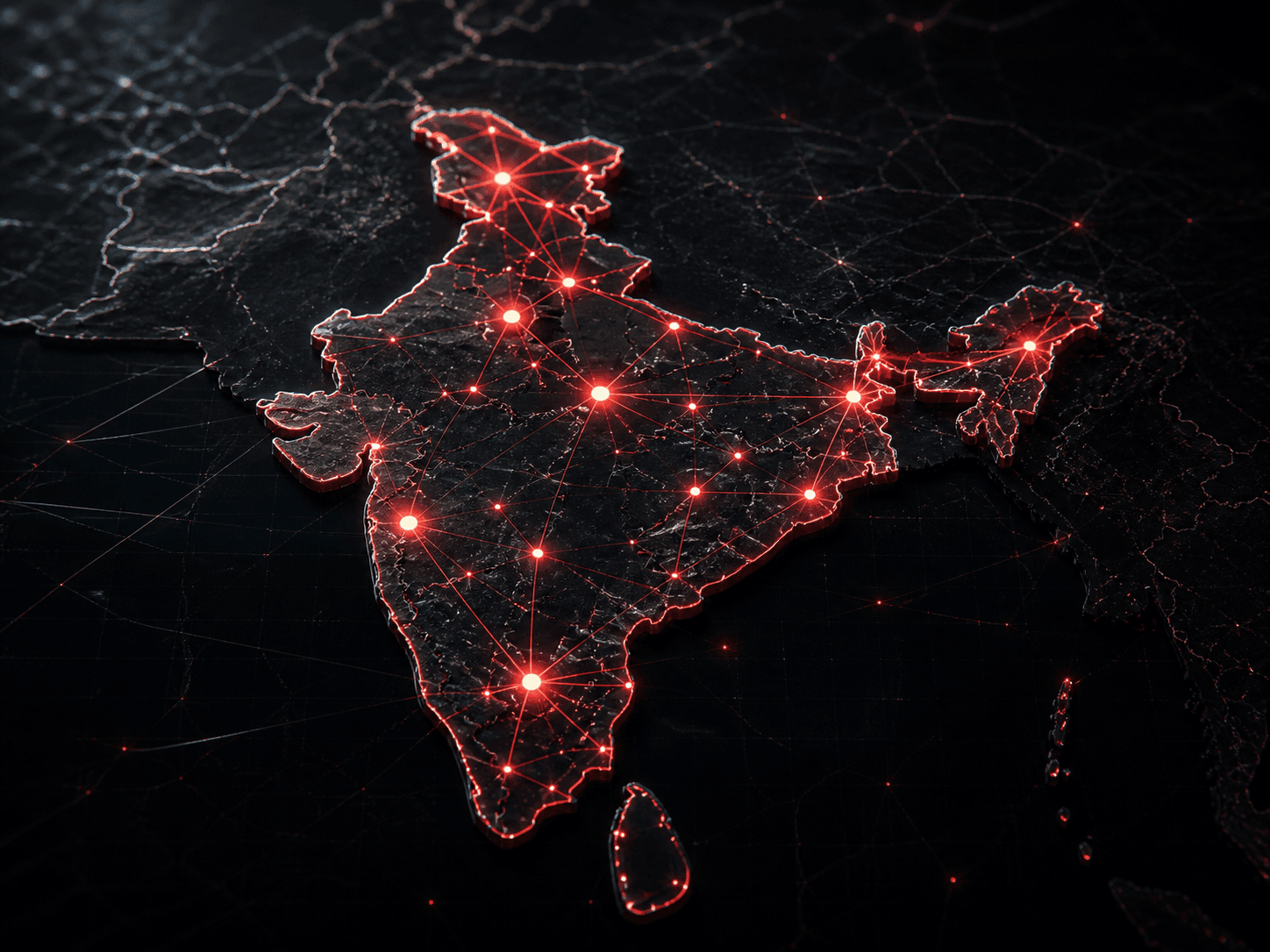
The routes that require more careful planning are longer ones crossing less-developed corridors, such as Hyderabad to Bengaluru, Mumbai to Goa, and Chennai to Coimbatore. These routes have charging available but at longer intervals, and some segments require planning your charge top-up more conservatively. For these routes, the planning buffer described in Tip 1 is especially important. SpeedCharge operates 2,500+ live charging points across 45+ cities, with coverage across 25+ major national highway corridors, which provides meaningful redundancy on most major Indian intercity routes.
Eco Mode and Speed Management to Extend Highway Range
Most Indian EVs offer an Eco driving mode that reduces power delivery and extends range. On a long highway section where the next charging stop is further than comfortable, dropping from 110 kilometres per hour to 90 kilometres per hour and engaging Eco mode can recover 15 to 20 percent of additional range. This is a genuine tool, not just a theoretical option. The difference between 100 and 90 kilometres per hour on a 150-kilometre highway section is approximately 10 minutes of total journey time. That trade is almost always worth making if it means arriving at the next charger with a comfortable buffer.
Regenerative braking, available on all modern Indian EVs, also contributes meaningfully to range recovery on routes with elevation changes or heavy traffic. The Bengaluru-to-Mysuru route, for example, involves some elevation descent where regen can recover a visible percentage of charge. Familiarise yourself with your car's regen settings before a long trip and use the highest regen level on sections where you will be slowing frequently.
Tip 5: Use the Right App and Book Your Slots Before Peak Travel Days
The operational difference between a smooth EV road trip and a frustrating one often comes down to which tools you used to plan it. A real-time charging network app that shows live slot availability, connector type, charger power output, and allows advance booking removes most of the uncertainty that makes EV travel stressful.
The SpeedCharge app provides real-time charger availability, slot booking, live charging session monitoring, UPI and digital wallet payments, and a smart trip planner that integrates charging stops into your route. For drivers on popular routes, the ability to book a charging slot at a busy highway station 24 hours in advance can mean the difference between a 25-minute stop and a 90-minute wait.
What to Check in the App Before Departure
Before leaving for a multi-day EV road trip, open your charging network app and verify three things for each planned charging stop. First, confirm the charger type: DC fast charger with CCS2 compatibility, and the power output (ideally 60 kW minimum for highway use, 120 kW or above for efficient stops). Second, check live availability or historical busyness if the app provides it, particularly for Saturday mornings, Sunday afternoons, and festival-adjacent travel dates. Third, confirm the payment method: most reliable networks in India support UPI, which is the fastest and most reliable option at highway stops.
Festival Season and Long Weekend Planning
Diwali, Holi, summer school holidays, and three-day long weekends are the periods when highway charging queues are longest in India. On these occasions, charging stations on routes like Delhi to Dehradun, Pune to Mahabaleshwar, and Bengaluru to Coorg can experience sustained queues of 45 minutes and above at peak hours. The solution is straightforward: book your charging stops in advance, plan to charge at off-peak hours where possible (early morning slots before 9 AM and evening slots after 8 PM are typically far less crowded), and build an extra 30-minute buffer into your total journey time estimate.
What Every EV Driver Should Verify Before Leaving for an Intercity Trip
Three checks before departure save more time than any amount of mid-journey troubleshooting. The first is confirming your starting charge: leave with a full charge or as close to it as possible, because the first leg of any highway trip sets the rhythm for every charging stop that follows. The second is verifying your charging stops are live and accessible: a quick app check the night before departure tells you whether any station on your route is showing offline or under maintenance. The third is downloading offline route maps as a backup, because mobile data coverage on some Indian highway sections, particularly in mountainous or remote terrain, can be unreliable enough to affect real-time navigation.
The EV road trip experience in India has improved substantially in 2026 compared to even two years ago. The network is larger, the chargers are faster, and the apps that connect drivers to charging infrastructure are more reliable. But the gap between a good road trip and a stressful one is still preparation. Drivers who plan their charging stops with the same care they put into booking their hotels tend to have the trips worth talking about when they return.
Explore the SpeedCharge charger locator and trip planner at SpeedCharge before your next intercity journey to see verified charging points on your specific route.
How Indian EV Drivers Are Charging Reliably Across India's Highway Network
SpeedCharge is a Gurugram-based EV charging infrastructure company with 2,500-plus live charging points across 45-plus cities and 25-plus major national highway corridors. The network has delivered power to 2 million-plus customers and enabled 25 million-plus clean kilometres of travel, with a verified network uptime of 99.9 percent. For road-tripping EV drivers, these numbers matter: a charging station that is reliably available when you arrive is not a luxury, it is the operational backbone of a planned trip.
SpeedCharge's DC fast chargers run from 30 kW to 360 kW, are CCS2-compatible, IP55-rated for all-weather operation, and are accessible through the SpeedCharge app on both Google Play Store and Apple App Store. The app provides real-time availability, slot booking, live session monitoring, and UPI payment in a single flow. For property owners and entrepreneurs interested in the network's growth, SpeedCharge franchise and location partner opportunities starting from Rs. 20 lakhs with a projected ROI of 28 to 36 percent and a payback period of 2.0 to 3.5 years. Contact Speedcharge for details.
Before your next EV road trip, use the SpeedCharge trip planner to map verified DC fast charging stops along your route, check live availability, and book your slots in advance. With 2,500-plus charging points across 45-plus cities and major national highway corridors, the network covers India's most-travelled intercity routes with 99.9 percent uptime reliability. Download the SpeedCharge app, or visit Website to find charging stations on your specific route.
Frequently Asked Questions
How far can I drive my EV on Indian highways before needing to charge?
At sustained highway speeds of 100 to 110 kilometres per hour with air conditioning, most Indian EVs deliver 70 to 80 percent of their official ARAI range. A Tata Nexon EV Long Range with an official range of 465 kilometres typically delivers 330 to 360 kilometres on a highway. Plan your charging stops every 200 to 280 kilometres for a comfortable buffer.
Is CCS2 the right connector for my EV at Indian highway charging stations?
Most passenger EVs sold in India since 2022, including the Tata Nexon EV, Hyundai Creta EV, MG Windsor, BYD Atto 3, and Tata Punch EV, use the CCS2 connector standard for DC fast charging. Before planning a charging stop, verify the station has CCS2 guns available. Type-2 AC charging is available at many stations but is too slow for practical highway top-ups.
How long does it take to charge an EV at a highway fast charging station in India?
At a 120 kW DC fast charger, most Indian EVs can go from 20 percent to 80 percent state of charge in 30 to 40 minutes. A 60 kW charger takes 55 to 65 minutes for the same charge window. Charging slows significantly above 80 percent, so the 20-to-80 percent window is the most time-efficient approach for road trips.
Can I book EV charging slots in advance for a long road trip in India?
Yes. Several EV charging networks in India, including SpeedCharge, allow advance slot booking through their apps. This is especially valuable on busy routes and during festival or holiday travel seasons when charging queues at popular highway stations can extend to 45 minutes or more.
Do Indian highways have enough EV charging stations for long-distance travel in 2026?
Major national highway corridors including NH48, NH44, NH275, and NH19 have adequate DC fast charging coverage for well-planned EV road trips. Less-travelled state highways and some cross-country routes have longer intervals between stations. Planning stops at 200-kilometre intervals and using a verified network app for real-time availability addresses this effectively for most popular intercity routes.