
Finding EV charging stations near you is no longer the guesswork it used to be. Two or three years ago, an EV owner in India might arrive at a charger marked on a map only to find it broken, occupied, or physically inaccessible behind a locked gate. That experience still happens, but the gap between finding a charger on a screen and finding one you can actually use is closing fast. India now has over 3.2 million EVs on the road, with the public charging market projected to reach Rs. 1.8 trillion by 2030. Infrastructure is expanding faster than most EV owners realise, and the tools for locating it have become genuinely useful.
This guide gives you a complete, practical method for finding a working EV charging station near you, whether you are at home in a metro city, driving between cities on a highway corridor, or parked at a mall in a Tier 2 town. It covers every reliable approach, explains what each one does and does not do well, and tells you what to check before you drive to any charger so you do not arrive and find the bay occupied or the unit offline.
How Do You Find an EV Charging Station Near You Quickly?
The fastest way to find an EV charging station near you in India is to open a dedicated EV charging app from a verified network operator. These apps show live charger availability on a map, display the connector type and power output at each station, and let you reserve a slot before you leave. Google Maps is a useful secondary tool for general discovery, but it does not show real-time availability.
The sections below explain each method in full detail, including what to do when your first option fails and how to plan charging stops for highway trips before range anxiety sets in.
Why the Method You Use to Search Matters as Much as the Search Itself
Most EV owners in India do not struggle to find a charger on a map. The real problem appears when they arrive. The charger is occupied. The payment terminal is offline. The connector is a Type-1 socket, and their vehicle needs CCS2. The rated power is 60 kW, but the unit is delivering 18 kW because of a grid voltage drop at that location. India's public charging network is growing at pace, but charger uptime varies significantly across operators. Some networks maintain uptime above 99%, while others operate well below 70%, meaning roughly three in ten chargers on those networks may be unavailable at any given moment. Finding a charger that is on a map is step one. Finding a charger that is live, compatible, operational, and available when you need it requires a more reliable approach.
The practical result is that EV owners who use a verified network app for their primary search, cross-check with Google Maps when exploring unfamiliar areas, and plan highway stops using a route planner before they leave have a significantly better experience than owners who rely on a single search at the moment they need a charge. The method you build as a habit determines whether charging feels effortless or stressful. The steps below build that habit from scratch.
Step-by-Step Guide to Finding EV Charging Stations Near You in India
Finding a working EV charging station near you involves more than typing a query into a map. The most reliable EV owners in India use a layered approach: one primary tool they trust for daily use, one backup for discovery in unfamiliar areas, and a pre-planned route strategy for highway travel. Each layer covers a gap the others leave open. This section walks through each step in sequence, from the moment you open your phone to the moment you plug in.
Step 1 - Download and Register on a Verified Network App
The starting point for every reliable charging session is a network app with live data. Not a general-purpose map. Not a third-party aggregator that scrapes data from multiple sources without verifying it. A first-party app operated by the charging network itself, which has direct access to real-time charger status, availability, and payment systems.
When you open a first-party network app, every charger shown on the map reflects its actual current status, pulled directly from the Charge Management System running the network. You can see which specific connector guns are free, which are in use, and which are offline for maintenance. You can filter by charger type, power output, and connector standard so you only see stations that work with your vehicle. You can book a slot in advance so the bay is reserved by the time you arrive. And you can pay through the app without needing a physical RFID card or a working payment terminal on the charger itself.
SpeedCharge operates a network of 2,500+ live charging points across 45+ cities in India. Their app, available on both Google Play Store and Apple App Store, gives registered users real-time charger location and availability, advance slot booking, live session monitoring with a remote stop function, and UPI-based payment through a built-in wallet. For EV owners in cities where SpeedCharge operates, this app covers the full cycle from finding a charger to completing and paying for the session without leaving the app.
For any network you register with, complete the setup before you need it. Download the app, create an account, add a payment method, and locate the three nearest stations to your home or workplace while you are sitting comfortably with a full battery. Do this once, and every future search takes thirty seconds.
Step 2 - Use Google Maps as a Discovery Tool for Unfamiliar Areas
Google Maps is not a live EV charging availability tool. It does not tell you whether a charger is currently occupied or whether it is operational. What it does do well is show you where charging infrastructure exists in an area you have never visited, which is genuinely useful when you are in an unfamiliar city or a neighbourhood you do not regularly drive through.
To search on Google Maps, type "EV charging station near me" or "electric vehicle charging point" and the city or area name. Google will surface all indexed charging locations in that zone, including their address, operator name, and user reviews. Those user reviews are often the most valuable piece of information on the listing. A charger with 200 reviews and a 4.2-star average, with recent comments mentioning smooth sessions and working payment, is a more reliable choice than a charger with no reviews or recent comments about units being offline.
After using Google Maps to identify candidate locations, open your network app and check whether any of those stations are part of your registered network. If they are, book through the app. If they are not, look up the operator's own app or RFID system before you arrive.
Step 3 - Check Live Availability Before You Leave, Not When You Arrive
This is the step most EV owners skip, and it is the one that prevents most bad charging experiences. Checking live availability means actively confirming that the specific charger you plan to use is online and has an open bay at the time you intend to arrive, not just that a charger exists at that location.
Every major network app refreshes availability data in real time through its CSMS (Charging Station Management System). When you open the app and tap on a station, you should see a status indicator for each individual connector gun: available, occupied, or faulted. If a station has two guns and both show as occupied, you can either book the next available slot or choose a different station. If a connector shows as faulted, eliminate that option before you drive there.
Checking live availability takes about ninety seconds. It is the single most effective action you can take to avoid range anxiety from a wasted trip to an unavailable charger.
Step 4 - Use an In-Car Navigation System for Integrated Charging Suggestions
Many current-generation EVs sold in India, including the Tata Nexon EV, Hyundai Creta EV, and MG Windsor, have built-in navigation systems that are aware of the vehicle's current state of charge (SOC) and can suggest charging stops along a route based on whether the battery will reach the destination. These systems calculate energy consumption for the planned route, estimate the remaining range at arrival, and flag if a charging stop is needed and where one exists along the way.
In-car navigation is particularly useful for local urban trips where you have not pre-planned a charging stop and the system alerts you that your battery will drop below a safe threshold before you reach home. The limitation of in-car systems is that most do not show real-time availability and do not allow advance booking. Use them to identify where to stop, then switch to your network app to check live status and reserve a bay.
Step 5 - Plan Highway Charging Stops Before You Leave Home
Highway charging is the scenario where poor planning creates the most serious problems. On a city street, running low on charge means inconvenience. On a national highway at night, between two towns with no guaranteed charger at the next stop, it means a genuine problem. Planning highway charging stops before departure eliminates this risk entirely.
The SpeedCharge app includes a smart trip planner that maps your route, identifies charging stops along the corridor, and lets you factor in your vehicle's range and current charge level. Major highway networks in India, including corridors covered by ultra-fast chargers at 150 kW and above, are now mapped in detail on network apps. Before any highway trip, open your app, enter your destination, and confirm that at least two charging stops exist along the route, not just one, in case the first station has a queue.
The difference between a well-planned highway charging stop and an unplanned one is rarely about the charger itself. It is almost always about whether you knew in advance that the charger would be there and operational. Planning removes the uncertainty.
Step 6 - Cross-Check with EV Community Groups for Ground-Level Accuracy
No map or app is perfectly accurate in real time. Chargers go offline. New stations open that have not yet been added to every database. Some stations on maps have been decommissioned. The most granular, ground-level accuracy comes from EV owner communities, which are active on WhatsApp groups, Facebook groups, Telegram channels, and subreddits dedicated to Indian EV owners.
These communities report charger outages, flag stations with recurring payment issues, celebrate newly opened fast-charging hubs, and share practical tips about specific locations such as which mall in Pune has the fastest charger access without a parking fee, or which highway service station on the Mumbai-Goa route has a working 60 kW DC charger with shade and a clean washroom nearby. Joining one or two of these groups for your city and your vehicle model takes ten minutes and provides a level of accuracy that no single app currently matches for edge cases.
What to Do When the Nearest EV Charger Is Not Working
Arriving at a charger and finding it offline is one of the most frustrating experiences in EV ownership, but it is manageable if you have a response plan. Most EV owners do not have one the first time it happens, and the combination of low battery and a non-functional charger can create genuine anxiety.
The correct sequence when a charger is not working is straightforward. First, check the network app to confirm whether the charger is showing as faulted. If it is, the app will often display the nearest alternative station. Second, try a different connector gun at the same station if more than one is installed. A dual-gun charger with one gun offline can still charge your vehicle on the second gun. Third, use Google Maps to search for alternative stations within a two-kilometre radius and cross-check their operator against your network app. Fourth, contact the network operator's support line directly. Verified network operators with a 24/7 technical support structure can often remotely diagnose and sometimes resolve charger faults without a field visit, or can direct you to an operational alternative nearby.
For ongoing unreliable chargers at a specific location, report the fault through the app after your session and flag it in your EV community group. This creates accountability for operators and helps other EV owners avoid the same location until the fault is resolved.
How to Find EV Charging Stations Near You for Different Vehicle Types
Not every charger works with every vehicle. This is one of the most commonly overlooked pieces of information among new EV owners in India, and it leads to situations where a driver arrives at a working, available charger only to find the connector does not match their vehicle's charging port.
India's EV fleet is diverse. Two-wheelers and three-wheelers typically use slower AC charging at 3.3 kW or slower, often with a proprietary connector or a standard Type-1 socket. Passenger cars in the current generation, including the Tata Nexon EV, Hyundai Creta EV, BYD Atto 3, and MG Windsor, predominantly use CCS2 (Combined Charging System 2) for DC fast charging and Type-2 for AC charging. Older models may use a CHAdeMO connector for DC. Commercial EVs and fleet vehicles vary by manufacturer.
When searching for a charger near you, filter by connector type in your network app before you leave. SpeedCharge's DC fast chargers, ranging from 30 kW to 360 kW depending on station type, are CCS2 compatible and designed for 4-wheeler passenger EVs. Their premium AC chargers support Type-2 connections at 7.4 kW, 11 kW, and 22 kW. Knowing your vehicle's connector standard and filtering for it in the app eliminates connector mismatch as a source of wasted trips. You can explore the full range of charger types and compatibility information at SpeedCharge All Charges Page before your next session.
If you drive a two-wheeler or a commercial EV, look specifically for stations that list your connector type. Many public charging hubs now have dedicated bays for two-wheelers and three-wheelers separately from passenger car bays. The SpeedCharge app locator and Google Maps listings both show charger types where the operator has provided accurate metadata.
What Every EV Owner in India Should Confirm Before Driving to Any Charger
Driving to a charger without checking three things first is the most common way EV owners end up stuck. The steps in this guide give you everything you need to find a station on a map. This section gives you the final checklist to confirm that the station you have found is actually worth driving to.
The first thing to confirm is live status. Open your network app, tap on the station, and verify that at least one connector gun is showing as available, not occupied and not faulted. The second thing to confirm is connector compatibility. Check that the station has the correct connector type for your vehicle before you leave, not when you arrive. The third thing to confirm for any highway stop is power output. A 7.4 kW AC charger at a highway location will take six to eight hours to meaningfully charge a passenger EV. A 60 kW or 120 kW DC fast charger delivers practical highway top-up charging in twenty to forty minutes. Knowing which type is at your planned stop changes whether it fits your journey.
Operators that maintain high uptime and transparent live data remove most of the uncertainty from this process. SpeedCharge, for example, publishes 99.9% network uptime and gives users real-time charger status through its app and its CSMS platform. For EV owners who have had unreliable experiences with other networks, switching to a verified high-uptime operator is often the single change that makes public charging feel genuinely reliable. You can locate all SpeedCharge stations and filter by charger type and availability through their charger locator at speedcharge.in.
The EV Charging Network That Makes Finding a Station Near You Simpler
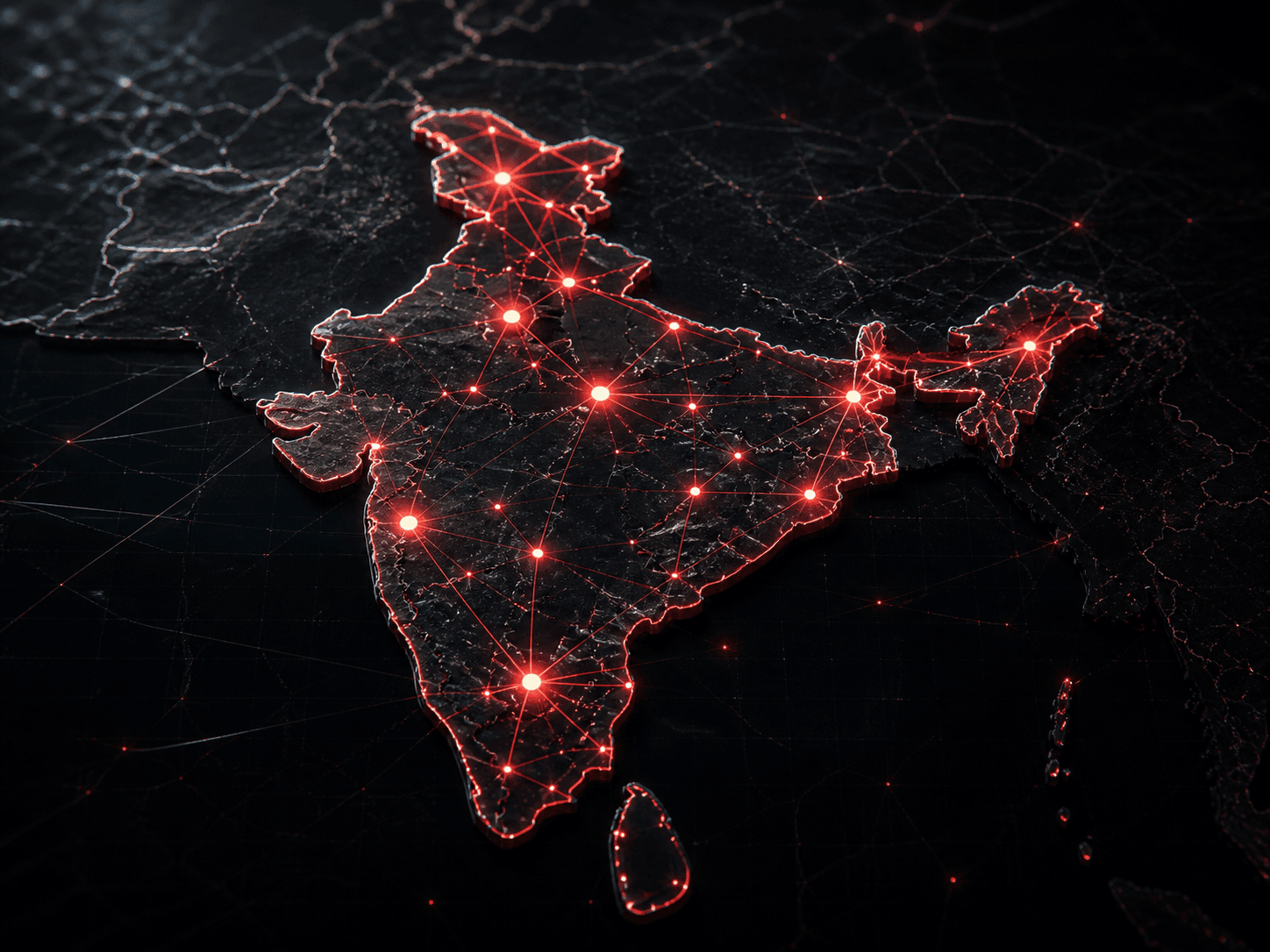
SpeedCharge is an EV charging infrastructure operator based in Noida, with 2,500+ live charging points across 45+ cities in India. The network includes super fast DC chargers ranging from 30 kW to 360 kW, premium AC chargers at 7.4 kW, 11 kW, and 22 kW, and ultra-fast highway chargers at 150 kW and above on major national corridors. Over 2 million customers have used the SpeedCharge network, and the company maintains 99.9% uptime across its installed base.
For day-to-day use, the SpeedCharge app handles the full process: find a nearby charger, check live availability, book your slot, monitor the session, and pay through UPI or wallet, all in one place. The network is also expanding rapidly, with a target of 10,000+ fast-charge points and coverage across 100+ cities planned. For EV owners who want a single app to handle most of their public charging needs without switching between multiple operator platforms, the breadth of this network is one of the practical reasons it has built a user base of over 75,000 EV drivers served.
Entrepreneurs and property owners looking to add an EV charging station to their premises can also partner with SpeedCharge through a franchise or location partner programme, with investment models starting from Rs. 20 lakhs and projected returns between 28% and 36%.
How to Make Finding an EV Charger Near You Feel Effortless Every Time
Finding EV charging stations near you reliably is a habit built from a few specific actions taken once, not a skill that requires ongoing effort. The most important action is to register with a verified charging network app, explore the map in your home city, and identify your three nearest reliable stations while your battery is full. That preparation means you never make your first search under pressure.
For day-to-day urban charging, your network app covers almost every situation. For unfamiliar areas, layer in Google Maps for discovery. For highway travel, pre-plan at least two stops per leg using the trip planner before you leave. For ground-level accuracy that apps cannot provide, join a city-specific EV owner community and check it before any long journey.
The charging infrastructure across India is improving consistently. The tools for using it reliably have already caught up. The only remaining variable is building the habit of using them correctly, and the steps in this guide give you everything you need to do that from your next charging session forward. Visit Speedcharge to download the app, locate your nearest charging station, or explore the franchise opportunity if you are considering adding a charging station to your property.
Frequently Asked Questions
How do I find an EV charging station near me right now?
Open your EV charging network app and check the live map. It shows real-time availability for every station on that network near your current location. If you are not registered with a network app yet, open Google Maps, search "EV charging station near me," and look for stations with recent positive reviews. Always check the live availability in a network app before driving to any station.
Can I use Google Maps to find EV charging stations?
Yes. Search "EV charging station near me" or "electric vehicle charging point" followed by your city or area name. Google Maps shows all indexed charging locations with addresses, operator names, photos, and user reviews. The key limitation is that Google Maps does not show real-time availability, so a station shown as existing on the map may have occupied or offline bays when you arrive. Use it for discovery, then confirm availability through the operator's app.
Is there an app that shows live EV charger availability in India?
Yes. Dedicated EV charging network apps show live charger availability directly from their Charge Management System. SpeedCharge's app, available on Google Play Store and Apple App Store, shows real-time availability across its network of 2,500+ live charging points in 45+ cities, with the option to book a slot in advance. Most major network operators in India have their own apps with similar live data.
How do I find an EV charging station on a highway in India?
Use the trip planner feature in your EV network app. Enter your destination, and the planner maps charging stops along the route based on the highway corridors the network covers. SpeedCharge operates ultra-fast chargers at 150 kW and above on major national highway corridors across India. Always identify at least two charging stops per leg of a highway journey, not just one, so you have an alternative if the first stop has a queue or a fault.
What should I do if I arrive at a charger and it is not working?
First, try a different connector gun at the same station if there are multiple guns installed. Second, check the network app for the next nearest available charger and whether it shows as operational. Third, call or message the operator's 24/7 support line directly. Operators with a verified support structure can often diagnose the fault remotely or direct you to a confirmed working alternative nearby. After your session, report the fault through the app.
How do I know if an EV charger is compatible with my car?
Check your vehicle's owner manual for the connector type your car uses for AC and DC charging. Most current-generation electric cars sold in India use CCS2 for DC fast charging and Type-2 for AC. When searching for stations in your network app, filter by connector type to see only compatible chargers. Avoid driving to a station without confirming the connector type matches your vehicle.
Can I book an EV charging slot in advance?
Yes, through a network app that supports advance reservation. The SpeedCharge app lets you book a specific charging bay at a specific station before you leave home, so the slot is reserved by the time you arrive. This is particularly useful during peak hours at high-demand locations such as mall parking lots, office complexes, and busy highway service stations. Not every operator or every station supports advance booking, so check the app before assuming it is available at your preferred location.