
Charging an EV at home in India means connecting your electric vehicle to either a portable charger plugged into a standard 15A or 16A socket, or a dedicated wall-box charger installed at your parking spot. A portable charger adds roughly 10 to 15 kilometres of range per hour. A wall-box charger rated at 7.4 kW delivers 30 to 40 kilometres of range per hour and fully charges most Indian passenger EVs overnight.
This guide covers every step of setting up home EV charging in India: the three charger types, what your electricity connection actually needs, how apartment owners can navigate society approvals, what it costs to install, and how much you will really pay per month on your electricity bill.
The Three Ways to Charge an EV at Home in India
Before choosing a charger or booking an installation, it helps to understand that home EV charging in India is not a single product. There are three distinct approaches, each with different hardware, electrical requirements, and practical tradeoffs. The right choice depends on how far you drive daily, what battery size your EV has, and whether you live in an independent house or an apartment with shared electrical infrastructure.
Using the Portable Charger That Came With Your EV
Every passenger EV sold in India comes with a portable AC charger as standard equipment. This charger, sometimes called a Mode 2 charger or a granny cable, plugs directly into a standard 15A or 16A wall socket and typically delivers between 3.3 kW and 3.5 kW of power. For a compact EV like the Tata Tiago EV or a Citroen eC3, this adds roughly 10 to 15 kilometres of range per hour. For a larger battery like the 79 kWh pack in the Mahindra BE 6, expect a full charge to take 20 hours or more.
The portable charger is convenient for emergencies and occasional top-ups, but it was never designed to be your primary daily charging method. At lower power delivery, the vehicle's onboard charger operates less efficiently, which means a measurable portion of electricity is lost as heat during every session. Real-world data from Tata Nexon EV owners shows that charging via a standard wall socket results in energy consumption roughly 20 to 25% higher per kilometre than charging through a dedicated wall-box charger. Over a year of driving, that inefficiency compounds into a meaningful cost.
The other constraint is safety. Continuous high-amperage draw over 6 to 8 hours on a standard domestic socket, especially an older one, generates heat at the socket and plug. If your wiring is ageing or your socket has not been inspected recently, this is a fire risk. The portable charger is not the problem. The unprotected socket often is.
Installing a Dedicated Wall-Box Charger (The Right Long-Term Setup)
A wall-box AC charger, also called a Level 2 charger or Mode 3 charger, is a fixed unit mounted at your parking spot. It connects to a dedicated circuit from your electrical panel, uses proper 6 square millimetre copper wiring, and charges through a Type 2 connector. The most common options for Indian passenger EVs are 7.4 kW single-phase units, which deliver 30 to 40 kilometres of range per hour, and 11 kW three-phase units, which deliver 50 to 70 kilometres of range per hour.
For the majority of Indian EV owners, a 7.4 kW single-phase wall-box charger is the practical choice. Single-phase power supply is available in almost every Indian household. A typical 40 kWh battery, found in vehicles like the Tata Nexon EV long-range, charges from near-empty to full in approximately 5 to 6 hours on a 7.4 kW unit. That means plugging in at 11 PM and having a fully charged car at 5 AM. The 11 kW charger is a sensible upgrade only if your home already has a three-phase connection, which is more common in independent houses than in apartment flats. Most standard urban apartments in Mumbai, Bengaluru, Pune, and Delhi NCR operate on single-phase supply, making the 7.4 kW unit the natural baseline.
The wall-box also comes with built-in MCB (Miniature Circuit Breaker) and RCCB (Residual Current Circuit Breaker) protection, which automatically trip the circuit if there is a fault, an overload, or an earth leakage. This protection is what makes the wall-box genuinely safe for overnight charging without supervision.
Using a Portable Smart Charger for Flexible Daily Use
If you move frequently between locations, travel to a second home, or simply want the flexibility of charging at different points without a fixed installation, a portable smart charger designed for regular use is worth considering. These are not the same as the basic granny cable that comes bundled with the car. Purpose-built portable chargers offer 3.3 kW to 7.4 kW output, use industrial-rated 16A or 32A input sockets, have built-in auto-shutoff and overload protection, and include an LCD status screen so you can monitor the charging session.
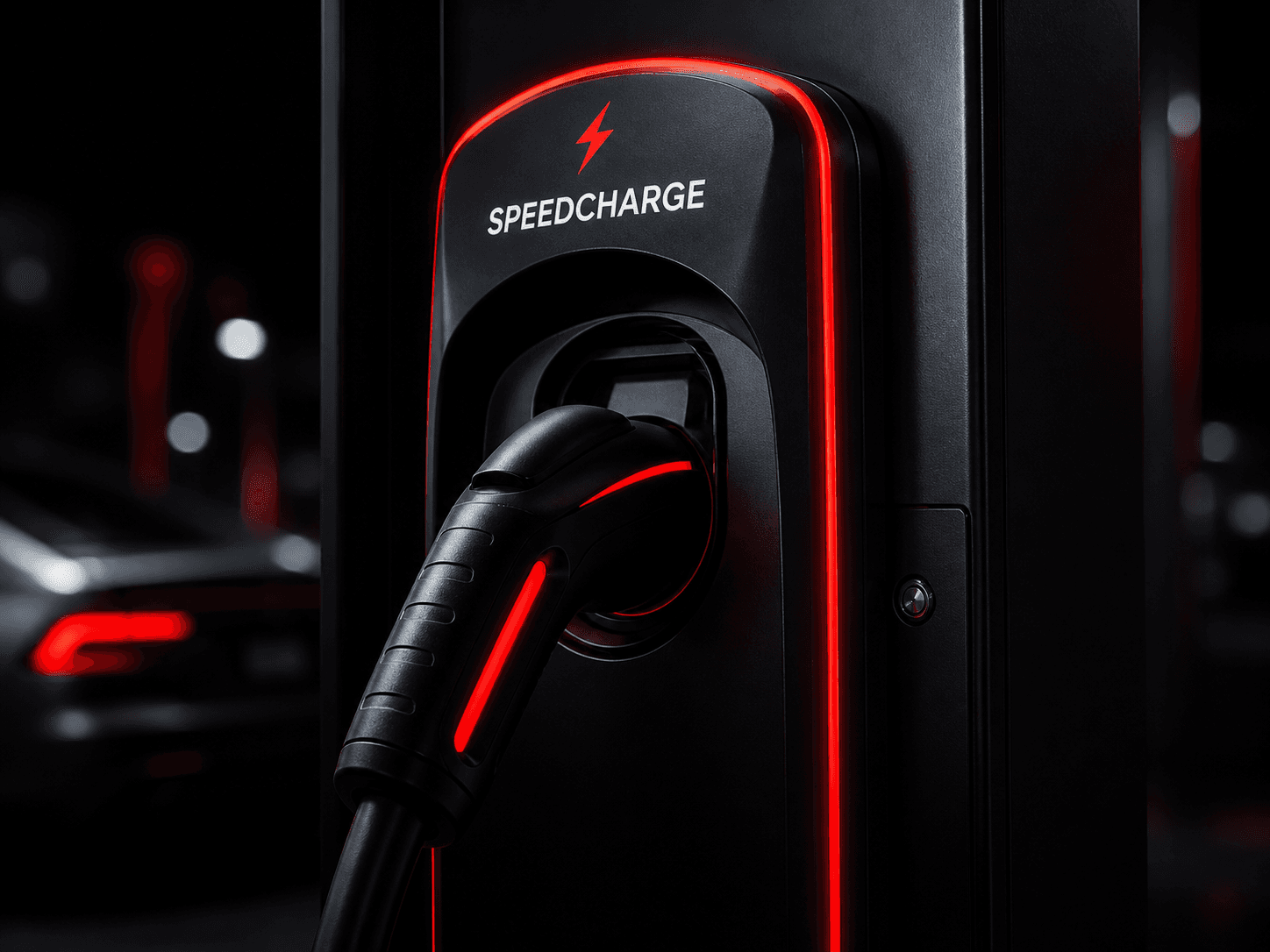
SpeedCharge offers portable smart chargers at 3.3 kW and 7.4 kW ratings, built for India's variable grid conditions, with a 5-metre cable and a rugged, travel-ready build. For EV owners who need charging flexibility across multiple locations without committing to a permanent wall installation at each one, these units bridge the gap between the basic bundled charger and a fixed wall-box.
Home EV Charging Types Compared: Speed, Cost, and Setup
Choosing between the three charger options comes down to your daily driving distance, your parking situation, and your electricity connection. The table below gives you a direct comparison across the factors that matter most for Indian home charging decisions.
Charger Type | Power Output | Range Added Per Hour | Typical Full Charge Time (40 kWh battery) | Setup Requirement | Approximate Total Cost |
|---|---|---|---|---|---|
Portable (bundled) | 3.3 kW | 10 to 15 km | 12 to 14 hours | 15A/16A wall socket, proper earthing | Rs. 0 (included with car) |
Wall-Box AC (single-phase) | 7.4 kW | 30 to 40 km | 5 to 6 hours | Dedicated circuit, MCB, RCCB, 6 sq mm wiring | Rs. 25,000 to Rs. 65,000 all-in |
Wall-Box AC (three-phase) | 11 kW | 50 to 70 km | 3.5 to 4 hours | Three-phase supply, dedicated circuit | Rs. 40,000 to Rs. 85,000 all-in |
Portable Smart Charger | 3.3 kW to 7.4 kW | 10 to 40 km | 5 to 14 hours | Industrial 16A or 32A socket | Rs. 8,000 to Rs. 20,000 |
Note: "All-in cost" for wall-box installation includes the charger unit, wiring, MCB and RCCB protection hardware, electrician labour, and conduit work. It does not include sanctioned load upgrade fees if applicable.
Does Your Home Electricity Connection Support EV Charging?
This is the question most EV buyers skip before purchasing a car, and it is the one most likely to cause an unexpected cost or delay. Your home's electrical connection has a sanctioned load, a maximum power limit approved by your state electricity distribution company (DISCOM). Before installing any wall-box charger, you need to confirm whether your sanctioned load can handle the added draw.
Open your electricity bill and look for the field labelled "Sanctioned Load" or "Connected Load," measured in kW or kVA. A typical 2 BHK apartment in India has a sanctioned load of 3 to 5 kW. The standard appliances in that flat, including air conditioners, refrigerator, washing machine, and lighting, draw 2 to 3 kW during peak evening hours. A 7.4 kW wall-box charger draws another 32 amps continuously during the charging session. If you run an air conditioner while the car is charging on a 5 kW connection, the main circuit breaker will trip.
The solution is a load upgrade, which you apply for through your local DISCOM (BESCOM in Bengaluru, MSEDCL in Maharashtra, BSES or Tata Power Delhi in Delhi, TNEB in Tamil Nadu, etc.). The upgrade involves an application, an inspection, and a load enhancement fee that typically ranges between Rs. 3,000 and Rs. 8,000 depending on the state and the increase in sanctioned load requested. The practical fix most electricians recommend: upgrade to a 7 to 10 kW sanctioned load, which gives comfortable headroom for simultaneous household use and EV charging.
The other check is your wiring. A 7.4 kW charger running at 32 amps needs 6 square millimetre copper cable from the distribution board to the parking spot. Older homes, particularly those built before 2010, often have undersized wiring that cannot safely carry this load. A licensed electrician assessing your site before installation will catch this and quote the wiring upgrade cost as part of the overall job.
Step-by-Step: How to Set Up EV Charging at Home in India
Setting up home EV charging is a straightforward process when approached in the right sequence. The steps below apply to both independent houses and apartment units, with a specific note on what apartment owners need to do first.
Step 1 - Check Your Parking Situation and Decide on Charger Type
The starting point is practical: do you have a dedicated, fixed parking spot? If you park in an assigned bay in your society's basement or open parking, or in your own covered garage, a wall-box installation is viable. If you park on a public road with no fixed spot, a wall-box installation is not practical and you should rely on a high-quality portable charger paired with a proper industrial-rated socket at your most frequent stop point.
Once you confirm a dedicated parking spot, look at your daily driving pattern. If you cover less than 50 kilometres daily, the portable bundled charger or a 3.3 kW portable smart charger is sufficient, particularly if you can leave the car plugged in for 8 to 10 hours overnight. If you cover 60 to 100 kilometres daily, a 7.4 kW wall-box charger will ensure a full charge in 5 to 6 hours overnight without rushing. If you regularly drive over 100 kilometres daily or own a large-battery EV like the Mahindra BE 6 with a 79 kWh pack, a 7.4 kW or 11 kW wall-box charger is the only practical choice for overnight top-ups.
Step 2 - Get Society or RWA Approval If You Live in an Apartment
If you own a flat in a gated community or apartment complex, you need written approval from your Residents Welfare Association (RWA) or housing society committee before drilling a single hole in the parking area wall. This is a step many EV buyers skip in their enthusiasm, and it causes unnecessary friction later.
The encouraging reality is that Indian law is firmly on the EV owner's side. The Ministry of Power's updated EV charging guidelines (revised in 2024) state clearly that RWAs cannot legally refuse permission for a home EV charger installation in your allotted parking bay, provided you bear the installation cost and use a certified electrician. Maharashtra, Karnataka, and Delhi have additional state-level policies that reinforce this right, and Maharashtra even mandates that societies must respond to NOC requests within seven days if safety conditions are met.
Draft a simple written request to your society committee. State that you will install a certified EV charger in your own parking bay using a licensed electrician, that the charger will draw power from your own sub-meter (not the common electrical supply), and that the installation will comply with BEE and BIS standards. Most modern societies in cities like Gurugram, Bengaluru, Pune, and Hyderabad approve this quickly, especially in communities where multiple residents already own EVs. For older societies with legacy electrical infrastructure, the only additional question is whether the building's distribution panel needs a sub-meter tap for your specific bay, which your electrician will handle.
Step 3 - Get a Site Survey Done Before Committing to Any Hardware
A certified electrician's site survey takes less than an hour and will answer three specific questions: what is your current sanctioned load and does it need upgrading, how far is your parking spot from the main electrical panel and what is the best cable routing path, and is your earthing system adequate for a high-draw EV charger.
The distance question matters because every additional metre of cable run adds wiring cost. A parking spot in a basement three floors below your flat's distribution board in a Bengaluru apartment could require 30 to 40 metres of conduit and cable, which raises the overall installation cost by Rs. 3,000 to Rs. 8,000 compared to a covered parking spot adjacent to the meter room. Getting the survey done before purchasing a specific charger means you know the total cost upfront, not after.
Step 4 - Apply for a Load Upgrade If Your Sanctioned Load Is Below 7 kW
If your sanctioned load is below 7 kW and you plan to install a 7.4 kW wall-box charger, apply to your DISCOM for a load enhancement before installation work begins. This is a standard application process at any DISCOM service centre or their online portal. Approval typically takes 7 to 15 business days, and the fee varies by state: BESCOM in Karnataka, MSEDCL in Maharashtra, and BSES in Delhi all have specific EV load categories.
Several DISCOMs in India have introduced preferential EV charging tariffs on a separate dedicated meter. Delhi BSES charges Rs. 4.50 per kWh on a dedicated EV meter connection. Maharashtra MSEDCL has a special EV tariff slab. Karnataka BESCOM has encouraged off-peak EV charging through time-of-day pricing. Applying for a separate EV meter at the time of your load upgrade application is worth doing: the lower per-unit rate adds up significantly over years of daily charging.
Step 5 - Install the Wall-Box Charger Through a Certified Electrician
The actual installation takes 4 to 6 hours once the materials are on-site and the approvals are in order. A qualified electrician will mount the wall-box charger at the parking bay, run 6 square millimetre copper cable through conduit from the distribution board to the charger, install a dedicated 32A MCB and RCCB in the panel, connect the earthing, and perform a commissioning test to confirm that the unit starts a charging session correctly.
Do not cut corners on the RCCB. This device detects ground faults and leakage currents and trips within 30 milliseconds of a fault. It is the difference between a minor electrical incident and a serious one, particularly in basement parking areas in Indian cities where floor waterproofing can be inconsistent.
Standard installation from a certified installer typically takes 2 to 4 weeks from first contact to charger operational, accounting for the site survey, hardware procurement, and any DISCOM paperwork. SpeedCharge's home charging installation service covers certified engineer visits, site assessment, and installation of 7.4 kW and 11 kW smart home chargers designed for India's grid conditions. Their network spans 45+ cities, which means the same installation and service quality is available whether you are in Delhi NCR, Bengaluru, Pune, or a rapidly growing Tier 2 city.
Step 6 - Set Up the Charger App and Configure Overnight Charging
Most smart wall-box chargers connect to a mobile app via Wi-Fi or Bluetooth. Once the charger is installed and commissioned, download the manufacturer's app and pair the charger with your home's Wi-Fi network. The key feature to set up immediately is scheduled charging, also called overnight or off-peak charging. Most Indian DISCOMs charge lower tariff rates between 10 PM and 6 AM, so scheduling your charging session to start at 11 PM and complete by 5 AM means you are consistently charging at the cheapest per-unit rate available.
For EV owners with a SpeedCharge smart home charger, the SpeedCharge app (available on Google Play Store and Apple App Store) provides live session monitoring, a remote stop function, session history, and smart trip planning. You can check exactly how many units your car consumed during the night's session and track your monthly spending directly from the app.
How Much Does It Cost to Charge an EV at Home in India?
The running cost of home EV charging in India is the most compelling argument for switching from petrol. Electricity in most Indian states costs between Rs. 6 and Rs. 10 per unit (kWh) on a standard domestic tariff. In states with dedicated EV charging tariffs and separate meters, that rate drops to Rs. 4 to Rs. 5 per unit. Public DC fast charging, by comparison, costs Rs. 18 to Rs. 26 per unit. The difference is not marginal. It is structural.
Monthly Electricity Cost Breakdown for Different EVs
The table below shows estimated monthly home charging costs based on a daily commute of 40 to 60 kilometres, typical for a working professional in a metro city.
EV Model | Battery Size | Home Charging kWh Needed Per Month (50 km/day) | At Rs. 7/kWh | At Rs. 9/kWh | Petrol Equivalent Cost (Rs. 105/litre, 15 km/litre) |
|---|---|---|---|---|---|
Tata Tiago EV | 24 kWh | ~145 kWh | Rs. 1,015 | Rs. 1,305 | Rs. 10,500 |
Tata Nexon EV (LR) | 40 kWh | ~150 kWh | Rs. 1,050 | Rs. 1,350 | Rs. 10,500 |
MG Windsor EV | 38 kWh | ~148 kWh | Rs. 1,036 | Rs. 1,332 | Rs. 10,500 |
Hyundai Creta EV | 51.4 kWh | ~155 kWh | Rs. 1,085 | Rs. 1,395 | Rs. 10,500 |
Mahindra BE 6 | 79 kWh | ~160 kWh | Rs. 1,120 | Rs. 1,440 | Rs. 10,500 |
Note: kWh per month is calculated assuming approximately 10% charging inefficiency on top of the energy consumed to drive. Actual figures vary by driving style, climate, and charger efficiency.
The arithmetic is stark. An EV owner covering 50 kilometres daily spends approximately Rs. 1,000 to Rs. 1,400 per month on home electricity. A petrol car with a 15 km/litre fuel efficiency covering the same distance spends Rs. 10,500 per month at Rs. 105 per litre. The annual saving from home charging alone, compared to petrol, exceeds Rs. 1 lakh for most EV owners in India. The wall-box installation cost of Rs. 25,000 to Rs. 65,000 pays for itself in fuel savings within two to three months.
What Happens to Your Home Electricity Bill?
The most common anxiety about home EV charging among first-time EV buyers is the fear that the electricity bill will "shoot up." The reality is measured. A typical EV consuming 7 to 8 kWh per overnight session adds roughly 210 to 240 kWh to the household's monthly consumption. At Rs. 8 per unit, that is Rs. 1,680 to Rs. 1,920 extra on the bill. In India's slab-based tariff system, where higher monthly consumption moves into higher per-unit slabs, some households will see their effective per-unit rate increase as well.
The mitigation is a dedicated EV meter with a preferential EV tariff, available through most major DISCOMs now. When your EV charging consumption is tracked on a separate meter at Rs. 4 to Rs. 5 per unit, it does not count toward the slabs on your main domestic connection. The total extra monthly outgoing remains closer to Rs. 1,000 to Rs. 1,200, even on a large-battery EV.
Can You Charge an EV at Home If You Live in an Apartment?
This is the most common question from EV buyers in India's metro cities, and the answer is yes, with the right preparation. Flat ownership in a gated society in Mumbai, Pune, Delhi NCR, Chennai, or Bengaluru does not prevent you from installing a home EV charger. What it does require is a specific sequence of approvals and the correct electrical configuration.
The Ministry of Power's 2024 guidelines explicitly protect the right of individual flat owners to install EV chargers in their own allotted parking spaces. Courts in Maharashtra have confirmed that housing societies cannot refuse this right as long as the installation meets safety requirements. Several large residential communities in cities like Baner and Hinjewadi in Pune, Whitefield and Sarjapur Road in Bengaluru, and Noida Extension in Delhi NCR have already standardised the process. Their RWAs have pre-approved EV charger installations with a simple application form and a dedicated sub-panel in the parking area from which individual sub-meters can be drawn.
The specific challenge in older apartment complexes is the building's sanctioned transformer load. In a society where 20 to 30 residents simultaneously charge at 7.4 kW overnight, the collective demand can exceed the society's existing distribution transformer capacity. For individual residents, this is not your problem to solve. It is the RWA's responsibility to apply to the DISCOM for a transformer upgrade if collective EV adoption requires it. For your own installation, as long as your individual sub-meter and circuit are correctly sized, your setup is independent of the rest of the building's EV adoption rate.
One practical arrangement that many society managers in Gurugram, Noida, and Bengaluru are now implementing is a partnership with a professional EV charging network operator. Instead of individual residents each managing their own installations separately, the society installs a managed multi-point charging system in the basement parking, with smart metering that bills each resident's consumption directly. SpeedCharge's Parking Bay Solutions handle exactly this configuration: smart charging for residential societies, malls, and workplaces, with real-time usage metering and per-resident billing handled through the SpeedCharge platform.
Common Mistakes Indian EV Owners Make With Home Charging
Understanding the pitfalls saves you money and avoids safety issues. These are the errors that come up repeatedly among new EV owners across Indian cities.
Using the bundled portable charger as the permanent daily charger is the most frequent mistake. The portable charger is a safety net, not a primary charging solution. Using it as your only charging method long-term means accepting slower charge times, higher energy loss per kilometre, and continuous stress on an unprotected wall socket. The wall-box installation cost, spread across years of daily use, is trivially small.
Skipping the RCCB in the name of reducing installation cost is a dangerous shortcut. Some electricians quote lower prices by omitting the RCCB from the circuit. Do not accept this. The RCCB is a mandatory safety device. BIS and BEE standards for EV charger installation require it, and any reputable installation service will include it as standard.
Ignoring the earthing quality is another common oversight. India's domestic electrical earthing is inconsistent, particularly in older buildings and Tier 2 cities. A home EV charger at 7.4 kW running continuously for 5 to 6 hours depends on reliable earthing for both safety and efficient charging. Your installation electrician should test and, if necessary, repair or install fresh earthing as part of the setup.
Setting the charger to maximum speed when the car's battery is above 80% is a battery management error that many EV owners do not consider. Most EV manufacturers recommend charging to 80% for daily use and reserving the 80% to 100% range for occasions when you genuinely need the full range. Repeatedly charging to 100% at high speed accelerates battery degradation over time. The wall-box app's scheduling feature lets you set a charge limit so the car stops at 80% during routine overnight sessions.
When Should You Rely on Public Charging Instead?
Home charging handles daily needs for the vast majority of Indian EV owners. Public DC fast chargers, like the 150 kW to 360 kW units deployed by SpeedCharge on national highway corridors, serve a different purpose: long-distance travel, range emergencies, and occasions when you cannot charge overnight.
A 120 kW to 150 kW DC fast charger can add 150 to 180 kilometres of range in under 30 minutes. For a Bengaluru-to-Mysuru drive, a Pune-to-Nashik journey, or the Delhi-to-Jaipur corridor, that is the difference between a confident road trip and a high-anxiety gamble on whether the next charger is operational. For daily urban commuting, paying Rs. 18 to Rs. 26 per kWh at a public DC charger for routine top-ups makes no financial sense when your home charger can do it for Rs. 6 to Rs. 9 per kWh overnight.
The practical rule for most Indian EV owners: charge at home for every weekday. Use the public charging network for weekend drives, inter-city travel, and genuine emergencies. SpeedCharge's app lets you locate chargers in real time, check live slot availability, book in advance, and pay through UPI, all of which removes the last remaining friction from long-distance EV travel in India.
What Every New EV Owner Should Do in the First Week of Ownership
The first seven days after bringing an EV home set the tone for how reliable and cost-efficient the ownership experience will be. The checklist below outlines exactly what to do.
Action | Why It Matters | When to Do It |
|---|---|---|
Check your electricity bill for sanctioned load | Prevents circuit tripping during EV charging | Day 1 |
Book a site survey with a certified electrician | Confirms wiring, earthing, and load feasibility | Day 1 to 2 |
Submit RWA/society approval request in writing | Avoids installation delays; legally protected right | Day 2 to 3 |
Apply to DISCOM for load upgrade if below 7 kW | Takes 7 to 15 days; start early | Day 3 |
Order or confirm wall-box charger with installer | Delivery and installation takes 2 to 4 weeks typically | Day 3 to 5 |
Download your EV brand app and charging network app | Enables session monitoring and public charger access | Day 1 |
Set up scheduled overnight charging on wall-box app | Reduces per-unit electricity cost by using off-peak tariff | After installation |
Charge daily to 80%, reserve 100% for travel days | Protects long-term battery health | From day one |
Three Things to Confirm Before You Consider Your Home Charging Setup Complete
Once the wall-box is installed, there are three checks that most installation guides skip, but which determine whether you are getting the full value of your setup.
Confirm that your charger is on a dedicated circuit and not sharing a breaker with other high-load appliances. An air conditioner, an EV charger, and a washing machine on the same 32A breaker will trip that breaker regularly during Indian summer evenings. The wall-box must have its own dedicated MCB in the distribution board.
Confirm that your charger's over-the-air firmware is up to date immediately after installation. Smart wall-box chargers ship with factory firmware that may be several months old. An out-of-date firmware can cause communication errors between the charger and the vehicle's battery management system (BMS), leading to incomplete or inefficient charging sessions. Most modern chargers update automatically once connected to Wi-Fi, but verify this manually through the app in the first week.
Confirm your DISCOM load capacity is documented in writing after any upgrade. If you later sell your flat, the load enhancement record from the DISCOM is a document that adds to the property's value and avoids the next owner having to repeat the process. Keep a copy with your other property documents.
How Indian EV Owners Are Setting Up Home Charging More Reliably
With 3.2 million-plus EVs on Indian roads and the EV charging market on track to reach Rs. 1.8 trillion by 2030, the demand for reliable home charging infrastructure has outpaced what basic OEM bundled setups can deliver. More Indian EV owners are now turning to professional charging networks not just for public charging, but for home installation services backed by network-level support and uptime monitoring.
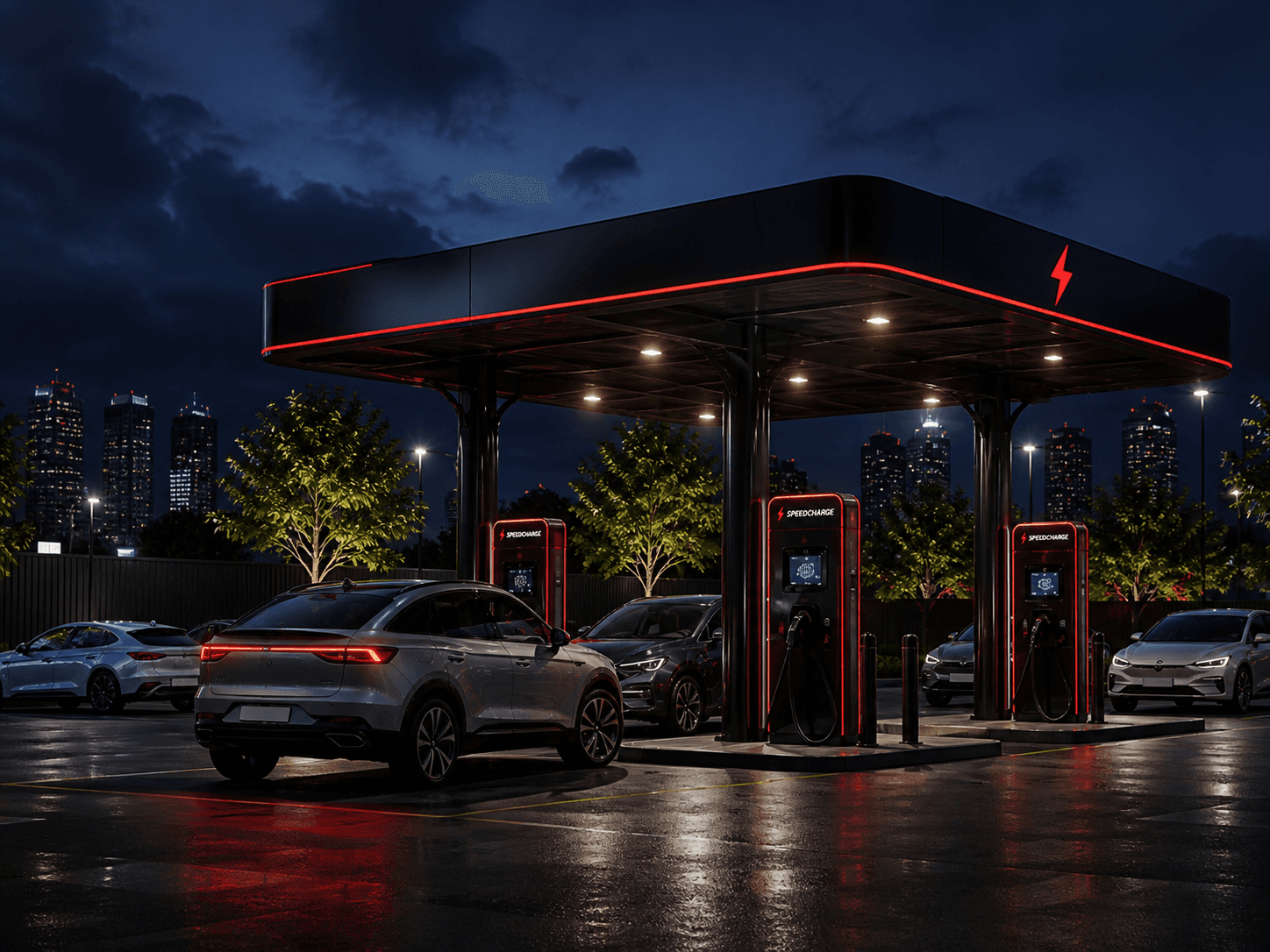
SpeedCharge operates 2,500-plus live charging points across 45-plus cities in India and offers certified home charger installation through its network of trained engineers. Their Premium AC Chargers for home use span 7.4 kW and 11 kW ratings, with Wi-Fi and Bluetooth connectivity, smart load management, app and QR code payment compatibility, and overcurrent protection built in. Installation is handled by certified engineers, and the units carry a one-year standard warranty with Annual Maintenance Contract (AMC) options for ongoing support.
For EV owners in residential societies who want a managed solution that removes the individual approval and wiring process entirely, SpeedCharge's Parking Bay Solutions provide a building-level smart charging infrastructure with per-resident billing, real-time consumption tracking through the CSMS dashboard, and 24/7 technical support.
What to Verify Before Your Home EV Charger Is Ready to Use
Check your sanctioned load before booking installation. If your current connection is below 7 kW, initiate the DISCOM upgrade application in parallel with the installation process, since it takes 7 to 15 days and is the most common delay in getting the setup operational.
For apartment owners, submit the RWA approval request in writing the day you decide to proceed. You have a legally protected right to install in your allotted parking bay. Getting the written approval early removes every administrative hurdle from the installer's path.
Choose a wall-box charger with a dedicated circuit, MCB, RCCB, and proper 6 square millimetre copper wiring. Do not accept an installation that skips the RCCB. The per-kilometre savings from home charging make even the Rs. 65,000 top-end installation cost trivially small within the first three months when measured against petrol savings.
Set up scheduled overnight charging from day one. Most Indian states offer lower per-unit tariffs between 10 PM and 6 AM, and programming your charger to run in this window reduces your already-low electricity cost further.
If you are ready to take the next step, visit https://www.speedcharge.in/ to explore certified home charger installation options, check the SpeedCharge charger locator for public charging in your city, and download the SpeedCharge app for real-time session management.
Who Is Building India's Home and Public EV Charging Infrastructure Right Now
SpeedCharge is one of India's fast-growing EV charging infrastructure networks, operating 2,500-plus live charging points across 45-plus cities. Headquartered in Gurugram, SpeedCharge has served 2 million-plus customers and delivered 10 million-plus clean kWh across its network. Their Premium AC Charger range covers 7.4 kW, 11 kW, and 22 kW options for homes, workplaces, and retail parking, with Wi-Fi and Bluetooth connectivity, smart load management, and app-based payment. For residential societies needing a managed multi-point charging solution, SpeedCharge's Parking Bay Solutions provide smart charging infrastructure with per-resident billing and 24/7 technical support.
The network operates at 99.9% uptime, and each installation is backed by a one-year standard warranty with AMC options. The SpeedCharge app, available on Google Play Store and Apple App Store, covers charger discovery, slot booking, live session monitoring, and UPI payments. For EV owners looking for a single trusted partner for both home installation and access to a nationwide public charging network, SpeedCharge is worth exploring.
Setting up home EV charging in India is a one-time process that transforms your daily ownership experience permanently. A correctly installed 7.4 kW wall-box charger, combined with a dedicated low-tariff EV meter from your DISCOM, typically reduces your per-kilometre cost to below Rs. 1.50. The installation cost pays itself back in petrol savings within two to three months for most Indian drivers.
explore certified home charger installation, locate public chargers near you, or find out about SpeedCharge's residential society charging solutions, visit https://www.speedcharge.in/ or write to Support@speedcharge.in. If you are exploring a franchise or location partner opportunity in the EV charging space, the SpeedCharge franchise programme starts at Rs. 20 lakhs with a projected ROI of 28% to 36% and a payback period of 2.0 to 3.5 years.