

Monsoon EV road trips are no longer a niche experiment. With over 3.2 million EVs now running on Indian roads, thousands of EV owners are doing exactly what you are considering: loading up the car, picking a misty Western Ghats destination or a coastal Goa run, and heading out in the rains. The green-washed highways, the cool temperatures, the dramatic skies it all makes sense. What also makes sense, in the current landscape of expanding highway charging infrastructure across India, is that planning an EV road trip during the monsoon is genuinely achievable. It just requires a different kind of preparation than the one your petrol-car instincts have trained you for.
This guide covers everything: whether your EV is actually safe in heavy rain, how much range you will realistically lose, how to plan charging stops along monsoon routes, what to check before you leave, and how to drive confidently even when the roads turn wet and unpredictable.
Is It Safe to Drive and Charge an EV in Monsoon Rain in India?
yes, modern EVs sold in India are safe to drive and charge in heavy rain, provided you avoid submerged or deeply waterlogged roads. Most EV battery packs, connectors, and electric motors in current Indian models carry an IP67 waterproof rating, meaning the electronics can withstand complete submersion in up to one metre of water for 30 minutes without damage. Normal monsoon rain, road splashes, and even driving through shallow puddles fall well within this protection boundary.
That said, the safety of EV driving in monsoon conditions has real limits that every owner must understand clearly.
What the IP Rating on Your EV Actually Means in Practice
IP67 is the standard that protects the battery pack, motor, and onboard electronics in most Indian EVs including the Tata Nexon EV, MG Windsor EV, Hyundai Creta EV, and BYD Atto 3. The IP67 rating means the system is fully dust-tight and can survive temporary immersion. What this does not mean is that your EV can safely navigate flood-level waterlogging. The distinction matters enormously during the Indian monsoon.
if the water level on the road reaches above the centre of your front wheels, do not drive through it. This applies to petrol cars too, but the consequences of ignoring it with an EV include water ingress beyond the sealed battery enclosure, potential damage to floor-level wiring, and in extreme cases of sustained immersion, battery degradation. A few incidents in Mumbai and Pune involving EVs left in flooded basements and parking lots during heavy July rains have confirmed that prolonged contact with standing water, not driving rain, is the actual risk.
Is Charging an EV in the Rain Safe?
Charging a modern EV at a properly installed charging station during rain is safe. The charging inlet on an EV, the connector head on a public charger, and the internal electronics on quality charging units are all engineered to handle wet-weather use. Public DC fast chargers rated IP55 and above are designed for outdoor installation precisely because they need to function in all weather conditions year-round.
The situations to avoid are specific and practical. Do not use a portable charger or an extension cord plugged into an uncovered outdoor socket during heavy rainfall. Do not use any charger where the cable is visibly damaged, frayed, or the connector housing appears cracked. Do not charge an EV that has been partially submerged until a service technician has inspected the vehicle. At covered or indoor public charging stations, or at well-maintained highway charging hubs, the risk during normal monsoon rain is negligible.
How Much EV Range Do You Actually Lose in Monsoon Conditions?
Range anxiety during the monsoon is real, but the actual numbers are less alarming than most EV owners fear. Rain itself does not drain a battery. What the monsoon changes is the combination of conditions that together reduce the effective range from your ARAI-certified figure. Understanding each factor separately helps you plan your charging stops with accuracy rather than guesswork.
The table below breaks down the realistic range impact of monsoon-specific conditions on a typical Indian passenger EV with a 45 kWh battery and an ARAI-certified range of around 450 km:
Condition | Typical Range Impact | Notes |
|---|---|---|
Rain alone (wipers, lights) | 2% to 4% reduction | Minimal; electrical load is small |
AC and defogger running together | 8% to 12% reduction | Most significant single factor |
Wet roads and rolling resistance | 3% to 5% reduction | Tyres displace water, increasing drag |
Mountain or ghat climbs (uphill) | 15% to 25% reduction | Steep ascents consume significantly more energy |
Speed above 100 km/h | 20% to 30% reduction | Aerodynamic drag increases with square of speed |
Regenerative braking on ghats | Up to 8% to 12% recovery | Descents can meaningfully add back range |
Combined monsoon highway conditions | 15% to 25% net reduction | Plan charging stops on this adjusted figure |
What this means in practice: if your vehicle has a real-world highway range of 380 km under normal conditions, plan your charging stops assuming an effective range of 285 km to 320 km during monsoon highway driving. The 20-80% charge rule applies here too: only count the range between 20% and 80% battery when spacing your charging stops. Never count on the last 20% to get you anywhere new; treat it as your emergency buffer.
Why Ghats and Hill Roads Change the Calculation Completely
The monsoon and the Western Ghats are inseparable in the Indian travel imagination. Mahabaleshwar from Pune, Coorg from Bengaluru, Lonavala from Mumbai, Munnar from Kochi these are all hill-destination routes that millions of Indians drive every monsoon season. For an EV owner, these routes have a characteristic that flat highway driving does not: sustained climbing followed by sustained descent.
On a sustained ghat climb at 30 km/h to 50 km/h with the AC running and wipers working, a 45 kWh EV can consume energy at a rate 40% to 50% higher than flat highway cruising. The good news is that the descent portion with regenerative braking recovers a meaningful portion of this. Driving from Pune to Mahabaleshwar involves a climb of roughly 1,400 metres over about 60 km. An EV that enters that climb at 80% charge can expect to arrive with close to 50% remaining and then recover 8% to 10% on the descent sections a workable equation if you started with enough charge.
The mistake most EV owners make on ghat routes is underestimating the total energy cost of the ascent and over-relying on the descent recovery. Always charge to at least 80% before beginning a significant hill section. The charging stop before the ghat matters more than the one after it.
How to Plan Your Charging Stops for a Monsoon EV Road Trip
Planning charging stops on a monsoon EV road trip is different from planning them on a dry-weather highway run in one specific way: you need to account for stations that may be temporarily unavailable due to power outages caused by heavy rainfall and grid disruption. India's Tier 1 and Tier 2 city charging hubs are generally unaffected, but some standalone highway stops in less-developed corridors can go offline during severe storms. This is not common on major national highway corridors, but it is possible and worth planning for.
The working method used by experienced EV road trip drivers in India is the two-station buffer: never plan a charging stop at a station you cannot drive past by at least 40 km. If Station A is your target and it turns out to be offline when you arrive, Station B is 40 km ahead and you have enough charge to get there. This simple rule eliminates almost all stranded-EV scenarios on well-served highway corridors.
The 20-80 Rule and Why It Matters More in the Monsoon
The 20-80 charging rule is standard EV advice: charge to no more than 80% for everyday use and never let the battery drop below 20% before charging again. During monsoon road trips, this rule becomes a safety margin, not just a battery health tip. The reasons are specific to monsoon conditions.
First, power demand from the AC and defogger is constant, which means the battery is drawing more energy per kilometre than your app's range estimate has been calibrated for. Second, if you hit a waterlogged diversion or a traffic jam caused by a landslide or road closure, your planned 80 km leg can extend to 120 km without warning. Third, you want at least 30% battery remaining when you arrive at any charging stop during monsoon season, because if the first charger is occupied or offline, you need the headroom to wait or move to the next one.
A practical spacing formula for monsoon highway charging: take your car's ARAI range, apply a 25% monsoon reduction, then plan a charging stop every 60% of that adjusted figure. For a vehicle with an ARAI range of 500 km, the adjusted monsoon range is 375 km. Plan a charging stop every 225 km.
Which EV Charging Apps to Use Before and During the Trip
Real-time charger availability is non-negotiable on a monsoon road trip. Multiple charging apps exist in the Indian market, and the experienced approach is to install at least two before you leave. Different operators run different stations, and no single app covers every charger on every highway corridor.
Before leaving: map your entire route with charging stops, note the operator name for each stop, and load your wallet in each app. Download offline maps for the route because mobile signal in ghat sections and some interior highway stretches is unreliable during the monsoon. The SpeedCharge app, available on both Google Play Store and Apple App Store, allows you to find chargers nearby, check real-time availability, book a slot in advance, and monitor your session live. For a monsoon road trip where uncertainty is higher than usual, the ability to reserve a slot ahead of your arrival is particularly useful. Visit Speedcharge to check the network's coverage on your planned route before you leave.
Best Monsoon EV Road Trip Routes in India with Charging Coverage
The best monsoon EV routes in India are not simply the most scenic ones; they are the ones where the highway charging infrastructure is mature enough to handle the additional uncertainty that the rainy season introduces. The three corridors below represent routes where public EV charging has reached a level of density that makes monsoon EV travel genuinely practical.
Route | Distance | Charging Stop Spacing | Terrain Type | Monsoon Travel Verdict |
|---|---|---|---|---|
Mumbai to Goa via NH66 | 590 km | 60 to 90 km between stops | Coastal, some ghats | Excellent; dense charger coverage in Panvel, Chiplun, Ratnagiri, Kolhapur |
Bengaluru to Coorg via Mysuru | 270 km | 80 to 100 km between stops | Moderate hills | Good; strong Bengaluru start, chargers in Mysuru and Madikeri |
Pune to Mahabaleshwar | 120 km | Single charging stop in Pune before departure | Steep ghat climb | Manageable with full charge; plan the ghat separately |
Chennai to Pondicherry via ECR | 160 km | Single stop sufficient | Flat coastal road | Very comfortable for monsoon EV travel |
Delhi to Rishikesh via NH58 | 250 km | One to two charging stops | Flat then hilly | Good on highway stretch; Rishikesh options expanding |
Mumbai to Goa: India's Most EV-Ready Monsoon Corridor
The coastal NH66 route between Mumbai and Goa is one of western India's most EV-compatible highway corridors and arguably the most popular monsoon road trip in the country. Maharashtra has among the highest public EV charging consumption in India, and the charging density along this route reflects that adoption. Fast chargers are clustered at highway rest stops, commercial complexes, and petrol station forecourts between Panvel, Chiplun, Ratnagiri, and Mapusa.
One consideration specific to this monsoon route: the section through the Sahyadri ghats between Kolhapur and the Goa border involves sustained climbs. Charge to above 80% in Kolhapur before tackling this stretch. The ghat section itself is one of the most dramatically beautiful drives in India during monsoon season, with waterfalls appearing along cliff faces and the road often shrouded in low cloud. A silent EV makes the experience distinctly better than a combustion car would.
Bengaluru to Coorg: The Hill Station Route That Suits an EV
The 270 km drive from Bengaluru through Mysuru to Madikeri in Coorg is a natural fit for an EV during the monsoon. Bengaluru has the highest concentration of public EV chargers in southern India, which means you start any trip with maximum flexibility. The road through Mysuru is largely flat and fast, with chargers available in the city. The final 100 km from Mysuru to Madikeri involves a gradual climb through coffee estates and teak forests. During the monsoon, this section is particularly scenic and the cooler temperatures at altitude actually improve EV efficiency slightly compared to summer conditions.
Charge to 90% in Bengaluru before leaving. Stop in Mysuru for a top-up if needed. Arrive in Madikeri and check whether your accommodation offers any form of EV charging. More homestays and resorts in Coorg have added EV-friendly sockets in recent seasons, driven by growing demand from EV-driving guests from Bengaluru. You can also check the SpeedCharge charger locator for available charging points along this corridor before finalising your route.
Monsoon EV Pre-Trip Checklist: What to Check Before You Leave
An EV road trip in the monsoon requires a specific set of checks that go beyond the standard tyre and fluid inspection that petrol car drivers rely on. The following checklist addresses both the vehicle and the trip plan.
Check Item | What to Verify | Why It Matters in Monsoon |
|---|---|---|
Tyre tread depth | Minimum 3 mm; replace below 2 mm | Wet roads need substantially more tread to maintain grip and prevent aquaplaning |
Tyre pressure | Check cold; wet roads change grip dynamics | Under-inflated tyres increase rolling resistance and reduce range |
Wiper blades | Replace if streaking or skipping | Monsoon visibility is critical; failing wipers are a serious safety issue |
Charging cable condition | Inspect for cuts, exposed wire, cracked connector housing | Damaged cables must never be used; return to dealer for replacement |
Battery state before leaving | Charge to 80% or higher | Start every monsoon road trip with maximum available range |
Charging app wallet balance | Load Rs. 500 to 1,000 in each app | Avoid running out of balance mid-trip when connectivity is limited |
Offline maps downloaded | Full route offline in navigation app | Ghat sections and rural corridors often have poor signal |
Emergency contacts saved | Roadside assistance number for your EV brand | Tata, Mahindra, MG, and Hyundai all have 24/7 emergency lines |
Vehicle insurance add-ons | Check if monsoon and flood cover is included | Standard insurance may not cover water damage in all situations |
Accommodation charging | Confirm if your stay has EV charging or a power socket | Many hill stations and coastal resorts have limited or no public charging nearby |
How to Drive an EV Safely on Wet and Slippery Monsoon Roads
Most EVs sold in India today are equipped with ABS, electronic stability control, and traction control as standard. These systems work harder on wet roads than on dry ones, and understanding how they interact with the instant torque delivery of an EV motor is essential for safe monsoon driving.
The most common mistake EV drivers make on wet roads is accelerating too aggressively at junctions and traffic signals. An EV delivers its full torque from zero rpm, which means the rear wheels or front wheels can lose traction on a wet surface before the driver has time to react. The corrective habit is simple: accelerate gently until you are rolling at 20 km/h, then increase pressure progressively. This is different from driving a petrol car, where torque delivery is gradual by the nature of the combustion cycle.
Speed Management and Stopping Distance in Rain
At 80 km/h on a wet highway, stopping distances increase by approximately 30% to 40% compared to dry road conditions. For an EV travelling at 100 km/h in heavy rain, the safe following distance from the vehicle ahead should be at least 4 seconds, not the 2-second rule used in dry conditions. This is not an EV-specific consideration; it applies to all vehicles. What is EV-specific is that drivers who are managing their range anxiously tend to maintain higher average speeds, which amplifies wet-road stopping distance risks significantly.
In the monsoon, driving at 80 km/h to 90 km/h rather than 110 km/h has two compounding benefits. First, it directly reduces the risk of hydroplaning on a road where water pooling is unpredictable. Second, it improves energy efficiency by 20% to 30% compared to driving at 110 km/h, which means fewer charging stops. Slower and more economical is not a compromise in the monsoon — it is the optimal strategy.
How Regenerative Braking Behaves in the Monsoon
Regenerative braking is one of the best things about driving an EV on a ghat road during the monsoon. On a descent, lifting off the accelerator engages the regenerative system, which slows the car while converting kinetic energy back into battery charge. On a 20 km ghat descent, this can recover 8% to 12% of battery capacity. It also means you are using friction brakes significantly less, which matters on a wet mountain road where brake fade from repeated use can be dangerous.
The one adjustment to make during monsoon driving: engage regenerative braking progressively, not abruptly. If you are travelling at 70 km/h and lift off the accelerator completely in a high-regeneration setting, the sudden deceleration on a wet road can cause rear-wheel instability. Set regenerative braking to medium on winding wet ghat sections. Use maximum regeneration on straighter descents where the car remains stable.
Parking and Overnight Charging During a Monsoon Road Trip
Where you park and charge overnight during a monsoon road trip matters more than EV drivers typically anticipate. The incidents that result in EV damage during the Indian monsoon are almost never from driving in rain. They are from parking in locations that flood after the driver has gone to sleep.
Before checking into your hotel or homestay on a monsoon road trip, ask two questions. First, does the parking area flood or accumulate water during heavy overnight rain? Low-lying parking lots, basement car parks, and areas near rivers or natural drains carry real risk during the monsoon. Second, is there elevated or covered parking available? Even a simple paved parking area on slightly higher ground eliminates most risk from overnight waterlogging.
For overnight charging at your stay, a standard 15A socket with a good portable charger will add 25 km to 35 km of range per hour. An 8-hour overnight charge from a 7.2 kW portable charger adds approximately 200 km to 250 km of range, which for most monsoon road trip segments is more than enough to start the next day at 80%.
What You Need to Know About EV Charging in the Monsoon
Finding a reliable, covered, fast-charging stop on a monsoon highway run is not as difficult as it was just a few years ago. India's public EV charging infrastructure has expanded rapidly, and operators who deploy outdoor highway stations have standardised on IP55-rated charger hardware as the minimum specification for exposed installations, meaning the equipment itself is designed to handle rain.
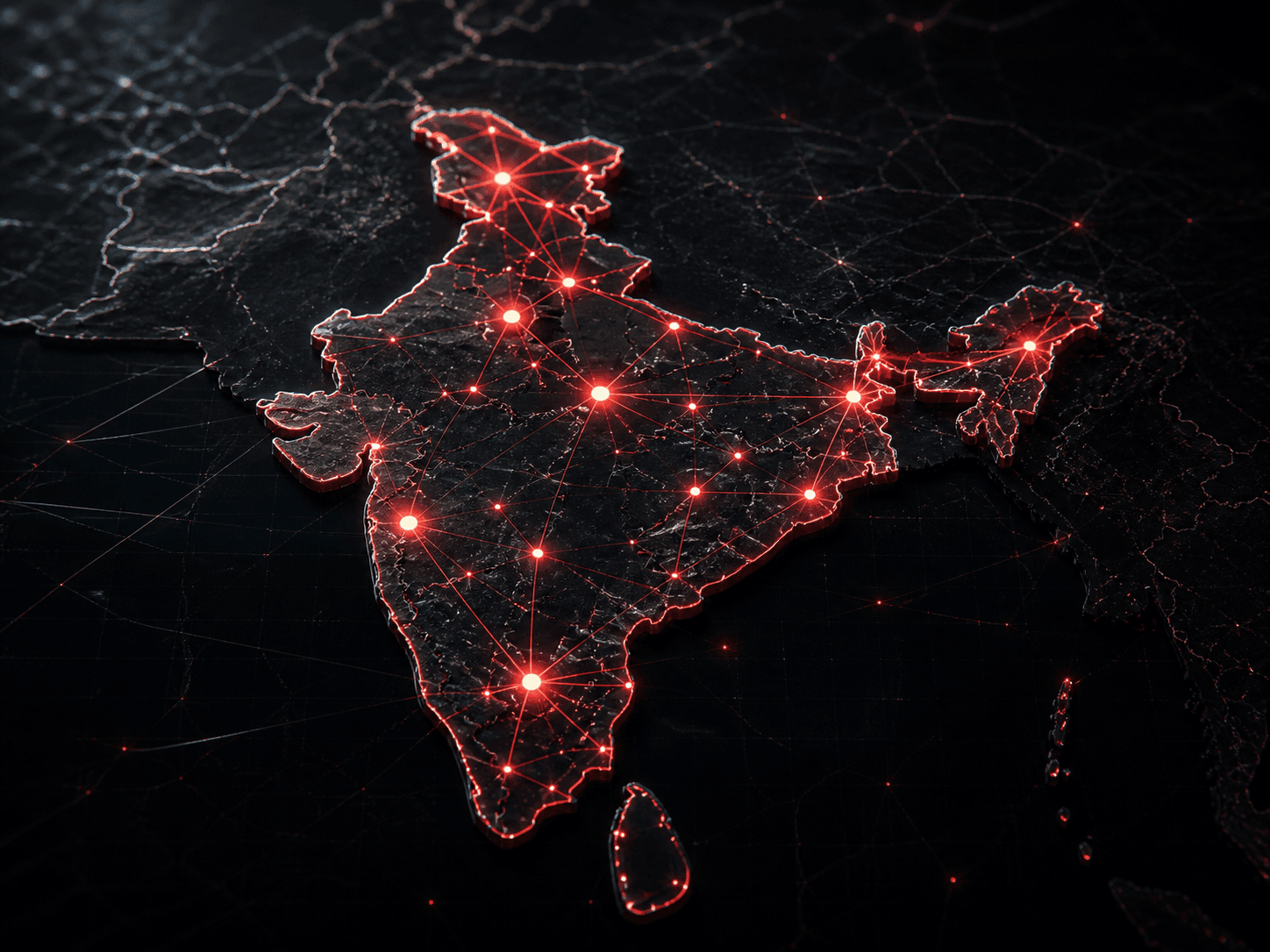
SpeedCharge operates 2,500+ live charging points across 45+ cities in India, including on major national highway corridors, with a network uptime of 99.9%. The SpeedCharge network uses DC fast chargers rated at 30 kW to 360 kW with CCS2 connectivity, supporting all major Indian EV models. For a monsoon road trip, the ability to check real-time charger availability, pre-book a slot, and monitor the charging session remotely through the SpeedCharge app removes the guesswork from the most stressful part of any highway EV journey. The 2M+ customers served by the network and 25M+ clean kilometres enabled reflect an infrastructure at a scale that makes monsoon planning significantly more reliable than it was in the early years of India's EV rollout.
What to Do If a Charging Station Is Offline During Your Trip
Charger downtime during heavy monsoon storms is uncommon at major network-operated highway stations but not impossible. A practical response protocol helps avoid panic.
If you arrive at a planned charging stop and find the station offline or all units occupied, the right sequence is: check your app for the next verified charging stop on the route, estimate whether your current battery level can reach it comfortably with a 30% buffer, and if yes, drive on. If not, contact the charging network's support line. Most major operators including SpeedCharge maintain 24/7 technical support for exactly this scenario. The worst outcome, a long wait at a partially functional station, is recoverable. Running out of charge because you bypassed a working station earlier in a hurry is not.
The two-station buffer strategy described earlier in this guide is the most reliable way to ensure you never face a situation where a single offline charger becomes a crisis.
Monsoon EV Road Trip Myths That Indian Drivers Still Believe
Several persistent myths about EVs in the monsoon circulate in Indian car owner communities, WhatsApp groups, and social forums. They discourage new EV owners from attempting road trips that they would otherwise manage comfortably.
Myth 1: Rain destroys EV battery range. The reality is that rain itself contributes only 2% to 4% of additional energy consumption, mainly from wipers and headlights. The larger range reduction comes from running the AC and defogger simultaneously, which is a driver habit choice, not a weather inevitability. If you use just the defogger on a cool monsoon day and skip the full AC, your range impact is minimal.
Myth 2: You cannot charge an EV in the rain. This is false. CCS2 connectors, the standard on all DC fast chargers in India, are designed and tested for wet-weather use. Charging in rain at a well-maintained public station is as safe as using a petrol pump in the rain.
Myth 3: EVs are dangerous to drive in flooded areas. Modern EVs with IP67 battery ratings are actually safer in shallow waterlogging than most petrol cars, because there is no exhaust pipe for water to enter and no combustion air intake at ground level. The Tata Tigor EV famously drove through 12 to 14 inches of water in Pune during a monsoon without incident. The rule for all vehicles is the same: if the water reaches the door sill, stop and turn back.
Myth 4: Monsoon road trips are only practical in a petrol car. The opposite is arguably true on India's expanding highway corridors. EV charging stops provide a natural 30 to 40 minute break that experienced road trippers use for meals and rest. At Rs. 2.50 to Rs. 3.50 per kilometre in charging costs compared to Rs. 6 to Rs. 8 per kilometre for petrol, an EV monsoon road trip from Mumbai to Goa saves approximately Rs. 3,000 to Rs. 4,500 in fuel alone.
How Indian EV Owners Are Charging Confidently on Monsoon Highways
The confidence level of Indian EV owners doing highway trips has changed significantly as charging infrastructure has matured and as brands like SpeedCharge have expanded the fast-charging network to cover not just metro cities but Tier 1 corridors and national highway stops. A network operating 2,500+ live charging points with 99.9% uptime and real-time slot booking means that a driver on the Mumbai to Goa monsoon run can pre-plan every charging stop with confirmed availability before leaving home.
For EV owners looking to plan their next monsoon road trip, the first step is to use the SpeedCharge charger locator at SpeedCharge to map charging stops along your chosen route. Pair this with the SpeedCharge app's trip planner feature, which overlays charging stops on your navigation route with real-time availability data. The network's coverage across 45+ cities and 25+ major national highway corridors means that the most popular Indian monsoon road trip routes are well within reach.
Three Things to Confirm Before You Start Your Monsoon EV Road Trip
Knowing the theory of monsoon EV driving is one thing. Walking through three specific verifications before you start the engine on the morning of your trip is what actually keeps the journey stress-free.
First, confirm that every charging stop on your route is active and functioning through a live check on the relevant app the evening before you leave, not just during your pre-trip planning a week ago. Charger availability and operational status changes, and a check done 12 hours before departure is more accurate than one done the day before.
Second, confirm that your accommodation at every overnight stop on a multi-day road trip either has EV charging or a reliably accessible public charging station within 3 km. Do not assume a resort or homestay has charging just because their listing mentions sustainability or eco-friendly credentials. Call and confirm the power socket type, the amperage available, and whether the parking area is on elevated or covered ground.
Third, confirm that your EV's portable charging cable is in the boot and that the connector is undamaged. On a monsoon road trip, the portable charger is your emergency tool. On at least one night of a multi-day trip, you will likely be relying on a hotel socket rather than a public DC charger for your overnight charge. The cable in the boot is the difference between waking up to a charged car and waking up to an unplanned detour.
Frequently Asked Questions
Is it safe to drive an EV in heavy rain in India?
Yes, modern EVs sold in India are safe to drive in heavy rain. Battery packs, electric motors, and charging systems on vehicles like the Tata Nexon EV, MG Windsor, and Hyundai Creta EV carry IP67 ratings, protecting all electronics from water ingress during normal monsoon driving. Avoid roads where standing water exceeds the centre of the front wheels.
Does monsoon rain reduce EV battery range significantly?
Rain alone reduces range by only 2% to 4%. The bigger factor is running the AC and defogger simultaneously, which can reduce range by 8% to 12% on top of that. Combined with wet road resistance and any hill climbing, a realistic monsoon highway range reduction is 15% to 25% compared to your car's ARAI-certified figure. Plan charging stops on this adjusted number.
Can I charge my EV at a public station during the monsoon?
Yes. Public DC fast chargers deployed by established operators are rated IP55 or higher for outdoor installation, making them safe to use in rain. Use covered or sheltered charging stations wherever available. Do not charge using a portable cable connected to an exposed outdoor socket during heavy rain, and always inspect the connector for damage before plugging in.
What should I do if I get stuck on a flooded road in my EV?
Stop before the water level reaches the centre of your front wheels. Do not attempt to drive through. Switch on your hazard lights. Call your EV brand's roadside assistance helpline. Do not try to restart or move the vehicle if you have already driven through water deep enough to cause concern. Tata, Mahindra, MG, and Hyundai all operate 24/7 breakdown assistance for their EV customers in India.
How do I plan charging stops for a monsoon EV road trip?
Calculate your adjusted monsoon range: take your car's ARAI range, reduce it by 25%, and plan a charging stop every 60% of that figure. Use at least two charging apps and load wallet balance in both before leaving. Download offline maps for your route. Apply the two-station buffer: always have enough charge to bypass your planned stop and reach the next one, 40 km further on.
Which are the best EV road trip routes in India during the monsoon?
The Mumbai to Goa coastal run via NH66 is the most EV-compatible monsoon route, with fast chargers in Panvel, Chiplun, Ratnagiri, and Kolhapur. Bengaluru to Coorg via Mysuru is excellent for southern India EV drivers. Chennai to Pondicherry along the ECR is flat, scenic, and well-served by urban chargers. Pune to Mahabaleshwar is manageable with a full charge at Pune before the ghat climb.
Can I park my EV in a waterlogged area during monsoon?
No. Do not park an EV in a basement car park, low-lying open parking, or any area that floods during heavy rain. Prolonged contact with standing water can damage wiring, floor electronics, and in severe cases affect the battery management system. Parking on elevated ground or in a covered structure is the right approach for any overnight stay during monsoon season.
How much does an EV road trip cost compared to a petrol car in the monsoon?
On a route like Mumbai to Goa, a public DC fast charger on the SpeedCharge or equivalent network costs approximately Rs. 18 to Rs. 22 per kWh. A Tata Nexon EV covering 590 km uses approximately 70 kWh, totalling Rs. 1,260 to Rs. 1,540 in charging costs. A comparable petrol SUV doing 12 km/l over the same distance costs approximately Rs. 5,000 to Rs. 5,500 in fuel at current petrol prices. The EV saves Rs. 3,500 to Rs. 4,000 on fuel for a single Mumbai-Goa run.