
Delhi is sitting on one of the most concentrated EV adoption curves in India right now. With over 3.2 million EVs on Indian roads as of 2024 and the national EV charging market projected to reach Rs. 1.8 trillion by 2030
Delhi is sitting on one of the most concentrated EV adoption curves in India right now. With over 3.2 million EVs on Indian roads as of 2024 and the national EV charging market projected to reach Rs. 1.8 trillion by 2030, the capital and its surrounding NCR belt are generating a level of charging demand that the current infrastructure simply cannot absorb. For entrepreneurs, landowners, and investors in Delhi, Gurugram, Noida, and Faridabad evaluating where to put their next rupee, an EV charging franchise in Delhi is a question worth examining with hard numbers, not just optimism.
This guide covers what a franchise investment actually involves, which Delhi NCR locations perform best, how the revenue model works, what the FOCO structure means for your day-to-day involvement, and what you need to verify before signing anything.
What Does It Cost to Start an EV Charging Franchise in Delhi?
An EV charging franchise in Delhi starts at Rs. 20 lakhs for a Fast Charging Station model. This entry point covers a minimum setup of two car parks across approximately 550 sq. ft. of usable space, with 30 kW to 60 kW DC fast chargers installed, grid-connected, and operational. For entrepreneurs evaluating whether this investment makes sense in 2026, the relevant question is not just what it costs to get in, but what the financial structure looks like across the full investment horizon.
The two primary franchise investment models available in the market are Fast Charging Stations and Super Charging Stations. The Super Charging Station model requires 1,000 to 2,500 sq. ft. depending on configuration and supports higher kW output chargers. Both models operate under the FOCO structure, meaning the franchise owner funds the setup while the operating company manages day-to-day operations, technical maintenance, and billing. This matters for Delhi investors in particular because it removes the need for dedicated staffing on-site, which is a significant overhead concern in a city where skilled labour costs are not trivial.
Investment and Return Comparison: Fast Charging vs Super Charging Station
The table below gives a side-by-side view of the two models for the Delhi NCR context specifically. Revenue figures reflect Metro Tier 1 estimates, which Delhi qualifies for.
Parameter | Fast Charging Station | Super Charging Station |
|---|---|---|
Starting investment | Rs. 20 lakhs | Higher (based on configuration) |
Space required | 550 sq. ft. (2 car parks min.) | 1,000 to 2,500 sq. ft. |
Charger output | 30 kW to 120 kW DC | 60 kW to 360 kW DC |
Est. monthly revenue | Rs. 6.5 to 12.0 lakhs | Higher throughput potential |
Est. monthly EBITDA | Rs. 2.8 to 3.6 lakhs | Scales with charger count |
Projected ROI | 28% to 36% | 28% to 36% |
Investment payback | 2.0 to 3.5 years | Varies by scale |
Franchise model | FOCO | FOCO |
Technical support | 24/7 included | 24/7 included |
CMS dashboard | Included | Included |
These are indicative figures based on Metro Tier 1 performance benchmarks. Actual results depend on location footfall, daily session counts, and electricity procurement costs. For a 120 kW dual-gun DC charger at a Noida Expressway commercial complex, for instance, session throughput during peak hours can differ significantly from a standalone location in West Delhi with lower EV density. Location analysis before committing is not optional.
What the FOCO Model Means for a Delhi Investor
FOCO stands for Franchise Owned, Company Operated. The investor owns the infrastructure and earns revenue from it. The operating company handles everything from technical operations to customer-facing service, billing settlements, and maintenance. For a Delhi-based entrepreneur running another business in parallel, or a salaried professional in Cyber City Gurugram looking for a passive income stream, this structure is the key practical advantage.
What it does not mean is complete passivity with zero accountability. The investor is still responsible for the physical location: ensuring grid power connectivity, maintaining the site condition, and managing any landlord or society-level approvals for the space. The operating partner manages everything above the hardware layer. Understanding this division clearly before signing is important.
Which Areas in Delhi NCR Offer the Strongest EV Charging Franchise Locations
Location selection is where EV charging franchise investments in Delhi either accelerate or stall. The city's geography creates distinct clusters of EV ownership and usage patterns, and not every area performs equally. Delhi NCR is not one market. It is several micro-markets with different EV density profiles, vehicle types, commute patterns, and power infrastructure conditions.
The highest-performing location categories for EV charging franchises in Delhi NCR in 2026 are those that combine high EV ownership with predictable dwell time. An EV driver who stops for 30 to 45 minutes at a mall or office complex is a more reliable charging session than one who passes through a standalone site. Dwell-time locations outperform pure transit locations for AC and mid-range DC chargers at 30 kW to 60 kW. For 120 kW and above DC fast chargers, highway entry and exit corridors are where throughput is highest.
High-Potential Locations Within Delhi and NCR
Cyber City and DLF Cyber Park in Gurugram are among the most EV-dense commercial addresses in the NCR region. The concentration of corporate offices, tech company campuses, and salaried professionals driving Tata Nexon EVs, MG Windsor EVs, and Hyundai Creta EVs in this corridor creates consistent weekday demand from 8 AM to 10 PM. Parking complexes within or adjacent to these office parks are the closest equivalent to a captive audience in EV charging.
Noida Expressway and the Sector 18 commercial belt in Noida represent a different profile: mixed use, high weekend retail footfall, and growing EV penetration from the significant residential developments along sectors 100 to 150. A franchise at a basement parking facility of a mall or IT park here can generate steady weekday and weekend sessions.
South Delhi, specifically areas like Saket, Vasant Kunj, Malviya Nagar, and Greater Kailway Part II, combines high vehicle ownership, large residential layouts with parking, and consumer willingness to pay for premium services. EV ownership in these neighbourhoods skews toward the BYD Atto 3, Hyundai Ioniq 5, and premium Tata variants, which are higher-capacity batteries and more frequent fast-charge users.
Dwarka and the NH-48 corridor toward IGI Airport carry significant airport-adjacent traffic and logistics movement. As electric cab fleets and commercial vehicle electrification grows in this corridor, DC fast charger demand here will rise through 2026 and into 2027. This is a location suited to a more forward-looking investor willing to scale as fleet EV adoption catches up.
East Delhi, encompassing Preet Vihar, Patparganj, and Mayur Vihar, is underserved relative to its EV ownership base and represents an opportunity for early-mover franchisees willing to establish before the area reaches saturation.
How EV Charging Franchise Revenue Actually Works in Delhi
Revenue from an EV charging franchise in Delhi is generated on a per-session or per-kWh basis. Every time an EV driver connects to a charger at your station, a charging session begins, kWh are metered, and a payment is collected through the app, RFID card, or QR code. The operating partner collects this revenue and settles the franchise investor's share based on the agreed revenue-sharing or payout structure.
For a station in a high-footfall Delhi NCR location operating at reasonable session utilisation, the monthly revenue estimate of Rs. 6.5 to 12.0 lakhs is the Metro Tier 1 range. The lower end of this range typically applies to newer stations still building session volume. The upper end reflects mature stations at optimal locations with consistent corporate or fleet-user demand. Monthly EBITDA in the range of Rs. 2.8 to 3.6 lakhs accounts for electricity costs, operating partner fees, maintenance provisions, and other site-level expenses. These are indicative figures and the actual outcome varies by location and session volume.
Dynamic Pricing and Session Volume: What Drives Revenue in Practice
EV charging revenue is not a fixed-rate business. Dynamic pricing optimisation means the per-kWh or per-minute rate adjusts based on demand, time of day, and charger utilisation. A charger in a Gurugram office park running at 70% to 80% utilisation during peak morning and evening slots will generate materially more revenue per month than the same charger at 30% utilisation in a low-footfall location. This is why location selection is inseparable from revenue projection.
The charge management system (CMS) dashboard provided to franchise investors gives real-time visibility into session counts, kWh throughput, and revenue. This is not a passive investment where you wait for a monthly statement. An engaged investor who monitors the CMS dashboard and works with their operating partner to optimise peak-hour pricing and session flow will see better financial outcomes than one who treats it as a purely hands-off venture.
Understanding the Electricity Cost Component for Delhi NCR Franchises
Delhi's electricity tariff structure under BSES Rajdhani, BSES Yamuna, and Tata Power Delhi Distribution directly affects the operating cost side of the franchise P&L. Commercial electricity tariffs for EV charging connections in Delhi typically require a dedicated commercial connection with the relevant DISCOM. Power sanctioned load, demand charges, and time-of-day tariff slabs all affect the unit cost of electricity delivered through the charger.
What franchise investors in Delhi commonly underestimate is the difference between grid power quality at a Gurugram commercial address, where Torrent or Tata Power supplies relatively stable commercial-grade power, versus a standalone location in Outer Delhi where BSES load management and voltage fluctuation can affect charger performance and availability. Verifying the power infrastructure quality at your specific site, not just the general area, is a step that separates investors who hit their revenue projections from those who spend the first six months managing downtime issues.
Government Support for EV Charging Businesses in Delhi in 2026
Delhi's EV Policy 2020, extended and reinforced through subsequent state-level push initiatives, is one of the most supportive EV frameworks in India. For franchise investors, the relevant policy levers include capital subsidies on charging equipment under the FAME II and PM e-DRIVE programmes, reduced commercial electricity tariffs for dedicated EV charging connections under select DISCOM schemes, and priority grid connection processing for EV charging infrastructure at approved locations.
The broader national target of 25,000+ public charging stations across India by 2030 means government pressure on DISCOMs and urban local bodies to facilitate new charging installations is not easing. For Delhi specifically, the state government's commitment to electric public transport expansion, including electric buses and electric auto-rickshaws through the EV Policy, is creating an operational environment where charging infrastructure investment is both commercially viable and policy-supported.
FAME II, PM e-DRIVE, and What Delhi Franchise Investors Can Actually Claim
FAME II (Faster Adoption and Manufacturing of Electric Vehicles, Phase II) provided direct subsidies for public charging station deployment. PM e-DRIVE, the successor programme, continues central government support for EV charging infrastructure. For a franchise investor in Delhi, the relevant question is not just whether a subsidy exists but whether the specific franchise model and charger specifications qualify under the current programme guidelines.
BEE (Bureau of Energy Efficiency) star ratings for chargers affect subsidy eligibility and procurement approvals. Chargers that carry relevant certifications and comply with EVSE (Electric Vehicle Supply Equipment) standards applicable in India are more likely to meet DISCOM interconnection requirements without delays. Verifying that your franchise partner's charging hardware meets current BEE and IS/IEC standards before committing is a due diligence step with direct financial implications, since a non-compliant installation can delay your grid connection by weeks or months.
What to Check Before Signing an EV Charging Franchise Agreement in Delhi
The EV charging franchise market in India is growing fast enough that due diligence has become the single most important differentiator between investors who build profitable stations and those who regret the commitment. Delhi NCR is now attracting multiple franchise operators, ranging from established national networks to smaller regional players. The quality of the franchise proposition varies significantly.
Before signing any franchise agreement for an EV charging station in Delhi, verify the following at a minimum: the number of live operational stations the franchisor has in Delhi NCR specifically (not just claimed nationally), the actual uptime performance of those live stations (request GSM or CSMS data, not just a sales deck figure), the specific charger models being deployed and their IS/IEC certifications, the clarity of the revenue-sharing arrangement and who bears electricity costs, and the dispute resolution process if a station underperforms against projections.
What Separates a Credible EV Charging Franchise Partner from a Fly-By-Night Operator
A credible franchise partner in the EV charging space operates at network scale, has verifiable uptime data across its live stations, has partnerships with recognised names in the EV ecosystem, and can show you a real CMS dashboard from an existing live station rather than a prototype. They have a documented installation process (standard installations typically take 2 to 4 weeks; partner deployments may take up to 4 to 6 weeks), transparent AMC (Annual Maintenance Contract) terms, and a 24/7 technical support structure that is demonstrably active, not just listed on a brochure.
Red flags include: franchise operators who cannot show you live operational stations in your target city, revenue projections that are not clearly labelled as indicative, charger hardware with no traceable certifications, and agreements where electricity cost risk is entirely borne by the franchise investor with no operational support for DISCOM liaison. The warranty structure matters too. A 1-year standard warranty on charging units with documented AMC options is a sign of an operator confident in their hardware. An operator who resists clarity on warranty terms after the first year is a flag.
The Location Partner Route: Zero Investment for Property Owners
For landowners and property managers in Delhi who own parking assets but prefer not to invest capital directly, the location partner programme is a separate and relevant option. Under this model, the charging infrastructure company covers 100% of installation and operational costs. The property owner earns revenue through a revenue-sharing arrangement or a fixed monthly rental payout. This is a zero-investment model for the property side, and it is particularly relevant for commercial property owners in Connaught Place, Karol Bagh, Lajpat Nagar, and Rohini who have underutilised basement or surface parking inventory.
The distinction between a franchise investor and a location partner is significant. A franchise investor deploys capital and earns a share of the revenue upside. A location partner deploys space and earns a more predictable, lower-risk income. Both serve the same infrastructure buildout, but the risk profile and return profile are different. Knowing which model fits your situation is the first decision to make before approaching any operator.
How EV Charging Franchise Investors Are Building Passive Income in Delhi Right Now
The operational experience of franchise investors who have already deployed stations in Delhi NCR over the past 12 to 18 months points to a consistent pattern. Stations at locations with pre-existing EV fleet contracts or corporate accounts, where a known set of vehicles charges daily on a predictable schedule, perform more reliably in the early months than stations dependent entirely on public walk-in traffic. Building a location with at least one anchor corporate or fleet account before opening, even informally, reduces the time to reach target utilisation rates.
SpeedCharge operates across 2,500+ live charging points in 45+ cities and has served over 2 million customers across its network. For franchise investors evaluating the Delhi NCR market, a network at this scale means the brand is already familiar to EV drivers in the city, the app-based booking and payment infrastructure is already built and tested, and the 99.9% uptime commitment is backed by a CSMS-monitored national network rather than a local team managing individual chargers reactively. The franchise and location partner programme details, along with the investment models, are available at Speed Charge Franchise
What franchise investors in the EV space consistently underestimate is the value of the CMS dashboard access provided from day one. Real-time revenue data, session analytics, and dynamic pricing visibility allow an engaged investor to make decisions about peak-hour optimisation and location expansion that a purely passive investment structure would not permit. The combination of FOCO operational convenience and live data transparency is what makes this model work for the Delhi professional investor profile.
What to Confirm Before Committing to an EV Charging Franchise in Delhi
Before finalising any EV charging franchise commitment in Delhi NCR, work through this checklist. It will save you months of post-investment regret if any item produces an unsatisfactory answer.
Verify the franchisor's live network: Ask for a list of operational stations in Delhi NCR with addresses. Visit two or three without announcing yourself. Check whether the chargers are functional, the app works, and the site condition reflects what you were shown in the pitch.
Confirm the power infrastructure at your site: Get a written assessment of your location's sanctioned load, DISCOM connection type, and whether a dedicated EV charging commercial connection is feasible at your address. This assessment should come from a licensed electrical engineer, not the franchisor's sales team.
Understand the total investment including civil work: The headline franchise investment figure covers the charging hardware. Civil infrastructure, cable runs, earthing systems, signage, and any structural modifications needed to handle the power load are often separate. Get a complete project cost estimate before comparing headline numbers across operators.
Review the revenue share agreement clause by clause: Understand specifically what percentage of session revenue goes to whom, how electricity costs are billed, what the settlement cycle is, and what happens if a charger is offline for an extended period due to a fault.
Check the warranty and AMC terms: A standard 1-year warranty on charging units is the baseline. Understand what the AMC costs after year one and what it covers. A charger with no AMC support that fails in year two can turn a profitable station into a liability.
Three Steps Delhi Franchise Investors Should Take Before Committing in 2026
The EV charging franchise opportunity in Delhi NCR in 2026 is real, the demand is growing, and the policy environment is supportive. What separates successful franchise investments from disappointing ones is the quality of the pre-commitment process, not the enthusiasm going in.
Start with location analysis before evaluating operators. Identify two or three specific sites you can realistically access, whether owned, leased, or offered by a willing landlord. Then evaluate which franchise operators have live operational evidence in your target locality. Finally, run the numbers with full project cost transparency, including civil works, DISCOM connection costs, and AMC provisioning from year two onward. The headline Rs. 20 lakh starting investment is the beginning of the cost picture, not the whole of it.
For investors who qualify from the financial and site perspective, the combination of rising EV adoption in Delhi, supportive national and state policy, and the FOCO model's operational convenience makes this a category worth serious evaluation. Use the EV Calculator to run projections for your specific location type and investment size before making any commitment.
Which EV Charging Network in Delhi Has a Verified National Track Record
For an entrepreneur evaluating an EV charging franchise in Delhi, the operating partner you choose matters as much as the location you pick. The charging market in India is attracting new entrants rapidly, and not every operator combining a pitch deck with a franchise offer has the infrastructure depth to back the projections they show.
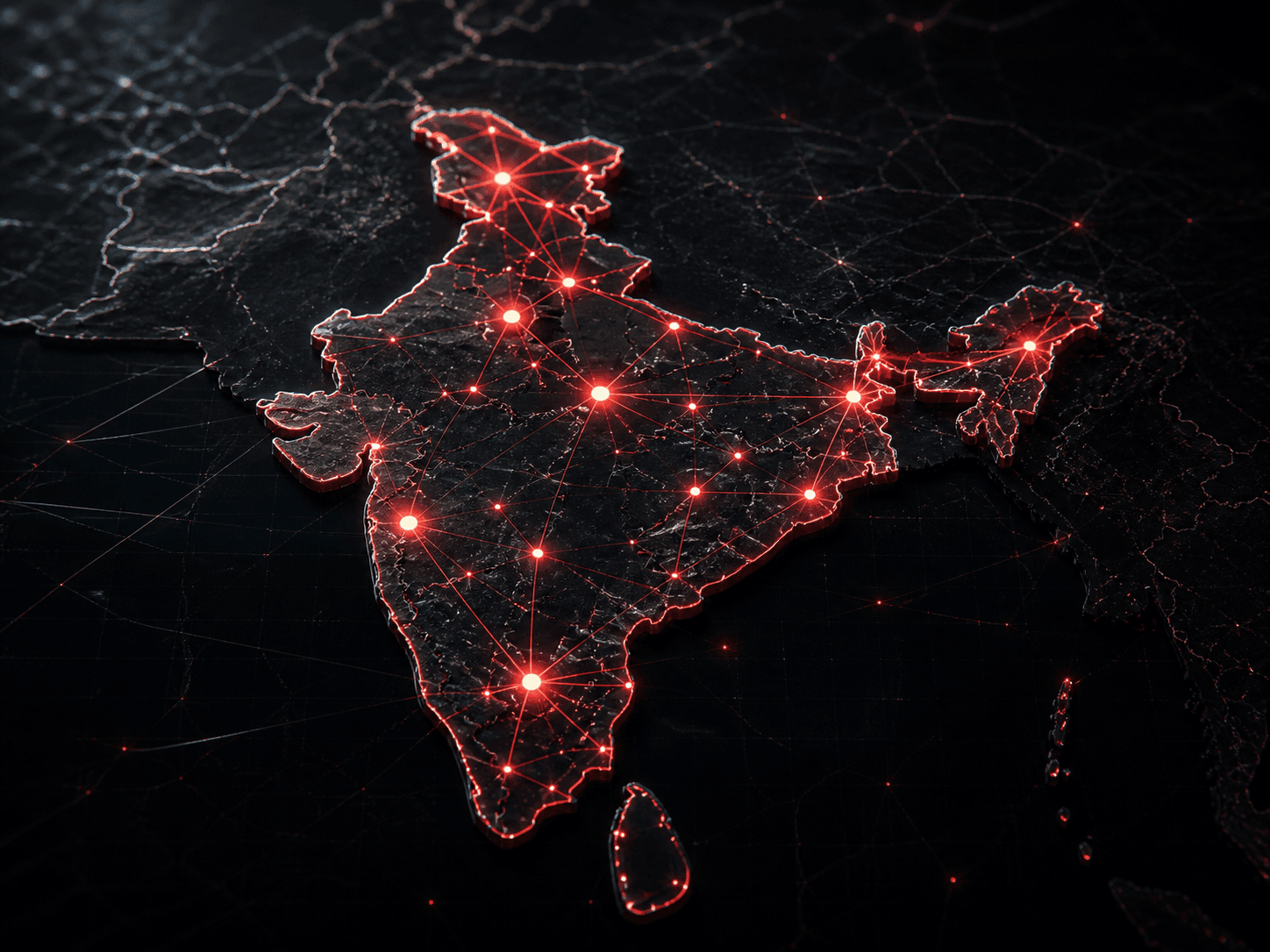
SpeedCharge, headquartered in Gurugram on Golf Course Road, operates one of India's growing EV charging networks with 2,500+ live charging points across 45+ cities, a 99.9% uptime commitment backed by a CSMS-monitored national infrastructure, and a customer base that has crossed 2 million users. The network has avoided 50,000+ tonnes of CO2 and delivered over 10 million clean kWh. For a Delhi investor, this means the brand your charging station operates under is already known to local EV drivers, the app-based booking and payment infrastructure works at scale, and the technical support structure is national, not locally assembled.
Franchise models start at Rs. 20 lakhs for a Fast Charging Station under the FOCO structure. The projected ROI of 28% to 36% and payback period of 2.0 to 3.5 years are grounded in Metro Tier 1 operational benchmarks, which Delhi qualifies for as a top-tier market. Trusted partnerships with names including Tata Motors, Mahindra, Shell, Adani, and DLF give the network commercial credibility that standalone or early-stage operators cannot match. Visit Website to explore the franchise and location partner options for Delhi NCR.
Frequently Asked Questions
How much investment is needed to start an EV charging franchise in Delhi?
An EV charging franchise in Delhi starts at Rs. 20 lakhs for a Fast Charging Station, which covers a minimum two-car-park setup across approximately 550 sq. ft. with DC fast chargers at 30 kW to 60 kW. Super Charging Station models require more space and higher capital. Projected ROI across models ranges from 28% to 36%, with an investment payback period of 2.0 to 3.5 years.
Is EV charging franchise business profitable in Delhi NCR?
Based on Metro Tier 1 benchmarks, an EV charging franchise in a well-located Delhi NCR site can generate monthly revenue of Rs. 6.5 to 12.0 lakhs with an estimated monthly EBITDA of Rs. 2.8 to 3.6 lakhs. These are indicative figures. Profitability depends on location footfall, daily session volume, electricity procurement costs, and how quickly the station reaches optimal utilisation. High-dwell-time locations like office parks and malls in Gurugram and Noida consistently outperform standalone roadside sites.
What locations in Delhi work best for an EV charging station franchise?
The strongest locations in Delhi NCR combine high EV ownership with predictable dwell time: commercial office parks in Cyber City Gurugram, retail malls along the Noida Expressway, residential high-rises in South Delhi and Dwarka, fuel station forecourts on NH-48, and basement parking at corporate campuses in Aerocity. The key variable is whether EV drivers at the location will stay long enough for a charging session and return regularly.
What is the FOCO model in EV charging franchises?
FOCO stands for Franchise Owned, Company Operated. The investor owns the charging infrastructure and earns revenue from it. The operating company manages technical operations, customer service, billing, maintenance, and regulatory compliance on a day-to-day basis. For investors who want exposure to the EV charging market without running a station as a full-time business, FOCO is the standard structure in the Indian franchise market.